
I booked a regular manicure once, showed up late because I couldn’t find parking, and just told the front desk, “whatever you have time for.”
I ended up with SNS and did not realize it was different from gel until my nails were already halfway dry.
My tech noticed me staring at the pot of pink powder like it was a science experiment and explained the whole thing while she worked.
That is basically how most people find out about SNS, secondhand, mid-appointment.
Here is the explanation I wish someone had given me that day about what SNS is, how it is done, what it costs, how long it lasts, and whether your natural nails come out okay.
What are SNS Nails and How do They Work?
SNS stands for Signature Nail Systems.
That was the name of the original brand, the one that basically invented this whole dip powder method years ago. It stuck around so hard that people now just say SNS the way some people say Kleenex instead of tissue.
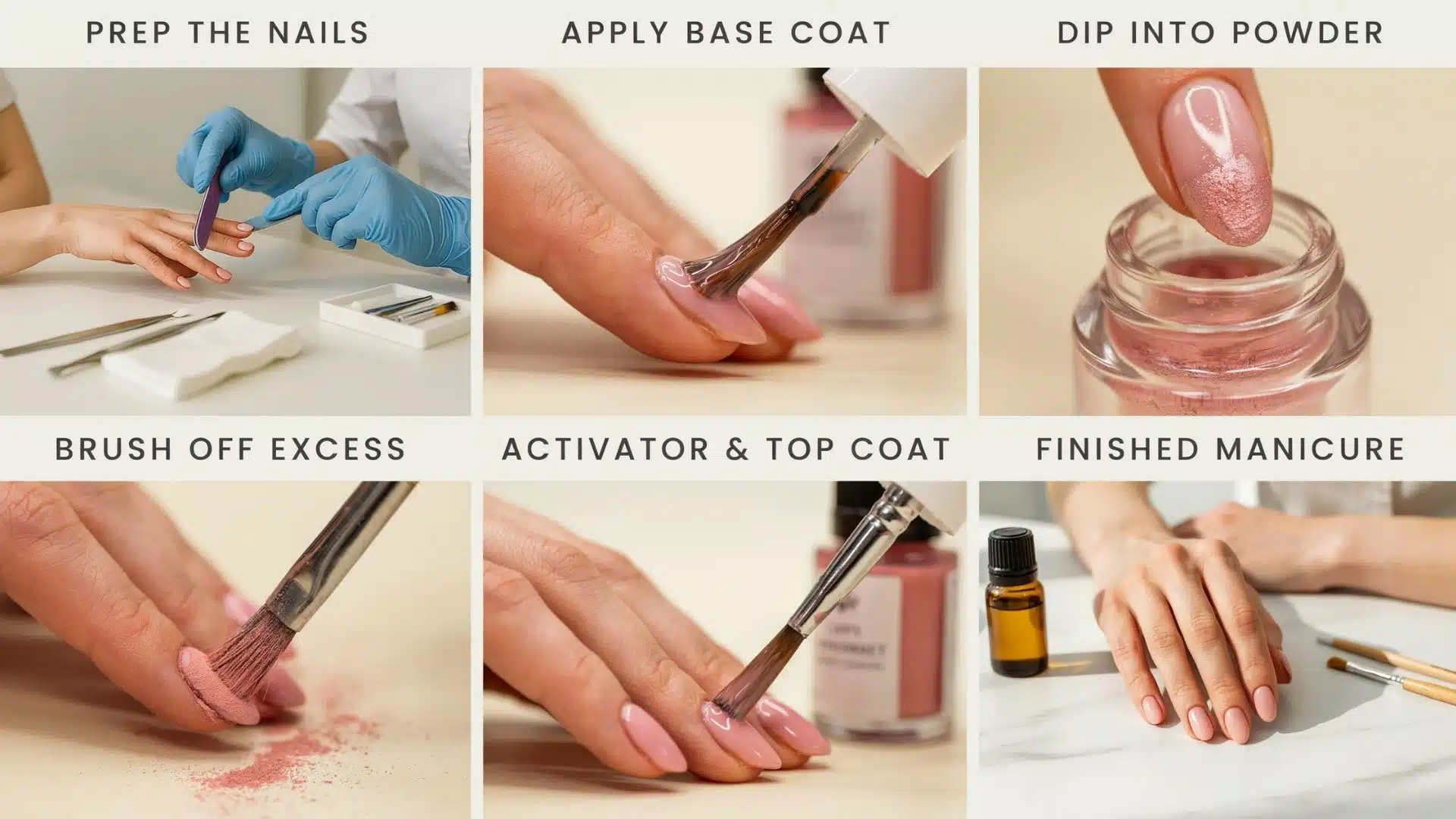
Here is the part that actually surprised me. Instead of brushing polish on like normal, she painted a thin, sticky base coat on my nail and dipped it into a little pot of powder.
Mine was pale pink, though I have seen everything from stark white to deep burgundy sitting in those pots.
She repeated that dip two more times, building the color up layer by layer instead of relying on one coat the way polish does.
After the last dip came an activator, the part that hardens everything without any UV light, since it just reacts on its own. Then filing, buffing, and a top coat for that glassy shine.
That layering makes the finish feel more like a thin shell sitting on your nail rather than a coat of paint on top of it, which is the whole reason it outlasted every bottle of regular polish I have owned, and I say that as someone whose polish used to chip within two days.
Pros and Cons of SNS Nails
Like any manicure, SNS nails have their strengths and a few trade-offs. Understanding both sides can help you decide if they’re the right choice for your lifestyle and nail care routine.
| Benefits of SNS Nails | Things to Consider |
|---|---|
| Durable and chip-resistant | Removal takes time and shouldn’t be rushed |
| No UV or LED curing required | Peeling or picking them off can damage natural nails |
| Quick application (often under 45 minutes) | Professional removal is recommended |
| Can help protect natural nails when applied correctly | Nail health depends on proper application and aftercare |
| Smooth, glossy, natural-looking finish | Not automatically healthier—or more damaging—than other manicure types |
The biggest takeaway is that SNS nails aren’t inherently good or bad for your natural nails. With proper application, careful removal, and regular maintenance, they can be a long-lasting, low-maintenance manicure that keeps your nails looking polished for weeks.
Why Are SNS Nails So Popular?
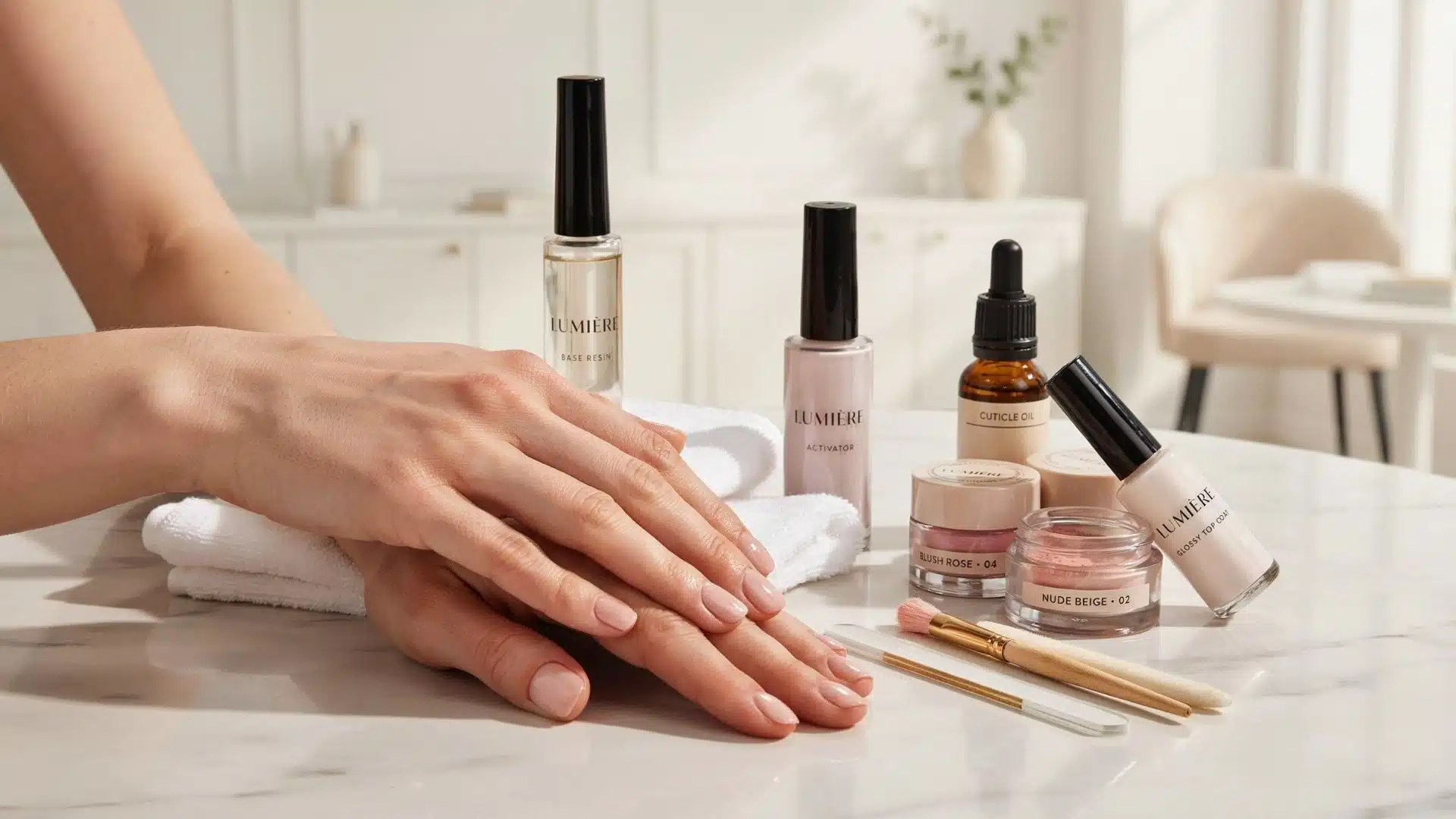
A few things keep coming up whenever people explain why they switched. It holds color for two to four weeks without chipping. Because the powder builds up in layers, the finished result is strong yet still looks light and natural rather than thick.
The color range has also grown a lot, from soft nudes all the way to loud metallics, so finding a shade you like tends not to be the hard part.
Since there is no lamp step at all, it appeals to people cutting back on UV exposure, which honestly was half the reason I kept going back after that first accidental appointment.
All of that makes SNS a strong fit for busy professionals who cannot squeeze in weekly touch-ups, and travelers who need a manicure that survives a long trip.
Anyone wanting low maintenance, or wanting to avoid UV lamps, usually ends up happiest with it.
SNS Nails vs Gel vs Acrylic: What Is the Difference?
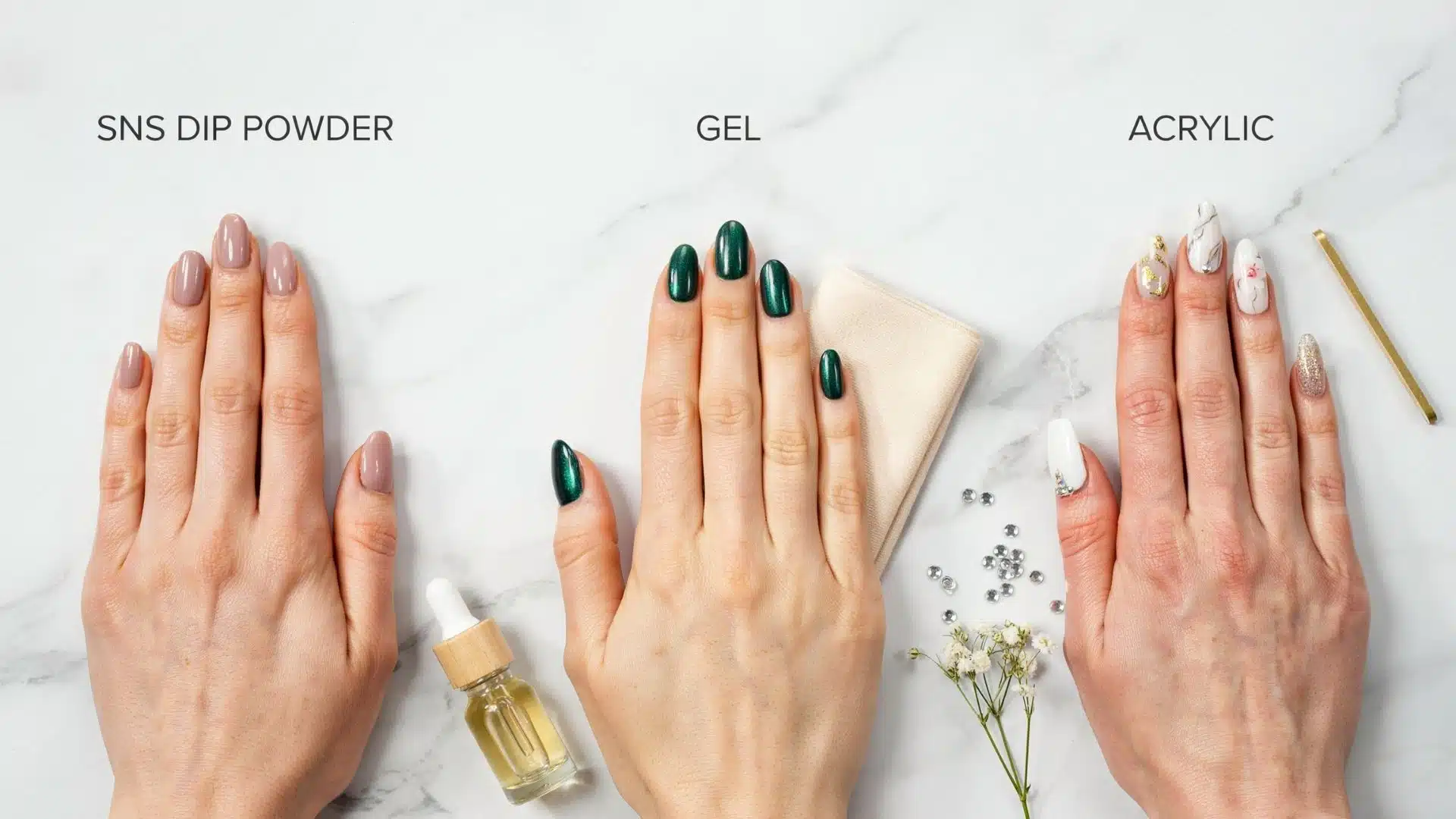
Gel nails use a polish cured under a UV or LED light for a glossy finish. Acrylic is made by mixing a liquid monomer with a powder polymer that hardens on its own, without a lamp. Here is how all three compare.
| Feature | SNS Nails | Gel Nails | Acrylic Nails |
| Durability | 2 to 4 weeks | 2 to 3 weeks | 3 to 4 weeks |
| Appearance | Smooth, natural-looking | Glossy, flexible shine | Firm, can look thicker |
| Flexibility | Some give, not rigid | Most flexible of the three | Stiff and rigid |
| Removal | Acetone soak, takes longer | Faster acetone soak | File down, then soak |
| UV Curing | Not needed | Required | Not needed |
| Maintenance | Moderate, fewer touch-ups | Moderate | Needs regular fills |
| Cost | Moderate to higher | Moderate | Can add up with fills |
| Best Suited For | Long wear without UV exposure | Shine with quicker removal | Length and added strength |
There are 3 types of nails, yet SNS is the easiest choice if skipping the lamp and getting long wear matters most. Gel suits frequent color changes since it comes off faster, and acrylic still wins if length is the goal.
How Much Do SNS Nails and Their Removal Cost?
The cost of SNS nails depends on the salon, your location, and the type of manicure you choose.
On average, a basic SNS manicure costs between $40 and $70, while more premium salons or intricate designs can cost $80 or more. If you want nail extensions, detailed nail art, or need an old set removed, expect to pay extra.
Although SNS nails are generally more expensive than a standard manicure, they often last 2 to 4 weeks with minimal chipping, making them a worthwhile investment for many people.
The cost of SNS nail removal varies depending on the salon and whether you’re getting a new set applied afterward.
On average, professional SNS removal costs between $10 and $25 when done on its own.
Many salons reduce the fee or include removal at no extra charge if you’re replacing your old SNS manicure with a fresh set.
SNS Nails vs. BIAB: What’s the Difference?
Although SNS and BIAB (Builder in a Bottle) are both popular alternatives to traditional nail polish, they work quite differently.
| Feature | SNS Nails | BIAB Nails |
|---|---|---|
| Application | Dip powder with resin | Builder gel applied with a brush |
| UV/LED Lamp | Not required | Required |
| Feel | Firm and durable | Flexible and lightweight |
| Durability | 2–4 weeks | 3–4 weeks |
| Best For | Long-lasting colour and chip resistance | Strengthening weak natural nails |
| Removal | Acetone soak | Filed down and soaked in acetone |
If you’re looking for a long-lasting, chip-resistant manicure with a wide range of colors, SNS is often the better choice. BIAB may be a better option if your natural nails are weak, bend easily, or you’re trying to grow them out with a flexible overlay.
The right choice ultimately depends on your nail condition, lifestyle, and personal preference.
How Long Do SNS Nails Last and How Can You Make Them Last Longer?
Most people get two to four weeks out of a set, though where you land depends on factors that have less to do with the product and more to do with you.
Nails that grow fast show a gap sooner; mine grow quickly, so I am usually back at three weeks rather than four.
Hands in water or physical work wear out faster, too, and the quality of the original application matters just as much as anything afterward.
A handful of daily habits genuinely stretch things out. Cuticle oil keeps the skin flexible, which helps prevent lifting, and gloves for dishes or harsh cleaning protect the set.
Resisting the urge to use your nails as tools avoids avoidable chips, and leaving a lifting edge alone keeps a small issue from turning into a bigger one.
Knowing when a set has run its course helps you avoid pushing it too far. Cracking, unusual thickness, or soft-feeling nails underneath all point to the same thing: time for a fresh set.
Are SNS Nails Safe for Your Natural Nails?
The short answer is yes, when done properly, but the damage people run into almost always traces back to how a set was removed, not the product itself.
Peeling or picking a set off pulls away real layers of your natural nail, which is exactly what leaves nails feeling thin afterward.
Professional removal matters more than which brand of powder a salon uses. At home, it works the same way, just slower, with cotton balls soaked in acetone and wrapped in foil.
I always forget how much it dries out skin, so moisturizing right away genuinely helps.
Salon hygiene matters more here than most people think to ask about. A reputable salon will not dip your finger into a shared powder pot that every client has already touched, since that raises questions about cross-contamination.
Conclusion
SNS nails really do come down to a fairly simple idea once you strip away the salon jargon: colored powder built up in layers, a bonding activator, and no lamp anywhere in the process.
That is basically why so many people, myself included, end up sticking with it.
Done properly, it gives you weeks of durable, natural-looking color without asking much of you day to day. Done carelessly, especially during removal, it can leave your natural nails worse off than before, which is really the only part worth being careful about.
Beyond that, the right choice comes down to your lifestyle, your budget, and how your nails personally respond, so think it over before your next appointment.
Frequently Asked Questions
Are SNS Nails the Same as Dip Powder Nails?
SNS is actually a brand name, one of the original companies that popularized the dip powder method, while “dip powder” describes the technique itself.
Can SNS be Applied on Short Nails?
Yes, short natural nails hold SNS powder just as well as longer ones. The powder builds a thin, durable coating directly over your own nail, so no added length or extensions are needed for a smooth, even finish.
Can SNS be Used with Extensions?
Yes, SNS can be layered over tips or extensions, though it works best for moderate length. If you want significant length or added strength, acrylic tends to hold shape and structure better over time.
Can you Paint Over SNS Nails?
You can apply regular polish over a finished SNS set, but it will chip and wear off much faster than it would on a bare nail, since the powder’s smooth surface doesn’t hold traditional lacquer well.