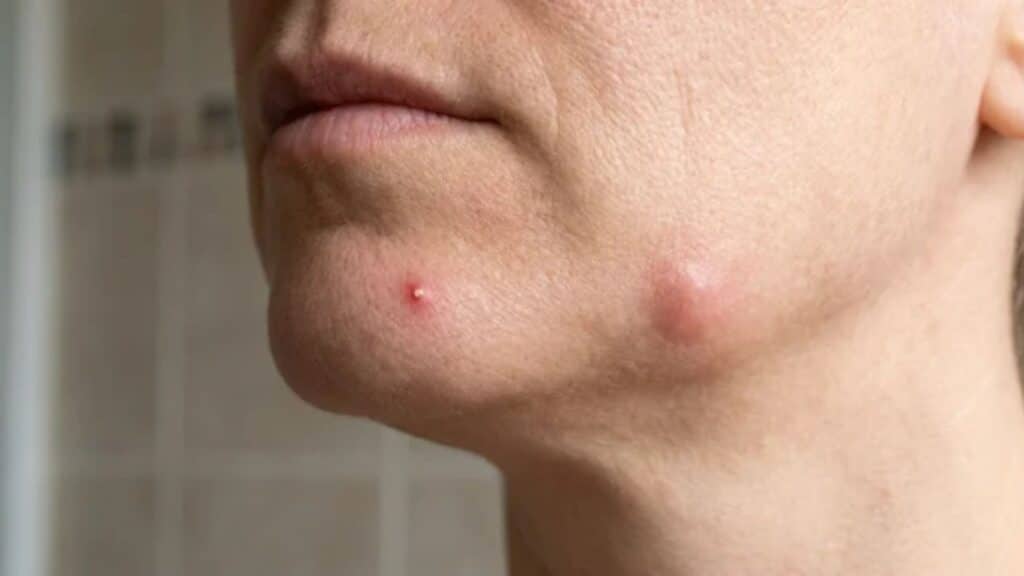

A painful bump can pop up out of nowhere on the chin, the jawline, wherever, and good luck telling right away if it’s a pimple or a cyst.
Honestly, they look almost identical at first: both just show up as an angry, swollen red lump. That’s exactly why people mix them up so often.
But underneath, they’re forming for completely different reasons, and that changes how you should treat them.
A regular pimple runs its course in a few days, tops. A cyst’s a different story. It sits deeper under the skin and hurts a lot more, and it doesn’t just clear up in a few days either; it can drag on for weeks.
Let me help you out with which one you’re actually dealing with, and you’ll stop picking at it and finally deal with what’s really going on.
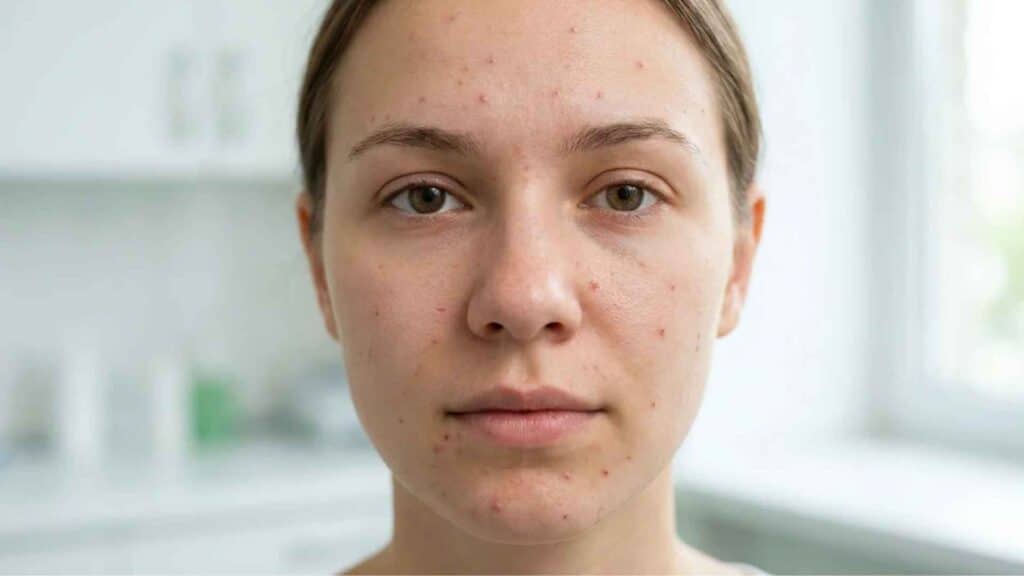
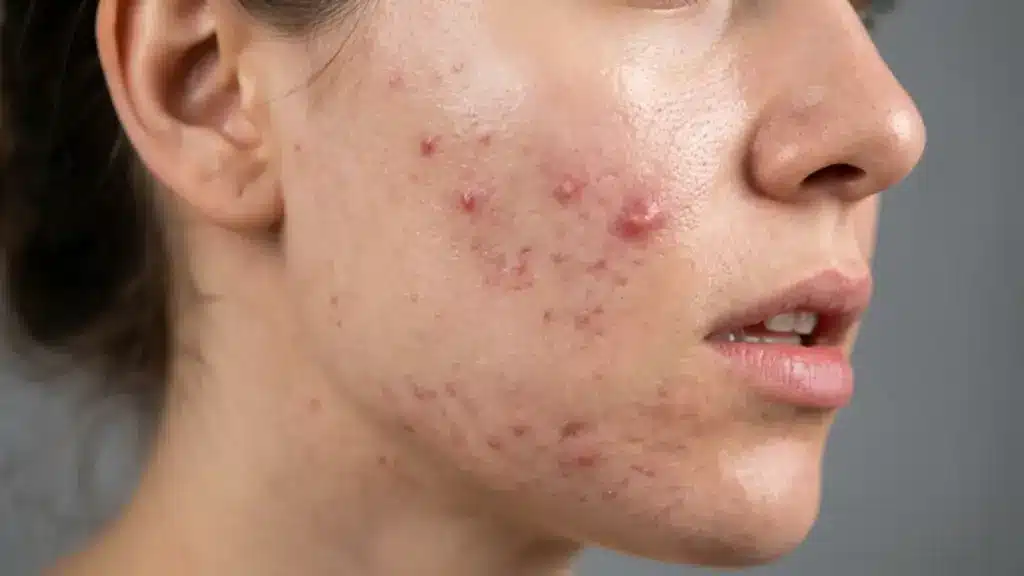
Why Do People Confuse Pimples and Cysts? Pimples and cysts often appear in the same areas, including the face, chest, back, and jawline. Both can look red, swollen, and painful, which makes them easy to confuse. However, pimples usually sit close to the skin’s surface and may have a visible white or yellow head, while cysts form deeper under the skin and often appear as smooth, rounded lumps without a head. Pimples may feel slightly tender, but cysts are usually more painful and can ache when touched. |
What Are Pimples?
Acne is usually the culprit behind pimples, and it starts when oil and dead skin get stuck inside a hair follicle. Once that follicle clogs up, whiteheads and blackheads tend to follow.
Anyone can get them at any age, but teenagers see the most breakouts on their face due to hormone swings.
These can appear on the Shoulders, back, chest, neck, and face; none of these spots are off limits. Stress plays a role too, and so does diet, especially foods high on the glycemic index.
Common Symptoms of Pimples:
- A small, raised bump on the skin
- Redness or mild swelling around the spot
- A visible whitehead or blackhead
Types of Pimples
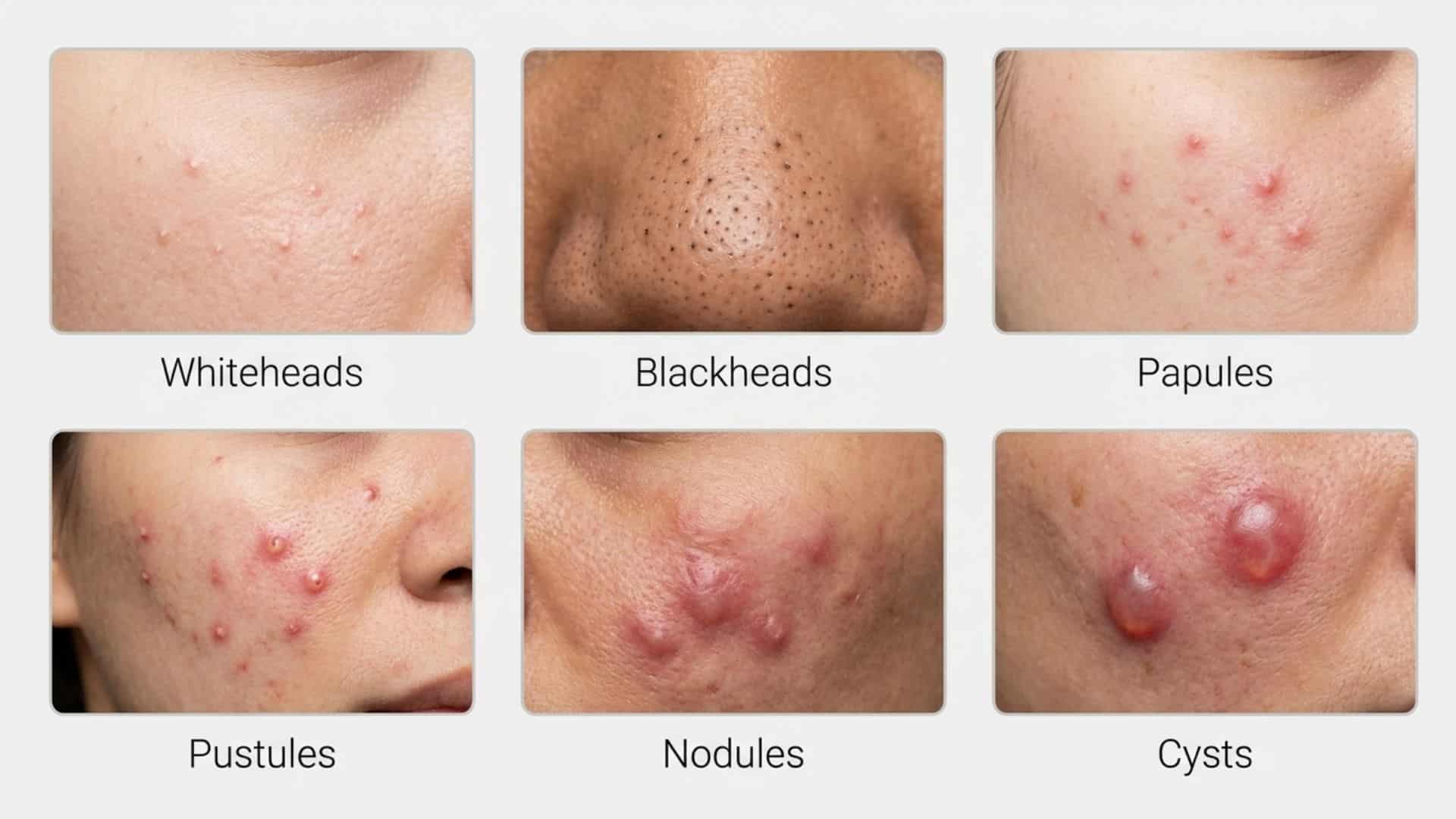
Not all pimples look or act the same way. Dermatologists sort them into a few clear categories. Knowing which one is showing up makes it easier to pick the right treatment.
- Whiteheads – A pore clogs all the way, trapping oil and skin cells under a white or skin-toned bump.
- Blackheads – Same clog, different outcome, since the pore stays open and air darkens the tip. That dark color isn’t dirt.
- Papules – Small, firm, red bumps with no visible head, caused by inflammation before pus forms.
- Pustules – Basically a whitehead ringed in red or pink, with pus sitting just beneath the skin. This is the classic “pimple” most people picture.
- Nodules – Deep, hard, and often painful for weeks, with a much higher risk of scarring than the rest.
Nodules sit close to the line between a stubborn pimple and a true cyst. That overlap is part of why the two get mixed up. The deeper and more painful the bump, the more likely it needs a dermatologist instead of a drugstore spot treatment.
What Are Cysts?
Cysts might appear very similar to pimples, with the same small bump and the same spot under the skin.
They most often show up on the face, neck, or trunk, though honestly they can pop up anywhere.
They grow slowly and don’t usually hurt, unless one breaks open and gets infected. Underneath, it’s a sac holding a mix of sebum, dead skin, and keratin.
Bothered by how it looks, or it’s turned painful? That’s when treatment makes sense. Cysts tend to form when skin cells that should shed instead get pushed deeper into the skin.
It can also form due to an injury or irritation of the skin or an irritation of a hair follicle.
Symptoms of Cysts:
- Small round bump under the skin on the trunk, neck, or face.
- Thick leakage from a bump that indicates a cyst is infected.
- Infected or inflamed bump on the skin if the skin is broken and inflamed
What is a Sebaceous Cyst? A sebaceous cyst is a common name people use for a smooth, slow-growing lump beneath the skin. However, many bumps called sebaceous cysts are actually epidermoid or pilar cysts. True sebaceous cysts are less common and develop from the glands that produce oil for the skin and hair. Unlike acne cysts, these bumps are not caused by clogged pores or an acne breakout. They are usually firm, rounded, and painless unless they become inflamed, infected, or break open. Avoid squeezing one at home, since this can increase the risk of infection and may not remove the cyst sac beneath the skin. |
Cyst vs Pimple: Key Differences You Should Know
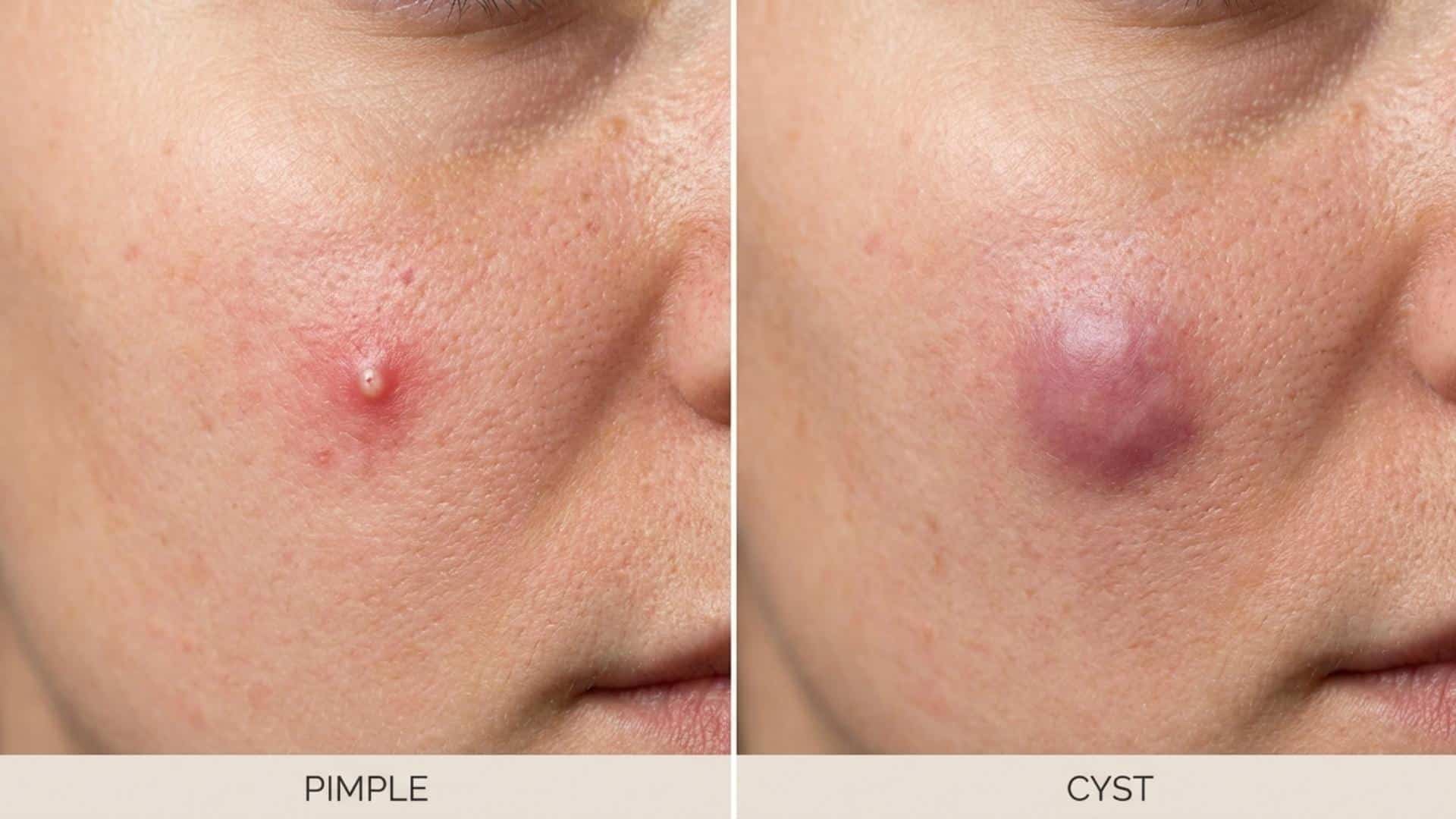
Once the basics are clear, a side-by-side look makes the cyst vs pimple difference easy to spot.
| Feature | Pimple | Cyst |
|---|---|---|
| Location | Surface level, inside a pore | Deeper under the skin |
| Size | Small, usually a few millimeters | Larger, can grow over time |
| Appearance | Red bump, often with a whitehead | Smooth lump, rarely has a head |
| Texture | Soft to firm | Firm and rounded |
| Pain level | Mild tenderness | Moderate to severe ache |
| Healing time | A few days to a week | Weeks, sometimes longer |
| Scarring risk | Low if left alone | Higher, especially if squeezed |
| Treatment approach | Over-the-counter acne products | Often needs a dermatologist |
Check the depth. Press gently on the bump. A pimple sits close to the surface, while a cyst feels like it starts much deeper, almost under a layer of normal skin.
Look for a visible head. Pimples often show a small white or yellow tip once they mature. Cysts rarely form a head, since the clog sits too far below the surface to reach it.
Pay attention to pain. A dull, deep ache that gets worse with pressure usually points toward cystic acne rather than a regular pimple.
Notice how long it lasts. Pimples fade within a week in most cases. A bump that lingers for weeks, or keeps coming back in the same spot, is more likely a cyst.
Knowing the difference helps prevent bacterial acne and supports a quick recovery that often helps control further skin damage.
Cyst vs Pimple Treatment Options
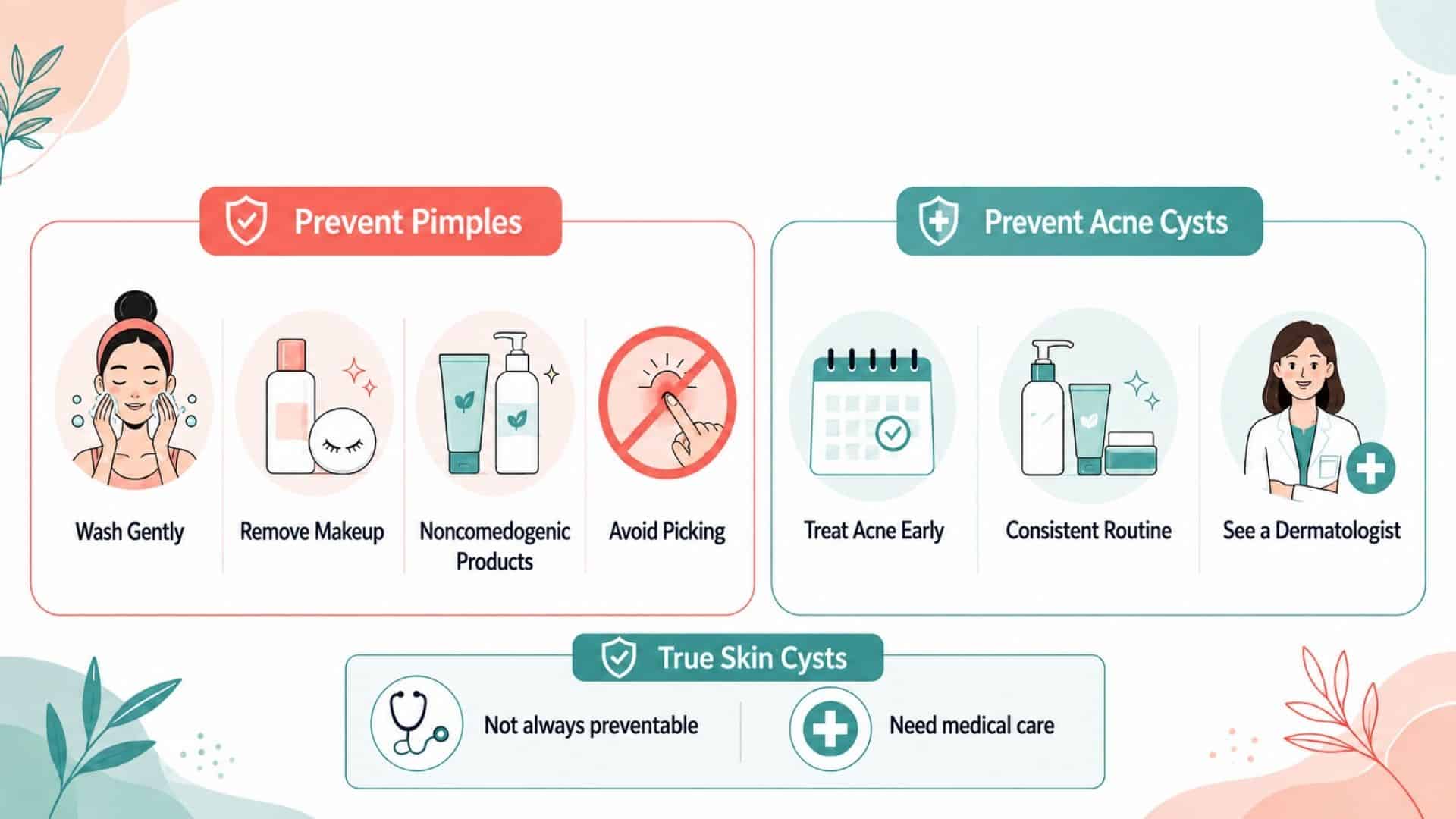
The right treatment depends on the real cause of the bump: a regular pimple, an acne cyst, or a different type of skin cyst.
Treatment for Pimples
Most pimples clear up with basic, steady care nothing fancy, just keeping pores clean and easing off the irritation so skin doesn’t dry out in the process.
- Wash twice a day with something mild. You want the oil gone, not your skin stripped raw.
- Salicylic acid gets down into the pore and loosens up whatever’s clogging it.
- Benzoyl peroxide takes on acne bacteria and takes the redness down a notch.
- Adapalene’s a retinoid, and it tends to help people who break out a lot.
- Hydrocolloid patches cover the spot and pull fluid out overnight.
- Leave it alone. Picking or squeezing just risks scarring and spreads bacteria to skin nearby.
Treatment for Cysts
Cysts usually need a different approach than regular pimples because they form deeper under the skin and often require professional care.
Acne cyst treatment:
- Prescription acne treatments: A dermatologist may prescribe stronger topical or oral medication for deep, recurring cysts.
- Retinoids: These help keep pores clear and reduce future flare-ups.
- Hormonal treatments: For some people, balancing hormones can reduce cystic breakouts.
- Dermatologist procedures: Corticosteroid injections or in-office drainage can quickly reduce pain and swelling.
Skin cyst treatment:
- Monitoring: Small, harmless cysts often need to be watched over time.
- Medical drainage: A dermatologist can safely drain a cyst that becomes swollen or uncomfortable.
- Removal: Cysts that keep coming back or bother someone can be removed entirely in a simple procedure.
Squeezing a cyst at home rarely works, since the sac itself stays under the skin even if some material comes out. It also raises the risk of infection, deeper scarring, and the cyst coming back.
When Should You See a Dermatologist?
According to the American Academy of Dermatologists, most bumps are nothing to worry about, but a quick visit can rule out anything serious and speed things along.
- Cysts that keep showing up in the same spot usually need more than home care. Professional treatment breaks the cycle.
- Large, deep cysts carry a real risk of scarring if left untreated.
- Scars starting to form? Early treatment can still stop them from becoming permanent.
- Weeks of over-the-counter products with no change means it’s time for something stronger.
- A bump growing fast or changing shape shouldn’t wait. Get it looked at.
- Warmth, spreading redness, or a fever are signs of infection and need medical care right away.
Conclusion
The pimple vs cyst question usually comes down to depth, pain, and how long the bump sticks around. Pimples sit near the surface, often show a visible head, and clear up within days.
Cysts sit deeper, ache more, and can last for weeks without a head in sight. Neither one responds well to squeezing, and picking at either raises the risk of scars.
A bump that keeps coming back, grows quickly, or refuses to heal on its own is worth showing to a dermatologist.
Simple habits, like gentle cleansing and leaving stubborn bumps alone, go a long way toward calmer, clearer skin over time.
Frequently Asked Questions
What is the Difference Between a Pimple and a Cyst?
A pimple sits near the surface and often shows a visible head. A cyst forms deeper, feels firmer, and rarely shows a head at all.
How Can You Tell if a Bump Is a Cyst or Pimple?
Check the depth, pain level, and how long it lasts. Cysts sit deeper, ache more, and stick around for weeks, while pimples heal within days.
Can You Pop a Cyst Like a Pimple?
Popping a cyst is not safe. The sac stays under the skin even after draining, and squeezing raises the risk of infection and scarring.