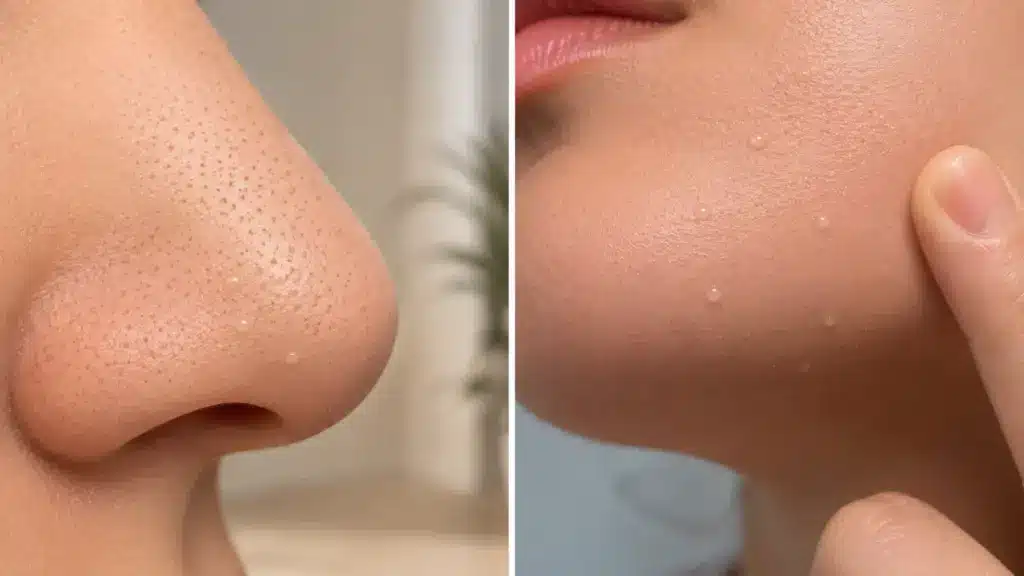

Tiny bumps around the nose, chin, or forehead have a way of taking up too much mental space. You spot one, poke it, squint at it in the mirror, and then spend twenty minutes searching whether it is a whitehead, a blackhead, a pimple, or something else entirely.
That spiral is exhausting, and it often ends with a product cart full of things you do not need. The answer is simpler than most skin care content makes it out to be. Whiteheads vs blackheads come down to one small structural difference in the pore.
This piece breaks down what each bump actually is, why they form, how they look different, what helps, and when it makes sense to stop guessing and get expert eyes on the skin.
What Are Whiteheads and Blackheads?
Before getting into causes or care, it helps to know what these bumps actually are. Both start with a clogged pore, also called a comedone. MedlinePlus explains that comedones can be open or closed, and that is the basic difference here.
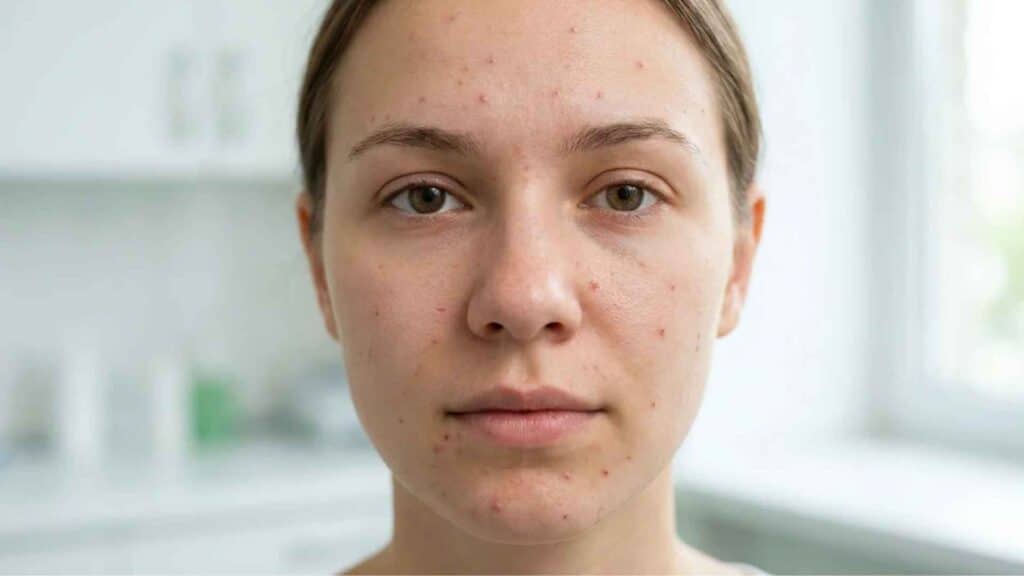
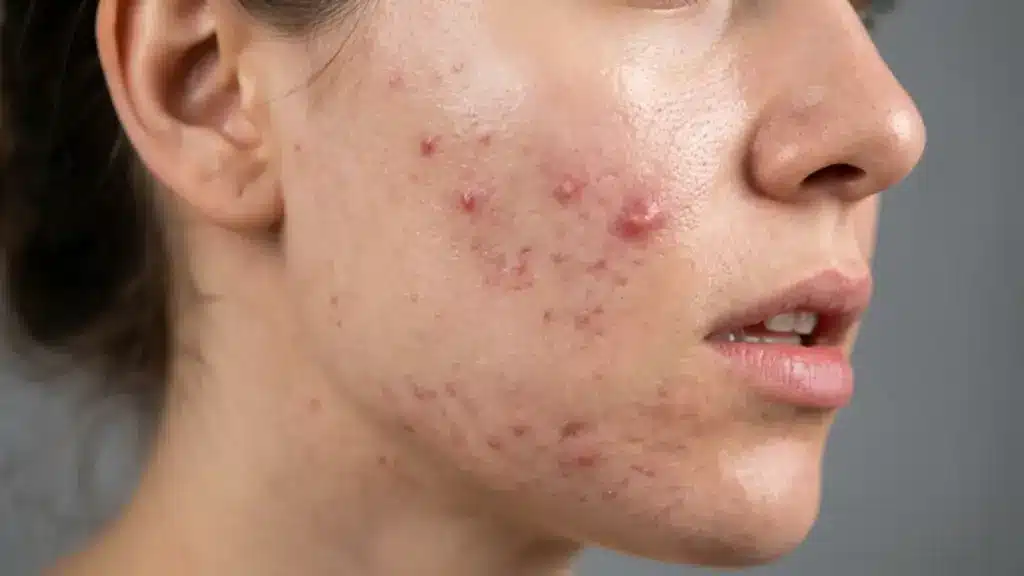
Whiteheads are closed comedones. The pore stays covered at the surface, so the trapped oil and skin cells sit under the skin. They often look like small white or skin-colored raised bumps.
Blackheads are open comedones. The pore has an opening at the surface, so the trapped material is exposed to air. They often look like small dark dots that may be flat or slightly raised.
Both can appear on the face, chest, back, shoulders, and upper arms. NIAMS explains that acne can form when hair follicles become blocked with sebum and dead skin cells. That means these bumps are not a sign of dirty skin or poor washing habits.
What Causes Whiteheads and Blackheads?
The cause is usually not one small mistake. Both types form when a pore becomes more easily clogged. Oil, dead skin cells, hormones, friction, sweat, and some products can all play a part.
- Excess oil: Sebum can collect inside the follicle and mix with dead skin cells, making a plug more likely.
- Dead skin buildup: Skin cells that do not shed smoothly can remain in the pore and contribute to the blockage.
- Hormone shifts: Puberty, menstrual changes, stress, and some life stages may affect oil production in acne-prone skin.
- Genetics: Some people naturally produce more oil or shed skin cells in a way that makes clogged pores more common.
- Pore-clogging products: Heavy makeup, thick sunscreen formulas, hair oils, and balms can sit near acne-prone areas and worsen bumps.
- Friction and sweat: Helmets, tight straps, workout gear, and sweat left on the skin can increase the likelihood of clogged pores.
This section explains the shared cause. The next section explains why the same clogged-pore process can leave one bump looking white and another looking dark.
What Is the Main Difference Between Whiteheads and Blackheads?

For whiteheads vs blackheads, the easiest starting point is the pore opening. Both begin as clogged pores, but they do not stay covered in the same way. A closed clog looks white or skin-colored. An open clog can turn dark.
| Feature | Whitehead | Blackhead | What It Means for the Reader |
| Medical type | Closed comedo | Open comedo | Both are clogged pores, just sealed differently |
| Pore opening | Sealed over | Open at the surface | Determines color and treatment priority |
| Color | White or skin-colored | Black or dark brown | Color reflects oxidation, not dirt |
| Texture | Raised a small bump | Flat or slightly raised dot | Neither should be forcefully squeezed |
| Inflammation | Usually none | Usually none | Red or painful bumps are a different type |
| Why does it look that way | Trapped under skin, no air exposure | Exposed to air, oxidation changes color | Explains the myth that blackheads are dirt |
| First care direction | Prevent clogs from forming | Reduce buildup from hardening and returning | Both respond to similar OTC ingredients |
| Picking risk | Squeezing can push irritation deeper | Forceful extraction can cause scarring or inflammation | A hands-off approach is safer for both |
They are not “better” or “worse” versions of acne. There are two forms of clogged pores. The difference matters because it helps you read the skin more clearly before choosing a care option.
What Do Real People Usually Get Confused About?

Real readers rarely use medical terms first. Most whiteheads vs blackheads confusion comes from everyday words like pimple, pore, and bump.
A real Reddit thread shows the same confusion in everyday language. The questions are useful, but the answers below are verified against medical sources such as MedlinePlus, NIAMS, the American Academy of Dermatology, and the Cleveland Clinic.
Query 1. Is A Whitehead Just A Pimple?
Not exactly, though people use the words together all the time. A whitehead is a closed, clogged pore. It may look like a small white or skin-colored bump, usually without much redness or pain.
A “pimple” is a loose everyday word. Some people use it for whiteheads, blackheads, pustules, or painful, inflamed bumps. MedlinePlus explains that acne can include whiteheads, blackheads, and red, inflamed bumps, so the word “pimple” is less exact than the medical terms.
Query 2. Why Do I Get Blackheads On My Nose but Whiteheads On My Chin?
Different areas of the face can show different patterns. The nose often has more visible pores and oiliness, so blackheads or sebaceous filaments may stand out there. The chin can be affected by friction, product buildup, stress, or hormone-related oil changes. If that’s the area giving you the most trouble, a focused look at blackheads on the nose covers it in more depth.
The location does not create a brand-new acne process. It only gives clues about what may be adding to the clog, such as sunscreen texture, makeup, hair products, face touching, or breakouts that change around the cycle.
Query 3. Are Sebaceous Filaments The Same As Blackheads?
No. Sebaceous filaments can look like tiny gray, tan, or yellow dots, often on the nose or chin. Cleveland Clinic explains that they help oil move across the skin and are part of normal pore function.
Blackheads are different because they are clogged pores with a plug of oil and dead skin cells. This difference matters because squeezing sebaceous filaments often causes irritation without fixing the skin concern.
Query 4. Is It Good To Remove Whiteheads?
Forceful squeezing is not a safe way to remove whiteheads at home. A whitehead is closed, so pressing on it can irritate the pore and make the bump look redder or swollen.
AAD warns that popping acne can worsen inflammation, pain, infection risk, and scarring. A safer plan is steady acne care with ingredients made for clogged pores. If bumps keep coming back or leave marks, a dermatologist can treat them more safely.
Query 5. Are Blackheads, Whiteheads, And Acne Basically The Same Thing?
They are related, but they are not the same. Acne is the skin condition. Blackheads and whiteheads are two types of acne lesions called comedones. MedlinePlus explains that a comedone is a plug of oil and skin cells inside a pore.
A blackhead is an open comedone. A whitehead is a closed comedone. NIAMS also explains that blackheads look dark because air discolors the sebum, not because the pore is dirty.
Query 6. Pustule vs Whitehead: What Are People Really Asking?
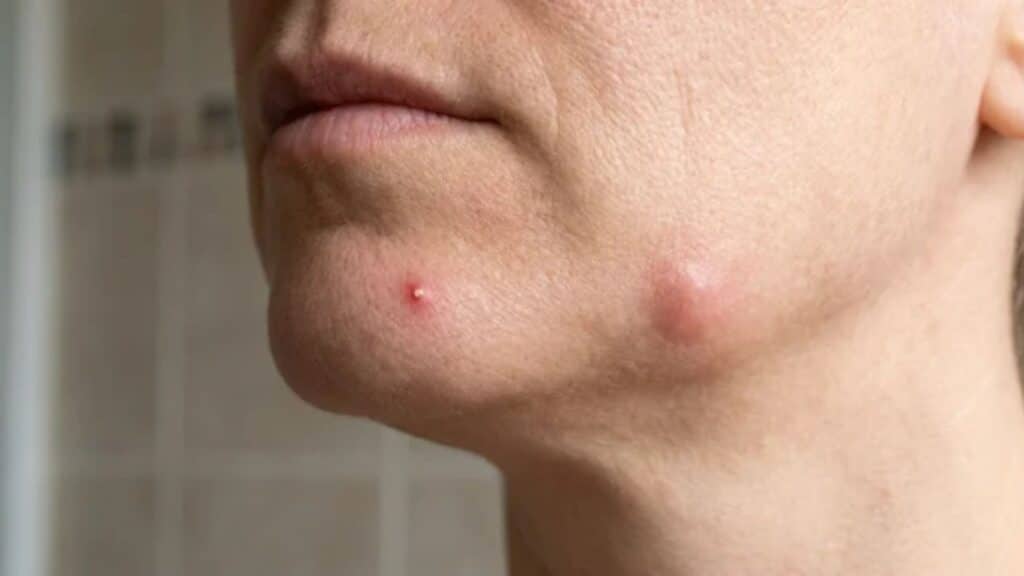
When people ask about pustule vs whitehead, they usually want to know why one bump feels calm, and another looks angry. A whitehead is a closed, clogged pore. It may look white or skin-colored, but it is usually not very red or sore.
A pustule is an inflamed acne. AAD describes pustules as pus-filled pimples with a yellow or white center. A simple way to tell the difference is this: if the bump is just clogged, think whitehead. If it is red, tender, and pus-filled, think pustule.
Once these real-life questions are clear, treatment becomes easier to follow. The next step is not a crowded shelf of products. It is a steady plan that targets clogged pores and lowers the chance of irritation.
How Do You Treat or Manage Whiteheads and Blackheads Safely?
Treatment should be steady, not harsh. Whiteheads and blackheads usually need pore-focused care that reduces clogs over time. Start by identifying the bump, choosing one acne ingredient, and keeping the skin barrier calm.
| Treatment Step | What to Do | Why It Helps |
| Identify the bump | Check if it is a closed white bump, an open dark dot, or a red painful spot. | Whiteheads and blackheads need care for clogged pores, while inflamed acne may need different support. |
| Use salicylic acid | Try it a few times a week if your skin tolerates it. | It helps loosen oil and dead skin buildup inside pores. |
| Consider adapalene | Use slowly at night with moisturizer. | It helps prevent new clogged pores from forming over time. |
| Use benzoyl peroxide carefully | Save it for red, inflamed, or pimple-like acne. | It works better for bacteria-related inflammation than for simple clogged pores. |
| Support the skin barrier | Use a gentle cleanser, a light moisturizer, and daily SPF. | Calm skin responds better to acne ingredients and stays more consistent. |
| Avoid picking or scrubbing | Do not squeeze, scrape, or use rough tools. | Pressure can worsen irritation and raise the risk of marks or scars. |
| Do not stack products | Add one active at a time and wait several weeks. | Too many strong products can irritate skin and confuse results. |
Some people get equally good results using azelaic acid as an exfoliant, either instead of or alongside salicylic acid, especially for skin that gets irritated easily. A simple, fragrance-free option like CeraVe moisturizing cream for the face is usually enough to keep the barrier calm while these acne ingredients do their work.
Managing the bumps you already have is only half of the plan. The next step is reducing how often new clogs form, because prevention is where mild acne often becomes easier to control.
Why Are Blackheads Black if They Are Not Dirt?

The question why are blackheads black matters because it changes how people treat their skin. If the dark color looks like dirt, it is easy to scrub harder or squeeze the spot. That usually irritates the skin without solving the real issue.
Blackheads look black because the clogged pore is open at the surface. NIAMS explains that blackheads look dark because air discolors the sebum, not because the pore is dirty. AAD also explains that blackheads form when the buildup inside a pore reacts with oxygen.
A simple way to think about it is that the plug darkens because it comes into contact with air. The dark color is a chemical change, not a hygiene problem.
So, why are blackheads black? It comes down to air exposure, not dirt. That is why gentle pore care works better than harsh scrubbing.
How Can You Help Prevent Whiteheads and Blackheads?
Prevention does not mean perfect skin forever. It means reducing the likelihood of clogged pores and catching early signs of irritation before they become a bigger issue.
The best habits are simple enough to keep doing, because a routine that feels punishing usually gets dropped fast. Building out a full skincare routine for oily skin makes it easier to stick with these individual habits.
- Wash gently: Cleanse up to twice daily and after sweating, without scrubbing the skin raw or using rough tools on already congested areas.
- Remove makeup completely: Leaving it on overnight traps oil and product residue around pores, especially around the nose, chin, and forehead.
- Choose non-comedogenic products: The American Academy of Dermatology recommends products labeled non-comedogenic for makeup, sunscreen, moisturizer, and any product used on acne-prone skin.
- Watch hair products: Oils, gels, and heavy leave-in conditioners can transfer onto the forehead, temples, cheeks, neck, and back, clogging pores there.
- Change sweaty clothing: Tight straps, helmets, chinstraps, and workout gear trap sweat and cause friction against the skin, especially on the chest and back.
- Stay consistent: Routine hopping, switching products every few days when things do not clear overnight, is one of the fastest ways to irritate skin and lose track of what is actually helping.
Even with good preventive habits, some acne cases need a second opinion. The next section gives a clear, practical stopping point for when home care is no longer the right answer on its own.
Can a Whitehead Turn Into a Blackhead?
A whitehead does not always turn into a blackhead. Both start as clogged pores, but a whitehead stays closed while a blackhead stays open. If the surface of a closed pore changes and the trapped material becomes exposed to air, it may look darker later.
Still, skin does not follow one fixed path. A bump may flatten, stay the same, become irritated, or become more inflamed. The safer takeaway is simple: do not wait for a whitehead to “turn” into anything before using gentle clogged-pore care.
This clears up one common question. The next section looks at the everyday words readers use when they talk about these bumps.
When Should You See a Dermatologist for Whiteheads or Blackheads?

Most mild clogged pores can start with careful home care. But that does not mean every bump should be handled alone. There is a practical line between normal self-care and the point where professional help makes the most sense.
Signs that a dermatologist visit would be useful:
- Bumps do not improve after 8 to 12 weeks of consistent, gentle care.
- Acne has become painful, red, swollen, or pus-filled.
- Dark marks or scars are starting to appear after bumps heal.
- Breakouts have spread to the chest, back, or shoulders in a way that feels out of control.
- The reader feels ongoing stress or embarrassment, or is stuck in a cycle of trying new products without making progress.
- Pregnancy, nursing, or multiple active ingredients in the current routine make the safety of the ingredients unclear.
A dermatologist visit is not reserved only for severe or cystic acne. Persistent clogged pores, recurring marks, or confusion about what to use are all valid reasons to get a professional read on the skin. Do not wait through months of scarring or worsening inflammation before asking for help.
Frequently Asked Questions
Can Pore Strips Fix Blackheads For Good?
Pore strips may temporarily pull out part of a surface plug, but they do not prevent the pore from clogging again. They also do not work on the oil and dead skin building up inside the follicle. For lasting control, steady use of salicylic acid or a retinoid for weeks is more effective than repeated stripping.
Should Oily Skin Skip Moisturizer?
Oily skin still needs moisturizer, especially when acne ingredients cause dryness or peeling. Skipping it can lead to compensatory oil production and irritation. A lightweight, non-comedogenic formula supports the skin barrier and helps acne treatments stay tolerable enough to use consistently over time.
How Long Should A New Acne Product Be Tested?
Most acne products require at least 6 to 8 weeks before results can be fairly judged. Early irritation is not the same as progress. If breakouts worsen, become painful, or the skin feels raw, stop and consult a dermatologist rather than layering on more products.
Can These Bumps Leave Dark Marks?
Whiteheads and blackheads are usually non-inflamed, but picking, squeezing, or aggressive removal can lead to post-acne marks, especially on skin that marks easily. Avoiding forceful extraction reduces that risk significantly. If the marks have already appeared, a few targeted methods to fade red spots on the face can speed up fading while the underlying acne is still being managed. Dermatology care is the safest option for persistent marks or recurring acne.
Can Whiteheads And Blackheads Appear On The Body?
Yes, clogged pores can appear on the chest, back, shoulders, and upper arms, not only the face. Oil glands and follicles are present throughout the body. The same gentle, consistent approach used for facial acne applies there as well, and friction from clothing or gear can worsen body acne.
Final Thoughts
Skin becomes much easier to read once the difference between open and closed pores is clear. Blackheads are not dirt. Whiteheads are not something to squeeze out fast before anyone notices. Both are clogged pores, and both respond to calm, consistent care rather than harsh fixes.
A solid routine for managing whiteheads vs blackheads starts with gentle cleansing, one well-chosen acne ingredient, a moisturizer, SPF, and enough patience to see what actually works. If bumps keep coming back, become painful, spread to the body, or leave marks, a dermatologist can help build a safer plan.
If a particular tip or product shift has helped the skin stay clearer, drop it in the comments because a real routine that works is always more useful than a list of things that might.