
Some dinners act calm right up until the salmon hits the oven. Then the questions start. Is it done? Is it dry? Did I leave it in too long?
I’ve been there more times than I’ve been overdressed for a Tuesday, which is saying something. That is why I keep this lineup of salmon recipes on standby, the ones I actually reach for on a slammed weeknight, not the ones that just look pretty in a saved folder.
Ahead: baked salmon in a dozen-plus flavor directions, from lemon garlic to gochujang butter, the right cut for each method, a doneness temperature you can actually trust, and quick fixes for the nights it tastes too fishy.
Choose the Kind of Salmon Night You Want
Before you pick a salmon recipe, start with the kind of dinner your night needs. Think of it like planning an outfit before you’ve checked the weather: sort the mood first, then let the recipe follow. Some evenings call for something light, fast, and fresh, like lemon garlic salmon with rice or a simple salad.
Other nights need a richer plate, like coconut curry salmon, hot honey salmon, or gochujang butter salmon with noodles. This helps you choose the right flavor mood before you start cooking.
It also keeps the recipe from feeling random. Think about your time, your side dish, and how bold you want the sauce to be.
Once that part is clear, your weeknight dinner feels easier to plan, and the salmon fits the meal instead of feeling like a last-minute idea.
Salmon Recipes Worth Repeating
Here are salmon recipes I’d revisit when dinner feels dull. Some are quick for tired nights; others feel more special. A few work well for leftovers that taste good the next day.
Each includes an intro, serving size, ingredients, method, salmon choice, pro tips, and pairings. Calories are per serving, excluding rice or sides unless noted.
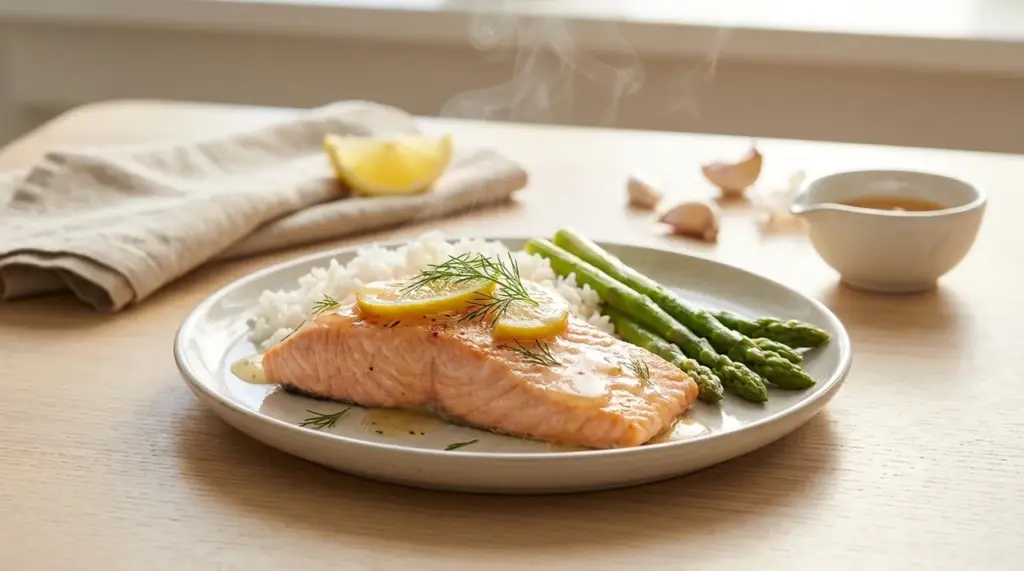
1. Lemon Garlic Salmon

Serves: 2 to 4 | Cook time: 12 to 15 minutes| Calories: About 330 per serving
This is the one I make when I want dinner to stay calm. Lemon, garlic, and olive oil do most of the work, and the salmon stays soft if you pull it out before it turns firm. It tastes bright, cooks quickly, and pairs well with almost anything on the side.
Ingredients:
- 4 salmon fillets
- 2 tablespoons olive oil
- 3 garlic cloves, minced
- 1 tablespoon lemon juice
- 4 lemon slices
- 1 teaspoon salt
- ½ teaspoon black pepper
- 1 tablespoon chopped parsley or dill
How to make it:
- Heat the oven to 400°F and line a baking pan. Pat the salmon dry with a paper towel so the sauce clings better.
- Stir olive oil, garlic, lemon juice, salt, and pepper in a small bowl until fragrant and sharp.
- Spoon the mix over the salmon, covering the top and edges. Add lemon slices on top.
- Bake for 12 to 15 minutes, based on thickness. The center should flake but still look moist.
- Let it rest for 3 minutes, then add herbs and spoon the pan juices over the top.
Pro tip: Pull the salmon out while the center still looks slightly glossy. It keeps cooking after it comes out of the oven.
Best with: Rice, roasted potatoes, asparagus, or cucumber salad.
2. Gochujang Butter Salmon

Serves: 2 to 4 | Cook time: 12 to 14 minutes | Calories: About 380 per serving
Plain salt-and-pepper salmon has its place, but not on a night like this. Butter tones down the gochujang heat, honey keeps the sauce from turning sharp, and once it lands on hot rice, the whole bowl looks like more effort than it actually took.
Ingredients:
- 4 salmon fillets
- 2 tablespoons gochujang
- 2 tablespoons melted butter
- 1 tablespoon soy sauce
- 2 garlic cloves, minced
- 1 teaspoon grated ginger
- 1 tablespoon honey
- 1 teaspoon sesame seeds
- 2 tablespoons sliced green onions
How to make it:
- Heat the oven to 400°F and place the salmon on a lined baking pan. Pat the fish dry so the sauce grips the surface.
- Stir gochujang, melted butter, soy sauce, garlic, ginger, and honey until the sauce looks smooth and deep red.
- Brush most of the sauce over the salmon, saving a spoonful for serving. That saved sauce matters later.
- Bake for 12 to 14 minutes, until the salmon flakes and the top looks shiny.
- Spoon the reserved sauce over the hot salmon, then finish with sesame seeds and green onions.
Pro tip: Keep a little sauce back for serving. It makes the salmon look glossy and keeps the final bite from tasting dry.
Best with: Sticky rice, cucumber, cabbage, or steamed broccoli.
3. Crispy Skin Salmon Bowl

Serves: 2 | Cook time: 10 to 12 minutes | Calories: About 620 per serving
This is the bowl for that moment when takeout starts sounding too tempting. The crisp skin gives you the good part of a restaurant salmon plate — the part everyone side-eyes on your plate wanting a bite — without the reservation or the marked-up cocktail. The only thing to practice is patience because the skin needs time.
Ingredients:
- 2 skin-on salmon fillets
- 1 teaspoon salt
- ½ teaspoon black pepper
- 1 tablespoon oil
- 2 cups cooked rice
- 1 cucumber, sliced
- 1 avocado, sliced
- 2 tablespoons soy ginger sauce
How to make it:
- Pat the salmon skin very dry. This step makes the difference between crisp skin and soft skin.
- Season both sides with salt and pepper, then let the salmon sit while the pan warms.
- Heat oil in a skillet over medium heat. Place salmon skin-side down and press gently for a few seconds.
- Let it cook without moving it until the skin turns crisp. The smell will tempt you to flip it early, but wait.
- Flip and cook the top briefly, then build the bowl with rice, cucumber, avocado, salmon, and soy ginger sauce.
Pro tip: Leave the salmon alone once it hits the pan. The skin releases more cleanly when it has had time to crisp.
Best with: Pickled onions, sesame seeds, chili crisp, or lime.
4. Honey Mustard Salmon

Serves: 2 to 4 | Cook time: 12 to 15 minutes | Calories: About 360 per serving
This is the one I’d put in front of someone who says salmon tastes too strong. Honey softens the fish, mustard keeps the sweetness in check, and lemon pulls everything back into balance. It tastes gentle, but it still has enough flavor to feel like dinner.
Ingredients:
- 4 salmon fillets
- 2 tablespoons of honey
- 1 tablespoon Dijon mustard
- 2 garlic cloves, minced
- 1 tablespoon lemon juice
- 1 tablespoon olive oil
- ¾ teaspoon salt
- ½ teaspoon black pepper
How to make it:
- Heat the oven to 400°F and place the salmon on a lined pan. Pat it dry so the sauce coats the top properly.
- Stir honey, Dijon mustard, garlic, lemon juice, olive oil, salt, and pepper until smooth.
- Spread the sauce over each fillet, making sure the top and edges are covered. The edges need flavor, too.
- Bake for 12 to 15 minutes, until the salmon flakes gently.
- Let it rest for 3 minutes so the sauce settles into the top before serving.
Pro tip: Spread the sauce across the full top. It protects the salmon while it bakes and helps keep it moist.
Best with: Green beans, potatoes, quinoa, or simple salad.
5. Miso Glazed Salmon For Rice Bowls

Serves: 2 to 4 | Cook time: 10 to 13 minutes | Calories: About 350 per serving, without rice
This salmon tastes as if you did more than you actually did. Miso gives the glaze a savory base, honey rounds it out, and ginger keeps the flavor from feeling heavy. I like this one most over rice because the extra glaze has somewhere to go.
Ingredients:
- 4 salmon fillets
- 2 tablespoons white miso
- 1 tablespoon soy sauce
- 1 tablespoon honey
- 1 teaspoon grated ginger
- 1 teaspoon sesame oil
- 1 teaspoon rice vinegar
- 1 teaspoon sesame seeds
How to make it:
- Heat the oven to 400°F and line a baking pan. Pat the salmon dry so the glaze spreads evenly.
- Mix miso, soy sauce, honey, ginger, sesame oil, and rice vinegar in a small bowl.
- Brush the glaze over the salmon, covering the top without piling it too thick.
- Bake for 10 to 13 minutes, checking near the end because honey can darken quickly.
- Sprinkle sesame seeds over the salmon before serving, then let the rice catch any extra glaze.
Pro tip: Watch the glaze near the end. Sweet sauces can brown before the salmon is fully ready.
Best with: Rice, mushrooms, cabbage, or bok choy.
6. Garlic Butter Salmon In Foil

Serves: 2 to 4 | Cook time: 12 to 16 minutes | Calories: About 390 per serving
Some nights the sink already has enough going on without a fresh mess to add to it. Everything here stays sealed inside foil, so the butter, garlic, lemon, and steam stay close to the fish, and clean-up stays boring in the best way. When the packet opens, it smells like dinner took more effort than it did.
Ingredients:
- 4 salmon fillets
- 3 tablespoons butter, softened
- 3 garlic cloves, minced
- 4 lemon slices
- ¾ teaspoon salt
- ½ teaspoon black pepper
- 1 bunch of asparagus or 1 zucchini, sliced
- 1 tablespoon chopped dill
How to make it:
- Heat the oven to 400°F. Lay out foil sheets and place vegetables in the center of each one.
- Set the salmon on top of the vegetables so the buttery juices drip down as it cooks.
- Spread butter over the salmon, then add garlic, lemon slices, salt, and pepper.
- Fold the foil over the fish and seal the edges tightly. A loose packet lets the steam escape.
- Bake for 12 to 16 minutes, until the salmon is tender. Open the packets carefully, then add dill before serving.
Pro tip: Seal the foil tightly. The trapped steam is what keeps this salmon tender.
Best with: Baby potatoes, rice, or a fresh salad.
7. Sheet-Pan Dill Salmon Dinner

Serves: 3 to 4 | Cook time: 25 to 30 minutes | Calories: About 480 per serving
This is the dinner that makes the oven feel useful. The potatoes get a head start, the salmon joins later, and the dill lemon mix makes the whole pan smell clean and warm. It is the kind of meal that looks organized without asking you to juggle three pans, and roasted cauliflower with lemon herb yogurt works the same oven-first logic if you want to switch things up.
Ingredients:
- 4 salmon fillets
- 2 cups baby potatoes, halved
- 2 cups broccoli or asparagus
- 2 tablespoons olive oil
- 2 garlic cloves, minced
- 1 tablespoon chopped dill
- 1 tablespoon lemon juice
- 1 teaspoon salt
- ½ teaspoon black pepper
How to make it:
- Heat the oven to 425°F. Toss potatoes with oil, salt, and pepper.
- Roast the potatoes first until they start to soften and pick up color. This keeps the salmon from overcooking in the oven.
- Add salmon and greens to the pan.
- Mix garlic, dill, lemon juice, and a little oil, then spoon it over the fish.
- Bake until the salmon flakes and the vegetables look tender. Spoon any pan juices back over the fish.
Pro tip: Start the potatoes before the salmon. If everything goes in together, the fish may dry before the potatoes soften.
Best with: Greek yogurt, dill sauce, or lemon butter.
8. Bang Bang Salmon Bowl

Serves: 2 to 3 | Cook time: 8 to 10 minutes | Calories: About 620 per serving
When dinner needs to feel fun fast, this is the bowl I reach for. The sauce is creamy, sweet, and spicy, the cucumber cools it down, and the salmon goes in hot so the sauce clings and turns glossy before it ever meets the rice.
Ingredients:
- 450 g salmon cubes
- 2 tablespoons mayo
- 2 tablespoons sweet chili sauce
- 1 teaspoon sriracha
- ½ teaspoon garlic powder
- 2 cups cooked rice
- 1 cucumber, sliced
- 1 avocado, sliced
How to make it:
- Cut the salmon into even cubes. Season with salt, pepper, and garlic powder so every piece gets flavor.
- Bake or air-fry the salmon until the cubes are just cooked and tender inside.
- While they cook, mix mayo, sweet chili sauce, and sriracha.
- Toss the hot salmon lightly with the sauce. Do not crush the pieces while mixing.
- Spoon rice into bowls, then add cucumber, avocado, and saucy salmon on top.
Pro tip: Keep the salmon pieces close to the same size. That way, they cook evenly and stay soft.
Best with: Green onions, sesame seeds, shredded carrots, or cabbage.
9. Air Fryer Salmon Bites

Serves: 2 to 3 | Cook time: 7 to 9 minutes | Calories: About 340 per serving
These are the salmon bites for the hungry-now kind of evening. They cook quickly, get a little crisp around the edges, and fit into whatever is already waiting. Rice, wraps, greens, leftover noodles, they all work.
Ingredients:
- 450 g salmon cubes
- 1 tablespoon olive oil
- 1 teaspoon garlic powder
- ½ teaspoon paprika
- ¾ teaspoon salt
- ½ teaspoon black pepper
- 1 tablespoon lemon juice
How to make it:
- Cut salmon into bite-sized cubes and pat them dry. Dry cubes season better and brown better.
- Add the cubes to a bowl with olive oil, garlic powder, paprika, salt, and pepper.
- Place the salmon in the air fryer basket with space between pieces.
- Cook for 7 to 9 minutes, until the edges look crisp and the centers stay soft.
- Finish with lemon juice right before serving so the bites taste sharp, not oily.
Pro tip: Do not crowd the basket. Space helps the edges cook evenly rather than steam.
Best with: Rice bowls, wraps, salad, or yogurt sauce.
10. Coconut Curry Salmon

Serves: 3 to 4 | Cook time: 15 to 18 minutes | Calories: About 520 per serving
Slower, saucier nights call for this one. Coconut milk keeps the fish soft, curry paste brings the warmth, and a squeeze of lime at the end keeps the sauce from tasting heavy. The pan smells ready before the table’s even set.
Ingredients:
- 4 salmon fillets
- 1 can of coconut milk
- 2 tablespoons red curry paste
- 2 garlic cloves, minced
- 1 teaspoon grated ginger
- 1 tablespoon lime juice
- 1 tablespoon soy sauce or fish sauce
- 2 cups spinach
How to make it:
- Sear the salmon lightly in a pan, just enough to give it color. It does not need to cook through yet.
- Move the salmon to a plate before it turns firm.
- In the same pan, cook curry paste, garlic, and ginger until fragrant.
- Pour in coconut milk and soy sauce, then let it simmer gently.
- Place the salmon back into the sauce and cook until just tender. Add spinach and lime juice at the end.
Pro tip: Do not boil the sauce hard after the salmon goes in. Gentle heat keeps the fish soft.
Best with: Steamed rice or flatbread.
11. Salmon Tacos With Mango Salsa

Serves: 3 to 4 | Cook time: 12 to 15 minutes | Calories: About 560 per serving
This is how salmon stops feeling like a formal dinner. Mango, lime, avocado, and warm tortillas make it lighter and easier to pass around. The fish should stay in soft flakes, not tiny bits, so each taco still tastes like salmon.
Ingredients:
- 4 salmon fillets
- 8 small tortillas
- 1 mango, diced
- 1 cucumber, diced
- ½ cup corn
- 1 lime
- 2 tablespoons chopped coriander
- 1 teaspoon chili powder
- 1 avocado, sliced
How to make it:
- Season salmon with chili powder, salt, and a squeeze of lime.
- Cook it in the oven or a pan until it flakes.
- Mix mango, cucumber, corn, lime juice, and coriander in a bowl.
- Let the salsa sit for a few minutes so the mango, lime, and herbs settle together.
- Warm the tortillas, then add salmon, mango salsa, and avocado.
Pro tip: Flake the salmon gently instead of mashing it. Bigger pieces make tacos taste better.
Best with: Avocado, yogurt sauce, shredded cabbage, or lime wedges.
12. BBQ Salmon Bowl With Mango

Serves: 3 to 4 | Cook time: 12 to 15 minutes | Calories: About 590 per serving
This bowl gives sweet, smoky, and cool flavors in one bite. BBQ sauce makes the salmon bold, while mango, avocado, and lime keep the bowl from tasting too heavy. It is especially good when you want dinner to feel colorful without adding extra work.
Ingredients:
- 4 salmon fillets
- ¼ cup BBQ sauce
- 2 cups cooked rice
- 1 mango, diced
- 1 avocado, diced
- 1 lime
- 1 cucumber, sliced
- 2 tablespoons green onions
How to make it:
- Heat the oven to 400°F and place the salmon on a lined pan.
- Brush BBQ sauce over the top of each fillet, covering the edges too.
- Bake for 12 to 15 minutes, until the fish flakes and the sauce looks sticky.
- Mix mango, avocado, lime, cucumber, and green onions in a bowl.
- Add rice to bowls, place the salmon on top, then spoon the mango mix over everything.
Pro tip: Brush on a little more BBQ sauce after baking. It keeps the salmon from tasting dry.
Best with: Corn, cabbage, or black beans.
13. Salmon Burgers

Serves: 4 | Cook time: 6 to 10 minutes | Calories: About 430 per serving
This is what leftover salmon wants to become. A quick patty, a soft bun, and crunchy slaw can turn yesterday’s fish into something that feels planned. It saves the salmon from that dry leftover fate nobody gets excited about.
Ingredients:
- 2 cups cooked or canned salmon
- 1 egg
- ½ cup panko
- 1 tablespoon Dijon mustard
- 1 tablespoon lemon juice
- 2 tablespoons green onions
- 4 burger buns
- 1 cup slaw mix
How to make it:
- Add salmon, egg, panko, Dijon mustard, lemon juice, and green onions to a bowl.
- Mix gently until the mixture holds together. Stop before it turns pasty.
- Shape into patties without pressing too hard.
- Cook in a pan for 3 to 5 minutes per side, until both sides turn golden.
- Add each patty to a bun with slaw and your favorite sauce.
Pro tip: Do not pack the patties too tightly. A lighter patty stays softer inside.
Best with: Yogurt sauce, pickles, or potato wedges.
14. Spicy Salmon Burgers With Slaw

Serves: 4 | Cook time: 6 to 10 minutes | Calories: About 470 per serving
A mild salmon patty can feel a little too safe some nights. Red curry paste fixes that fast, brown sugar rounds the edges, and the slaw keeps every bite crunchy instead of soft.
Ingredients:
- 450 g salmon, chopped, or canned salmon
- ½ cup panko
- 1 egg
- 1 tablespoon red curry paste
- 1 teaspoon brown sugar
- 1 tablespoon lime juice
- 1 cup cabbage slaw
- 3 tablespoons mayo
How to make it:
- Mix salmon, panko, egg, curry paste, brown sugar, and lime juice in a bowl.
- The mixture should hold together but still feel soft.
- Shape them into patties and chill them for a few minutes if they feel loose.
- Cook in a pan for 3 to 5 minutes per side, until browned.
- Serve with cabbage slaw and mayo. The crunch matters here.
Pro tip: Chill soft patties before cooking. It helps them hold their shape in the pan.
Best with: Sweet potato fries or cucumber salad.
15. Hot Honey Salmon

Serves: 2 to 4 | Cook time: 12 to 14 minutes | Calories: About 400 per serving
This salmon is sticky, spicy-sweet, and fast enough for a weeknight. Honey glosses over the top, chili flakes bring heat, and lemon keeps the sweetness from taking over. It is the kind of salmon that makes plain broccoli or rice feel less plain.
Ingredients:
- 4 salmon fillets
- 3 tablespoons of honey
- ½ teaspoon chili flakes
- 2 garlic cloves, minced
- 1 teaspoon Dijon mustard
- 1 tablespoon melted butter
- 1 tablespoon lemon juice
- ¾ teaspoon salt
How to make it:
- Heat the oven to 400°F and line a baking pan.
- Pat the salmon dry so the hot honey sauce can sit on top.
- Stir honey, chili flakes, garlic, Dijon mustard, melted butter, lemon juice, and salt.
- Brush the sauce over the salmon, letting it coat the top evenly.
- Bake for 12 to 14 minutes, until the salmon is glossy and tender. Add a little extra hot honey before serving if you want more heat.
Pro tip: If you like real heat, add extra chili flakes right after baking instead of before. They stay sharper and don’t mellow out in the oven.
Best with: Rice, broccoli, roasted carrots, or potatoes.
16. Smoky Ranch Salmon Salad

Serves: 3 to 4 | Cook time: 12 to 15 minutes | Calories: About 510 per serving
This salad actually feels like dinner. Warm salmon, smoky ranch, avocado, corn, and roasted peppers make it filling, while the greens keep it from feeling too rich. It works for the night when you want something lighter but still need a real plate.
Ingredients:
- 4 salmon fillets
- 4 cups romaine or mixed greens
- 1 avocado, sliced
- ½ cup corn
- ½ cup roasted peppers
- 2 tablespoons bacon bits if desired
- ¼ cup ranch dressing
- ½ teaspoon smoked paprika
How to make it:
- Cook the salmon by baking or pan-searing until it flakes.
- Let it cool slightly so it does not wilt the greens.
- Toss greens, avocado, corn, roasted peppers, and bacon bits in a large bowl.
- Stir smoked paprika into ranch dressing until it tastes lightly smoky.
- Place salmon on top of the salad and drizzle with smoky ranch.
Pro tip: Let the salmon cool slightly before placing it on the greens. It keeps the salad crisp.
Best with: Crusty bread or baked potatoes.
17. Lentil Salmon With Herby Sauce

Serves: 2 to 4 | Cook time: 12 to 15 minutes | Calories: About 540 per serving
For the night you want something filling but not heavy, lentils and quinoa do the steady work while the herb sauce keeps the salmon from tasting plain. It has meal-prep energy without feeling like homework, and swapping lentils for black beans vs pinto beans changes the texture without losing that same staying power.
Ingredients:
- 4 salmon fillets
- 1 cup cooked lentils
- 1 cup cooked quinoa
- 1 tablespoon lemon juice
- 2 tablespoons olive oil
- ¼ cup parsley
- 1 garlic clove
- 1 cup green beans
How to make it:
- Bake salmon with olive oil, salt, and pepper until the center flakes.
- While it cooks, warm the lentils and quinoa so the base does not feel flat or cold.
- Mix parsley, garlic, lemon juice, olive oil, salt, and pepper into a quick herb sauce.
- Keep the sauce loose enough to spoon.
- Serve salmon over lentils and quinoa, then add herb sauce right before eating.
Pro tip: Spoon the herb sauce over the salmon right before serving. It keeps the herbs tasting fresh.
Best with: Green beans or cucumber salad.
18. Caramelized Salmon

Serves: 2 to 4 | Cook time: 10 to 14 minutes | Calories: About 370 per serving
Give the pan fifteen minutes and it can still pull off something interesting. Brown sugar and soy sauce caramelize the top, lemon at the end balances it out, and the best version has edges that go a little dark and sticky.
Ingredients:
- 4 salmon fillets
- 1 tablespoon brown sugar
- 1 tablespoon soy sauce
- 2 garlic cloves, minced
- 1 tablespoon olive oil
- ½ teaspoon black pepper
- 1 tablespoon lemon juice
How to make it:
- Stir brown sugar, soy sauce, garlic, olive oil, and black pepper in a bowl.
- Rub the mixture over the salmon, especially across the top where the crust will form.
- Heat a pan over medium heat and carefully place the salmon in.
- Let the surface brown without moving it too much.
- Cook until the outside looks caramelized and the center flakes. Add lemon juice right before serving.
Pro tip: Let the salmon sit untouched for the first two minutes in the pan. Moving it early scrapes off the caramelized crust you’re building.
Best with: Rice, slaw, or roasted vegetables.
19. Basil Sauce Salmon

Serves: 2 to 4 | Cook time: 12 to 15 minutes | Calories: About 390 per serving
A lighter dinner doesn’t have to taste unfinished. The basil sauce goes on after cooking so the herbs stay green and sharp, and a simple tomato salad on the side keeps the whole plate feeling fresh.
Ingredients:
- 4 salmon fillets
- 1 cup basil leaves
- 2 tablespoons olive oil
- 1 garlic clove
- 1 tablespoon lemon juice
- ¾ teaspoon salt
- ½ teaspoon black pepper
- 1 cup tomato salad
How to make it:
- Cook the salmon by baking or pan-searing until it flakes and the center still looks moist.
- Let the salmon rest for a few minutes so it stays soft when served.
- Mix basil, olive oil, garlic, lemon juice, salt, and pepper until you have a spoonable sauce.
- Spoon basil sauce over the salmon right before serving.
- Add tomato salad on the side so the plate feels clean and ready to eat.
Pro tip: Add basil sauce after cooking. Fresh herbs taste better when they are not exposed to direct heat.
Best with: Rice, couscous, or grilled bread.
Best Salmon Cut For Each Recipe
Before you pick a recipe, check the type of salmon first. Some recipes work better with thick fillets, while others need skinless pieces, skin-on fillets, or cooked salmon. This quick table helps you match the right salmon cut with the right recipe, so the texture stays soft, and the cooking method makes sense:
| Best salmon to use | Recipes |
| Medium-thick fillets | Lemon Garlic Salmon, Honey Mustard Salmon, BBQ Salmon Bowl With Mango |
| Thick fillets | Sheet-Pan Dill Salmon Dinner, Coconut Curry Salmon, Hot Honey Salmon, Lentil Salmon With Herby Sauce, Caramelized Salmon |
| Skinless fillets | Miso Glazed Salmon, Garlic Butter Salmon In Foil, Smoky Ranch Salmon Salad, Salmon Tacos With Mango Salsa |
| Skin-on fillets | Crispy Skin Salmon Bowl |
| Skinless salmon cubes | Bang Bang Salmon Bowl, Air Fryer Salmon Bites |
| Fresh or canned salmon | Salmon Burgers, Spicy Salmon Burgers With Slaw |
| Fresh fillets | Basil Sauce Salmon |
| Skinless or skin-on thick fillets | Gochujang Butter Salmon |
Use this table as a starting point, not a strict rule. If you only have frozen salmon, thaw it well and pat it dry before cooking. Wild-caught salmon (sockeye, coho) runs leaner than farmed Atlantic salmon, so it cooks a little faster and dries out a little sooner — check it a minute or two early. Farmed salmon carries more fat marbling, which makes it more forgiving in a hot oven or on the grill.
The Doneness Number Worth Knowing
Baked salmon dries out for a few predictable reasons, and undercooking it is a real one too, so here’s the number that settles both arguments. The FDA and USDA’s food-safety benchmark for cooked salmon is 145°F at the thickest part. That’s the temperature to hit without question if you’re cooking for pregnant guests, young kids, or anyone immunocompromised.
That said, plenty of home cooks and chefs pull salmon a little earlier, around 125–135°F, for a softer, more medium texture — especially with leaner wild-caught fillets, which turn dry and chalky fast if pushed past that point. A quick-read thermometer in the thickest part settles the question faster than pressing the center with a fork ever will, and it’s a five-dollar habit that ends the guessing for good.
What The Cooking Community Is Trying

A trend I’ve noticed popping up in cooking forums lately: salmon wrapped in puff pastry, with the top scored into tiny fish-scale marks. It’s a small detail, but it upgrades a weeknight fish dinner into something that looks like it took real effort.
If you try it, pull the skin off the salmon first — it makes slicing the finished pastry much cleaner. A spoonful of goat cheese, fresh fennel, or sautéed shallots tucked inside adds real depth without much extra work.
This kind of trend shows how salmon ideas often come from simple home-kitchen details: a better filling, a cleaner slice, and one texture trick that makes dinner feel more polished without extra stress.
Keep Leftovers Happy
Cooked salmon can still taste good the next day if you treat it gently — more like an outfit rewear than a rerun. The main mistake is reheating it too fast until it turns firm and dry. I like to add a little moisture and warm it slowly.
- Fridge: Store cooked salmon in a sealed container
- Time: Use within 3 days
- Reheat: Warm on low heat
- Moisture: Add butter, water, broth, or sauce
- Avoid: Do not microwave for too long
- Reuse: Add leftovers to bowls, wraps, pasta, tacos, or salad
Leftover salmon should not feel like punishment. Treat it gently, and it can still taste good tomorrow.
Common Salmon Mistakes To Avoid
Salmon can go from tender to dry quickly. This table helps you catch the common mistakes before they affect the taste or texture.
| Mistake | What Happens | Better Move |
| Overcooking salmon | The center turns dry and firm | Pull it at 125–135°F for medium, or 145°F for the full food-safety margin |
| Not patting it dry | Sauce slips off, and the top turns watery | Dry the salmon before seasoning |
| Using high heat with sweet glazes | Honey or BBQ sauce can burn fast | Cook on steady heat and check near the end |
| Moving skin-on salmon too soon | The skin tears or stays soft | Let it crisp before flipping |
| Adding herbs too early | Herbs lose their fresh taste | Add dill, parsley, or basil after cooking |
| Reheating too fast | Leftovers turn tough | Warm gently with butter, broth, or sauce |
Use these quick fixes while cooking, especially with sweet glazes, skin-on fillets, and leftovers. Small changes can make the salmon softer, cleaner, and easier to serve.
Frequently Asked Questions
Is wild-caught or farmed salmon better for these recipes?
Neither is strictly “better” — they behave differently. Wild-caught salmon (sockeye, coho) is leaner and cooks a little faster, so it’s easier to overshoot into dry territory. Farmed Atlantic salmon carries more fat marbling, which buys you a wider margin of error in a hot oven or on the grill. If you’re newer to cooking salmon, farmed is the more forgiving starting point.
What’s the fastest safe way to thaw salmon if I forgot to plan ahead?
Skip the counter. Seal the salmon in its original packaging or a zip-top bag, submerge it in cold water, and change the water every 30 minutes. A standard fillet is usually ready in under an hour this way, and it thaws far more evenly than a quick microwave defrost.
Why does white stuff ooze out of my salmon while it cooks?
That’s albumin, a natural protein in the fish that coagulates and pushes to the surface under heat. It’s completely harmless to eat. It shows up more with high heat or a longer cook time, so a slightly lower oven temperature and pulling the salmon a touch earlier will usually keep it to a minimum.
Can I marinate salmon overnight?
A short marinade works better. Salmon is delicate, so a strong acidic marinade with lemon or vinegar left on overnight can start to “cook” the surface and change the texture before it ever hits the oven. Thirty minutes to an hour is plenty.
What can I do if salmon tastes too fishy?
Fresh salmon shouldn’t taste strongly fishy to begin with — a sharp smell is often a sign it’s past its prime. If the flavor is just stronger than you’d like, lemon, garlic, herbs, honey mustard, miso, or curry sauces all soften it, and pairing salmon with rice, potatoes, cucumber, or slaw helps too.
Your Salmon Lineup
Salmon doesn’t need to be the same lemon-and-salt dinner every week, and that’s really the whole case for keeping a rotation of salmon recipes on hand instead of one default. Between the cut-by-cut cheat sheet, the real 145°F safety number, the mistakes table, and the FAQs above, you’ve got what you need to stop guessing and start cooking with intention.
My honest advice, organizer to organizer: pick three that fit your usual week, keep them on rotation for a month, then bring in something bolder once gochujang butter stops feeling adventurous.
Baked salmon is only as boring as the same three ingredients on repeat. Tell me in the comments which recipe earned a permanent spot on your menu.