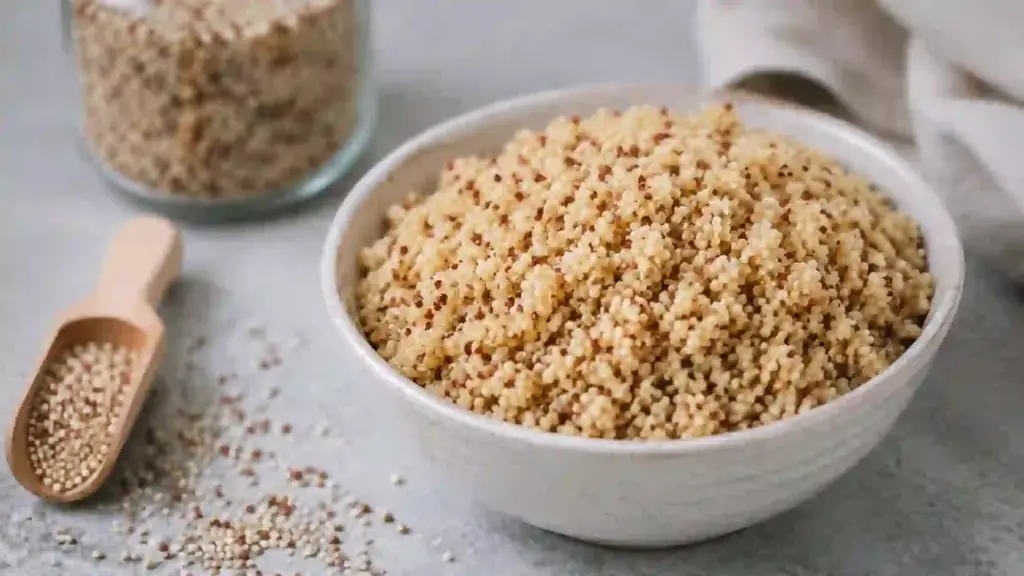

Quinoa packs more nutrition into one bowl than most grains manage. I always tell clients that a single cup of cooked quinoa holds 222 calories, 8.1 grams of protein, and 5.2 grams of fiber, numbers that beat rice by a wide margin.
What sets quinoa apart is its status as a complete protein, since it carries all nine essential amino acids in one small seed.
That trait alone makes it a smart pick for anyone building muscle or simply eating balanced meals. I first added quinoa to my own diet years ago and still rely on it for quick, filling lunches.
Quinoa Macronutrients Explained
A cup of cooked quinoa gives you 8 grams of protein, built from the same complete amino acid profile mentioned above, including a higher lysine content than most grains, which supports muscle repair and tissue growth.
According to USDA FoodData Central nutrient data, this complete protein status is one reason quinoa gets attention from plant-based eaters.
Carbohydrates make up most of the calories in quinoa, with 39 grams per cup, including 5 grams of fiber that slows digestion and helps you stay full longer.
Fat content stays low, at just over 3.5 grams per cup, and includes small amounts of omega-3 and omega-9 fatty acids alongside the mostly unsaturated fat.
Quinoa Nutrition by Serving Size
Quinoa nutrition changes with portion size. Here is how a 100-gram serving, a half cup, and a full cooked cup compare, matched to your calorie and macro goals.
Quinoa Nutrition Per 100 Grams
- Calories: 120
- Protein: 4.4 grams
- Carbs: 21.3 grams
- Fiber: 2.8 grams
- Fat: 1.9 grams
These numbers make quinoa easy to fit into any calorie-controlled meal plan without much math.
Quinoa Nutrition Per Half Cup
- Calories: 111
- Protein: 4 grams
- Carbs: 19.5 grams
- Fiber: 2.5 grams
- Fat: 1.75 grams
Half-cup portions suit meal preppers and anyone tracking smaller, more frequent servings throughout the day.
Quinoa Nutrition Per Cup Cooked
- Calories: 222
- Protein: 8.1 grams
- Carbs: 39 grams
- Fiber: 5.2 grams
- Fat: 3.5 grams
This is the standard side dish serving most recipes and nutrition labels use. Pick the serving size that fits your goals, from a light side dish to a full meal. Quinoa delivers steady protein and fiber at every portion.
Vitamins and Minerals in QuinoaQuinoa nutrition goes beyond protein and fiber. A cooked cup also supplies over half the daily value for manganese, per the NIH Office of Dietary Supplements, along with meaningful amounts of magnesium, phosphorus, folate, and iron. Manganese and magnesium both support bone health and energy production, while folate supports cell growth, which is one reason quinoa often comes up in conversations about balanced diets for pregnant women. Zinc and copper round out the mineral profile, both of which support immune function. |
Health Benefits of Quinoa
Quinoa’s fiber supports gut health by feeding good bacteria and keeping digestion steady, and that same fiber pairs with 8 grams of protein per cup to support fullness after meals, which helps with weight management.
For vegetarians and vegans, quinoa’s complete protein profile makes it easier to meet daily protein needs without meat, eggs, or dairy.
Quinoa also contains flavonoid antioxidants, mainly quercetin and kaempferol, which support the body’s defenses against everyday cell damage and help explain why quinoa is grouped with other antioxidant-rich whole foods.
That same fiber-and-antioxidant combination is linked to healthier cholesterol levels, which matters if heart health is part of your reason for eating more whole grains.
Quinoa is naturally gluten-free, since it comes from a seed rather than a wheat plant.
Note: People with celiac disease should still check labels, because cross-contamination can happen during processing and only certified gluten-free brands remove that risk.
Quinoa vs Rice Nutrition Comparison
Quinoa and rice often replace each other on the dinner plate. Here is how their calories, protein, fiber, and minerals compare side by side, based on one cooked cup of each.
Nutrient | Quinoa | Brown Rice | White Rice |
|---|---|---|---|
Calories | 222 | 216 | 205 |
Protein | 8 g | 5 g | 4.3 g |
Fiber | 5 g | 3.5 g | 0.6 g |
Minerals | High in magnesium, iron, zinc | Moderate manganese and magnesium | Low, mostly enriched iron |
Quinoa wins on protein and fiber, brown rice offers a lower-calorie, mineral-rich middle ground, and white rice works when you want a gentler, low-fiber option.
Is Quinoa Better Than Other Grains
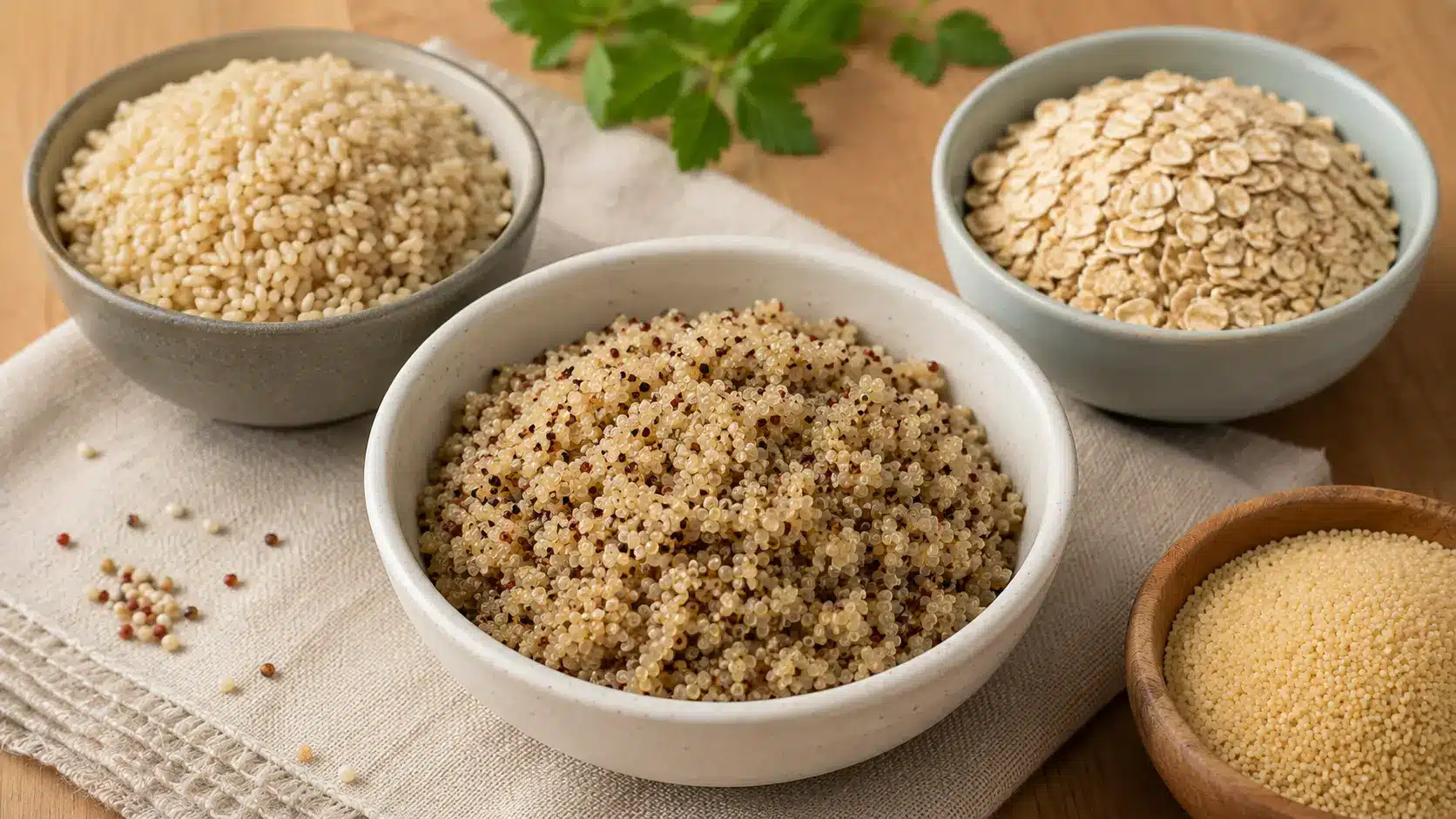
Compared with brown rice, quinoa carries more protein and almost twice the fiber for close to the same calories, though brown rice costs less and works well in everyday meals.
Oats fall short of quinoa on both protein and fiber per cooked cup, though oatmeal’s lower calorie count makes it the lighter breakfast pick.
Couscous doesn’t fare much better, since it comes from wheat and doesn’t offer the complete amino acid profile discussed earlier, while quinoa still carries roughly twice the fiber.
Quinoa also stays naturally gluten-free, unlike couscous and most oat products processed in shared facilities.
Are There Any Downsides to Eating Quinoa
Quinoa offers real nutritional benefits, but a few points are worth knowing before adding large amounts to daily meals, especially if you have a sensitive stomach or mineral concerns.
- Phytates: Quinoa contains phytates, natural compounds that can lower how well the body absorbs iron, zinc, and calcium from meals.
- Oxalates: Healthline notes quinoa contains oxalates, which may further affect mineral absorption in people prone to kidney stones.
- Digestive sensitivity: Some people report bloating or gas from quinoa’s saponin coating, especially when it is not rinsed well.
- Rinsing matters: Rinsing quinoa before cooking removes bitter saponins and lowers the amount of phytates left on the seed.
None of these issues rule quinoa out for most people. Rinsing well, cooking it properly, and eating a varied diet keep these small downsides in check.
How to Add More Quinoa to Your Diet
Working quinoa into daily meals takes little effort once you have a few go-to ideas. The table below breaks down simple ways to fit it into breakfast, lunch, dinner, and beyond.
Meal | Idea |
|---|---|
Breakfast | Warm quinoa bowl with fruit and nuts |
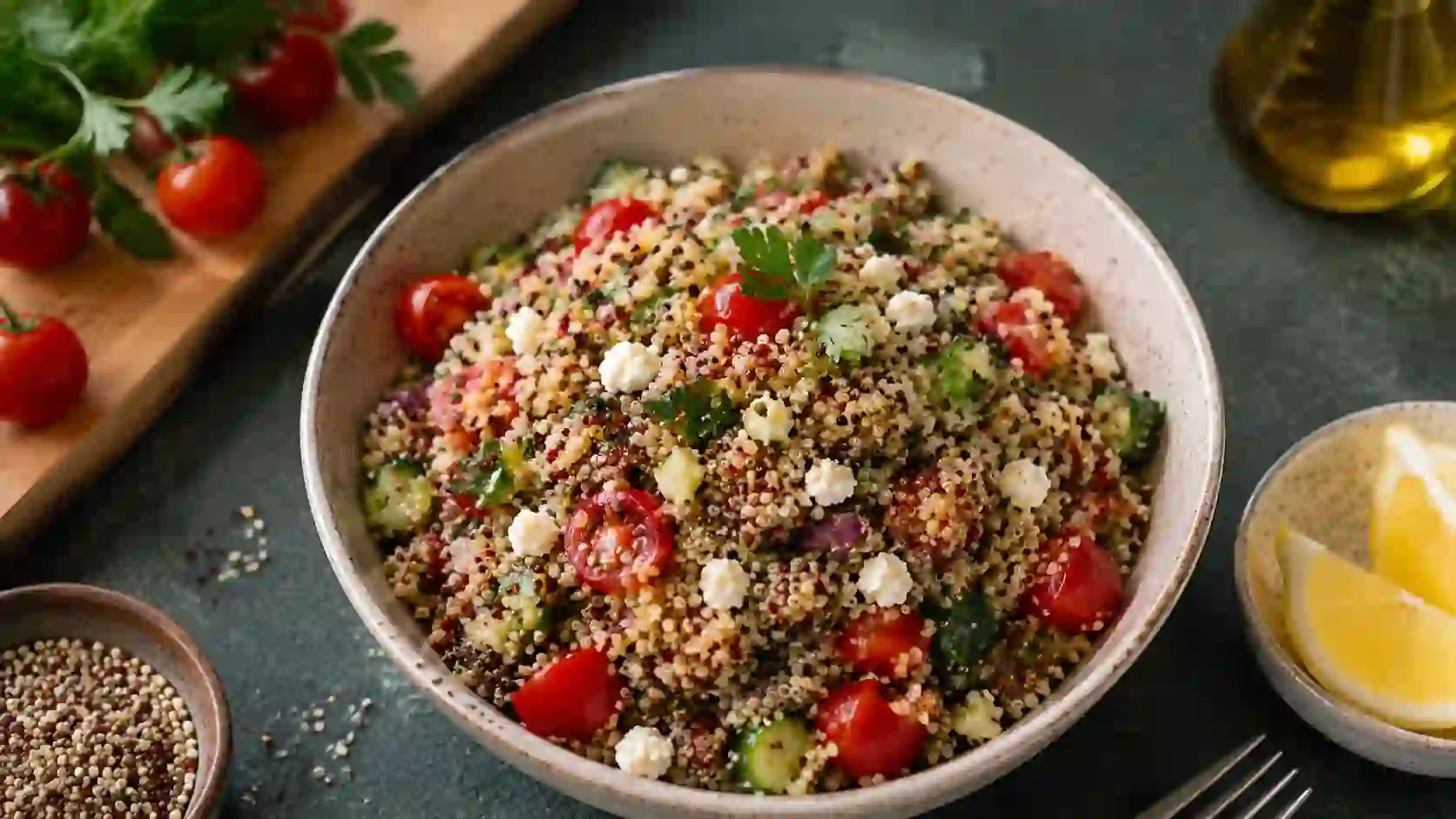
Lunch | Quinoa salad with vegetables and lemon |
Dinner | Quinoa grain bowl with roasted vegetables |
Soup | Stir cooked quinoa into vegetable soup |
Side dish | Swap quinoa in for rice in any recipe |
Rotating quinoa across even two or three of these meals each week adds up to steady protein and fiber without changing your routine much.
For a snack-sized option, try these quinoa stuffed bell pepper cups or a batch of quinoa vegetable patties; both make it easy to work quinoa into a busy week without extra effort.
Final Thoughts
Quinoa nutrition earns its spot as a smart grain choice, not just for its protein and fiber count, but for how well that combination supports steady blood sugar and lasting fullness, the two benefits most people are actually looking for when they switch away from rice.
Its complete protein profile, paired with steady fiber, makes it a solid pick for weight management, muscle support, and daily energy, all while staying naturally gluten-free.
I keep quinoa in regular rotation for lunches and quick dinners because it fits so many meals without much effort.
If your goal is more protein, more fiber, or a change from rice, quinoa nutrition offers a balanced, practical choice for most diets.
Frequently Asked Questions
How Much Quinoa Should You Eat Per Day?
Most adults can enjoy about one cup of cooked quinoa daily, a solid source of fiber and protein that stays within typical whole-grain serving amounts.
Does Quinoa Have a Low Glycemic Index for Blood Sugar Control?
Quinoa has a glycemic index near 53, considered low, so it raises blood sugar slowly and suits people managing diabetes or blood sugar levels.
How Many Cups of Cooked Quinoa Does One Cup of Dry Quinoa Make?
One cup of dry quinoa expands into about three cups once cooked, since the seeds absorb water and triple in size during cooking.
Is Quinoa a Good Source of Vitamins and Minerals?
Yes. A cooked cup covers over half the daily value for manganese and offers solid amounts of magnesium, folate, and iron, making quinoa one of the more nutrient-dense grain options for a normal diet.