
Coffee drinkers often switch to matcha expecting less caffeine. That seems like a safe assumption until you compare the numbers.
The truth is, matcha’s caffeine content depends on far more than the tea itself. A traditional bowl, a café latte, and a concentrated serving can all deliver very different amounts of caffeine.
Knowing what changes those numbers makes it much easier to choose a matcha that matches your caffeine tolerance instead of guessing.
What is Caffeine and How Does It Work?
Caffeine is a natural stimulant found in tea, coffee, cacao, and several other plants people have relied on for centuries.
Once it enters your system, the NIH notes caffeine works mainly by blocking adenosine, a chemical in the brain that builds up and promotes feelings of tiredness, which is why alertness kicks in fairly quickly after a cup.
Research on matcha specifically shows its caffeine content tends to run higher than standard green tea due to the shade-growing process used before harvest.
Someone who drinks caffeine daily may barely notice a serving that would keep a first-timer awake past midnight.
Tolerance builds, sensitivity varies, and body weight plays a role too, so there’s no single “correct” reaction to expect.
A quick note: individual caffeine response is genuinely personal, so treat any numbers here as a starting point rather than a rule.
Does Matcha Have Caffeine?
Yes, matcha has caffeine, and in most cases it has more per serving than a standard steeped green tea.
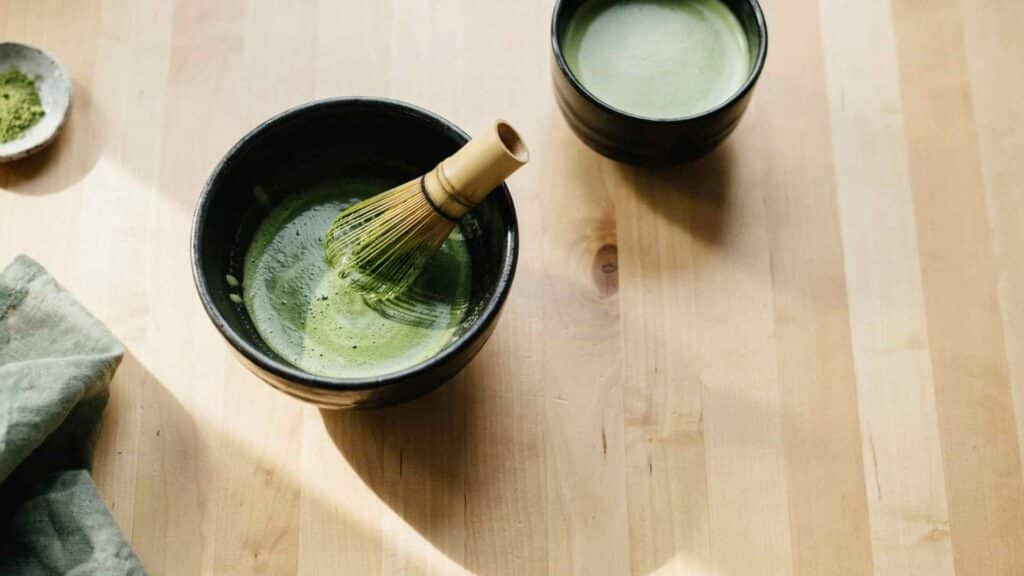
Matcha comes from the same Camellia sinensis plant as other teas, but it’s the shading and grinding process that shapes both its color and its caffeine content, rather than steeping and discarding the leaf like regular green tea.
With matcha, you’re swallowing the whole leaf, not just the water it sat in, so more of the plant’s natural caffeine ends up in your cup.
I’ve found this is the part people get tripped up on: matcha isn’t a gentler alternative to caffeine, just a different delivery method.
How Much Caffeine is in Matcha?
Matcha typically contains 38 to 176 mg of caffeine per serving, or roughly 19 to 44 mg per gram of powder.
That range is wide because so much depends on how the matcha is scooped and mixed, and on the grade of matcha itself, since ceremonial grade tends to carry more caffeine than culinary grade thanks to its younger, more heavily shaded leaves.
| Matcha serving | Approximate caffeine |
|---|---|
| 1 gram matcha powder | 19 to 44 mg |
| Traditional bowl with 1 to 2 grams | 40 to 80 mg |
| Strong matcha latte | 60 to 100+ mg |
More powder in the bowl simply means more caffeine in the cup, since nothing gets filtered out the way it does with steeped tea.
Café versions often land on the higher end of that range too, mainly because baristas tend to use larger scoops than most people would measure at home.
A typical matcha latte uses about 1 to 2 teaspoons of powder, which usually works out to 60 to 100+ mg of caffeine per cup.
If you’re ordering matcha out and want a clearer sense of what you’re getting, it’s worth asking how many grams of powder they use per drink, since that number varies more between cafés than most people expect.
| How Matcha Caffeine Feels Different Matcha pairs caffeine with L-theanine, an amino acid that’s believed to slow how quickly caffeine is absorbed and released into the bloodstream, smoothing out the usual spike. It also promotes calm alpha brain wave activity rather than jittery alertness. That combination is why many drinkers describe matcha’s energy as steadier than coffee |
The smoother feeling doesn’t mean matcha has less caffeine, just that it may hit differently.
Matcha Caffeine vs Green Tea and Coffee
Matcha usually contains more caffeine than regular green tea but less than a standard cup of coffee.
| Drink | Typical serving | Average caffeine |
|---|---|---|
| Matcha | 1 bowl or serving | 40 to 80 mg |
| Green tea | 8 oz cup | 25 to 30 mg |
| Coffee | 8 oz cup | 95 to 120 mg |
Espresso is worth calling out separately from drip coffee. A single 1-ounce shot averages around 60 to 65 mg of caffeine, which puts a strong matcha serving in the same range as a shot of espresso rather than a full cup of brewed coffee.
Black tea lands in the middle too, usually running 45 to 75 mg per 8-ounce cup, just below matcha’s typical range but above standard green tea.
That middle ground can make it a solid pick for anyone who wants a moderate lift without reaching for a stronger coffee drink.
What Factors Affect the Caffeine Amount in Matcha?
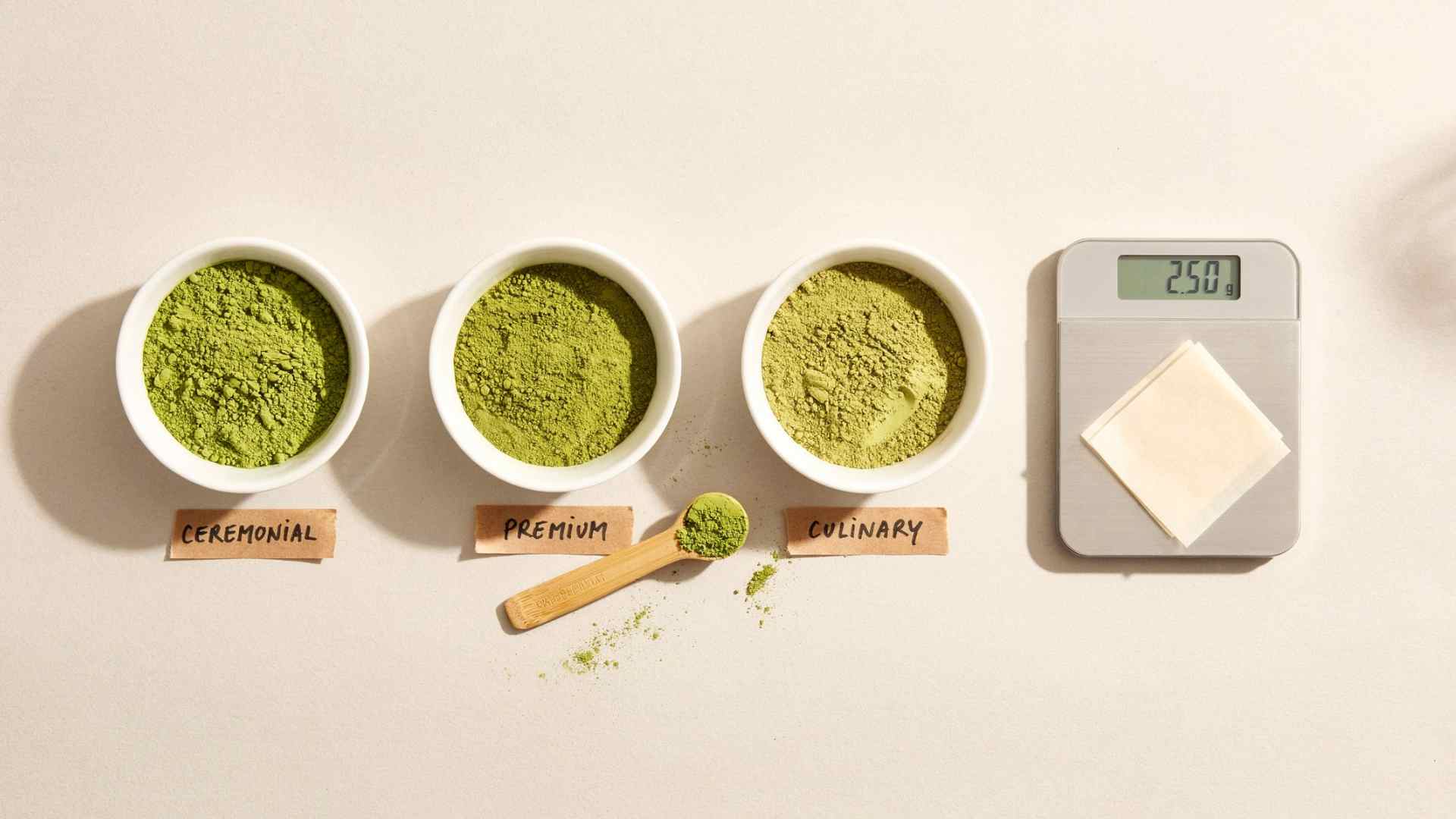
A few small variables stack up here, and together they explain why no two cups of matcha taste or hit quite the same.
- Amount of Matcha Powder Used: More powder in the bowl means more caffeine, plain and simple. Café matcha drinks tend to use larger amounts, which is why a shop-bought matcha latte can feel noticeably stronger.
- Matcha Quality and Growing Conditions: Tea variety, growing environment, and harvest timing all shift caffeine levels slightly. Shade growing, tea variety, and harvest timing can influence caffeine levels, but the final amount depends mostly on how much powder is used.
- Serving Size and Preparation Style: A traditional matcha bowl, a latte, and a concentrated café recipe all use different amounts of powder, so the caffeine each one delivers can look quite different side by side.
Between powder amount, growing conditions, and prep style, three separate factors decide what ends up in your cup.
How to Make Matcha With Different Caffeine Levels
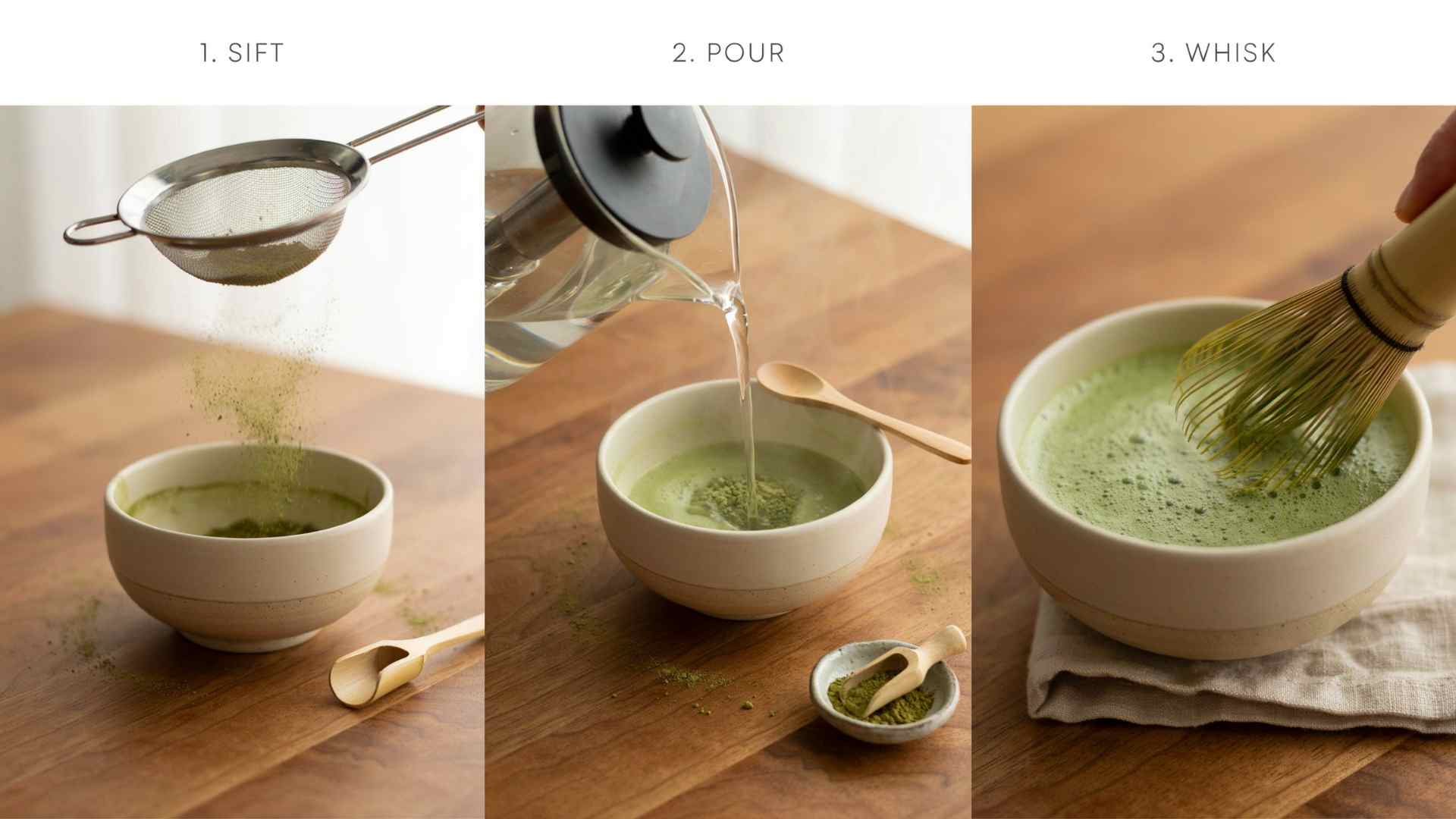
It doesn’t matter if you want a gentler cup or a stronger one; the basic method stays the same; only the amount and ratio change.
1. Simple Regular Matcha
Start by measuring out your matcha powder, adjusting the amount based on how strong you want your cup.
Add warm water, not boiling, since overly hot water can affect the taste. Whisk briskly until the surface turns smooth and slightly foamy.
From there, adjust the strength by adding more powder for a bolder cup or more water for a lighter one.
Anyone who is pregnant or breastfeeding should also keep total intake in mind, since ACOG recommends staying under 200 mg of caffeine a day during pregnancy.
2. Lower Caffeine Matcha
Use a smaller amount of powder, roughly half a teaspoon, and add more water or milk to dilute the mix further.
Choosing a lighter preparation style, like usucha, a thin, standard-strength bowl of matcha, instead of a concentrated one, also helps.
This keeps the caffeine amount closer to the lower end of the typical range without changing the basic whisking process or requiring any special equipment.
If a light bowl still feels too strong, try cutting the powder down further, to a scant quarter teaspoon, and stretching it with extra hot water or milk. That thins out both the flavor and the caffeine without needing to switch to a different drink entirely.
3. Stronger Matcha
Increase the powder amount to closer to a full teaspoon or more, and lean toward concentrated recipes like koicha, a thick, paste-like preparation traditionally made with roughly double the powder of a normal bowl, if you want a bigger energy lift.
Using less water relative to the powder also intensifies both the flavor and the caffeine. Just keep in mind that stronger matcha means a bigger caffeine intake, so adjust based on how your body usually responds.
How Much Caffeine is in Different Types of Matcha Drinks?
Different matcha drinks use different amounts of powder and dilution, which is why the caffeine count can shift so much from one order to the next.
| Matcha Drink | Typical Powder Used | Approximate Caffeine |
|---|---|---|
| Traditional matcha (usucha) | 1 to 2 grams | 40 to 80 mg |
| Iced matcha | 1 to 2 grams | 40 to 80 mg |
| Matcha latte | 1 to 2 teaspoons | 60 to 100+ mg |
| Blended matcha drink | 2 teaspoons or more | 70 to 110+ mg |
| Concentrated matcha (koicha) | 3 to 4 grams | 80 to 150+ mg |
The main driver behind these differences is simply how much powder goes into the cup, not the milk, ice, or sweeteners added afterward.
A blended or concentrated drink uses more matcha per serving, so it naturally lands on the higher end of the range, while a lighter traditional bowl stays closer to the lower end.
Side Effects of Too Much Caffeine From Matcha
Matcha sits in the moderate range for caffeine, but drinking too much of it, like any caffeinated beverage, can still cause unwanted effects.
The FDA notes that 400 mg a day is generally not associated with negative effects for most healthy adults, though individual sensitivity varies.
Your total daily caffeine intake matters more than matcha alone. Coffee, other teas, energy drinks, and even some supplements all add to that same running total.
Common side effects include:
- Trouble sleeping
- Restlessness
- Increased heart rate
- Headaches
- Stomach discomfort
| How Much Matcha is Too Much? Most healthy adults can comfortably drink 3 to 5 cups of matcha a day without crossing the FDA’s 400 mg guideline, though this depends heavily on how strong each serving is prepared. People sensitive to caffeine may need to cap it lower, and anyone already drinking coffee or other caffeinated beverages should factor that total in before adding matcha. Drinking matcha earlier in the day tends to help avoid sleep disruption later on. |
Since tolerance varies so much person to person, paying attention to your own reaction matters more than any chart.
Best Time to Drink Matcha for Energy
Timing plays a bigger role in how matcha feels than most people expect, so a little planning goes a long way.
Morning is the easiest window, since matcha has become a popular alternative to a coffee routine and supports alertness right away without the sharper spike some get from coffee.
Some people also drink it before workouts for the same caffeine boost they’d get from a pre-workout coffee.
The CDC lists avoiding caffeine in the afternoon or evening as one habit that supports better sleep quality overall. Your matcha timing mainly matters because caffeine can stay active for several hours after drinking it.
Low Caffeine Drinks If Matcha Feels Too Strong
If matcha ever feels like too much, these swaps keep the ritual without the buzz.
- Herbal tea: naturally caffeine-free and available in almost any flavor profile
- Rooibos tea: caffeine-free with a naturally sweet, earthy taste close to black tea
- Decaf green tea: keeps the familiar green tea flavor with only trace caffeine
- Fruit-infused water: zero caffeine, good for staying hydrated without any stimulant effect
- Caffeine-free herbal blends: often marketed as “nighttime” or “calm” blends for an evening-safe option
These options work well for anyone who enjoys a warm drink but wants little to no caffeine involved.
Final Thoughts on Matcha Caffeine
The next time someone asks how much caffeine is in matcha, the most accurate answer is, “It depends on what’s in the cup.”
Matcha doesn’t come with a fixed caffeine count, and that’s exactly what makes it easy to underestimate.
A little more powder, a different preparation, or a café-sized serving can change the numbers more than most people realize.
Knowing what influences those differences helps you enjoy matcha for its flavor and energy without second-guessing how much caffeine you’re actually drinking.
Frequently Asked Questions
How Much Caffeine Is in One Teaspoon of Matcha?
1 teaspoon of matcha, roughly 2 grams, typically contains about 40 to 80 mg of caffeine, though this can shift depending on the powder’s quality and grind.
Is Matcha Safe to Drink Every Day?
For most healthy adults, daily matcha is generally fine as long as total caffeine intake stays within recommended limits.
Does Matcha Keep You Awake?
It can, especially if consumed later in the day. Its caffeine content can affect sleep for some people, so morning or early afternoon is usually the safer window.
Is a Matcha Latte Stronger Than a Coffee Latte?
Not usually. A matcha latte typically contains 60 to 100 mg of caffeine, while a coffee latte often contains 120 to 225 mg, depending on the number of espresso shots.
Does Ceremonial Grade Matcha Have More Caffeine Than Culinary Grade?
Yes, ceremonial grade matcha generally contains more caffeine because it is made from younger, shade-grown tea leaves.

One Response