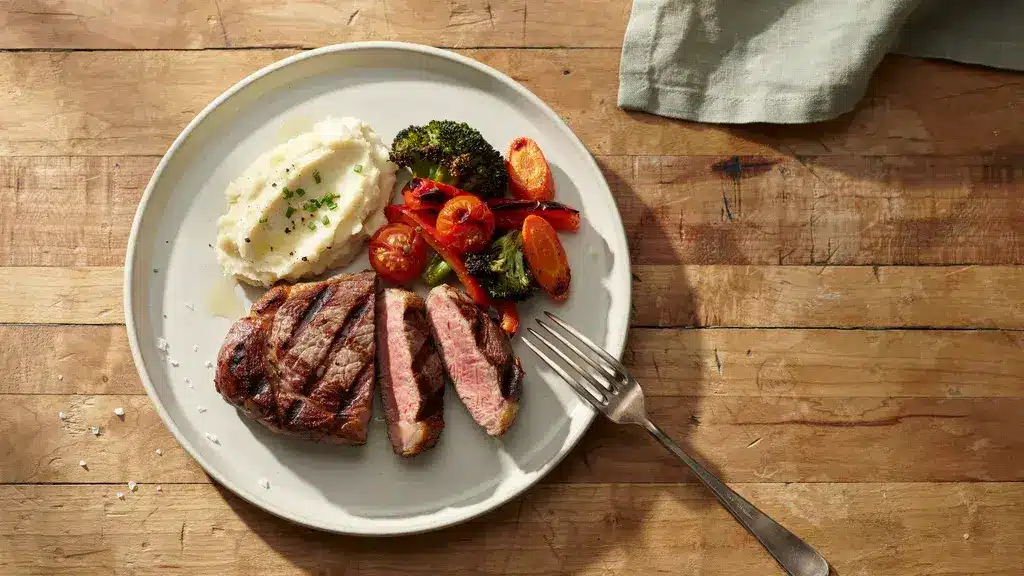

I have ordered enough 8 oz steaks at this point, at restaurants, from butchers, and straight off ranch websites, that I can tell you exactly what you are getting before it hits the table.
It is the portion that shows up on almost every steakhouse menu, and once you know what it actually looks like on a plate, you stop guessing and start ordering with confidence.
Here’s what I have learned so far about the size, the calories, the cuts worth your money, and where I go when I want one shipped to my door or served to me at a table.
What Is an 8 Oz Steak?
An 8 oz steak is half a pound of meat, raw weight, before it ever sees a pan or a grill. I tell people to picture two decks of cards stacked on top of each other.
Or look at your palm and fingers if your hand is average-sized. That’s about the size and shape you’re picturing.
Steakhouses lean on this size as their default for a reason. It’s not skimpy enough to read as an appetizer, and it’s not so big that you’re splitting it with someone.
Check almost any menu, and you’ll see the 8 oz cut listed as the base sirloin or filet, with larger sizes as the upgrade or a healthy go-to option.
At home, this is the size I reach for when I’m cooking for one person with a normal appetite, particularly once you factor in sides. It lands as a full dinner without that overstuffed, “why did I eat all that” feeling afterward.
Quick reference: 8 oz equals 226 grams, raw, before cooking. Expect it to shrink by roughly 25 percent on the heat, landing closer to 6 oz once it’s cooked and rested. So what lands on your plate will look and weigh noticeably less than what went on the grill. |
How Many Calories Are in an 8 Oz Steak
A quick note before the numbers: everything in this section refers to an 8 oz portion as it comes off the heat, cooked and trimmed, not the raw 8 oz cut you’d buy at a butcher counter or order at a steakhouse.
If you’re starting from a raw 8 oz steak, expect the cooked weight to land closer to 6 oz once you account for moisture and fat loss.
Calories swing a lot depending on which cut lands on your plate, and I’ve checked this enough times over the years to know the range isn’t small.
Take a lean sirloin, trimmed of the visible fat, cooked down to 8 oz, and you’re looking at roughly 420 to 500 calories.
Go with a well-marbled ribeye at the same cooked weight, and that number can climb past 600, sometimes closer to 650, all because of the fat woven through the meat itself.
Protein barely moves, no matter what you order. Most lean cuts land between 46 and 58 grams per 8 oz cooked serving, give or take.
Fat is really where things split. A trimmed sirloin might only carry around 8 grams, while a heavily marbled ribeye can blow past 45 grams without much effort.
Carbs, meanwhile, aren’t really part of the conversation. Steak is just meat, so you’re sitting at essentially zero either way.
Cut: 8 oz cooked, visible fat trimmed | Approx. calories | Protein | Fat |
|---|---|---|---|
Top sirloin | 400 | 69 g | 13 g |
Ribeye | 507 | 61 g | 27 g |
Filet mignon | 453 | 69 g | 19 g |
These estimates cover the cooked lean portion only and exclude separable visible fat, added butter, oil, and sauces. They are calculated from rounded three-ounce values; they do not describe an 8 oz raw steak.
Sources: Top sirloin nutrition, ribeye nutrition, and filet mignon nutrition.
Best Types of 8 Oz Steak Cuts
Not every cut behaves the same on the grill, and I have come to pick my cut based on the occasion rather than habit. Here is how I break down the four I reach for most.
Top Sirloin Steak (8 Oz)
My go-to weeknight cut. It is leaner, budget-friendly, and holds up well to a simple sear without needing much fuss.
Ribeye (8 Oz)
The one I order when I want richness. The marbling melts into the meat as it cooks, which is why it costs more and tastes the way it does.
Grass-Fed Strip Steak (8 Oz)
A firmer, beefier bite than a grain-fed strip. I notice a slightly earthier flavor and a bit less fat overall.
Buffalo / Bison Steak (8 Oz)
Leaner than beef with a naturally sweeter taste. I cook it a few minutes less since it dries out faster at high heat.
Things to keep in mind: Bison cooks faster than beef because it carries less internal fat, so pull it off the heat a minute or two earlier than you would a beef steak of the same thickness. |
Where to Order an 8 Oz Steak Online
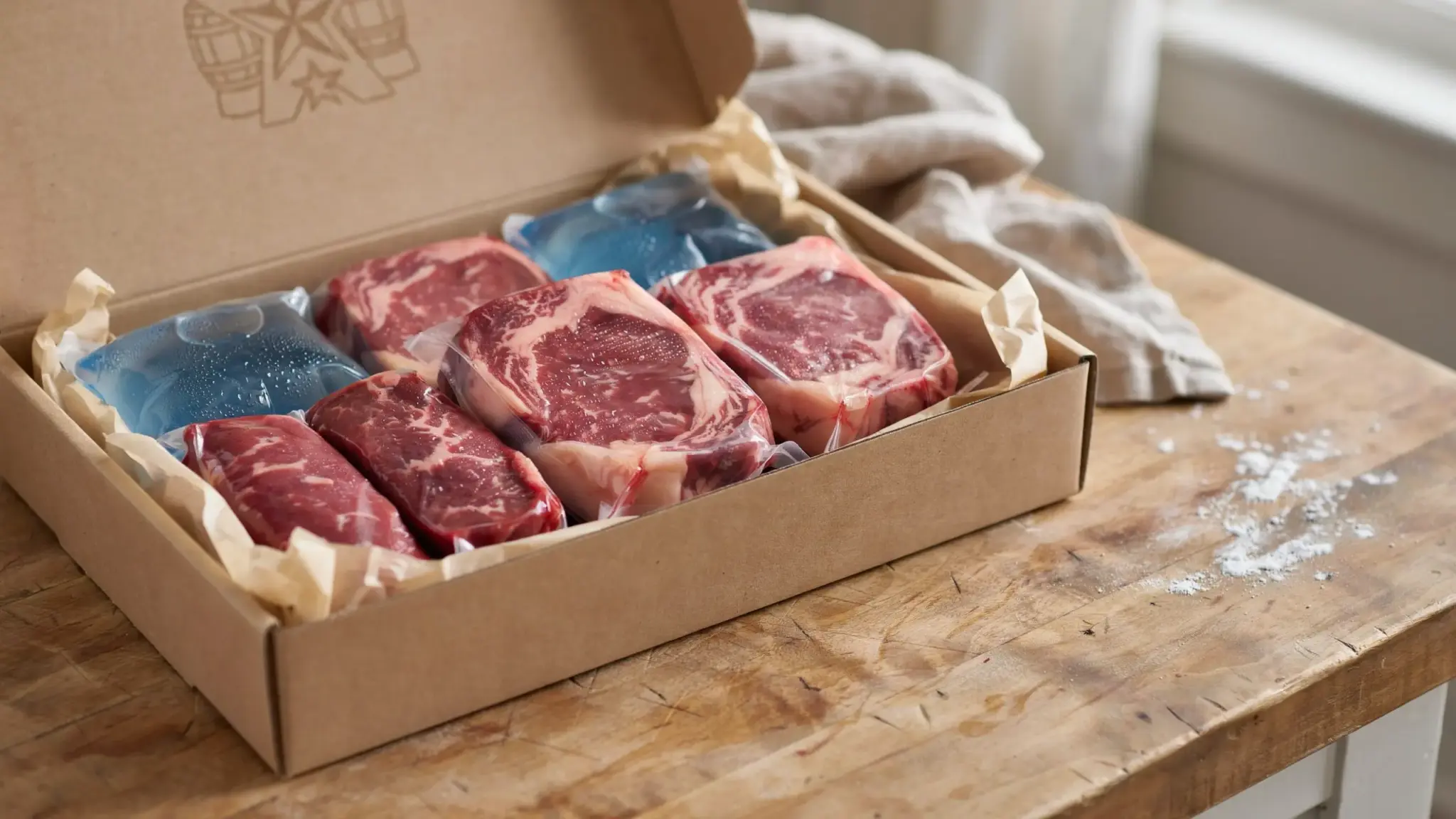
When I want something better than what my regular grocery store carries, I order directly from a ranch or specialty butcher instead. Here’s what you’re actually getting from each one, since pack sizes and pricing vary more than people expect.
D’Artagnan
D’Artagnan sells 8 oz bison ribeye and sirloin steaks online, from bison raised on pasture without antibiotics or hormones.
Their boneless beef ribeye runs roughly $ 45 per smaller pack, with pack sizes and case counts varying by cut.
Steaks ship uncooked and frozen, and fresh items are recommended for use within 3-5 days of receipt.
They also run subscription orders with free shipping on recurring deliveries, plus a discount off regular pricing.
This one suits you if you want to compare bison against beef side by side, or if you’re buying a mixed grilling box rather than a single cut.
Nebraska Bison
Nebraska Bison sells bison filet mignon and NY strip steaks starting around $105 to $125 for a set of four steaks, along with sampler and variety packs that mix filet, ribeye, strip, and sirloin cuts.
Orders ship in insulated coolers with dry ice via FedEx, and free shipping applies above a threshold ranging from roughly $235 to $299, depending on current promotions.
This suits you if you want to sample several bison cuts in a single order before deciding which to reorder in bulk.
Wagyu-style beef specialists
If beef is more your speed and you want something beyond standard grocery-store cuts, several butchers specializing in Wagyu-style marbling offer individually packaged steaks with overnight or 2-day shipping rather than forcing you into a bulk box.
Expect a noticeably higher price per steak than a standard grocery cut, since you’re paying for the marbling and the aging process.
This suits you if you’re buying for a special occasion rather than a weeknight dinner.
A general note on all of these: prices and minimums shift with promotions, so treat the numbers above as a starting range and check the current price at checkout rather than assuming it’s locked in.
How to Cook and Serve an 8 Oz Steak
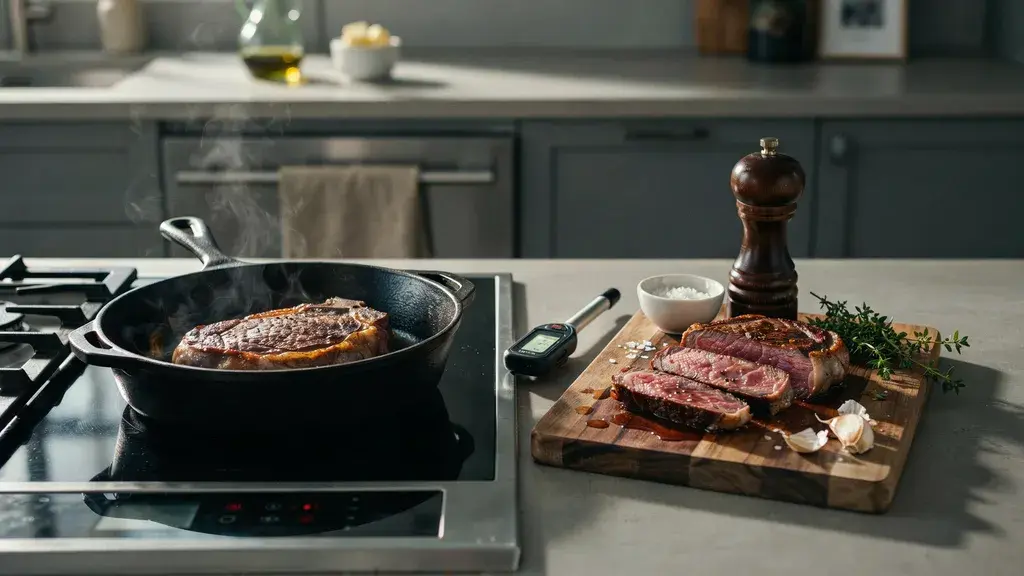
For an 8 oz steak, about an inch thick, I sear it 2 to 3 minutes per side over high heat, then let it rest for 5 minutes before I even think about cutting into it. That resting step matters way more than most people give it credit for.
Cut into a steak straight off the heat, and you’ll watch most of the juice run out onto the board instead of staying where it belongs, inside the meat.
Internal temperature is the only way to judge doneness without guesswork.
I pull mine at 130°F for medium-rare, since it’ll keep climbing another 5 degrees or so while it rests.
After that, it doesn’t need much. Salt, pepper, and a pat of butter melted over the top. That’s the whole finish, and honestly, it’s all an 8-oz steak is asking for.
If you like your steak cooked differently, here is the internal temperature I pull mine at for each level of doneness:
Doneness | Pull Temperature | Final Temp After Resting |
|---|---|---|
Rare | 115°F to 120°F | ~125°F |
Medium-Rare | 125°F to 130°F | ~135°F |
Medium | 135°F to 140°F | ~145°F |
Medium-Well | 145°F to 150°F | ~155°F |
Well-Done | 155°F and up | ~160°F+ |
Worth noting: USDA guidance recommends cooking whole cuts of beef to an internal temperature of 145°F before removing the steak from heat, followed by a 3-minute rest before cutting or serving. Rare and medium-rare fall below that guidance, so pulling the steak earlier than 145°F is a personal choice worth knowing about rather than a strict rule.
A simple finish of salt, pepper, and a pat of butter melted over the top is really all an 8-oz steak needs.
Restaurant Chains That Sell an 8 Oz Steak
When I do not feel like cooking, I look for steakhouses that list an 8-oz option as their base size rather than only offering 12- or 16-oz portions.
Chain steakhouses tend to be the most consistent for this, since an 8-oz sirloin is often their smallest listed cut and priced accordingly.
Applebee’s, for one, lists an 8 oz. Top Sirloin is right on their menu, lightly seasoned and grilled to order, so it is an easy one to check for near you.
Texas Roadhouse is another one worth checking. Their hand-cut Sirloin comes in multiple sizes, including an 8 oz portion, and it’s worth asking your local location whether an early-dine or weekday discount applies, since these vary by location and change over time.
Independent steakhouses in most cities also tend to offer a smaller filet or Sirloin around this weight for guests who want a lighter dinner.
I always ask my server how the kitchen cooks their 8 oz cuts, since a smaller steak can go from medium to well done faster than a thicker one.
A good server will know the difference and adjust the cook time without you having to explain it twice.
Tip: Ask if the 8 oz option comes trimmed or untrimmed. Untrimmed Sirloin at this weight can carry noticeably more fat than a trimmed version, which changes both the calorie count and the texture. |
Conclusion
An 8 oz steak has become my easy number to plan around, for a solo dinner at home or a menu pick that will not leave me stuffed.
Once you know the calorie range, the cuts worth paying more for, and where to actually buy a good one, ordering or cooking this size stops feeling like a guessing game.
I keep coming back to it because it strikes the right balance between a satisfying meal and a portion I do not regret the next morning, and that is really all I am looking for on a Tuesday night.
Frequently Asked Questions
Is An 8 Oz Steak A Big Portion?
It is considered a standard single serving, larger than a light meal but smaller than a splurge cut.
Does Bison Taste Different From Beef Steak?
Yes, bison has a slightly sweeter, earthier flavor and a leaner texture than most beef cuts.
Can You Freeze An 8 Oz Steak Safely?
Yes, wrap it tightly, and it holds well in the freezer for up to six months without quality loss.