
Gold jewelry can feel tricky when one small chain looks too plain, and one extra ring suddenly feels like too much. That is why knowing how to wear gold jewelry starts with balance, not rules.
You can begin with the outfit, then choose pieces that match the neckline, color, and fabric, and suit the plan for the day. I find that one clear piece often does more than a full stack, especially when clothes already have detail.
Still, gold can look relaxed, polished, or dressy with a few smart choices. The right earrings, chain, rings, or bracelet can change the whole mood without making the look feel busy. Once the basics are clear, styling gold becomes much easier.
Gold Jewelry Looks Better When Every Piece Has a Purpose
Gold jewelry should not feel like an extra piece added at the end. It should help the outfit look more complete, even when the clothes are simple. The easiest way to do that is to give every piece a clear purpose.
Earrings can frame the face, a necklace can fill an open neckline, rings can add detail to the hands, and bracelets can finish bare wrists. I like starting here because it keeps the choice simple.
You are not trying to wear every piece of gold at once. You are choosing the one that best suits the outfit. A plain shirt may need hoops or a chain, while a printed dress may only need studs.
Once each piece has a reason, gold jewelry feels cleaner, lighter, and easier to wear in daily life without making the look feel crowded.
Understanding Gold Tones and Types Before You Style
Knowing your gold is the real starting point. Yellow gold feels warm and classic. White gold leans cool and modern. Rose gold sits somewhere romantic in between. Each tone behaves differently against skin and clothing, so identifying which resonates with your personal aesthetic saves a lot of trial and error.
The same logic applies to clothes. Once you settle on the wardrobe style you gravitate toward, matching a gold tone to it gets a lot easier.
| Gold Tone | Feel | Best For |
|---|---|---|
| Yellow Gold | Warm and traditional | Everyday wear, classic outfits, and most skin tones |
| White Gold | Cool and sleek | Silver-toned outfits, clean looks, and cooler color palettes |
| Rose Gold | Soft and romantic | Warm undertones, blush shades, beige, and soft neutral outfits |
Thekarat also matters. 14K gold is strong enough for daily wear and is usually practical for rings, bracelets, and other pieces worn often. 18K gold has a richer color because it contains more pure gold, but it can feel softer and needs a little more care.
Once you understand the gold tone and karat, styling becomes easier. You can match pieces with more purpose and avoid choices that feel random or too heavy.
Style Gold Jewelry So the Look Feels Balanced

After choosing the outfit, focus on balance. Gold jewelry looks better when tone, size, layering, and comfort work together without feeling heavy.
- Choose the Right Gold Tone and Finish: Pick a gold tone and finish that suits the outfit. Yellow gold feels warm, white gold feels cool, and rose gold feels soft. Shiny pieces look sharper, while matte or brushed pieces feel calmer.
- Choose One Main Focus Area: Let one area lead, such as earrings, necklaces, wrists, or rings. If earrings are bold, keep the neck simple. If chains stand out, choose smaller earrings.
- Match Jewelry Size to the Outfit and Day: Small pieces suit prints, workwear, busy days, and daily outfits. Medium hoops or chains work with plain tops. Larger pieces fit simple clothing and slower plans better.
- Layer and Stack With Space: Use two or three necklaces in different lengths. Mix one pendant with plain chains. For rings, bracelets, and earrings, leave enough space so the styling feels neat.
- Mix Metals and Pick Pieces With Purpose: Gold and silver can work together when the mix looks planned. Keep gold as the main metal, repeat silver in small places, and choose each piece based on what the outfit needs.
- Know When to Skip or Simplify: Skip the necklace with high necks, detailed collars, heavy embroidery, or statement earrings. Move the focus to earrings, rings, or bracelets instead.
- Keep Comfort First: Jewelry should not pull, pinch, tangle, or get in the way. If a piece feels uncomfortable, save it for another day. Comfortable jewelry always looks more natural.
A balanced look in gold jewelry does not need many pieces. It needs the right pieces in the right places, with enough space for the outfit to breathe.
How to Wear Gold Jewelry So It Matches the Outfit
Gold jewelry works best when it fits the outfit’s mood, fabric, neckline, and setting. These outfit-based ideas make daily styling easier and more practical.
1. Casual Outfits

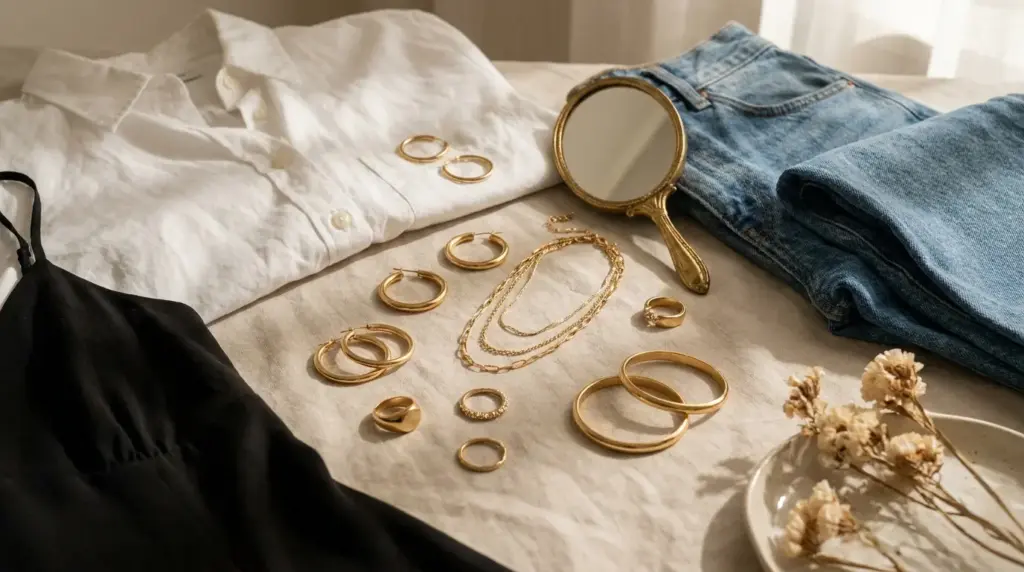
Casual outfits look best when gold jewelry feels easy, not overdone. Pair a white tee and straight jeans with small hoops, a fine chain, and one slim ring.
For linen shirts, wear a small pendant under the open collar. For cotton sundresses, add a light bracelet only if the outfit feels relaxed. The same rule applies across most everyday top styles, since the neckline usually decides how much gold the outfit can carry.
- Best pick: Small hoops or huggies.
- Style move: Keep one gold piece near the face, like hoops or a short chain, so simple clothes look finished without feeling too planned or dressy.
2. Jeans, Trousers, and Everyday Basics

Everyday basics need gold pieces that add shape without making the outfit feel too styled. Straight jeans look clean with hoops and a short chain.
Wide-leg trousers work well with studs, a watch, and one ring. If the outfit is all black, place one stronger gold piece near the face. This keeps the basic pieces looking intentional yet relaxed enough.
- Best pick: Medium hoops with denim.
- Style move: Use a watch or bracelet to finish tucked-in tops, especially with trousers, jeans, or belts where the wrist area is easy to notice.
3. Plain Outfits

Wearing plain clothes gives gold jewelry more room to shine, so one stronger piece can carry the look. A white button-down can handle a thicker chain or larger hoops.
A black tank or crew-neck tee works well with a cuff or signet ring. Keep the rest simple, so the main piece stays clear. This makes the outfit feel styled without adding too many details.
- Best pick: Chunky chain or cuff.
- Style move: Let one gold piece do most of the work, then keep the other pieces smaller so the outfit still feels clean and balanced.
4. Dresses and One-Piece Outfits

Dresses are easy to style because the outfit is already set. A plain midi dress can take hoops, a pendant, and stacked rings. A printed wrap dress looks cleaner with smaller earrings or one fine bracelet.
A deep neckline works well with a pendant that follows the shape. This keeps the dress in focus, while the jewelry complements the shape and color.
- Best pick: Pendant necklace for open necklines.
- Style move: Match jewelry size to the dress detail, not just the event, so a simple dress can carry stronger pieces while a printed dress stays lighter.
5. Hair Up or Hair Down

Hair can change which gold pieces people notice first. A bun, ponytail, or claw clip makes earrings more visible, so hoops, drops, or studs can lead.
Loose waves may hide small earrings, so a necklace, ring, or bracelet can work harder. If your ear piercing placement already draws attention, tied-back hair is when it shows the most.
Volume near the face needs earrings with a clear shape. This helps each piece show clearly instead of getting lost behind hair, curls, or volume.
- Best pick: Hoops for tied-back hair.
- Style move: Let hair placement guide the jewelry, because visible ears can carry earrings while loose hair may need a necklace or bracelet instead.
6. Work Outfits

Work outfits need gold jewelry that feels neat, quiet, and comfortable throughout the day. Studs, small hoops, a short chain, and one slim bracelet work well with blazers, button-downs, trousers, and sheath dresses. The same restraint applies when you are dressing jeans for the office, since jewelry has to hold up through a full day at a desk.
If the collar is open, add a pendant. If the neckline is high, choose earrings. The goal is jewelry that looks put together and never interrupts real tasks during busy workdays.
- Best pick: Studs and slim chains.
- Style move: Avoid pieces that make noise while typing, catch on sleeves, or feel heavy during long meetings, since comfort matters as much as polish.
7. Party and Evening Outfits

Party looks can carry stronger gold pieces, but one main detail still works best. A black cocktail dress looks sharp with bold hoops, a cuff, or a statement ring.
Satin tops and slip dresses need smoother pieces. If the outfit has sequins or beading, let earrings lead. This keeps the shine focused instead of spreading attention across every area of the outfit at once.
- Best pick: Bold hoops or cuff.
- Style move: Skip the necklace when earrings already stand out, especially with shiny fabric, beading, or a neckline that already has enough detail.
8. Dinner, Brunch, and Date Looks

Plans like dinner, brunch, or a date call for gold jewelry that feels relaxed yet thoughtful. Try medium hoops with a knit top, a pendant with a shirt dress, or stacked rings with a simple blouse.
Keep one piece slightly stronger so the outfit feels clear. The look should feel warm and easy, not like full event dressing for a simple plan out.
- Best pick: Medium hoops or pendant.
- Style move: Choose pieces that look good while sitting at a table, since earrings, rings, and necklaces are usually the most visible during meals.
9. Layered Winter Outfits

Winter outfits can hide fine jewelry, so choose pieces that sit where they can be seen. Long chains work over turtlenecks, while hoops show well beside coats and scarves.
A watch or cuff can peek out under sweater sleeves. Tiny bracelets may disappear under thick cuffs. This keeps gold visible even when coats, scarves, and sweaters cover most of the outfit in cold weather.
- Best pick: Long chain over knits.
- Style move: Choose visible pieces before adding more layers, because tiny chains or bracelets can get lost under coats, thick sweaters, and scarves.
10. Different Outfit Colors

Gold stands out clearly on black, white, cream, brown, camel, green, red, and navy. Thin pieces feel soft in light neutrals, while heavier earrings or cuffs pair well with black outfits.
The same thinking carries over when you are building a neutral color palette, since gold reads warmer against some shades than others.
If the outfit uses a bright color, keep gold simple and close to the face. This keeps the gold jewelry supportive rather than making the whole outfit feel loud or overly contrasty at once.
- Best pick: Yellow gold with warm neutrals.
- Style move: Let bold clothing keep the attention, then use one simple gold piece near the face to tie the outfit together without adding too much shine.
11. Prints, Patterns, and Textured Fabrics

Prints and textured fabrics already add movement, so gold jewelry should feel calm. Small hoops, studs, or a narrow bracelet usually work better than heavy layers.
Ribbed knits, tweed jackets, crochet tops, and pleated skirts pair well with smooth gold pieces that do not fight the texture. This keeps texture looking rich without making the top half feel crowded near the neckline or face at once.
- Best pick: Smooth studs or hoops.
- Style move: Save heavy chains for plain fabrics, and use smoother gold pieces with textured clothes so the outfit does not feel too busy.
12. Holiday and Formal Outfits

Holiday parties, weddings, galas, and formal dinners often allow richer gold pieces. A velvet dress can handle drop earrings. A satin gown may need one bracelet and a ring.
If the neckline has lace, beading, or strong detail, choose earrings before adding a necklace, the same principle that makes the strongest red carpet looks feel deliberate instead of overdone.
This makes formal gold look careful, not random, especially in photos where earrings and necklaces show more clearly under bright lighting.
- Best pick: Drop earrings or bracelet.
- Style move: Match jewelry strength to fabric and neckline, so velvet, satin, lace, and beaded outfits feel dressed up without looking overloaded.
Gold jewelry becomes easier to style when each outfit gets the right amount of detail. Start with one clear piece, then add only what the look still needs.
The Art of Layering Gold Necklaces Without It Looking Messy
Layering gold necklaces looks best when each chain has its own space and purpose. If the lengths sit too close together, the whole look can feel tangled rather than polished.
The easiest way to fix that is to build the layers step by step, starting with the shortest chain first. Once the base feels right, the next layers can add shape, detail, and movement without crowding the neckline.
Follow the Length Rule:
| Layer | Suggested Length | Best Style | Best Neckline |
|---|---|---|---|
| First | 14 to 16 inches | Choker or collar chain | Scoop neck, strapless, or open collar |
| Second | 18 inches | Pendant chain | V-neck, button-down, or simple round neck |
| Third | 20 to 24 inches | Longer statement chain | Turtleneck, deep neck, or plain top |
Tips for Cleaner Layers:
- Start with two chains: It is easier to control the spacing before adding a third necklace.
- Use different chain weights: Pair one fine chain with one slightly thicker chain so the layers do not blend together.
- Keep pendants apart: Place pendants at different heights so they do not sit on top of each other.
- Avoid bulky clasps in front: Turn the clasps back into place before leaving so the layers look neat.
- Check movement: Walk, sit, and turn once in the mirror to see if the chains twist too quickly.
Start with two necklaces if layering feels new. Add a third only when the lengths, neckline, and outfit still feel clean. The goal is a neat layered look, not a stack that needs fixing all day.
Can You Mix Gold Jewelry With Diamonds, Pearls, and Other Metals?
Yes, gold jewelry can be mixed with diamonds, pearls, gemstones, silver, white gold, or platinum when the pairing feels balanced. The easiest way is to let gold stay as the main tone, then use the other material as a soft detail.
A gold chain with a diamond pendant, gold hoops with pearl drops, or a gold ring stacked beside a white gold band can look clean when the shapes feel related. Keep one thing consistent, such as size, finish, or style. If the outfit is simple, the mix can be stronger.
If the clothes already have shine, print, or heavy detail, keep the jewelry lighter. The goal is not to match every piece perfectly. It is to make gold, stones, and other metals feel connected.
Common Mistakes to Avoid When Wearing Gold Jewelry
Some gold jewelry mistakes are less about styling rules and more about the small details people miss. These points help the final look feel cleaner and more practical.
| Mistake | Why It Can Look Off | What to Do Instead |
|---|---|---|
| Forgetting bag, belt, and shoe hardware | Gold jewelry can clash when the outfit has strong silver, black, or mixed hardware throughout. | Let one hardware tone lead, then keep the rest quiet. |
| Wearing jewelry that clashes with glasses | Large earrings or high-shine pieces can crowd the face when paired with bold frames or sunglasses. | Choose slimmer earrings or move the focus to rings or bracelets. |
| Ignoring sleeve length | Bracelets can disappear under long sleeves or bunch awkwardly under fitted cuffs. | Wear rings with long sleeves and save bracelets for open or shorter sleeves. |
| Choosing pieces that twist easily | Loose pendants, spinning rings, or turning hoops can make the look feel untidy. | Check movement before leaving and pick pieces that stay in place. |
| Wearing damaged or loose pieces | Weak clasps, loose stones, or bent hoops can make even good jewelry look careless. | Fix small damage before styling the piece again. |
| Pairing very shiny jewelry with flash-heavy events | High-shine pieces can reflect too much in photos, especially at night events. | Use one shiny piece and keep the rest smoother or smaller. |
| Forgetting the outfit’s final layer | A jacket, cardigan, or coat can hide or crush jewelry that looked good before layering. | Add outerwear last, then adjust earrings, chains, and bracelets. |
A good gold jewelry look usually needs small edits, not more pieces. Once these mistakes are avoided, the final step is knowing how to care for the pieces you wear most.
Gold Jewelry Care Tips So It Always Looks Its Best
Gold jewelry looks better when the surface stays clean, smooth, and secure. A few care habits can protect daily pieces without making storage or cleaning complicated.
- Clean gently at home: Use warm water, mild dish soap, and a soft toothbrush to clean links, settings, and corners. Dry fully with a lint-free cloth.
- Use a polishing cloth: A soft jewelry cloth can bring back shine. Use light pressure, especially on plated, hollow, or detailed pieces.
- Store pieces by type: Keep chains clasped or hanging, rings in slots, and bracelets separate to prevent knots, dents, and scratches.
- Check clasps and settings: Look for loose clasps, jump rings, prongs, or stones before wearing, so small issues do not turn into repairs.
- Keep pieces fully dry: Dry jewelry before storage, especially after cleaning or humid days, so moisture does not settle in small gaps.
- Schedule deeper cleaning when needed: Daily-wear pieces may need professional cleaning, especially rings and chains with small spaces that collect buildup.
Good care keeps gold ready to wear, not hidden away for repairs. Once pieces are cleaned, stored, and checked often, styling feels easier every day too.
Frequently Asked Questions
How do I choose gold jewelry for my face shape?
Round faces often suit longer earrings or slim drops because they add length. Oval faces can wear most styles easily. Square faces look softer with hoops or curved pieces. Heart-shaped faces often suit earrings that add width near the jawline.
Is it better to buy gold jewelry as a set?
A full set can work for formal outfits, but separate pieces are usually easier for daily styling. Choose pieces that share one detail, such as tone, shape, or finish. That gives more outfit options without making everything look too matched.
What gold jewelry is best for travel?
Choose lightweight pieces that work with several outfits, such as small hoops, one pendant, a bracelet, and two rings. Avoid packing sentimental or very expensive pieces unless needed. Use a small travel case with separate sections to prevent tangling.
Can gold jewelry work with sporty outfits?
Yes, but keep it simple and secure. Small huggies, tiny studs, a slim chain, or one ring can suit sporty clothes. Avoid loose bracelets or long necklaces because they can catch on fabric, bags, or active movement during the day.
Should gold jewelry match nail color?
It does not need to match exactly, but it should feel connected. Nude, red, white, brown, black, and soft pink nails usually pair well with gold. Bright nail colors work better when the jewelry stays simple and clean.
How can costume gold jewelry look more expensive?
Choose pieces with a clean finish, solid weight, and simple shapes. Avoid overly yellow tones, peeling edges, or noisy parts. Wearing one strong costume piece at a time often looks better than stacking many lower-quality pieces together.
What gold jewelry makes a good gift?
Simple pieces are safest for gifting, such as small hoops, a fine bracelet, a pendant, or a classic ring. Avoid very bold designs unless the person already wears them. Check metal preference, size, and lifestyle before buying.
Final Thoughts
Gold jewelry feels easiest when it works with the outfit, not against it. I like starting with one clear piece, then adding only what the neckline, color, and setting can handle.
You can keep casual looks light with hoops and fine chains, make work outfits cleaner with small pieces, and save stronger earrings or cuffs for dressier plans.
Layering also gets simpler when you give each chain space and choose comfort over clutter. These small choices matter because they help your jewelry feel useful every day, not saved for rare moments.
Once you understand how to wear gold jewelry, try one outfit formula and share your favorite styling idea in the comments.