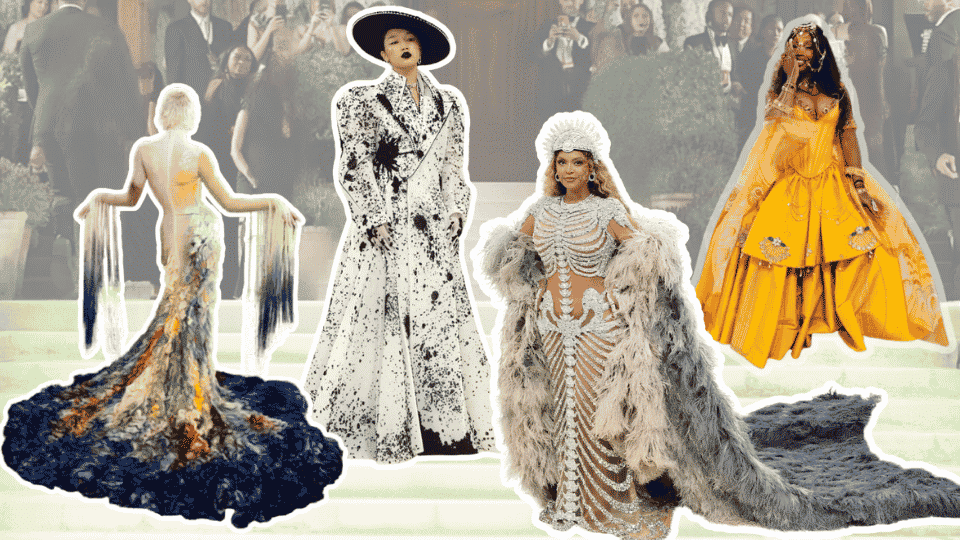
Fashion’s biggest night returned with something different in its bones. The Met Gala 2026 best-dressed list wasn’t just about who looked spectacular; it was about who did their homework.
This year’s “Fashion Is Art” theme separated the carpet’s thinkers from its decorators, the researchers from the red-carpet regulars.
From Rihanna closing the night in 1,380 hours of Maison Margiela craftsmanship to Hunter Schafer stepping out of a Klimt painting that hangs inside the very building she was entering, the standout Met Gala 2026 outfits told stories.
Some looked extraordinary. Some looked intelligent. A few managed both. And a handful missed the brief entirely.
Why the Met Gala 2026 Felt Different This Year
The 2026 Met Gala emphasized craftsmanship and artistic interpretation over spectacle, with the theme “Costume Art” and dress code “Fashion Is Art” encouraging celebrities to go beyond traditional glamour into more conceptual styles.
Instead of just dramatic silhouettes, many attendees emphasized construction, texture, and art references from painting, sculpture, and archival couture.
I have seen how, year after year, iconic looks at the Methave astonished all. And this year, sculpted corsetry, painterly fabrics, metallic finishes, and gallery-inspired styles were prominent. The strongest looks achieved a perfect balance, artistic yet graceful, theatrical without losing grace.
This shift gave this year’s carpet a clearer sense of purpose compared to recent Met Galas, where spectacle often overshadowed fashion.
The Met Gala 2026 Best Dressed List
A list of all the looks that owned the carpet, through spectacle, silhouette, and sheer force of presence.
1. Rihanna, Maison Margiela Artisanal

Over 115,000 crystal beads and antique jewels went into a bodice that took 1,380 hours to complete. Above it, a ribbony gold shawl swept to the floor, cocooning the silhouette in gilded bronze.
The effect was operatic without performing for attention, which is precisely what separates Rihanna from everyone else attempting drama on this carpet.
- A silhouette drawn from medieval Flemish architecture, structural depth, not just volume
- Crystal embroidery that shifted tone under every camera angle
- A golden shroud that moved like drapery but held its form like sculpture
2. Beyoncé, Olivier Rousteing

A custom skeleton gown with diamonds outlining the body beneath, finished with a cream and dusty blue feathered train and a diamond crown. After a ten-year hiatus, this is exactly the return statement the carpet needed, theatrical without being gratuitous, and unmistakably hers.
- A skeleton silhouette that referenced the body as both canvas and subject
- The feathered train adding sweep and grandeur without overwhelming the gown
- A diamond crown that felt earned, not costumed
3. Sabrina Carpenter, Dior

A film-strip inspired slinky Dior gown with rhinestone studs on each individual strip, nodding to Audrey Hepburn’s 1954 film Sabrina. The concept is clever, the execution is sleek, and the self-referential wit lands without feeling smug. One of the more quietly brilliant dressing decisions of the night.
- Film-strip construction that made the reference wearable, not costume-y
- Rhinestone detailing that photographs like a moving reel under lights
- Restraint in silhouette that lets the concept carry the look
4. Janelle Monáe, Christian Siriano

The gown was built from live moss, succulents, moving butterflies, dragonflies, black crystals, a motherboard, and hundreds of electrical wires, nature-consuming technology, or the other way around. No one commits to a concept quite like Monáe, and this was her most ambitious carpet moment yet.
- Moving mechanical elements that made the look literally alive on camera
- A nature-versus-machine concept executed with genuine fashion craft, not gimmick
- Sculptural silhouette that held its shape despite the construction complexity
5. Nicole Kidman, Chanel

A deep red sequinned Chanel gown by Matthieu Blazy with feather detailing, co-chair dressing done with authority. Kidman didn’t overshadow the night; she anchored it. Polished, precise, and exactly as theatrical as the occasion demanded.
- Deep red sequins that photographed dramatically against the carpet
- Feathered detailing adds movement without competing with the gown
- Co-chair restraint that still reads as a genuine fashion intention
6. Emma Chamberlain, Mugler

A hand-painted Mugler gown that Chamberlain described as having a watercolor quality with a “creepy, ominous undertone”, her own taste in art, rendered wearable.
The personal investment showed. This wasn’t a celebrity wearing a designer’s vision; it was a genuine creative collaboration.
- Hand-painting that made the gown one-of-one in the most literal sense
- A creeping, moody quality that photographed differently from every angle
- Styling that lets the painterly surface dominate without interruption
7. Anok Yai, Balenciaga

A Balenciaga gown built on the 1949 coquillet technique by Cristobal himself, with sculpted hair and golden tears on her face, the look treated the body as the canvas and the model as the muse simultaneously. Few people understand their own presence on a carpet the way Yai does.
- An archival construction technique that gave the silhouette a genuine fashion history
- Golden tears as an accessory, a styling detail that elevated the entire concept
- A camera presence that made the look feel like portraiture rather than fashion
8. Colman Domingo, Valentino

A richly coloured, patterned custom Valentino with sharp tailoring and a strong palette that felt bold without excess.
Domingo consistently delivers the best menswear on this carpet, and this was his strongest entry yet, proof that restraint and confidence are not opposites.
- Color and pattern work together rather than competing
- Tailoring sharp enough to read as couture from every angle
- An ease of wear that made something technically complex look effortless
9. Naomi Osaka, Robert Wun

A white sculptural Robert Wun dress with exaggerated shoulders and red feathers, with two-toned red gloves, then, mid-carpet, Osaka opened the dress to reveal a sleek red beaded gown beneath, embellished with the human anatomy. The reveal alone made it the most theatrical single moment of the night.
- A dual-look concept with a mid-carpet reveal that stopped the room
- The anatomy-embellished inner gown references the exhibition directly
- Red feathers and gloves provided drama before the reveal even landed
10. Lisa, Robert Wun

Lisa in Robert Wun brought architectural precision to the carpet, a structural gown that balanced drama with discipline in the way only true couture construction can. The silhouette commanded space without demanding it.
- Sculptural construction that reads as wearable art, not fashion costume
- A silhouette with genuine couture weight and presence
- Restraint in styling that kept the craftsmanship front and center
11. Kylie Jenner, Schiaparelli

A beaded champagne gown hanging at the waist over a nude corset that mapped the body, faux nipples, belly button, curves, with bleached eyebrows completing the look. Provocative by design, but the execution had genuine Schiaparelli DNA in it. Surrealism is the house’s language; Jenner spoke it fluently.
- A surrealist body-illusion concept rooted in the house’s own history
- Craftsmanship in the nude corset that made the provocation feel considered
- Bleached brows are the one styling choice that is fully committed to the concept
12. Blake Lively, Archival Atelier Versace

A pastel-hued archival Atelier Versace gown with a sweeping train, worn hours after settling her high-profile lawsuit, made the entrance itself a statement as much as the dress. The look was graceful, composed, and deliberately old-world glamorous.
- Archival Versace with enough heritage weight to need no explanation
- A pastel palette that photographed with unusual softness against the carpet’s theatrics
- The timing of the entrance gave the look a context that no other gown had that night
13. Bad Bunny, Custom Zara

A custom Zara tuxedo with prosthetics, grey hair, and a cane, dressing as an elderly version of himself, aging “53 years” in one look. The concept referenced the exhibition’s “Aging Body” category directly, and the makeup work was genuinely extraordinary. Fashion as performance art, executed without a single wink.
- A prosthetic transformation that is committed completely, no half-measures
- A direct, intelligent reference to the exhibition’s own curatorial framework
- The humour landed because the execution was entirely sincere
Who Understood the Theme Best?
Beyond spectacle, these were the looks that treated “Fashion Is Art” as a brief worth researching, not just a trend to wear.
14. Hunter Schafer, Prada

The look was drawn directly from Klimt’s 1912 portrait, Mäda Primavesi, an empire-waist gown with rosettes under the bust, holes and tears revealing blue floral silk chiffon beneath, and a long train that draped the steps.
The painting hangs in the Met’s permanent collection. Schafer wasn’t referencing a famous image; she was referencing something literally inside the building she was entering.
| Element | The Painting | The Dress |
|---|---|---|
| Reference | Mäda Primavesi, Klimt, 1912 | Custom Prada |
| Silhouette | White empire-waist with ruffles | Floor-length empire gown with train |
| Detail | Floral dress by couturier Emilie Flöge | Rose appliqués, floral silk lining |
| Concept | A child in her finest dress | Primavesi grew up, or the dress found in an attic, was restored |
15. Gracie Abrams, Chanel

The Chanel gown was inspired by Klimt’s Portrait of Adele Bloch-Bauer I, it hit the Fashion Is Art theme with clarity and beauty in equal measure.
Two Klimt interpretations in one night, entirely different in execution, Schafer deconstructed, Abrams wore hers as pure luminous homage.
| Element | The Painting | The Look |
|---|---|---|
| Reference | Portrait of Adele Bloch-Bauer I, Klimt, 1907 | Custom Chanel by Matthieu Blazy |
| Palette | Gold, black, ornamental geometric detail | Gold-toned gown with decorative surface |
| Mood | Gilded, Viennese Secession grandeur | Luminous, refined, quietly maximalist |
| Concept | Subject absorbed into the painting’s surface | Wearer as an extension of the canvas |
16. Charli XCX, Saint Laurent

A strapless, semi-sheer black gown with a glass Iris flower snaking up the ruched bodice, inspired by Saint Laurent’s 1988 couture show, paying homage to Van Gogh’s Irises. Charli could have relied on spectacle. She chose a scholarship instead, and it paid off entirely.
| Element | The Painting | The Look |
|---|---|---|
| Reference | Irises, Vincent van Gogh, 1889 | Custom Saint Laurent by Anthony Vaccarello |
| Bridge | Saint Laurent’s Spring/Summer 1988 couture show, which paid direct homage to Van Gogh’s floral works | Gown built on that archival collection, not the painting directly |
| Detail | Violet-blue irises rendered in oil, dense and painterly | A glass Iris flower snaking up the ruched bodice |
| Silhouette | Irises crowding the canvas edge to edge | Spare black strapless gown, one flower, maximum space |
| Concept | Van Gogh’s botanical obsession as emotional expression | Fashion as a three-generation conversation, painter to designer to wearer |
17. Amy Sherald, Thom Browne

The most conceptually daring look of the entire night. Sherald wore a Thom Browne look recreating the outfit worn by the sitter in her own 2014 painting Miss Everything (Unsuppressed Deliverance), embodying a person she painted rather than wearing herself, collapsing the distance between artist, subject, and image. No one else made a move this structurally interesting.
| Element | The Painting | The Look |
|---|---|---|
| Reference | Miss Everything (Unsuppressed Deliverance), Amy Sherald, 2014 | Custom Thom Browne |
| Subject | A young Black woman, Crystal, photographed by Sherald herself | Sherald wearing the sitter’s exact outfit from her own canvas |
| Craft | Oil on canvas, grayed skin tones, deliberate stillness | Thom Browne’s signature tailoring recreates the sitter’s garments |
| Concept | Artist looking at the subject | Artist becoming subject, the gaze turned inward |
18. Madonna, Saint Laurent

The Saint Laurent look channeled Leonora Carrington’s surrealist painting The Temptation of St. Anthony, Fragment II, Madonna arrived with seven ladies-in-waiting to complete the composition.
The reference wasn’t incidental. Madonna’s 1994 music video for “Bedtime Story” drew from another Carrington work; this was a reunion, not a discovery. The surrealist commitment was total.
| Element | The Painting | The Look |
|---|---|---|
| Reference | The Temptation of St. Anthony, Fragment II, Carrington | Custom Saint Laurent |
| Composition | Dreamlike figures in a fantastical scene | Madonna + seven ladies-in-waiting |
| Mood | Mystical, surrealist, feminine rebellion | Theatrical, draped, darkly ceremonial |
| Depth | — | A decades-long personal connection to Carrington’s work |
19. Rachel Zegler, Prabal Gurung

A Prabal Gurung ensemble referencing Paul Delaroche’s 1833 painting The Execution of Lady Jane Grey, complete with a sheer blindfold.
The painting depicts a young queen in her final moments, white-gowned, blindfolded, kneeling. Zegler didn’t just reference it; she performed it. The blindfold wasn’t an accessory. It was the entire argument.
| Element | The Painting | The Look |
|---|---|---|
| Reference | The Execution of Lady Jane Grey, Delaroche, 1833 | Prabal Gurung |
| Silhouette | White gown, young figure | White structured gown |
| Key detail | Blindfolded, kneeling | Sheer blindfold worn mid-carpet |
| Concept | Tragedy rendered in couture stillness | Historical narrative as lived fashion moment |
20. Hailey Bieber, Saint Laurent

The sculpted gold bodice referenced Saint Laurent’s 1969 couture show featuring Claude Lalanne’s sculpted bodywork, while the blue drew from Majorelle blue, the pigment developed for Jacques Majorelle’s Marrakech villa, later adopted by Yves Saint Laurent himself. Most people read it as a pretty blue dress. It was a house history lesson folded into a single silhouette.
| Element | The Reference | The Look |
|---|---|---|
| Artwork | YSL × Claude Lalanne, 1969 couture | Custom Saint Laurent by Vaccarello |
| Bodice | Sculpted gold breastplate from the original show | Gold-breasted corset, architecturally structured |
| Colour | Majorelle blue, from the artist’s Marrakech villa | Klein blue chiffon throughout |
| Concept | The house references its own art history | A look that rewards research without requiring it |
21. Kendall Jenner, Zac Posen for Gap

The gown was constructed from a reworked white T-shirt base, layered with chiffon, jersey, and organza, evoking the sculpture’s sense of motion and wind-swept drama, a direct reference to the Winged Victory of Samothrace, the headless Greek goddess Nike whose marble drapery looks perpetually caught mid-flight.
Jenner’s gown referenced the goddess Nike with a softness that Kylie’s structured Schiaparelli didn’t attempt. Two sisters, two sculptures, entirely different readings.
| Element | The Sculpture | The Dress |
|---|---|---|
| Reference | Winged Victory of Samothrace, c. 200–190 BC | Zac Posen for GapStudio |
| Fabric | Carved marble with wind-swept drapery | Chiffon, jersey, organza in layered motion |
| Silhouette | Headless, forward-leaning, robes in flight | Fluid, corseted, movement-driven |
| Concept | Victory as a physical, bodily force | Classical storytelling through modern construction |
22. Heidi Klum, Mike Marino

The look referenced veiled marble sculptures, specifically Giuseppe Sanmartino’s Veiled Christ and Raffaele Monti’s Veiled Virgin, transforming the marble illusion of stone through fabric into a full-length, draped fashion statement.
The technical challenge of these sculptures is simulating the translucency of fabric in solid stone. Klum inverted it, simulating solid stone in actual fabric. The concept works precisely because it runs the reference backward.
| Element | The Sculpture | The Look |
|---|---|---|
| Reference | The Veiled Virgin, Monti / Veiled Christ, Sanmartino | Custom Mike Marino |
| Challenge | Marble that reads as transparent fabric | Fabric engineered to read as carved stone |
| Concept | Stone imitating cloth | Cloth imitating stone, the reference in reverse |
| Execution | Head-to-toe draping with no break in illusion | Full-length, uninterrupted veiled silhouette |
23. Venus Williams, Custom Swarovski

Her Swarovski crystal mesh gown was directly inspired by Robert Pruitt’s Venus Williams, Double Portrait, commissioned by the National Portrait Gallery in 2022. Every other art reference on this carpet pointed outward, to a painting, a sculptor, a movement.
Williams pointed at herself. She didn’t reference art. She wore art made about her. The circularity of that was the most quietly radical move of the entire night.
| Element | The Artwork | The Look |
|---|---|---|
| Reference | Venus Williams, Double Portrait, Robert Pruitt, 2022 | Custom Swarovski crystal mesh gown |
| Subject | Williams is depicted in the National Portrait Gallery | Williams is wearing her own portrait |
| Material | Oil on canvas | Swarovski crystal mesh throughout |
| Concept | Artist looking at the subject | Subject wearing the artist’s gaze |
24. Lena Dunham, Valentino

The Valentino dress took bold inspiration from Artemisia Gentileschi’s Judith Beheading Holofernes, transforming the painting’s blood spray into a vibrant red gown.
Gentileschi painted that image as an act of defiance, a woman depicted mid-violence, not mid-suffering. Dunham, wearing it as a feathered red gown on the Met carpet, carries that same energy. The violence is the beauty. That’s the point.
| Element | The Painting | The Look |
|---|---|---|
| Reference | Judith Slaying Holofernes, Gentileschi, c. 1620 | Valentino feathered red gown |
| Colour | Deep red, blood, power, fury | Red sequins and feathers head to toe |
| Mood | Brutal, unapologetic, female rage as subject | Theatrical, saturated, deliberately confrontational |
| Concept | Violence rendered as high art | High art rendered as wearable defiance |
25. Kim Kardashian, Custom Allen Jones

The centerpiece was a tangerine fiberglass breastplate repurposed from an original late-1960s cast created by British artist Allen Jones himself, not commissioned new, but sourced from the actual archive.
She paired it with a custom leather skirt featuring Jones’s hand-painted brushstrokes. Most Met Gala art references point at an artwork. Kardashian wore an actual piece of one.
| Element | The Artwork | The Look |
|---|---|---|
| Reference | Allen Jones fiberglass bodywork, late 1960s | Original archival Jones cast + Whitaker Malem skirt |
| Material | Fiberglass sculpture | Fiberglass breastplate, finished in an auto body shop |
| Paint | Jones’s Pop Art body imagery | Hand-painted sunset-orange brushstrokes by Jones himself |
| Concept | Body as Pop Art object | Wearing the actual object, not a reference to it |
26. Nichapat Suphap, Robert Wun

Suphap worked with Hong Kong couturier Robert Wun on an all-black floor-length gown, then collaborated with American kinetic artist Casey Curran to add a series of sculptural moving hands as the finishing element, a direct reference to Michelangelo’s Creation of Adam, where two hands reach toward each other across the divine gap.
The hands moved. The reference was live. Few people caught it. Fewer still could have executed it.
| Element | The Artwork | The Look |
|---|---|---|
| Reference | Creation of Adam, Michelangelo, Sistine Chapel, c. 1512 | Robert Wun + Casey Curran kinetic hands |
| Key detail | Two outstretched hands bridging creation | Sculptural moving hands on the gown |
| Material | Fresco on plaster | Kinetic sculpture on black couture |
| Concept | The moment of divine touch | Fashion as the body reaching toward art |
27. Audrey Nuna, Robert Wun

The Robert Wun look directly referenced Jackson Pollock, action painting translated into wearable form, the drips and splatter of Pollock’s canvases rendered as embellishment on the body.
Where most Pollock references become costume-y, this one held its discipline. The paint felt like intention, not decoration.
| Element | The Artwork | The Look |
|---|---|---|
| Reference | Jackson Pollock’s action paintings, 1947–1950 | Robert Wun |
| Technique | Drip and splatter on a horizontal canvas | Paint-splattered construction on a structured gown |
| Mood | Controlled chaos, physicality as process | Embellishment as artistic gesture |
| Concept | The artist’s body in the work | The wearer’s body as the canvas |
28. Isha Ambani, Gaurav Gupta

The Gaurav Gupta look paid homage to Raja Ravi Varma, drawing from Padmini the Lotus Lady, with hand-painted motifs and intricate embroidery throughout, and her now-viral mango-shaped purse offered a secondary nod to Varma’s Woman Holding a Fruit.
Two references in one look, both from the same painter, both coherent with each other. This is what genuine art scholarship in fashion dressing looks like, not a single borrowed image, but a sustained conversation with an artist’s body of work.
| Element | The Artwork | The Look |
|---|---|---|
| Primary reference | Padmini the Lotus Lady, Raja Ravi Varma | Custom Gaurav Gupta couture |
| Secondary reference | Woman Holding a Fruit, Raja Ravi Varma | Mango-shaped purse, hand-crafted in metal |
| Craft | Oil painting is rooted in the Indian classical tradition | Hand-painted motifs, metal embroidery by artists Subodh and Sourabh Gupta |
| Concept | Indian art history worn as lived identity, not borrowed aesthetic |
29. Karan Johar, Manish Malhotra

His Met Gala debut in a Manish Malhotra creation drawn from Raja Ravi Varma’s Indian classical paintings, combining vintage zardozi, three-dimensional embroidery, and hand-painted gold work in a dramatic cape.
Where Isha Ambani brought Varma’s Padmini to life through couture silhouette, Johar brought him through craft itself, every stitch a reference to the Indian artisan tradition that Varma’s paintings also celebrated. Same painter, entirely different reading.
| Element | The Artwork | The Look |
|---|---|---|
| Reference | Raja Ravi Varma’s Indian classical paintings | Manish Malhotra couture cape |
| Technique | Oil on canvas, Indian classical figurative tradition | Vintage zardozi, 3D embroidery, hand-painted gold work |
| Distinction from #26 | Ambani referenced Varma’s subjects | Johar referenced Varma’s world, the craft, the artisans, the tradition |
| Concept | “I didn’t want to arrive here trying to explain India” | India’s artisan legacy worn without a footnote |
The Most Underrated Looks of the Night
Spectacle travels. Craft doesn’t always. These were the looks that rewarded attention rather than demanding it.
30. Paloma Elsesser, Francesco Risso

The dress was made up of a constellation of garments dating from the 1920s through the 1940s, sourced across continents. Not constructed new, assembled from history.
The look understood the theme at a material level: fashion as accumulated time, not as a single designed object. On a carpet full of custom couture commissions, Elsesser wore something genuinely irreplaceable.
- Decades of garment history are literally sewn into a single silhouette
- A concept that engaged with the exhibition’s body-as-archive idea more directly than most
- Almost entirely ignored in the night’s coverage, which tells you exactly what this section exists for
31. SZA, Bode

A custom Bode look crafted exclusively from eBay-sourced vintage fabrics, tapestries, curtains, and beaded appliqués.
On a night of million-dollar couture commissions and designer archives, SZA and Bode built something entirely from secondhand material, and it held the room. The provenance was the point. Discarded fabric repurposed into a Met Gala moment is its own kind of fashion argument.
- Vintage fabrics sourced from eBay, the most democratic material origin story on the entire carpet
- Bode’s signature patchwork approach transformed into a genuine red carpet presence
- A sustainability and craft statement that arrived without announcing itself as either
32. Julianne Moore, Bottega Veneta

A silk crepe Bottega Veneta dress with a silk organza stole, worn with the ease of someone who has nothing to prove and knows exactly what she’s doing.
No concept. No reference. No statement. Just impeccable fabric, impeccable fit, and a woman who understands that sometimes the most confident thing you can wear is something quietly perfect.
- Bottega Veneta silk crepe with an organza stole, construction doing all the work
- Styling so restrained it reads as authority, not absence of effort
- The kind of look that gets skipped in roundups and remembered for years
33. Carey Mulligan, Custom Prada

Custom Prada with Tiffany & Co. jewelry, and almost nothing else to say, which is entirely the point.
On a night of moving butterflies, prosthetic aging, and skeleton gowns, Mulligan walked out in something that asked you to slow down. The tailoring was the drama. The restraint was the concept.
- Prada’s construction that rewarded close attention over immediate reaction
- Jewelry chosen to complement rather than compete, rare on a carpet this orchestrated
- Quiet enough to be overlooked on the night, strong enough to age better than most looks here
34. Greta Gerwig, Stella McCartney

Gerwig arrived alongside Stella McCartney, in Stella McCartney, and the look had the considered ease that directors bring to dressed occasions. Not fashion-world glamour.
Not celebrity dressing. Something more specific: a person who understood the room and dressed for her own relationship to it, not the camera’s.
- Stella McCartney is doing the work without spectacle
- Styling that felt personal rather than assembled, rare on a carpet this orchestrated
- Overlooked precisely because it didn’t announce itself, which was its entire strength
35. Troye Sivan, Prada

Sivan told Vanity Fair he was inspired by downtown New York art scene figures, Robert Mapplethorpe, Fran Leibowitz, Peter Hujar, and David Wojnarowicz, then arrived in denim and a fur-trimmed coat.
The audacity of the understatement was the whole point. On a night when everyone brought maximum, Sivan brought the art world’s version of nothing-to-prove cool.
- A fur-trimmed Prada coat with denim, the most deliberately anti-Met Gala outfit that still understood the Met Gala completely
- References drawn from queer art history rather than the mainstream canon are a genuinely distinct curatorial choice
- The kind of look dismissed on the night and reassessed the morning after
Who Missed the Point Altogether?
Not every look needs to name a painting. But on a night themed “Fashion Is Art,” it needed to say something. These five said very little.
- Gigi Hadid, Miu Miu: A sheer crystal gown with no concept behind it. Hadid has the presence to carry almost anything; the problem here wasn’t execution, it was the absence of an idea worth executing.
- Doja Cat, Custom Saint Laurent: A sleek tan latex cape-back dress, technically accomplished, thematically absent. Doja Cat has proven she can fully commit to a concept. On this particular night, she chose not to.
- Cara Delevingne, Ralph Lauren: A velvet gown with a sheer embroidered back. The reveal-at-the-rear device has been done too many times to be read as a risk anymore. The theme deserved an actual idea.
- Lauren Sánchez Bezos, Schiaparelli: A pretty gown, tailored precisely, predictable, and a missed opportunity from a co-chair wearing a house built on surrealism. None of that DNA reached the carpet.
- Katy Perry, Stella McCartney: A chrome mask was removed halfway up the stairs, leaving the look with nothing underneath to sustain it. A Met Gala outfit needs to work without its prop.
Beautiful on arrival. Forgettable by morning, the Met Gala asks for more than that, and these five had every resource to deliver it.
What the Met Gala 2026 Revealed About Fashion
The Met Gala 2026 showed a clear shift away from shock value and toward intentional fashion storytelling. The strongest looks relied on craftsmanship, silhouette, and artistic references instead of oversized theatrics alone.
Structured tailoring, sculptural couture, metallic textures, and archival inspirations dominated the carpet without feeling costume-like.
This year also proved that audiences now expect more than visual spectacle. The most memorable outfits carried personality and point of view, whether through subtle styling choices or deeper artistic inspiration. Even dramatic couture felt more controlled and refined compared to recent years.
More than anything, the night confirmed that fashion is becoming personal again. Individuality, restraint, and thoughtful construction mattered far more than simply going viral.
Frequently Asked Questions
What was the theme and dress code of the 2026 Met Gala?
The theme was “Costume Art,” with the dress code “Fashion Is Art,” encouraging attendees to interpret fashion as wearable art, incorporating artistic references, conceptual design, and historical inspirations.
When and where did the 2026 Met Gala take place?
The gala was held on May 4, 2026, at the Metropolitan Museum of Art in New York City, supporting the Costume Institute’s spring exhibition and celebrating creativity in fashion.
What does “Fashion Is Art” mean for outfits?
It meant treating garments as artistic expressions, referencing fine art, sculpture, and historical designs, with attention to construction, silhouette, texture, and conceptual storytelling rather than just visual glamour.
Who co‑chaired the 2026 Met Gala?
The event was co-chaired by Beyoncé, Nicole Kidman, Venus Williams, and Anna Wintour, guiding the evening’s fashion direction and emphasizing the theme through their own outfits.
How is the Met Gala linked to museum exhibitions?
The gala raises funds and awareness for the Costume Institute’s annual exhibition, aligning red-carpet looks with the featured theme, creating a dialogue between fashion and curated artworks.
What’s the purpose of the Met Gala dress code?
The dress code directs attendees to visually interpret the theme, ensuring cohesion between individual outfits and the exhibition’s artistic or conceptual narrative on the carpet.
Who decides the guest list and theme?
The Costume Institute collaborates with curators and fashion editors to set the theme and curate a diverse list of celebrities, designers, and cultural figures to attend the gala.
How did celebrities interpret the “Fashion Is Art” theme?
Attendees referenced artworks, historical fashion, or conceptual ideas through sculptural silhouettes, embroidery, and design details, turning garments into statements of both art and individuality.
To End the Evening
The 2026 Met Gala made one thing clear: fashion’s relationship with art has never been more specific, more researched, or more personal.
The Met Gala 2026 best-dressed moments weren’t just about spectacle; they were about intention.
Beyoncé’s return, Rihanna’s closing act, the Indian contingent’s craft-driven statements, the quiet looks that nobody discussed and should have, collectively, the Met Gala 2026 outfits built a carpet that rewarded attention.
The gimmicks faded by morning. The craft stayed. Which look are you still thinking about? Drop your favorite in the comments, we’d love to know.