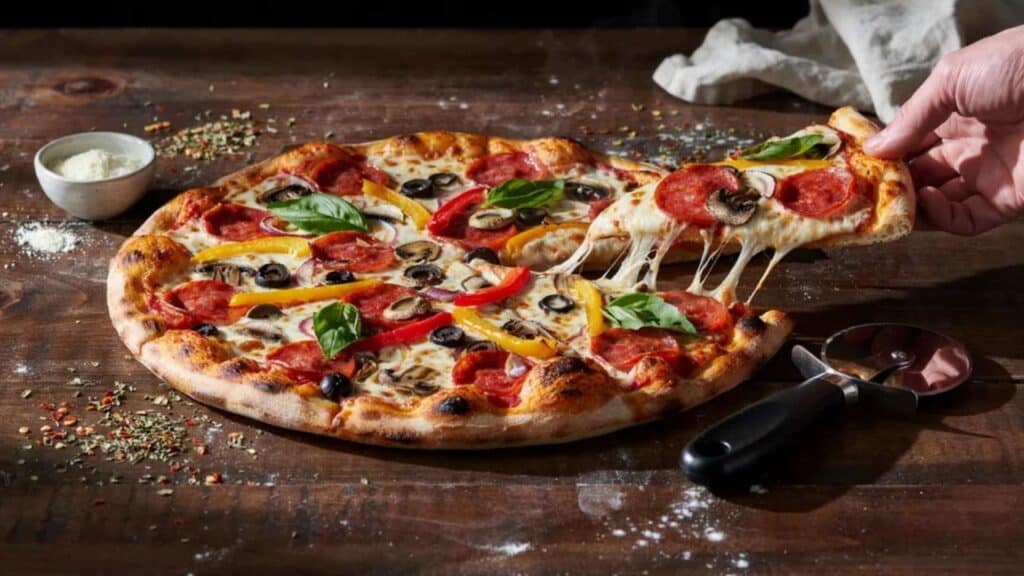

Pizza is one of those foods almost everyone reaches for, whether it is a Friday night dinner or a quick slice between errands.
But if you are keeping an eye on your diet, you have probably stopped mid-bite and wondered how many calories are in a slice of pizza.
A standard slice of regular-crust cheese pizza has about 285 calories, based on data from USDA FoodData Central.
That number is only a starting point. The real count depends on the crust, the toppings, how much cheese is piled on, and how big the slice actually is.
Once you understand what changes that number, it gets a lot easier to enjoy pizza while still keeping your eating habits on track.
What a Slice of Pizza Really Costs in Calories
If you want a quick number to work with, a regular slice of cheese pizza runs about 250 to 300 calories.
Two slices can look nearly identical on a plate and still differ by more than 100 calories, depending on what went into them.
A thin-crust Margherita and a loaded meat lover’s slice both get called “pizza,” but their calorie counts are nowhere near the same.
The table below breaks this down by pizza style, so you can see roughly where your usual order lands.
| Pizza Type | Average Weight Per Slice | Average Calories Per Slice |
| Thin-Crust Cheese | 65-90g | 170-250 |
| Margherita | 85-110g | 220-300 |
| Cheese Pizza | 100-115g | 250-300 |
| Veggie Pizza | 105-125g | 240-320 |
| Hawaiian | 110-130g | 260-330 |
| Pepperoni | 105-125g | 280-350 |
| BBQ Chicken | 115-135g | 280-380 |
| Chicken Supreme | 120-140g | 300-400 |
| Four Cheese | 120-145g | 320-420 |
| Stuffed Crust | 130-160g | 320-450 |
| Meat Lovers | 135-165g | 350-450 |
| Deep-Dish Pizza | 150-200g+ | 350-500+ |
These figures are average estimates. Your actual count can shift based on the recipe, the brand, the portion size, and where the pizza was made.
So there is no single right answer here. Which raises the next question: what actually makes one slice heavier in calories than another?
Why One Pizza Slice Has More Calories Than Another
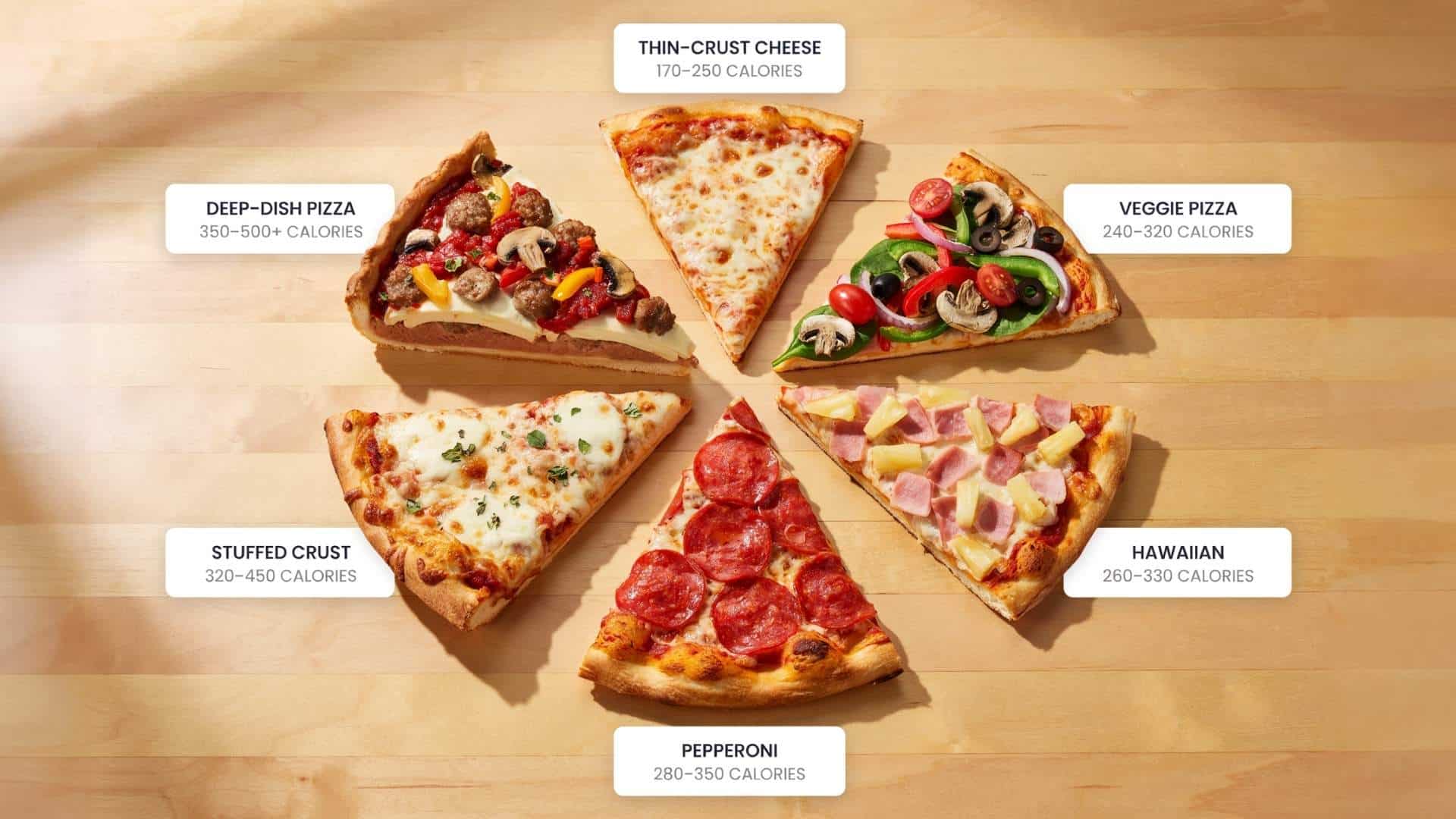
Two slices can look almost the same and still differ widely in calories, according to USDA FoodData Central. It comes down to how the pizza is built and what goes into it.
- Crust Type: The crust makes the biggest difference. A thin base uses less dough, so it stays lower in calories. Deep-dish and stuffed-crust styles pack in extra dough and cheese, which quickly pushes the number up.
- Cheese and Toppings: Toppings carry almost as much weight as the crust. Extra cheese, pepperoni, sausage, and bacon add calories quickly, while mushrooms, onions, and bell peppers bring flavor without adding much.
- Slice Size: Pizza slices are not a fixed size. A restaurant slice is often bigger than a homemade one, so the calorie count can shift even when the ingredients are identical.
Keeping these three factors in mind makes it much easier to estimate calories on the spot, even without a nutrition label in front of you.
Calories in a Slice of Pizza by Size
Pizza size plays a bigger role than most people expect, since a larger pie means more dough, more sauce, more cheese, and more of every topping on it.
There is no single industry standard for what counts as “small” or “large,” but here is a general breakdown based on common pizza sizes.
- Personal or Small Pizza (8-10 inch): A slice from a personal-sized pizza typically runs 150 to 250 calories, since the pie is cut into fewer, smaller pieces.
- Medium Pizza (12-inch): A slice from a medium pie lands around 220 to 280 calories for a basic cheese topping.
- Large Pizza (14-inch): This is the most common U.S. size, and a slice averages 250 to 350 calories depending on the crust and toppings.
- Extra-Large Pizza (16-18 inch): Slices from extra-large pies tend to run higher, often 300 to 450 calories, since the crust-to-topping ratio usually shifts toward more cheese and toppings per slice.
Whole-pie totals climb fast, too. A full 14-inch cheese pizza cut into eight slices can add up to roughly 2,000 to 2,300 calories, which is why portion size matters just as much as topping choice.
Calories are only part of the picture, though. Pizza can still have a place in a balanced diet.
Nutritional Breakdown of a Slice of Cheese Pizza
If you want more than just the calorie count, here is what a standard slice of cheese pizza actually contains.
These numbers are based on a regular-crust 14-inch pizza cut into eight slices, which is the typical U.S. serving, with each slice weighing about 107 grams.
| Nutrient | Amount per Slice |
|---|---|
| Weight | 107g |
| Calories | 285 |
| Total Fat | 10.4g |
| Saturated Fat | 4g |
| Carbohydrates | 35.6g |
| Dietary Fiber | 2.5g |
| Protein | 12.2g |
| Sugars | 3.8g |
| Sodium | 640mg |
| Cholesterol | 27mg |
| Calcium | 250mg |
These numbers are a general guide. Actual nutrition can vary by brand, recipe, toppings, and where the pizza is made.
A deep-dish or pan pizza will almost always run higher in calories, while thin-crust and cauliflower-crust versions tend to sit lower.
If you are curious how pizza stacks up against another everyday carb, the calorie range is fairly close to what you would find in a standard bagel, especially once toppings come into the picture.
Pizza and Healthy Eating Can Go Together
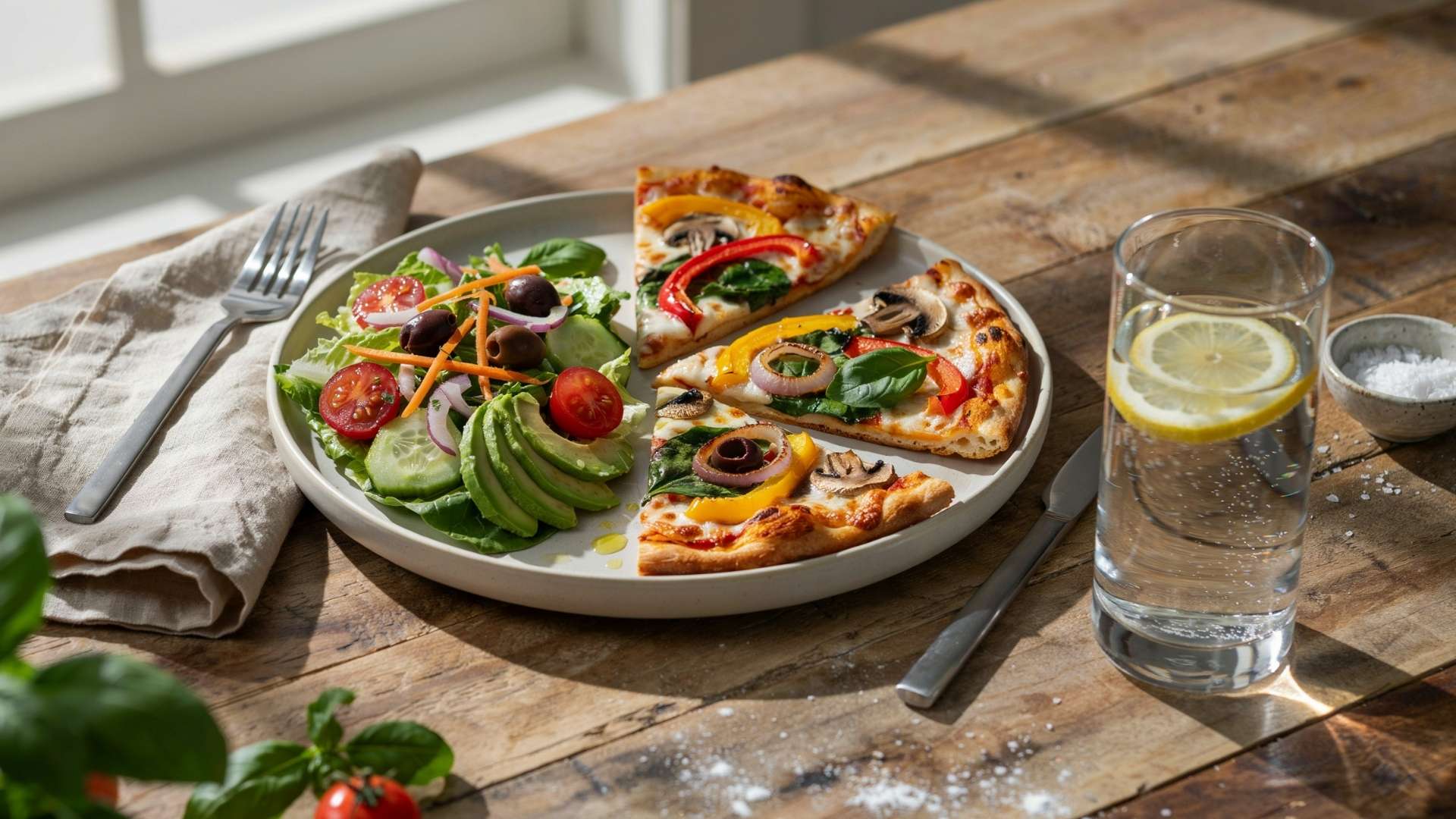
Pizza gets treated like a cheat meal a lot of the time, but you do not have to put your health goals on hold just to eat it.
Like most foods, pizza fits into a balanced diet once you know which choices keep it in check.
- Portion Control: You do not have to cut pizza out completely. One or two slices next to a salad is enough for most people to feel satisfied, without turning the meal into an all-day calorie total.
- Balance Your Meal: Rather than making pizza the entire meal, pair it with a salad or a side of vegetables. It adds nutrients and helps you feel fuller for longer.
- Choose Lower-Calorie Options: Small swaps add up. Going thin crust, loading up on vegetables, or skipping the extra cheese are simple ways to keep the calorie count down without giving up the pizza itself.
- Enjoy Pizza in Moderation: One meal will not make or break your diet; it is your overall eating pattern that matters. Working your favorite foods into a balanced routine is far more sustainable than cutting them out entirely.
So the next time a pizza craving hits, go ahead and enjoy it. A balanced diet always leaves room for the foods you actually like, especially when the choices around it are thought through.
Crazy Facts About Pizza You Probably Did Not Know
Pizza has a bigger story than just calories and toppings. Here are a few facts that show just how deep America’s love for pizza actually runs.
Americans Eat About 3 Billion Pizzas a Year.
That works out to roughly 46 slices per person annually, or close to 23 pounds of pizza eaten by the average American each year.
The World’s Largest Pizza Covered Nearly 14,000 Square Feet.
Set in Los Angeles in January 2023, the record-breaking pizza used more than 13,000 pounds of dough, nearly 9,000 pounds of cheese, and over 630,000 pieces of pepperoni.
Pepperoni Tops the List of America’s Favorite Pizza Toppings.
Roughly a third of all pizza orders in the U.S. include pepperoni, making it the most requested topping by a wide margin.
National Pizza Month Has Been Around Since 1984.
It was started by Gerry Durnell, an Indiana pizzeria owner who launched a trade magazine called Pizza Today and picked October to mark its debut issue.
The Margherita Pizza Was Named After a Queen.
As the story goes, it was created in 1889 in Naples to honor Queen Margherita of Savoy, using tomatoes, mozzarella, and basil to represent the colors of the Italian flag.
America’s First Licensed Pizzeria Opened in 1905.
Lombardi’s in New York City became the first officially licensed pizzeria in the U.S., and the same Spring Street location is still serving pizza today.
Saturday Is the Most Popular Night for Pizza in America.
Weekend cravings run high, with Saturday consistently ranking as the busiest night for pizza orders and deliveries nationwide.
Conclusion
There is no single fixed number for how many calories are in a slice of pizza.
A plain cheese slice, a veggie pizza, and a loaded meat lover’s slice can all sit at very different calorie counts, depending on the ingredients and the size of the slice.
You do not need to give up pizza to eat well. A few smart choices around crust and toppings are usually enough to keep it part of a balanced diet.
At the end of the day, eating well is not about cutting out your favorite dishes. It is about finding a routine that leaves room for them.
Frequently Asked Questions
How Many Calories Are in Two Slices of Pizza?
Two slices of cheese pizza usually add up to 500-600 calories. If you are eating deep-dish pizza or a version loaded with extra cheese and processed meats, that number can climb past 800 calories.
Is Thin-Crust Pizza Lower in Calories?
Yes, thin-crust pizza generally comes in lower because it uses less dough than a regular or deep-dish base. If you want to keep enjoying pizza while cutting back slightly, thin crust is the easier swap.
Which Type of Pizza Has the Fewest Calories?
Thin-crust vegetable pizza tends to be one of the lightest options available. The thinner base combined with a generous amount of vegetables means you still get plenty of flavor without a heavy calorie count.
Does Homemade Pizza Have Fewer Calories?
Yes, making pizza at home gives you full control over what goes into it. You can go with a thinner crust, cut back on cheese, add more vegetables, and portion it out to fit what you actually need.
Is One Slice of Pizza Okay on a Diet?
Generally, yes. A single slice, especially a thin-crust or veggie-topped one, can fit into most daily calorie budgets. The bigger factor is what surrounds that slice, so pairing it with a salad or vegetables instead of extra sides keeps the meal balanced.
How Many Calories Are in a Whole Pizza?
A full 14-inch cheese pizza cut into eight slices adds up to roughly 2,000 to 2,300 calories. That number climbs higher with a thicker crust, extra cheese, or meat toppings like pepperoni and sausage.