
A homemade hair mask is one of the simplest and most effective ways to improve hair health using ingredients already available in most kitchens.
When hair becomes dry, frizzy, or weak due to heat styling, pollution, or chemical exposure, natural treatments help restore balance without the need for expensive salon visits.
These ingredients are widely used because they support hydration, repair, scalp balance, and strengthening.
Below, I’ll combine top-performing recipes and expert-backed insights into a structured routine, so each mask can be matched to specific hair needs and applied correctly for visible improvement.
Diy hair mask guide for healthy, strong, and naturally nourished hair
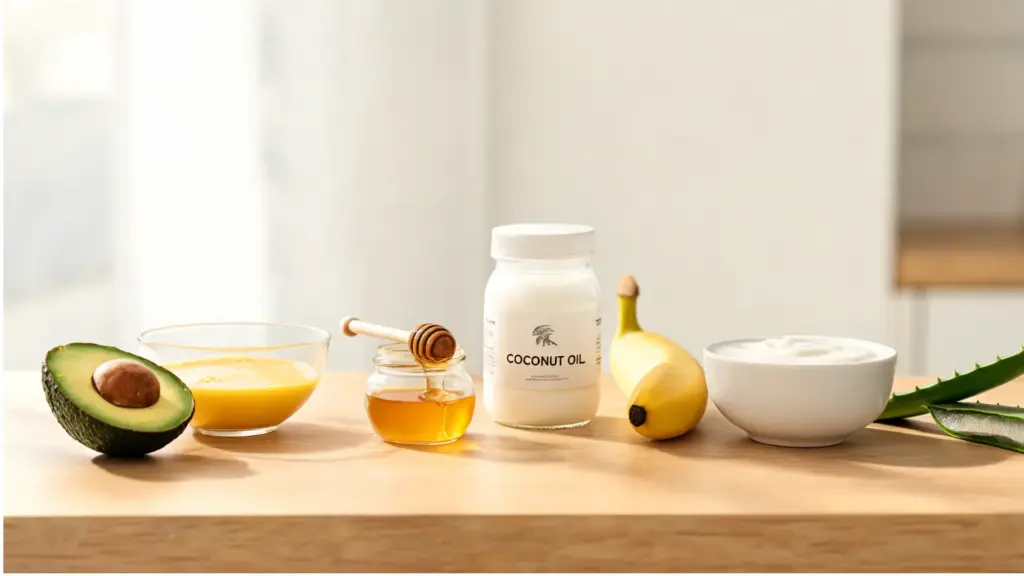
A diy hair mask is a simple and effective way to improve overall hair health using natural ingredients that are easily available at home. Unlike chemical-based treatments, a homemade hair mask focuses on nourishing the hair from root to tip using ingredients like avocado, egg, honey, banana, yogurt, and coconut oil.
These ingredients help restore moisture, repair damage, and improve shine without harsh side effects. A diy hair mask routine can target multiple concerns such as dryness, frizz, dandruff, and hair thinning when used consistently.
It also supports scalp health by improving circulation and reducing buildup. When applied correctly and regularly, a homemade hair mask helps strengthen hair strands, reduce breakage, and improve overall texture, making hair look healthier, smoother, and more manageable over time
Quick Homemade Hair Mask Recipes + Hair Concern Guide
This section combines highly effective homemade hair mask recipes with targeted solutions for common hair concerns, including dryness, frizz, dandruff, oiliness, and slow growth.
Each diy hair mask is structured to solve a specific problem rather than being a general treatment, making it easier to choose based on hair condition. The goal is to simplify hair care by aligning recipes with concerns, so users can apply solutions directly without confusion.
1. Avocado + Egg + Honey Hair Mask

Mix all the ingredients in a bowl and mash or blend them until you get a smooth, creamy, lump-free paste. Ensure everything is fully combined so it spreads easily and evenly through the hair without clumps.
Apply on clean, damp hair by sectioning it properly and coating the scalp and lengths evenly. Gently massage for a few minutes, leave it on for 20–25 minutes, then rinse thoroughly with mild shampoo and lukewarm water.
Ingredients: avocado, egg, honey
Benefits: deep moisture repair, reduces breakage, improves shine, strengthens hair
Best for: dry hair, damaged hair, heat-treated hair
2. Banana + Yogurt + Honey Hair Mask

Blend or mash the banana until smooth, then mix it with yogurt and honey until you get a creamy, even paste with no lumps. Make sure the texture is soft enough to spread easily through hair.
Apply on damp hair section by section, covering lengths evenly and massaging lightly into the scalp. Leave it for 20 minutes, then rinse well with lukewarm water and a gentle shampoo.
Ingredients: banana, yogurt, honey
Benefits: reduces frizz, smooths hair cuticles, adds shine, improves softness
Best for: frizzy hair, dull hair, rough hair
3. Coconut Oil + Brown Sugar Mask

Mix coconut oil and brown sugar in a bowl until a grainy but well-combined, scrub-like paste forms. Ensure sugar is evenly coated with oil for smooth application.
Apply directly to the scalp and massage gently in circular motions for a few minutes. Leave it for 10–15 minutes, then rinse thoroughly with shampoo to remove buildup.
Ingredients: coconut oil, brown sugar
Benefits: removes buildup, exfoliates scalp, reduces dandruff, improves circulation
Best for: oily scalp, dandruff, scalp buildup
4. Egg White + Lemon Hair Mask

Whisk egg white until slightly foamy, then mix in lemon juice until fully blended. The mixture should be light and easy to apply to the scalp.
Apply only to scalp and roots, avoiding hair lengths. Leave it for 15 minutes, then rinse with cool water and mild shampoo.
Ingredients: egg white, lemon juice
Benefits: controls oil, tightens scalp, removes grease, refreshes scalp
Best for: oily hair, greasy scalp, fine hair
5. Aloe Vera + Castor Oil Hair Mask

Mix aloe vera gel and castor oil until smooth and fully combined, resulting in a slightly thick consistency. Ensure no separation of oil and gel.
Apply directly to scalp and hair roots, massage gently, and spread lightly through lengths. Leave it for 30–45 minutes before rinsing with shampoo.
Ingredients: aloe vera gel, castor oil
Benefits: supports hair growth, strengthens roots, soothes scalp, reduces thinning
Best for: thinning hair, weak hair, slow growth
6. Coconut Milk + Honey Hair Mask

Combine coconut milk and honey in a bowl and mix until you get a smooth, creamy liquid. Ensure honey dissolves properly for even application.
Apply on damp hair from roots to ends, covering all strands evenly. Leave it for 20–30 minutes, then rinse thoroughly with lukewarm water and shampoo.
Ingredients: coconut milk, honey
Benefits: deep hydration, improves softness, restores shine, reduces dryness
Best for: dry hair, rough hair, lifeless hair
7. Strawberry + Coconut Oil + Honey Hair Mask

Blend strawberries into a smooth pulp, then mix with coconut oil and honey until fully combined. Strain if needed for smoother texture.
Apply evenly on scalp and hair lengths, ensuring full coverage. Leave it for 20 minutes, then rinse thoroughly with shampoo to remove residue.
Ingredients: strawberries, coconut oil, honey
Benefits: boosts shine, removes buildup, hydrates hair, refreshes scalp
Best for: dull hair, lifeless hair, normal hair
8. Rice Water + Avocado Hair Mask

Mash avocado until smooth, then mix it with rice water until you get a creamy, even paste. Ensure no lumps remain for easy spreading.
Apply on damp hair from scalp to ends, coating all strands evenly. Leave it for 25 minutes, then rinse thoroughly with mild shampoo.
Ingredients: rice water, avocado
Benefits: strengthens hair, reduces breakage, improves elasticity, repairs damage
Best for: weak hair, brittle hair, damaged hair
9. Banana + Castor Oil + Yogurt Hair Mask

Mash banana until smooth, then mix with yogurt and castor oil until you get a thick, creamy paste. Ensure all ingredients are fully blended.
Apply evenly on scalp and hair lengths, massaging gently for better absorption. Leave it for 25–30 minutes, then rinse well with shampoo and lukewarm water.
Ingredients: banana, castor oil, yogurt
Benefits: supports hair growth, improves thickness, nourishes scalp, strengthens roots
Best for: thinning hair, slow growth, weak hair
Benefits of using homemade hair masks regularly
Using a homemade hair mask regularly helps improve overall hair health in a natural and cost-effective way. With consistent use, your hair becomes more manageable, nourished, and resistant to damage caused by heat styling, pollution, and chemical exposure. A diy hair mask routine supports both scalp health and hair strength over time.
- Improves hair hydration and prevents dryness by locking in natural moisture.
- Strengthens hair strands and reduces breakage caused by heat and styling tools.
- Enhances natural shine and smoothness, making hair easier to manage and style.
- Supports scalp health by reducing buildup, dandruff, and irritation.
- Promotes healthier hair growth by improving blood circulation and follicle nourishment.
- Reduces frizz and improves overall hair texture with consistent application.
Regular use of a homemade hair mask helps maintain long-term hair health by improving moisture balance and reducing damage. A consistent diy hair mask routine supports stronger strands, smoother texture, and overall healthier-looking hair with visible improvement over time.
Key ingredients used in homemade hair masks
Most effective diy hair mask recipes rely on a consistent set of natural ingredients found across top beauty sources. These ingredients provide hydration, repair, and scalp balance.
| Ingredient | Benefit |
|---|---|
| Coconut oil | Deep hydration and frizz control |
| Egg | Protein strengthening and repair |
| Honey | Moisture retention and softness |
| Avocado | Damage repair and nourishment |
| Yogurt | Smooth texture and scalp balance |
| Lemon | Oil control and cleansing |
| Castor oil | Supports hair growth |
| Brown sugar | Scalp exfoliation |
| Aloe vera | Soothing and hydration |
Understanding these ingredients helps create more effective homemade hair mask combinations tailored to specific hair needs, rather than random mixtures. Coconut oil penetrates deeply to reduce protein loss; egg strengthens strands; honey locks moisture; avocado repairs damage; yogurt smooths texture; lemon controls oil; castor oil supports growth; brown sugar exfoliates the scalp; and aloe vera soothes irritation.
How to apply a diy hair mask properly
Proper application is essential to get the most benefits from any homemade hair mask. Incorrect use can reduce effectiveness or cause buildup. Following the right process ensures better absorption and improved scalp health.
A structured application routine ensures every diy hair mask delivers consistent results. Following proper steps helps ingredients penetrate deeply and work effectively without causing irritation or buildup.
- Start with clean or damp hair for better absorption
- Apply evenly from scalp to ends, depending on concern
- Massage the scalp gently to improve circulation
- Cover with a shower cap to lock in heat
- Leave for 20–45 minutes depending on ingredients
- Rinse with lukewarm or cool water
- Use shampoo if an oil-based mask is used
Following these steps ensures every homemade hair mask works effectively and delivers visible improvements in texture, hydration, and scalp health.
Frequency guide for homemade hair masks
The frequency of using a diy hair mask depends on hair type and condition. Using masks too often can cause buildup, while using them too little may delay results. Finding balance is key to long-term improvement. Each hair type requires a different level of nourishment for best results.
| Hair type | Frequency | Mask focus |
|---|---|---|
| Dry hair | 1–2 times/week | Oil and avocado masks |
| Oily hair | 1 time/week | Lemon and egg masks |
| Damaged hair | 2 times/week | Protein-rich masks |
| Normal hair | Weekly | Balanced hydration masks |
This frequency guide helps maintain a balanced diy hair mask routine that improves hair health without overloading strands or scalp. A proper frequency routine ensures homemade hair mask treatments work without overwhelming the hair.
Tips to get maximum results from homemade hair masks
To get the best results from a homemade hair mask, consistency and correct application matter more than complex recipes. Small adjustments in how you use ingredients can significantly improve hydration, shine, and strength. These tips help you make every diy hair mask more effective and suitable for your hair type.
- Apply the mask to slightly damp hair to improve absorption and allow nutrients to penetrate better into the hair shaft.
- Focus on an application based on your hair concern, such as the scalp for growth or the ends for dryness and split ends.
- Always cover your hair with a shower cap to lock in heat and improve ingredient penetration.
- Keep the mask on for 20 to 45 minutes, depending on the ingredient strength and hair condition.
- Use lukewarm or cool water while rinsing to prevent damage and maintain a smooth texture.
- Maintain a consistent routine of 1-2 times per week to achieve visible long-term results.
Following these simple steps can make any homemade hair mask more effective and consistent in results. When applied correctly, a diy hair mask routine improves texture, strength, and shine while helping your hair respond better over time.
Mistakes to avoid when using diy hair masks
Homemade masks can help, but small errors may leave hair dry, greasy, or irritated. Use this table to spot common mistakes and keep your routine gentle and balanced at home:
| Mistake | Why To Avoid It |
| Leaving egg or yogurt masks on too long | Protein-based masks can make hair feel stiff or dry |
| Using lemon too often | Acidic ingredients may dry out sensitive or color-treated hair |
| Applying too much oil to the scalp | Heavy oils can cause buildup and a greasy feel |
| Using masks too often | Overuse can weigh hair down and disturb your routine |
| Skipping a patch test | New ingredients may cause itching, redness, or an allergy |
| Rinsing with hot water | Hot water can make hair feel rough and weak |
Start with simple ingredients and use one mask at a time, so you can notice how your hair reacts. Keep masks short, rinse well, and stop using any mix that causes itching, burning, or extra dryness after use right away.
Frequently asked questions
How long should a diy hair mask stay on?
Most masks should stay on for 15–45 minutes. Oil-based masks can stay longer, while protein masks should not be overused or overextended.
Can homemade hair masks damage hair?
Yes, incorrect usage of lemon or protein-heavy ingredients can cause dryness or irritation. Proper timing and balance are essential.
Should hair masks be applied to wet or dry hair?
Damp hair is best for absorption. However, oil-based treatments can also be applied to dry hair before washing.
Can homemade hair masks be stored?
No, fresh preparation is recommended because ingredients like eggs and bananas spoil quickly and lose their effectiveness.
The final mask
A homemade hair mask is a simple and effective way to improve hair health using natural ingredients already available in your kitchen. I’ve shown you how different combinations like avocado, egg, honey, banana, yogurt, and coconut oil can target specific hair concerns such as dryness, frizz, dandruff, and weak strands.
When you understand what your hair needs, you can easily choose the right diy hair mask and apply it correctly for better results over time. You also saw how key ingredients work together to nourish, repair, and strengthen hair from root to tip.
If you follow these steps consistently, you will notice healthier texture and shine. Try these tips yourself and share your experience or explore more related hair care guides. Next, drop a comment below and get the review of your new shiny hair.