

Lentils have earned a permanent spot in my kitchen, even though they don’t always agree with my stomach.
After one too many uncomfortable evenings, I wanted to understand why lentils cause gas instead of just avoiding them.
The answer wasn’t what I expected. It wasn’t that lentils were difficult to digest or somehow unhealthy.
They’re simply packed with natural fiber and carbohydrates that gut bacteria ferment during digestion, and gas is a normal byproduct of that process.
Once you know what’s causing it, you’ll also know which simple habits can make lentils much easier on your stomach.
Do Lentils Cause Gas?
Yes, lentils can cause gas. This happens because lentils are high in fiber and a type of carb called FODMAPs, both of which your gut bacteria break down in the large intestine.
This process is a normal part of digestion, not a sign that something is wrong. Some gas after eating lentils is common, and most people feel it within a few hours of a meal.
People with IBS or a sensitive stomach tend to notice it more, but portion size, cooking method, and lentil type all affect how much gas shows up.
Why Do Lentils Cause Gas and Bloating?
The short answer comes down to fiber, a group of carbs found in lentils, and a few other factors that often get overlooked.
Here is what happens inside your gut after a lentil meal.
1. Lentils Are High in Fiber
Your small intestine cannot break down all of the large fiber held by lentils, so it passes into the large intestine intact. Once there, gut bacteria feed on the fiber and break it apart.
This process, called fermentation, creates gas as a natural result.
The National Institute of Diabetes and Digestive and Kidney Diseases (NIDDK) notes that legumes, a food group that includes beans, peas, and lentils, contain carbs that the stomach and small intestine cannot fully break down, which is why they often lead to more gas than other foods.
2. Lentils Contain Oligosaccharides
Beyond fiber, lentils also carry a specific type of carb called galacto-oligosaccharides, or GOS.
Your body lacks the enzyme needed to break these down in the small intestine, so they travel further into the gut mostly whole.
Gut bacteria ferment GOS quickly, which is part of why lentils tend to cause gas sooner than some other high-fiber foods.
The two specific compounds responsible are called raffinose and stachyose. Neither one breaks down until gut bacteria get to it, which is also why products like Beano work; they contain an enzyme that targets these exact compounds.
3. Lentils Can Be High in FODMAPs
FODMAP stands for Fermentable Oligosaccharides, Disaccharides, Monosaccharides, and Polyols, a group of short-chain carbs that resist digestion.
GOS, the oligosaccharide covered above, is actually one specific type of FODMAP, not a separate cause. That’s why lentils show up on nearly every low-FODMAP food list.
Depending on portion size and preparation, lentils can carry a meaningful FODMAP load, which can lead to gas, bloating, stomach discomfort, and changes in bowel habits. People with IBS often feel this more than others.
4. Eating Too Much Too Quickly
Your digestive system needs time to adjust to a jump in fiber intake.
Common mistakes include large portions, adding lentils to daily meals all at once, and not drinking enough water with meals.
Slowing down gives your gut bacteria time to adapt instead of reacting all at once.
5. Other Ingredients May Be the Real Trigger
Sometimes it is not the lentils themselves. Onions, garlic, canned broths, and heavy seasoning blends are common additions to lentil dishes, and each can cause gas on its own.
If symptoms feel stronger than expected, it is worth looking at the full recipe, not just the lentils, before ruling anything out.
Do Lentils Cause Any Other Digestive Symptoms Besides Gas?
Gas is the most common complaint, but undercooked lentils can cause more than that. Like most legumes, lentils contain natural compounds called lectins.
Lentils carry much lower levels of these than beans like kidney beans, which are the legume most linked to lectin-related illness when undercooked, but thorough cooking is still good practice with any legume.
This can show up as cramping or an upset stomach on top of the usual gas and bloating. Cooking lentils fully, especially after soaking, breaks down most of these compounds before they reach your gut.
If you’ve ever had lentils that seemed to “sit wrong” beyond typical gas, undercooking is worth ruling out first.
Do All Types of Lentils Cause Gas?
Not every lentil affects your gut the same way. Cooking time, fiber content, and texture all change how much gas a serving might produce.
Which Lentils are Easier to Digest?
Lentil Type | Gas Potential | Why |
|---|---|---|
Red lentils | Lower | Cook fast and break down easily |
Yellow lentils | Lower | Often gentler on the gut |
Green lentils | Moderate | Higher fiber and a firmer texture |
Brown lentils | Moderate | The outer coating stays mostly intact |
Black lentils | Moderate | Dense texture and fiber content |
Split lentils | Lower | Outer skin removed, cooks soft and fast |
Canned lentils | Lower | Some FODMAPs leach out during canning |
No single lentil is free of gas, but red and yellow varieties tend to sit lighter on most stomachs.
Why Do Some People Handle Lentils Better Than Others?
A few factors decide how your body reacts to lentils, and no two people respond the same way.
- Differences in gut bacteria: Everyone’s gut microbiome breaks down carbs at a different pace, which changes how much gas shows up.
- Overall fiber tolerance: People who eat fiber-rich foods regularly often adjust faster than those who rarely do.
- Portion size at each meal: Larger servings give gut bacteria more to ferment at once, which can mean more gas.
- Cooking method used: How you prepare lentils affects how much of the gas-causing load makes it to your plate
- Existing digestive conditions, such as IBS: Conditions like IBS can make the gut more sensitive to fermentable carbs like the ones found in lentils.
How Much Lentil Should You Eat to Avoid Gas?
There is no single “safe” amount that works for everyone, but a general starting point can help.
Most people tolerate about 2 to 3 tablespoons of cooked lentils per meal when first introducing them.
Over one to two weeks, you can build up to around half a cup, then up to a full cup once your gut adjusts.
Canned lentils, once drained and rinsed, are often easier to increase faster than dried ones cooked from scratch.
Some of the FODMAPs in canned lentils leach into the canning liquid itself, which is part of why draining and rinsing them further lowers the load, not just a rinsing effect on the lentils alone.
If gas shows up at any stage, staying at that amount for a few more days before increasing again usually helps more than pushing forward.
How Can You Eat Lentils Without Getting Gassy?

A few small changes to how lentils are prepared and served can lower gas and bloating for most people.
Soak Lentils Before Cooking When Needed:
Soaking can help remove some of the compounds linked to digestive discomfort. Rinse dry lentils under cold water, cover them with fresh water, and let them soak for a few hours, or overnight for whole lentils like green or brown.
Drain and discard the soaking water don’t cook with it, since this is where a lot of the gas-causing compounds end up. Rinse once more, then cook as usual.
Worth knowing: Cleveland Clinic notes that no method of soaking or cooking has been proven to eliminate flatulence entirely. Soaking may help some people, but it’s not a guarantee; think of it as one tool among several, not a fix on its own.
Cook Lentils Until They Are Soft:
Undercooked lentils are harder for your gut to break down. Use enough water, cook until the lentils are fully tender, and skip firm or undercooked lentils if they tend to trigger symptoms.
Add Digestive-Friendly Spices and Ingredients:
Cumin and fennel are considered the most effective, with a long history of use for gas specifically. Ginger is better known for settling the stomach generally rather than targeting gas directly.
Turmeric may help too, mainly in its raw or lightly cooked form, since heavy cooking reduces the active compound. Cloves and cinnamon are sometimes added for the same reason, though the evidence behind them is thinner.
None of these cancel out gas entirely, but used consistently, they may take the edge off.
Try a Digestive Enzyme Before MealsOver-the-counter enzyme drops or tablets, such as Beano, contain alpha-galactosidase, an enzyme that helps break down the same carbs in lentils that lead to gas. Taking a few drops or a tablet with your first bite can lower gas for some people. These are generally safe for most adults, but it’s worth checking with a doctor first. |
If gas has already set in, simethicone-based products can help break up gas bubbles and ease the pressure. These won’t stop lentils from producing gas in the first place, but they can make an uncomfortable afternoon more bearable.
Soaking, fully cooking lentils, and starting with small portions can turn a gassy meal into a comfortable one.
Managing Lentil Gas With IBS or a Sensitive Stomach
IBS and general stomach sensitivity call for a slower, more careful approach to lentils.
Try Low FODMAP Lentil Options
Canned lentils, drained and rinsed, are the easier low FODMAP option here. A quarter cup is generally considered a safe starting portion for most people managing IBS.
Lentils cooked from dry carry a heavier FODMAP load in the same volume, so the safe starting portion is smaller, closer to a scant quarter cup for green or brown lentils, and less than that for red.
That’s a smaller serving than most recipes call for, so it may mean treating lentils as a side addition rather than the main component of a meal at first.
Track Which Lentils and Portions Trigger Symptoms
A simple food diary can help you spot patterns: note the date, lentil type, amount, cooking method, and any symptoms within 24 hours, since gas from lentils can also show up the next day rather than right away.
After two to three weeks, patterns usually become clear enough to know your personal tolerance level.
Foods That May Help Prevent Bloating After Eating Lentils
Pairing lentils with the right foods and drinking enough water can reduce the risk of bloating later.
Food Pairing | Why It May Help |
|---|---|
Lentils with rice | Rounds out the meal without adding more fiber |
Lentils with cooked vegetables | Often gentler than raw vegetables |
Lentils with herbs and spices | Adds flavor without heavy add-ons |
Lentils with plain yogurt or kefir | Probiotics may help your gut adjust to fermentable carbs over time |
Lentils with ginger tea after the meal | May settle the stomach after a heavier legume meal |
Cooking a larger batch ahead of time also makes it easier to control portions; a simple meal prep can help you space out servings across the week instead of eating a large bowl all at once.
Important note: Stay Hydrated When Increasing Fiber Intake. Water helps fiber move smoothly through your digestive tract. Adding a lot of fiber to your diet at once, without enough fluids, can make gas and bloating worse, not better.
If gas continues even after pairing lentils with easier foods and staying hydrated, it may be worth swapping them out on some days rather than every meal.
Quinoa, tofu, tempeh, and lean meat offer similar protein without the same fermentable carb load, and nuts or seeds can fill some of the gap depending on the meal.
None of these fully replace what lentils bring to a plate, but they’re worth rotating in while you work out your own tolerance.
Why You Should Still Eat Lentils
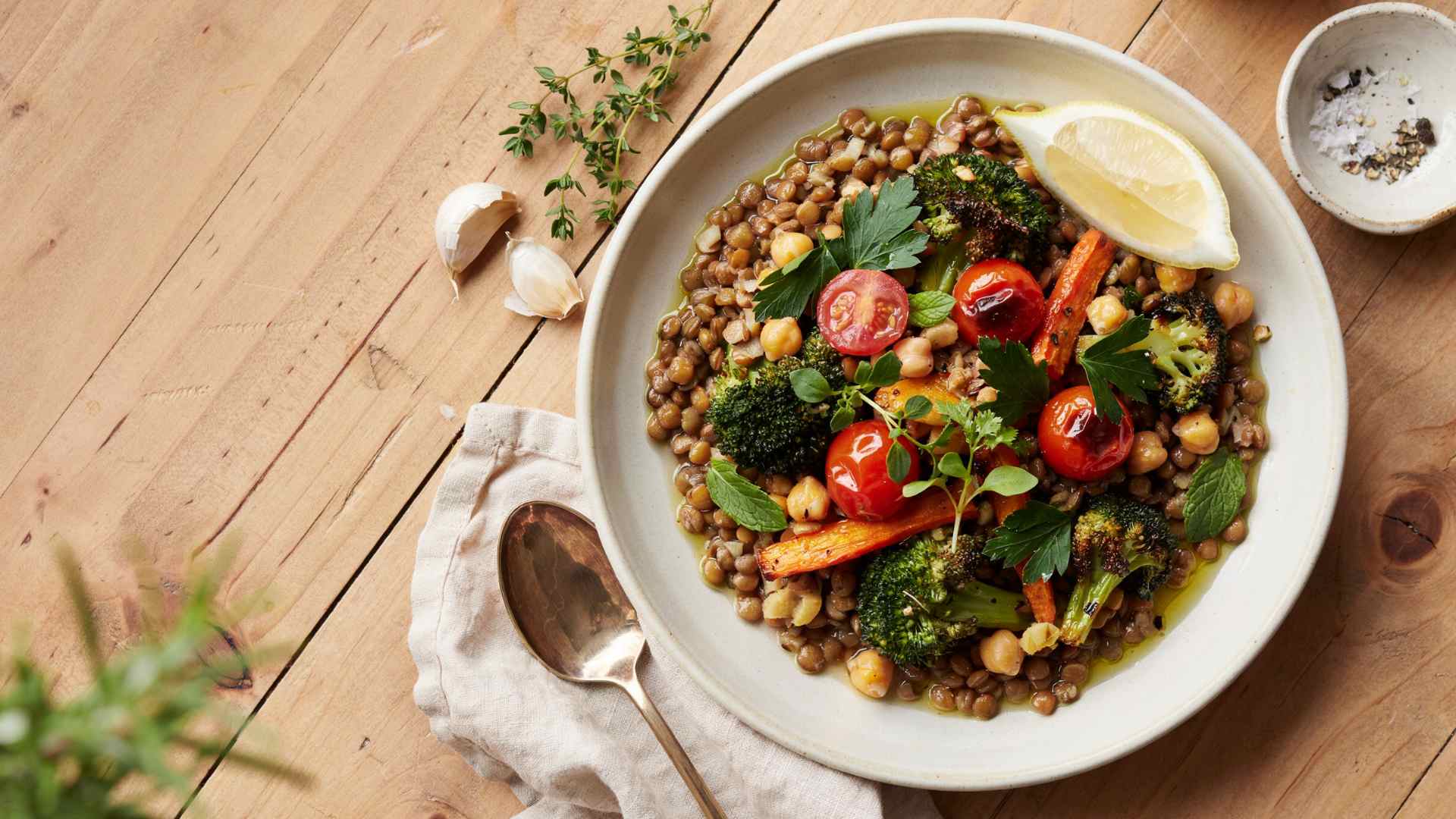
Some gas after eating lentils is not a reason to cut them out completely, given everything they add to a meal.
Lentils Provide Protein and Plant-Based Nutrients
One cup of cooked lentils has about 18 grams of protein, along with meaningful amounts of iron and magnesium.
According to USDA FoodData Central, that same cup also provides nearly 90 percent of the daily value for folate.
These nutrients support red blood cell formation, energy levels, and muscle function, making lentils a strong plant-based addition to most balanced diets.
Lentils Support Long-Term Digestive Health
Fiber keeps bowel movements regular and supports a healthy gut over time. With steady intake, many people find their gut bacteria adjust, and gas symptoms tend to ease.
Regular fiber intake has also been linked to lower cholesterol levels and a reduced risk of certain digestive conditions over the years.
Gas Does Not Always Mean Lentils Are Bad for You
Tolerance also tends to improve the more consistently you eat lentils, since your gut bacteria adjust with repeated exposure.
The goal is better tolerance over time, not total avoidance. Some gas is a small trade-off for the protein, iron, and folate lentils bring to your plate.
Cutting lentils out completely often means missing out on real nutritional value, when a few small adjustments could solve the issue instead.
How Long Does Gas From Lentils Last?
For most people, gas from lentils starts within a few hours of eating and settles down within that same day.
How long it lasts depends on portion size, how well-cooked the lentils were, and how used to fiber your gut already is.
If gas or bloating continues for more than a day or two, or happens every single time regardless of portion or preparation, it may point to a food intolerance or a condition like IBS rather than a normal digestive response.
What to Do if Lentils Have Already Caused Gas?
If gas has already set in, a few simple steps can ease the discomfort while your gut works through it.
- Take a short, gentle walk to help gas move along
- Sip warm peppermint, ginger, or fennel tea
- Apply a warm compress to the abdomen
- Loosen tight clothing around the waist
- Avoid lying flat right after eating
- Note the portion and preparation in your food diary for next time
Most discomfort passes on its own within a few hours without any specific treatment.
When Should You Consult a Doctor?
Most gas from lentils passes within a few hours and is not a cause for concern. However, it is worth reaching out to a doctor if bloating does not go away, if you notice severe pain in the abdomen, or if you experience unexplained weight loss.
Ongoing changes in digestion, or any symptoms that start getting in the way of daily life, are also worth mentioning at your next visit.
Blood in the stool, fever alongside stomach symptoms, or gas and bloating that wakes you up at night are also signs that go beyond typical dietary discomfort and are worth having checked.
Recurring or severe symptoms like these may point to a condition such as IBS, which needs a proper medical review rather than home remedies alone.
Final Thoughts on Lentils and Gas
Understanding why lentils cause gas doesn’t mean you have to stop eating them.
In most cases, the discomfort is a normal response to the natural fiber and carbohydrates that make lentils so nutritious.
With a few simple adjustments, like soaking, cooking them well, and increasing your portions gradually, you can reduce bloating while still enjoying all the protein, fiber, and other nutrients lentils have to offer.
Frequently Asked Questions
Can Lentil Gas Smell Worse Than Gas From Other Foods?
Not usually. Lentils are more likely to cause frequent gas than strong-smelling gas because they contain less sulfur than foods like eggs or cabbage.
Does Sprouting Lentils Reduce Gas More Than Just Soaking Them?
Yes, sprouting can reduce gas more than soaking alone. It further breaks down compounds that are harder to digest.
Is It Normal to Feel Gassy the Day After Eating Lentils, Not Just a Few Hours Later?
Yes, gas can appear the next day because digestion and fermentation in the gut take time. This is a normal response for many people.