
Preppy fashion is a structured, classic approach to dressing built on pieces that have worked for decades and show no signs of stopping.
A navy blazer. An Oxford shirt. Penny loafers. Chinos that actually fit.
You know it when you see it, and it reads as put-together without ever feeling overdressed.
What separates it from most other styles is that it ignores trends completely. There’s no seasonal reset, no moment where everything has to change.
Once you have the right foundation, outfits practically build themselves. That’s exactly what I find appealing about it.
My training in fashion styling has taken me through client wardrobes in every category, and the people who always look good without thinking too hard about it tend to be working from a small set of well-chosen classics.
Where Did Preppy Fashion Come From?
Preppy fashion started in the United States, specifically in the culture around prep schools and Ivy League universities. The dress code in those environments had a practical logic: look sharp, look clean, don’t draw attention to yourself.
Structured trousers, button-down collars, blazers worn to class rather than saved for events.
By the 1950s and 1960s, that aesthetic had spread well beyond campus. It resonated because it was reliable. You could get dressed quickly, look appropriately pulled together for almost any setting, and nothing ever really went out of style.
The 1980s gave it a wider cultural moment when The Official Preppy Handbook made it feel both accessible and self-aware. That cultural visibility helped the style stick around instead of fading the way most decade-specific trends do.
What we’re working with today is an evolved version of all that. The core pieces are the same. The way people wear them has relaxed a bit. Fewer blazers worn with ties, more blazers thrown over a polo.
The silhouette loosened slightly without losing its structure entirely.
What Are the Key Elements of Preppy Fashion?
Every style has a foundation, and with preppy it’s a specific, short list. Nothing elaborate. The challenge is getting the pieces right and understanding why they work together.
Clothing Staples

These are the pieces I return to when building a preppy wardrobe for a client, and they’re the same ones I’d start with myself. Each one earns its place because it works with everything else on the list.
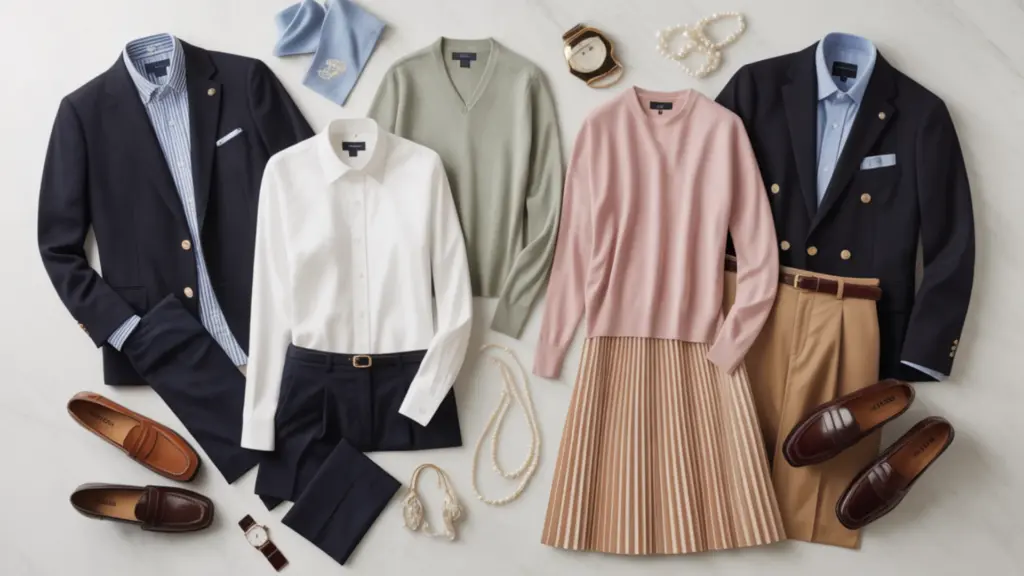
Blazers. The anchor piece. A well-fitted navy blazer in a medium-weight fabric is the single most useful thing you can own in this category. It moves from casual to smart casual effortlessly.
Oxford shirts. The button-down collar is the detail that matters here. White and light blue are the workhorses. They tuck, they layer, and they hold their shape after washing in a way that cheaper shirts don’t.
Polo shirts. The relaxed end of preppy. Done right, a polo in a solid navy, white, or muted stripe reads polished. Done wrong, it reads shapeless. Fit is everything with this one.
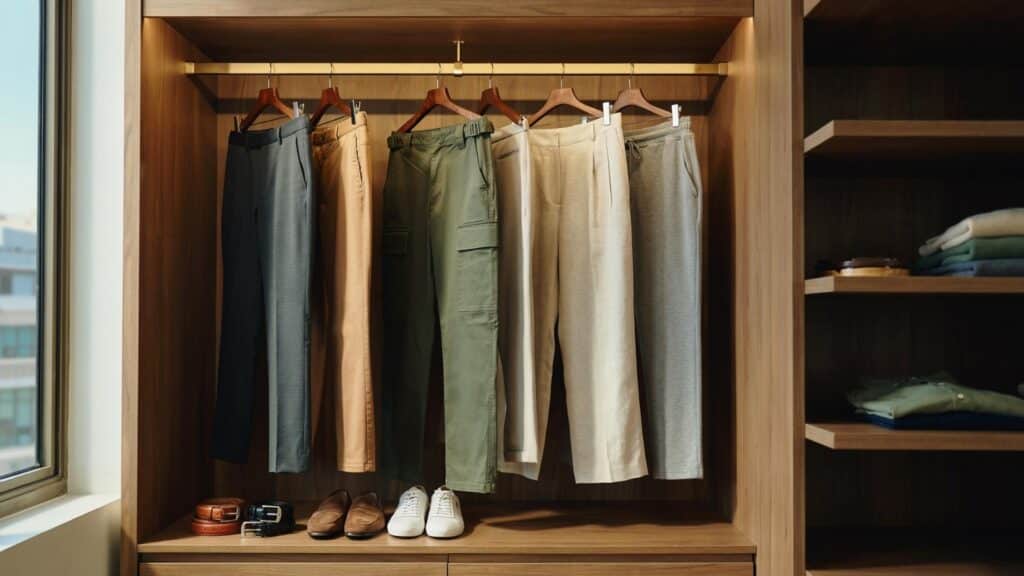
Chinos. Tailored trousers that sit between formal and casual in a way that nothing else quite manages. Khaki and navy are the starting points. Olive is a useful third option.
Pleated skirts. Structured and feminine in a way that reads preppy rather than just school-uniform adjacent. Midi length in a plaid or solid fabric.
Cable-knit sweaters. Thick, textured, built for layering over an Oxford or under a blazer. Cream, navy, and forest green are the most versatile.
Sweater vests. Better than they sound. Layered over a collared shirt, they add depth to an outfit without adding bulk or weight. Argyle or solid, both work.
Loafers. The default footwear. Penny loafers or tassel loafers in tan, brown, or burgundy. These close out most preppy outfits in a way that sneakers or boots can’t quite replicate.
Colors, Fabrics, and Patterns

The color palette is one of the more recognizable things about preppy style.
- Navy and white form the base.
- Cream, khaki, and soft pastels layer on top without competing with each other.
- Think blush, mint, pale yellow, and light blue.
What you don’t find is anything saturated or high-contrast for its own sake.
The patterns are equally specific.
Plaid and tartan feel structured and work across every season.
Argyle shows up most naturally on sweater vests and socks, not on outerwear.
Stripes are simple and clean.
Madras is the brighter, looser version of plaid that works best in warmer months and reads more casual than its structured counterpart.
Fabrics matter as much as any of this. Cotton, wool, tweed, seersucker, and corduroy each hold their shape in a way that synthetic blends don’t. There’s a quality signal in the texture itself, before you’ve even looked at the cut.
One thing I tell clients consistently: if you’re new to this, start with the neutrals and patterns in small doses. A plaid blazer paired with a striped shirt is a combination that works on a fashion moodboard but usually doesn’t translate in real life.
Pick one pattern per outfit and let the rest breathe.
Accessories That Complete the Preppy Look

Preppy accessories aren’t decorative. They’re finishing details, and there’s a real difference. The right accessory makes an outfit feel intentional. The wrong one, or too many at once, pushes it into costume territory. Here’s what I’ve consistently found to be worth the investment.
Belts. Brown or tan leather, matching the shoes. No embellishment. This is the kind of detail that reads quietly and correctly.
Pearls. A single-strand necklace works from class to dinner without needing to be switched out. Understated is the whole point.
Headbands. Velvet or tortoiseshell. They keep the look neat and intentional without trying too hard.
Silk scarves. Tied loosely or knotted around a bag handle. This is one of those additions that costs very little and reads as considered.
Leather watches. Classic face, leather strap, neutral tone. A smartwatch works in a completely different register and won’t land the same way here.
Canvas tote bags. A simple print, navy or natural canvas. Practical and immediately recognizable as part of the preppy vocabulary.
How to Build a Preppy Wardrobe From Scratch

The mistake most people make is buying several pieces at once, getting the combinations wrong, and deciding the style doesn’t work for them. A better approach is sequential. Start small, wear the pieces regularly, and add once you understand how they interact.
- Start with two tops. A white Oxford shirt and a navy polo. These are the base of almost everything. They layer, they stand alone, and they work with whatever bottoms come next.
- Add one blazer. Navy, structured, well-fitted. This is the piece that elevates everything around it. Don’t skip it in favor of a second sweater.
- Add a cable-knit sweater. Cream or navy. This gives you a layering option for cooler days that keeps the polish without adding a second blazer.
- Choose versatile bottoms. Chinos in khaki or navy plus one pleated or A-line skirt. These pair with every top already in the wardrobe.
- Get the footwear right. Penny loafers first, white leather sneakers second. The loafers will carry most occasions; the sneakers handle the casual end.
- Add one accessory. A leather belt that matches your loafers, or a canvas tote. Start with one and stop there until the clothes feel settled.
Every piece on this list works with at least three others. That’s the test worth applying whenever you’re considering adding something new.
Quality over quantity is not a cliché here. It’s the actual structural principle the style runs on.
Preppy Fashion for Women

The preppy wardrobe translates very naturally for women because the core pieces already lean toward structured silhouettes. You don’t need to reinvent anything.
Three pieces, clean colors, and one considered accessory is a complete outfit.
| Occasion | Outfit | Notes |
|---|---|---|
| Everyday, classes, brunch | Pleated skirt + Oxford shirt + loafers | Tuck the shirt in. Add a cable-knit on cooler days. One accessory only. |
| Casual outings, weekend errands | A-line skirt + polo shirt + loafers | Keep colors in the pastel or neutral family. Let the cut do the work. |
| Smart casual, lunch dates | Shift dress + loafers + structured tote | Pearls or a headband, not both. Minimal accessories finish this one correctly. |
The thing I notice when clients get this wrong is usually volume. They add too many pieces, too many accessories, and the outfit tips from effortless into effortful.
Preppy is a style where restraint reads as confidence. Less is actually more.
Preppy Fashion for Men

Men’s preppy fashion has one main advantage: the foundational pieces are extremely simple to combine, and the combinations are almost always interchangeable.
Once you have a decent Oxford shirt, a pair of chinos that fit, and penny loafers, you’re 80% of the way there for most occasions.
| Occasion | Outfit | Notes |
|---|---|---|
| Everyday, work, errands | Oxford shirt + chinos + loafers | White or light blue shirt. Khaki, navy, or olive chinos. Untucked is fine for casual settings. |
| Relaxed days, weekends | Polo or rugby shirt + chinos + loafers | Solid or narrow stripe. Still put-together without any effort showing. |
| Smart casual, meetings, dinners | Oxford shirt + chinos + blazer + loafers | The blazer handles all the heavy lifting. Roll the sleeves slightly for smart casual settings. |
The fit conversation matters more with men’s preppy than almost any other category. A boxy Oxford shirt or baggy chinos reads sloppy, not relaxed.
The goal is clean lines throughout. If something doesn’t fit as-bought, tailoring is worth the cost on anything you’ll wear regularly.
Preppy Style vs Old Money Style
These two get confused regularly, and I understand why. They share the same roots: quality fabrics, classic silhouettes, and an East Coast sensibility.
They communicate those roots very differently, though. The distinction matters for anyone trying to understand which one actually reflects their wardrobe goals.
| Element | Preppy Style | Old Money Style |
|---|---|---|
| Vibe | Collegiate, structured, deliberate | Quiet, understated, effortless |
| Colour Palette | Navy, white, pastels, brighter tones | Oatmeal, camel, grey, muted neutrals |
| Patterns | Plaid, argyle, stripes, madras | Minimal. Subtle checks or nothing at all. |
| Key Pieces | Blazer, polo, Oxford shirt, loafers | Tailored trousers, cashmere, trench coat |
| Fit | Clean and structured | Relaxed but perfectly cut |
| Accessories | Pearls, headbands, canvas tote | Simple leather goods, nothing showy |
| Logos / Branding | Subtle brand references acceptable | Avoided entirely |
| Overall Impression | Put-together and recognizable | Dressed-down wealth, no effort shown |
The short version: preppy is visible about its references. The Ivy League signals, the plaid, the polo are all intentional and present. Old money style communicates through subtraction. Fewer patterns, quieter colors, a cut that does all the talking without any labels in sight.
Common Mistakes People Make With Preppy Style
Getting preppy wrong tends to come down to the same few things. I see them repeatedly, and they’re all fixable once you know to look for them.
Mixing too many patterns. A plaid blazer, argyle socks, and a madras shirt worn together is too much happening at once. One pattern per outfit. Let the rest of the pieces breathe.
Getting the fit wrong. Preppy is built on clean lines. An oversized blazer or baggy chinos dismantle the entire effect. This style does not have a relaxed-fit mode the way streetwear does.
Over-committing to the aesthetic. When every single piece signals preppy, it stops looking like a personal wardrobe and starts reading like a costume. Ground it with neutral basics and let some pieces speak more quietly than others.
Chasing trend versions of the style. Preppy fashion doesn’t need seasonal updates. The classics hold up precisely because they ignore what’s currently on the rails at fast fashion retailers. Trust them.
Copying a reference wholesale. Whether it’s a film character, a mood board, or a specific brand’s campaign aesthetic, preppy works best when it’s actually yours rather than lifted from a source. Use references as starting points, not blueprints.
The brands most closely associated with this style are Ralph Lauren, Brooks Brothers, J.Crew, and Vineyard Vines. These are useful guides for understanding what the pieces look like. They’re not mandatory shopping lists. The same silhouettes exist at different price points.
What Is Preppy Fashion for Different Occasions?
One thing people underestimate about preppy style is its range. Because the foundation pieces are so versatile, the same basic wardrobe can cover a wide spread of settings with very little adjustment.
- For everyday wear, a polo or Oxford shirt with chinos and loafers handles most situations with zero overthinking.
- For classes or a casual workplace, add the blazer. For dinner out, keep the blazer and swap the loafers for something slightly dressier.
- For weekend errands, drop back to the polo and chinos, leave the blazer behind. The pieces do the work.
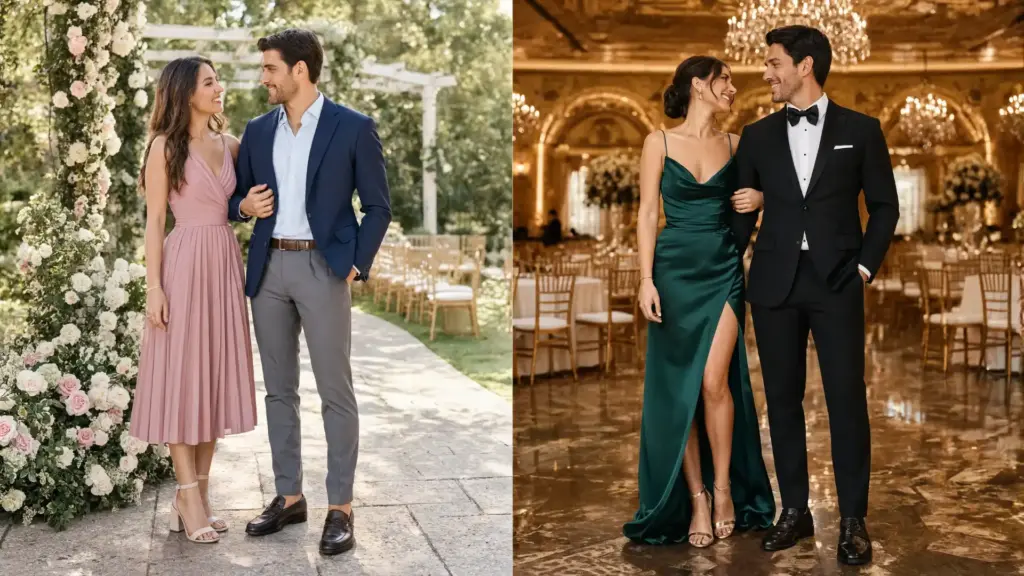
What doesn’t work is applying preppy to black-tie or highly formal settings.
This is a smart-casual-to-business-casual style. It’s not designed to replace a tuxedo or a formal gown. Knowing that boundary is part of using it correctly.
If you’re building a wardrobe that needs to cover a wider range of formality, I’d recommend reading through the full history of fashion-forward dressing to see just how wide the spectrum actually runs.
Preppy Colour Combinations That Actually Work
Navy and white is the most reliable starting point in preppy fashion. It’s clean, it’s recognizable, and it works regardless of season or occasion. From there, the combinations that work best tend to follow the same logic: one neutral base, one accent, one pattern if you’re using one.
Navy blazer, white Oxford shirt, khaki chinos, brown loafers. That outfit works every single time. The khaki colour family is where a lot of the interesting combinations happen in preppy style. This guide to colours that go with khaki covers the specific neutrals, pastels, and patterns that sit alongside it in the preppy palette. Worth reading if you want to push beyond the basics.
Pastels deserve a mention too. Soft pink, mint, pale yellow, and light blue all sit naturally within the preppy palette and work best when they’re not competing with a patterned piece. A solid pastel polo with neutral chinos and loafers is a summer combination that reads perfectly without any effort.
What to avoid: pairing two patterns of similar weight.
Plaid and stripe can work together when one is very subtle and the other is dominant. Two bold patterns worn together usually cancel each other out. That holds even within the preppy vocabulary.
Frequently Asked Questions
These are the questions I get asked most often from people who are new to the style or trying to refine what they already have.
What is preppy fashion?
Preppy fashion is a classic, structured approach to dressing rooted in Ivy League and prep school style. It’s built on reliable pieces like Oxford shirts, blazers, chinos, polo shirts, and loafers, worn in a clean, unfussy way that reads polished without being formal.
What is preppy style?
Preppy style is the visual aesthetic that comes from wearing those classic pieces with intention. It prioritizes fit, quality fabrics, and a restrained color palette over trends. The goal is looking effortlessly put-together rather than dressed for effect.
What does preppy look like?
Think a well-fitted blazer over a crisp Oxford shirt, chinos that sit at the waist, penny loafers, and possibly a cable-knit sweater tied over the shoulders. Clean lines, muted or classic colors, and one considered accessory. That’s the core image.
How to look preppy without spending a lot?
Start with secondhand or end-of-season picks on the core pieces: an Oxford shirt, chinos in a neutral color, and loafers. Fit matters more than brand. A well-fitting no-name chino reads better than an ill-fitting designer version every time.
Can preppy be casual?
Yes. A polo shirt, well-fitted chinos, and white leather sneakers instead of loafers is casual preppy. The structure comes from the fit and the palette, not from how formal the individual pieces are.
What are some preppy clothing brands?
Ralph Lauren and Brooks Brothers are the most recognized names. J.Crew, Vineyard Vines, Polo, and Southern Tide sit in the same category. For more affordable options, Uniqlo carries Oxford shirts and chinos that work perfectly within this aesthetic.
What is preppy style in 2026?
The style itself hasn’t changed dramatically, but the way people wear it has softened. More relaxed fit in the trousers, blazers worn over hoodies occasionally, and a greater mix with other aesthetics. The core pieces remain exactly the same.
Is preppy style gender neutral?
Oxford shirts, blazers, tailored trousers, and loafers all work across genders. The style doesn’t require any particular body type or presentation to work well. It’s about the cut and the combination, not the person wearing it.
Final Verdict
After years of working with clients on wardrobe decisions, my honest answer is yes. There is one condition, and the condition is fit.
Preppy fashion delivers on its promise of looking effortlessly polished only when the pieces fit correctly. A blazer that pulls at the shoulders or chinos that bag at the knees will undo the whole effect before you’ve walked out the door.
Start with the navy blazer and get it tailored if needed. Add the Oxford shirt and the loafers. Wear those three pieces enough that the combinations feel second nature.
From there, the rest of the preppy wardrobe builds itself. If you’re deciding where preppy fits within your broader style identity, the full guide to fashion aesthetics is worth reading alongside this one.