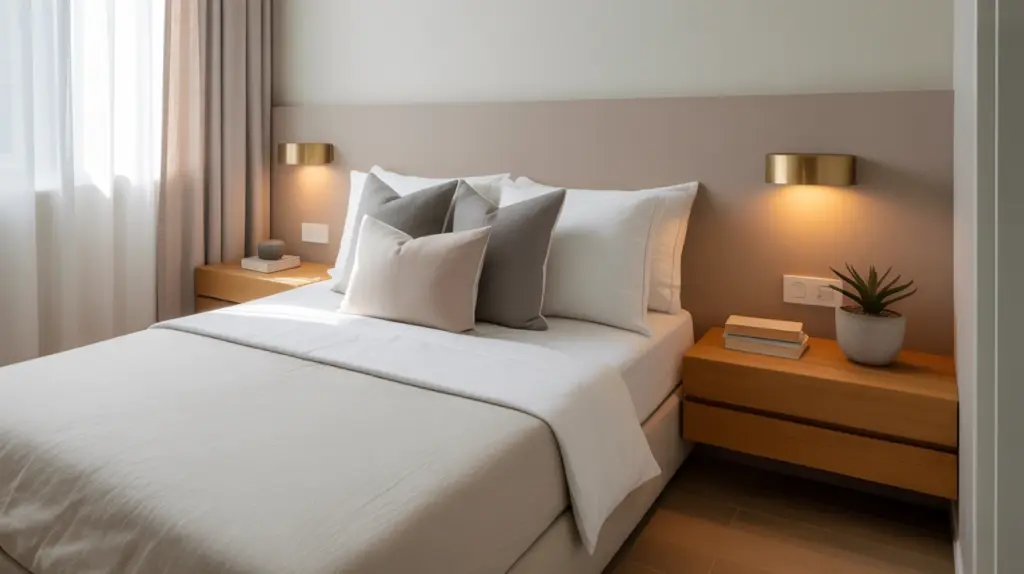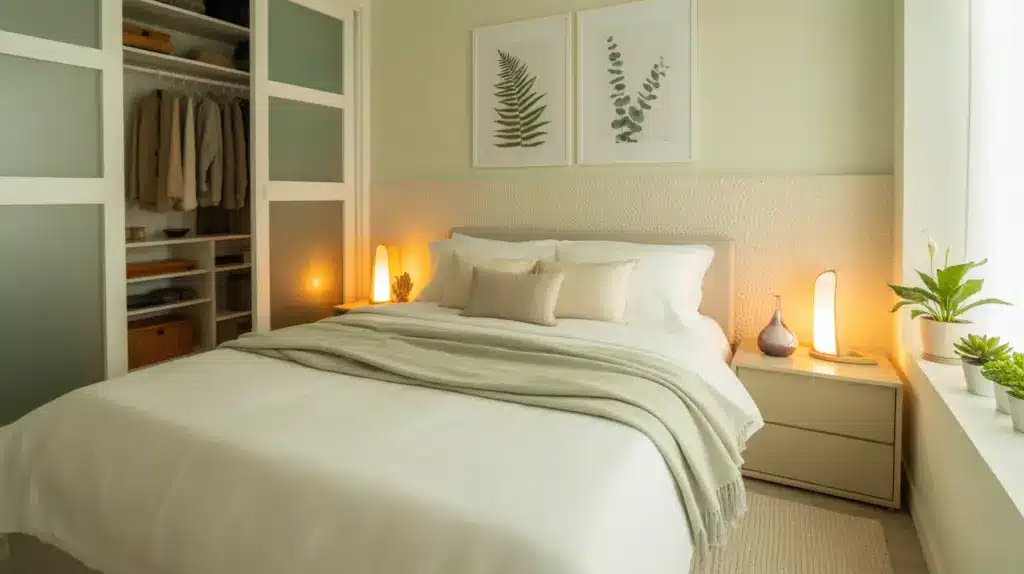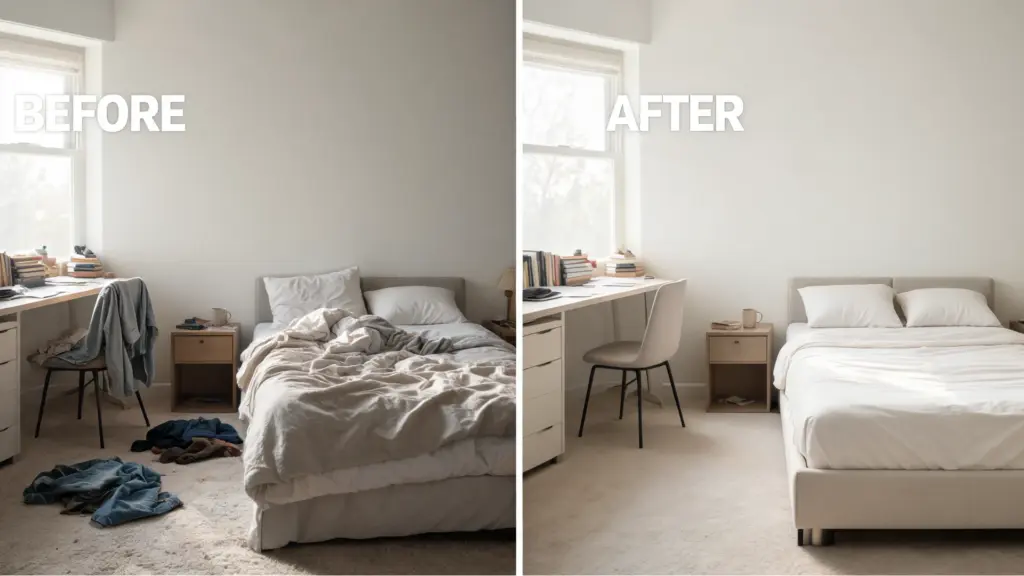

Organizing your space is not about doing everything perfectly once, but about building simple systems that make daily life easier and more manageable for you. When I look at the process as a whole, it always comes down to decluttering first, creating clear zones, and using storage in a smart and intentional way.
You also need consistent habits like small daily resets and putting things back in their place so clutter doesn’t slowly return over time. If you follow these steps, you will notice your room feels more open, calm, and easier to use without extra effort.
Learning how to organize your room helps you take control of your environment and improve focus, comfort, and productivity in a practical way. Start applying what you learn to organize your room today, and you will see a real difference in how your space feels and functions.
Understanding What Makes a Room Messy
A messy room usually isn’t a cleaning problem. It’s a structural problem. When items don’t have a spot, they drift onto every surface until the room feels like an unanswered inbox.
Then there’s the stuff we keep “just in case”, I see you, single earbud from three phones ago. That slow buildup quietly eats up space, and no candle fixes it.
Daily habits do the rest. Clothes dropped on a chair. Mail dumped on a desk. Shoes that never make the rack. Small choices, repeated, create the mess, not one dramatic event.
A tiny room stays sharp with the right system. A huge one spirals without one. Fix the habit, not just the pile, and the mess stops coming back.
How to Organize Your Room Step by Step
Getting a room organized does not require a full weekend or expensive storage bins. These five steps work in order, and each one builds directly on the last.
Step 1: Declutter Everything First

Before any organizational system works, removing unnecessary items is the most important first step. It creates space and makes everything easier to manage.
- Toss broken or unused items first
- Work one section at a time, not the whole room at once
- Start with the obvious clutter, floor, chairs, desk
- Keep only what you use or genuinely love
- Hold off on organizing until the edit is actually done
Step 2: Sort Items into Clear Categories

After decluttering, grouping items properly helps you understand what you own and how much space each category requires.
- Group clothes, electronics, and stationery separately
- Keep like with like for faster access later
- Don’t mix categories into one catch-all bin
- Note how much space each group needs before buying storage
- Skip duplicate storage you don’t need
Clear categorization builds structure in your room and makes organizing faster and more logical in the long run.
Step 3: Zone-Based Room Organization with Smart Storage Systems

Smart room organization is about combining clear functional zones with efficient storage systems to ensure every item has a defined purpose and a logical place.
- Split the room into sleep, work, and storage zones
- Keep the sleep zone calm, no desk clutter creeping onto the nightstand
- Stock the work zone with only what you need mid-task
- Use under-bed bins, wall shelves, and drawer dividers for the heavy lifting
- Keep every system simple enough to maintain half-asleep
Good organization happens when zoning and storage work together, making the room naturally clean, functional, and effortless to manage daily.
Step 4: Build a Simple Maintenance Reset System

An organization only works in the long term when supported by daily habits that prevent clutter from returning.
- Return items to their zone every night
- Do a sixty-second scan before bed
- Catch small messes before they become a project
- Repeat daily, not just on “cleaning day”
- Treat it like skincare, consistency beats intensity every time
With consistent maintenance habits, your room stays naturally organized without needing repeated deep cleaning.
Small Room vs Large Room Storage Strategy for Maximizing Space
Understanding how storage strategy varies with room size is important for maximizing space efficiency. Small rooms require vertical thinking and strict prioritization, while large rooms allow more flexibility but need structure to avoid unused or messy areas.
The goal in both cases is to reduce clutter, improve accessibility, and maintain a balanced layout that supports daily use.
| Aspect | Small Room Strategy | Large Room Strategy |
|---|---|---|
| Space Usage | Focus on vertical and hidden storage | Use open layouts with structured zones |
| Furniture Choice | Multi-functional and compact pieces | Separate furniture with dedicated purposes |
| Storage Approach | Minimal and essential-only storage | Categorized and expandable storage systems |
| Clutter Control | Strict item limitation and frequent decluttering | Organized sections with periodic deep cleaning |
| Layout Style | Tight, efficient, and space-saving design | Balanced spacing with clear functional zones |
| Item Prioritization | Keep only daily-use essentials visible | Allow secondary and decorative storage areas |
| Organization Focus | Maximizing every inch of space | Maintaining structure across larger areas |
Small adjustments in space planning and daily habits can make both small and large rooms feel more organized, functional, and easy to maintain over time.
Best Storage Ideas to Maximize Space in Your Room
Storage is not just about adding boxes or containers, but about using every part of your room in a smart and practical way. When storage is planned properly, it helps reduce clutter, improve accessibility, and make even small rooms feel more open and comfortable.
The goal is to create systems that make it easy to store and retrieve items without creating a mess again. When storage is used intelligently, the room becomes more organized, functional, and easier to maintain daily.
1. Under-Bed Storage

Under-bed storage uses hidden space that is often unused in most rooms, making it a smart way to increase storage without adding extra furniture. It keeps items out of sight while still allowing easy access when needed.
This method is especially useful for freeing up visible storage areas like closets, shelves, and cabinets, helping the room stay more open, organized, and clutter-free while improving overall space efficiency
Best for: Seasonal planners, renters with limited storage options, and users who need hidden space without changing room layout.
2. Vertical Wall Storage

Vertical wall storage uses vertical height instead of floor space to create additional storage in a room. Shifting items upward improves movement space and keeps surfaces clean and uncluttered.
It helps organize essentials in a structured way while freeing up valuable floor area. This method is highly effective for maximizing storage capacity without expanding the room size or making the space feel crowded or difficult to manage daily.
3. Multi-Functional Furniture Storage

This type of storage combines everyday furniture with hidden storage to maximize a room’s functionality. It helps reduce the need for additional storage units while keeping the layout clean and organized.
Integrating storage into furniture supports a clutter-free environment and improves overall space efficiency. This approach is ideal for maintaining both practicality and a visually clean room design without sacrificing comfort or usability.
4. Categorized Storage Bins

Categorized bins help organize belongings into structured groups, making everything easier to manage and find when needed. Instead of mixing items together, each category is stored separately, improving clarity and saving time during daily use.
This system reduces confusion, keeps similar items together, and supports a more efficient and organized room setup. It is especially useful for maintaining order and preventing clutter from building up again.
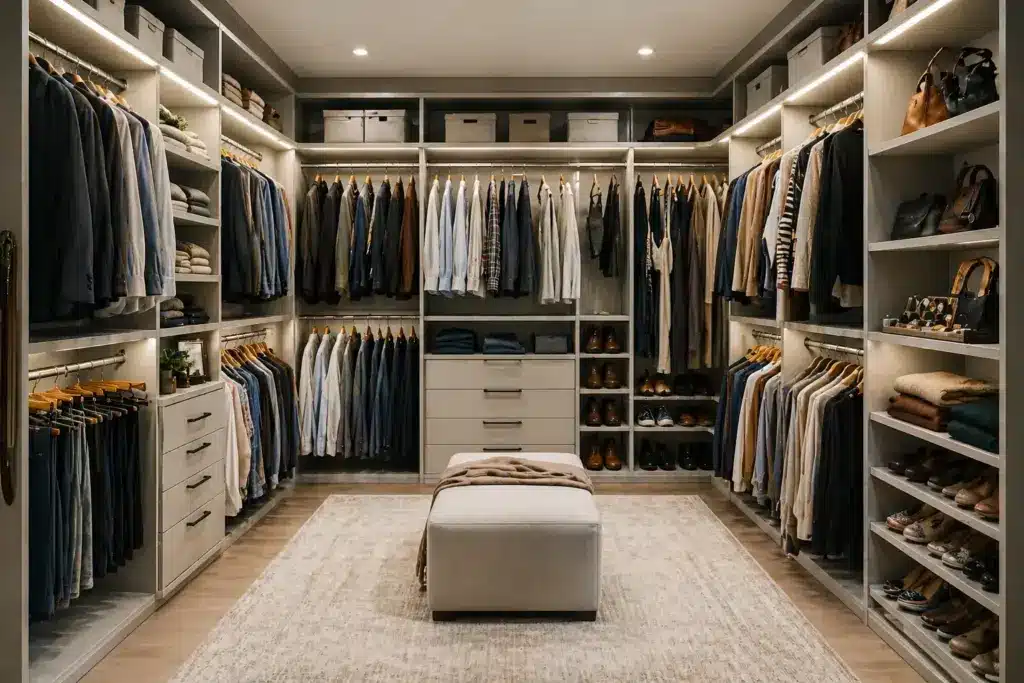
5. Closet Optimization Storage

Closet optimization improves the internal structure of a wardrobe by creating well-defined sections for different types of items. It ensures that every part of the space is used efficiently without overcrowding or misplacing belongings.
This system helps maintain order by separating clothes and accessories in a structured way. It also makes daily use easier, improves visibility, and supports long-term organization by reducing clutter and maximizing available storage space effectively.
Best for: Wardrobe-heavy users, fashion organizers, and anyone looking to maximize existing closet capacity without buying extra furniture.
How to Organize a Room with Too Much Stuff
Small rooms often feel messy, not because of a lack of cleaning, but because of poor space planning and overcrowding. When space is limited, every object needs a clear purpose and a fixed place; otherwise, clutter builds up quickly, and the room feels even smaller.
Organizing a small room starts with understanding how to use every inch of space efficiently, rather than simply trying to fit everything inside. The key is to think vertically and functionally.
Use wall space for shelves, hooks, and hanging storage to free up valuable floor area. Hidden storage, like under-bed boxes or multi-use furniture, can also help store extra items without making the room feel packed.
It is also important to reduce unnecessary belongings because too many items will always make a small space harder to manage. With the right structure, even a small room can feel open, clean, and easy to maintain daily.
Common Storage Mistakes that Make Your Room Messy Again
Many people struggle to keep their rooms organized because of simple storage mistakes that slowly bring back clutter. Avoiding these common errors helps maintain a clean and structured space for longer.
- Buying storage before removing unnecessary items leads to hidden clutter instead of real organization
- Not assigning fixed places for belongings causes items to be left in random spots
- Mixing different categories like clothes, books, and electronics creates confusion and disorganization
- Overfilling drawers and shelves makes storage hard to maintain and items harder to access
- Ignoring daily reset habits allows small messes to grow into bigger clutter over time
- Keeping unused or old items reduces available space and increases unnecessary storage load
- Poor placement of frequently used items causes them to be left outside storage areas
Avoiding these common storage mistakes helps your room stay organized for longer, improves space usage, and ensures clutter does not return easily over time.
Frequently Asked Questions
How often should I actually reorganize my room?
Do a full reset every three to four months as seasons change and habits shift. In between, a nightly sixty-second tidy is enough to keep systems working. If you’re re-sorting drawers weekly, the system itself is the problem, not your consistency.
How do I organize a rented room without drilling holes in the walls?
Lean on command hooks, tension rods, freestanding shelving units, and over-the-door organizers instead of anything wall-mounted. Furniture with built-in storage does double duty without touching the walls at all. Most rental-friendly systems pack up and move with you when the lease ends.
Why does my room still look cluttered even after I’ve organized everything?
Visual clutter often comes from mismatched colors, uneven surfaces, or too many small objects left visible rather than stored. Group similar colors together, hide anything that isn’t daily-use, and leave a few surfaces completely empty. That visual breathing room reads as “organized” even more than the storage itself.
I know what to do, so why can’t I get started organizing my room?
Big rooms feel overwhelming because the brain sees one massive task instead of small ones. Set a ten-minute timer and tackle a single drawer or shelf instead of the whole room. Momentum from one finished spot usually makes the next one easier to start.
How do I organize a shared room without it turning into an argument?
Split the room into personal zones and a neutral shared zone, then agree on where shared items live. Give each person their own bin or shelf so “your mess” and “my mess” never mix. Clear boundaries prevent most shared-space disputes before they start.
The Bottom Line
Getting here didn’t take a magic system. Learning how to organize your room really comes down to four moves: edit, sort, zone, and reset nightly.
Skip a step, and the system slips within a week. I’ve tested that the hard way. If you’re still stuck on how to organize a room when the closet’s the real crime scene, start there first; everything else gets easier once that door closes properly.
Try one zone this weekend before tackling the whole room, and tell me in the comments which step trips you up most, sock drawer confessions welcome.