
| Method | Type | Best For | Downtime |
| Laser treatment | Professional | Deep or widespread freckling | A few days of redness |
| Chemical peel | Professional | Overall tone and texture | Mild peeling for a few days |
| Cryotherapy | Professional | Isolated, single freckles | Small scab, several days |
| Microdermabrasion | Professional (support) | Boosting other treatments | None |
| Retinoids or vitamin C | At-home | Gradual, low-commitment fading | None to mild dryness |
Ever looked in the mirror and wondered how to get rid of freckles without damaging your skin? I’ve been there, trying different creams and treatments while feeling unsure about what actually works.
If you are dealing with freckles that darken in the sun or keep coming back no matter what you try, it can feel frustrating and confusing to choose the right solution.
How to get rid of freckles depends on understanding what causes them and which treatments actually deliver real results.
In this guide, you’ll learn the most effective professional options, at-home solutions, and simple prevention habits that truly make a difference. By the end, you’ll know what works for your skin type and how to manage freckles in a realistic, long-term way.
What Freckles Are and Why They Form
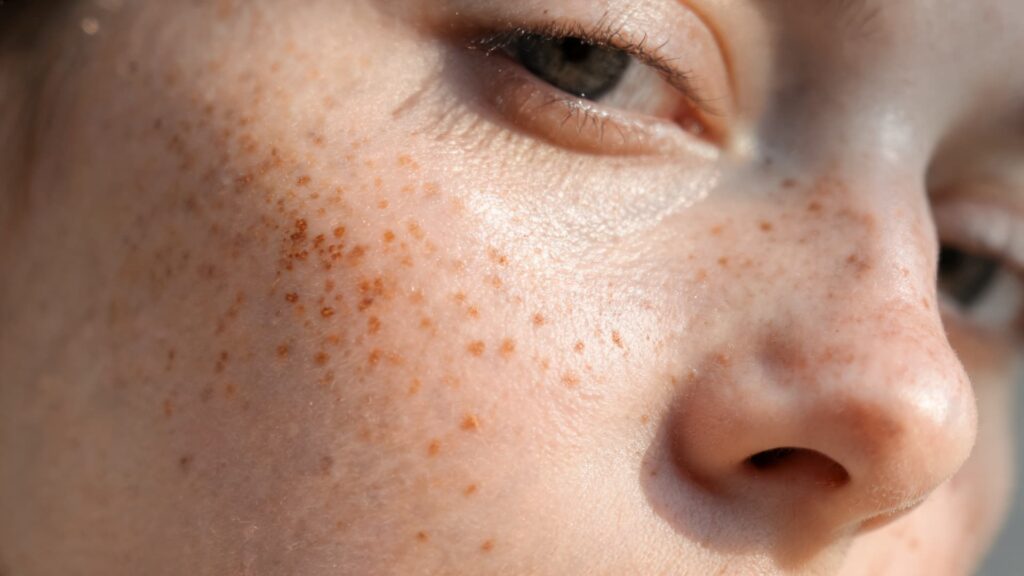
Freckles form when UV exposure tells your skin to produce extra melanin in small, concentrated clusters. Genetics decide how prone your skin is to this response, which is why fair skin tends to freckle more visibly, though it can happen on any skin tone with enough sun exposure. They build up gradually rather than appearing overnight. A few unprotected summers is usually all it takes to turn a light dusting into something more noticeable.
This matters because freckles are not the same thing as sun damage in general, even though people use the terms interchangeably. Genuine freckles are harmless. Other pigmentation issues, like red spots on your face, come from a different mechanism entirely, and treating them the same way rarely works.
Can Freckles Be Permanently Removed?
Freckles usually cannot be permanently removed because they are linked to the skin’s natural melanin response. Even after fading treatments, they can return when the skin is exposed to UV rays again. So the goal is more about reducing visibility rather than permanent removal.
Most treatments, such as laser therapy, IPL, and chemical peels, work by breaking down existing pigment in the upper layers of the skin. These methods can significantly lighten freckles, but they do not stop the skin from producing pigment in response to sunlight.
Key points to remember:
- Freckles are not permanently removable
- Treatments focus on fading, not elimination
- Results depend heavily on sun exposure control
- Daily SPF use (broad-spectrum)
- Avoid direct peak sun exposure
- Use protective clothing or hats
Freckles often reappear when sunscreen is skipped or tanning increases. This is why protection matters as much as treatment itself. In simple terms, freckles can be managed and lightened, but keeping them away long-term depends on consistent sun protection and maintenance, not a one-time procedure.
Professional Methods to Reduce Freckles

Professional treatments are the most effective way to reduce freckles, especially deeper or long-standing pigmentation. These procedures are performed in clinics using technologies such as lasers, light therapy, and controlled exfoliation.
1. Laser Treatment (Most Effective Option)
Laser treatment is one of the most advanced methods for reducing freckles because it targets melanin directly and promotes its natural removal by the body. Visible improvement often appears within a few sessions, though multiple sittings may be required for best results.
It is highly effective for stubborn pigmentation but may involve higher cost and short-term sensitivity. Some freckles may temporarily darken before fading, which is a normal part of the healing process.
Quick points:
- Best for stubborn or deep freckles
- Usually needs multiple sessions
- Temporary redness or sensitivity is common
2. Chemical Peels
Chemical peels use acids such as glycolic acid or TCA to remove the outer layer of pigmented skin and stimulate skin renewal. This helps reduce the visibility of freckles while improving overall skin tone and texture. After treatment, mild redness, peeling, and sensitivity may persist for several days, depending on the peel strength.
Quick points:
- Improves skin brightness and texture
- Requires a short recovery time
- Best results with repeat sessions
3. Cryotherapy (Spot Treatment)
Cryotherapy freezes individual freckles with liquid nitrogen, which makes it a good fit for one or two stubborn spots rather than full-face pigmentation. The treated area forms a small scab before it heals. It works on a similar principle to removing a beauty mark, and results can vary depending on how your skin responds to the freeze.
Quick points:
- Best for individual freckles
- Fast spot treatment method
- Results can be uneven
4. Microdermabrasion (Support Method)
Microdermabrasion is a gentle exfoliation technique that removes dead skin cells from the surface to improve skin brightness and smoothness. It does not directly eliminate freckles, but it helps reduce dullness and enhances the effectiveness of other treatments, such as chemical peels or topical agents.
Quick points:
- Improves overall skin glow
- Supports other treatments
- No major downtime required
At-Home Freckle Removal Options
At-home treatments help gradually fade freckles, improve skin tone, and support long-term control of pigmentation. Results take time and require consistent use.
- Retinoids (Retinol/Tretinoin): Retinoids accelerate skin cell turnover and gradually fade freckles with consistent use. They improve overall skin texture but may cause initial dryness, peeling, or mild irritation before results appear over weeks to months.
- Who Should Avoid It: Not suitable for very sensitive, irritated, or damaged skin. People with active skin conditions should consult a dermatologist. Overuse may cause redness, dryness, and inflammation.
- Vitamin C Serums: Vitamin C brightens skin and reduces melanin activity. It helps lighten freckles gradually when used daily with sunscreen but does not remove them completely.
- Hydroquinone Creams (Prescription): Hydroquinone slows melanin production and reduces the visibility of freckles under medical supervision. It is effective but used short-term due to possible side effects.
- Niacinamide: Niacinamide is the ingredient I reach for when someone wants something gentler. It strengthens the skin barrier and evens out pigmentation slowly, and I usually pair it with an azelaic acid exfoliant for clients who want a bit more turnover without the irritation retinoids can bring.
Community Advice and Real User Experiences on Freckle Removal

This is from Reddit and the discussion focuses on whether freckles can be reduced or if they should simply be accepted. The thread shows two clear viewpoints.
Another group challenges this idea, pointing out that beauty standards often favor even-toned skin, which can make freckles feel like a cosmetic concern for some individuals.
On the practical side, users share several methods for reducing freckles or controlling their appearance. These include strict sunscreen use to prevent darkening, brightening ingredients like vitamin C and kojic acid to improve skin turnover, and professional treatments and laser options. Some also mention that results vary and repeated sessions are often needed.
Freckles are sun-induced pigmentation, so they can be softened but rarely removed permanently. The safest and most effective approach is consistent SPF combined with gentle brightening skincare, with clinical treatments only if needed.
Freckle Maintenance Routine
Keeping freckles from coming back comes down almost entirely to sun protection. The American Academy of Dermatology recommends a broad-spectrum, water-resistant sunscreen with an SPF of 30 or higher, reapplied every two hours outdoors, along with shade and covering up during peak sun hours. Even on cloudy days, UV rays reach your skin enough to reactivate pigmentation, so this is not a summer-only habit.
Pair sunscreen with a simple routine built around vitamin C, a retinoid, and niacinamide, and you will maintain fading results far longer than treatment alone provides. If you want your whole complexion to look more even while you are at it, working toward a glass skin routine tackles brightness and texture at the same time as pigmentation. Long term, improving your skin elasticity also helps treated skin heal and hold results better between sessions.
Frequently Asked Questions
Can freckles go away naturally?
Yes, freckles can fade on their own, especially in winter when sun exposure drops. Some disappear almost completely over time, while others stick around depending on genetics and how much sun your skin sees.
What is the fastest way to get rid of freckles?
Laser treatment gives the fastest visible results because it targets pigment directly rather than working gradually from the surface. Most people still need a few sessions for the best outcome.
Do freckles come back after treatment?
Yes, if the skin is exposed to UV rays without protection afterward. Sun exposure reactivates melanin production, so daily sunscreen is what actually protects your results.
Are freckles dangerous?
No, freckles themselves are a normal skin variation and not dangerous. They do signal sun exposure, so any spot that changes shape, color, or size should be checked by a dermatologist.
Can skincare alone remove freckles completely?
Not completely. Ingredients like retinoids, vitamin C, and niacinamide lighten freckles gradually, but deeper or long-standing pigmentation usually needs a professional treatment to fully fade.
Is it better to treat freckles at home or in a clinic?
It depends on how stubborn the pigmentation is. I recommend starting at home for light, recent freckling and moving to a clinic option like laser or a peel if months of consistent skincare have not moved the needle.
Final Verdict
Freckles may not disappear quickly, but I’ve seen how much easier they are to manage once you understand what causes them and what actually works. The key is not to chase a single solution, but to combine treatments with daily care in a realistic way.
Getting rid of freckles comes down to using the right mix of professional treatments, simple at-home skincare, and strong sun protection. You’ve learned how different options like lasers, creams, and light therapies work, along with habits that help maintain results.
What matters most is staying consistent and choosing what suits your skin, rather than overcomplicating it. Try applying these steps in your routine, watch how your skin responds over time, and revisit these tips whenever you need a clearer direction.