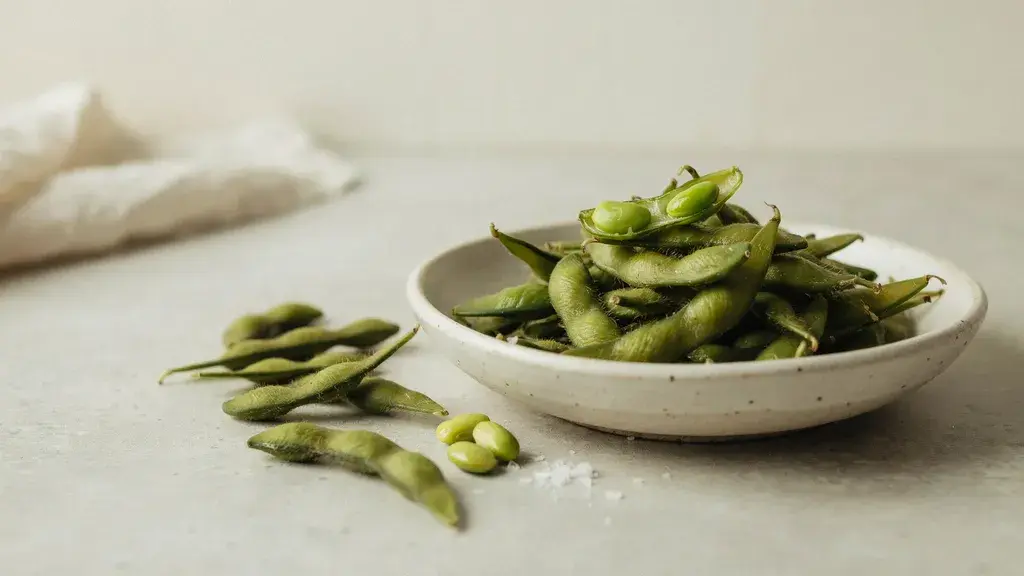

Edamame is a young soybean, picked and cooked before it has had time to mature and dry out on the vine.
I remember grabbing a bag of it at the grocery store for the first time and having no idea what I was actually looking at.
The Japanese have been eating it for centuries, usually as a quick bar snack alongside a cold beer.
These days you will find it on the menu at almost every Asian restaurant in the US, usually served warm as a starter before the main dish arrives.
What is Edamame?
Edamame is not just a generic term for young soybeans. It is a specific variety bred to produce bigger, sweeter beans meant to be eaten fresh, never dried like a regular black bean or pinto bean.
You catch it while it is still tucked inside its green pod, which is why it looks nothing like the yellowish, shriveled soybeans most people picture when they hear the word soy.
The name comes from Japanese and roughly translates to “stem beans,” a nod to the old practice of selling the pods while still attached to the branch.
That small detail has always stuck with me, since it explains why some older recipes call for edamame “on the stem” instead of loose.
As for the pod itself, skip it. It is tough, fibrous, and not meant to be chewed. The beans inside are the whole point: soft, tender, and ready to eat once boiled or steamed.
| Edamame vs. Soybean Same plant, different timing. Edamame is picked young and green, while a regular soybean is left to mature and dry, then turned into tofu, soy milk, or oil. Edamame is also its own cultivar, bred specifically for larger, sweeter beans suited to fresh eating, rather than just an early harvest of any soybean plant. |
What Does Edamame Taste Like?
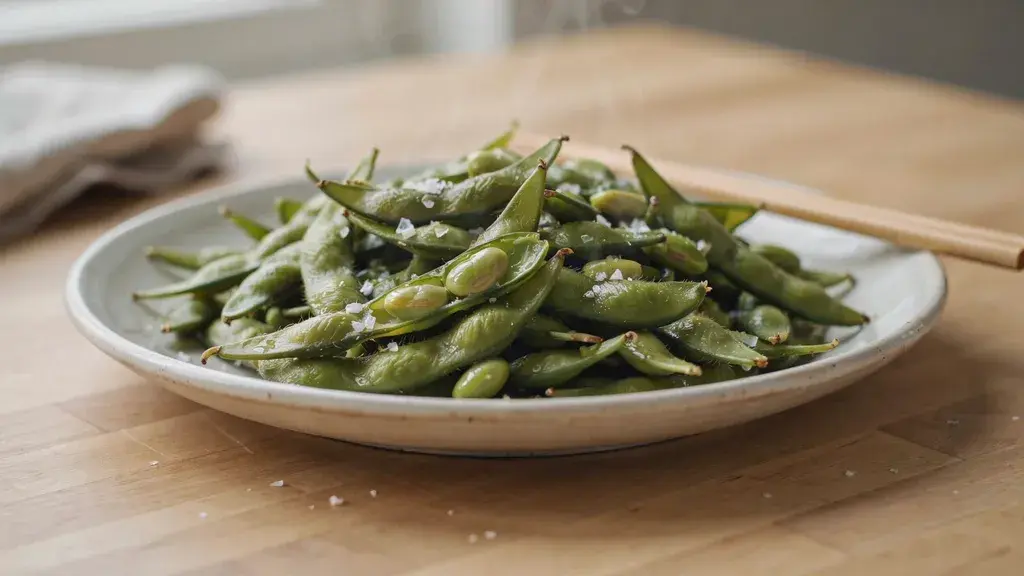
Edamame caught me off guard the first time I tried it. I expected something bland, basically a plain bean, and got a mild sweetness instead that reminded me more of fresh peas, with a little nuttiness underneath.
Nothing sharp, nothing bitter. Just sea salt on top, and you are pretty much done.
Texture does a lot of the heavy lifting here. Cooked properly, it has a slight snap to it, closer to a garden pea than the mush you would get from canned beans.
That is really the whole draw: a little sweetness, a little firmness, no sauce required.
Salt is really the only thing it needs, and even that is optional. I have served it plain to guests who assumed it would need soy sauce or something similar, and more than a few were surprised at how good it was on its own.
As for prep, it is boiling water and not much else. No seasoning skills required.
Quick Tip: If your edamame tastes bland or grassy instead of sweet, it is usually a sign it was overcooked. A few minutes in boiling water is genuinely all it needs.
Edamame Nutrition Facts
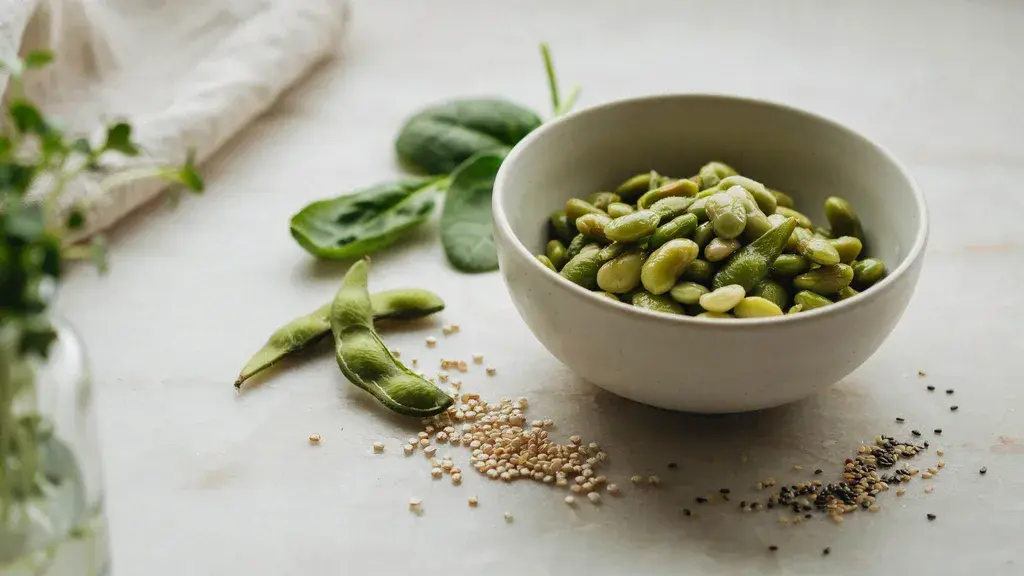
According to USDA FoodData Central, a single cup of cooked, shelled edamame (about 155 grams) comes in at roughly 188 calories, which is fairly light considering how filling it is.
| Nutrient | Per 1 Cup (155g) |
|---|---|
| Calories | 188 |
| Protein | 17 to 18g |
| Fiber | 8g |
| Carbohydrates | ~14g |
| Potassium | 676mg |
| Folate | High source |
Edamame is a complete protein, meaning it has all nine essential amino acids your body needs but cannot make on its own. That is genuinely rare for a plant food, and Harvard’s T.H. Chan School of Public Health backs this up too.
Add in 8 grams of fiber per cup, along with a decent hit of folate, iron, and calcium, and it starts to make sense why so many people cutting back on meat and dairy have made it a staple.
It is especially popular among people eating vegan, vegetarian, or just more plant-forward in general, and for good reason.
Not many plant foods can claim a complete amino acid profile the way edamame can. It is also gluten-free by nature and sits low on the glycemic index, so you don’t get the blood sugar spike you would from something starchier.
One thing worth knowing if you are watching your sodium: plain frozen edamame that you cook yourself gives you far more control over salt intake.
The pre-seasoned or roasted versions can pack in a lot more sodium than the numbers above would suggest.
Benefits of Eating Edamame
Beyond the basic protein and fiber numbers, edamame earns its spot in the freezer for a few other reasons worth knowing.
Start with the heart. The fiber and healthy fats in edamame, including small amounts of plant-based omega-3s, are linked to better cholesterol management and general heart health.
Because it is also low on the glycemic index and high in both fiber and protein, it digests slowly and keeps you fuller longer, without the crash you get from something starchier.
Then there is the mineral profile. Edamame is a solid source of iron, magnesium, and vitamin K, three nutrients tied to oxygen transport, muscle and nerve function, and normal blood clotting.
Zinc and copper also show up in meaningful amounts, both of which support immune function and cellular energy production.
And because edamame delivers a complete amino acid profile, it can genuinely stand in for animal protein in a meal, rather than just padding it out.
How Do You Serve Edamame?
The classic way is to boil it in lightly salted water for three to five minutes, then finish with coarse sea salt while it is still warm.
You eat it straight from the pod by popping the beans out with your teeth, which makes it more fun to eat than most snacks.
If you are cooking from frozen, which is the most common form outside of Japan, you can usually skip thawing altogether and add a couple of extra minutes to the boiling time.
Beyond the basic boil, it works just as well here:
- Shelled and tossed into a stir-fry for extra protein
- Added cold to grain bowls or salads
- Blended into a quick garlic and olive oil dip
- Roasted in the oven with chili flakes for a crunchy snack
I keep both forms in my freezer: the pod version for snacking while I cook, and the shelled version for whatever is actually going into the meal.
If you are new to it, start with frozen shelled edamame. It thaws fast under warm water, needs almost no prep, and can go straight into whatever you are already making without throwing off the rest of the recipe.
How to Eat Edamame the Right Way
If you are starting from raw or frozen in-pod edamame, boil or steam the pods for three to five minutes, then drain and toss with coarse sea salt while still warm.
To actually eat it, hold the pod at one end, place it between your teeth, and press down gently so the beans pop directly into your mouth.
Skip the pod itself. It is fibrous and not meant to be chewed or swallowed.
Working with shelled edamame instead? Skip the pod step entirely. A two- to three-minute boil is enough, and it goes straight into stir-fries, salads, or grain bowls.
Soy Myths, Cleared Up
Soy has a reputation problem, so it is worth separating what’s backed by research from what is just internet noise.
Myth: Soy is bad for the environment because of how much land it takes up.
Soy is genuinely one of the most widely grown crops in the world, and most of what is grown in the US is genetically modified.
That said, growing conditions vary a lot by farm, and responsibly sourced soy and edamame do exist.
The environmental concern is more about how a crop is farmed than about soy as a food itself.
Myth: Soy messes with hormones because it contains plant estrogen.
Soy does contain isoflavones, plant compounds that share a similar structure to estrogen, which is where this myth comes from.
Early concerns were based mostly on animal studies using doses far higher than what a person would get from eating soy foods.
More recent human research points the other way, tying these compounds to benefits for heart and brain health rather than harm.
Myth: Soy is not a real protein source.
This one does not hold up. Edamame is a complete protein containing all nine essential amino acids, which is uncommon among plant foods and puts it on par with animal protein sources in that respect.
Conclusion
Edamame is exactly what it sounds like once you get past the name: a young soybean, picked early, cooked, and eaten straight from the pod.
It is mildly sweet, packed with complete protein and fiber, and flexible enough to work as a snack, a side, or an ingredient in something bigger.
I keep a bag in my freezer year-round, whether that means a quick pod snack after work or a shelled batch tossed into tomorrow’s lunch bowl.
Frequently Asked Questions
Is Edamame Safe to Eat Raw?
No, raw edamame should always be cooked before eating. Cooking softens the beans and makes them easier to digest.
Can You Freeze Fresh Edamame Pods at Home?
Yes, blanch the pods in boiling water for a few minutes, then cool and pack them in an airtight bag. Stored this way, they will keep well in the freezer for several months.
Does Edamame Contain Gluten?
No, edamame is naturally gluten-free since it comes from soybeans, not wheat or other gluten-containing grains. It is a safe plant protein choice for people avoiding gluten.