
The problem with most small guest bedrooms isn’t size. It’s that the room was set up without thinking through how a guest actually uses the space.
A bed shoved in the middle of the room, a dresser that takes up half a wall, nowhere to hang a coat or set a bag down. The room ends up feeling cramped even when it technically has enough square footage.
I’ve tested most of the fixes in this list myself, and the ones that make the biggest difference are almost always the same: get the bed against a wall, switch to wall-mounted storage wherever possible, and keep the floor clear.
Everything else builds from there. Below are 21 small guest bedroom ideas that cover layout, storage, lighting, and the small details that make a guest feel genuinely looked after.
Small Guest Bedroom Ideas That Actually Work
1. Use a Daybed Instead of a Traditional Bed

A daybed is the most practical bed swap you can make in a small guest bedroom. It sits against the wall during the day and functions as a sofa, then converts to a sleeping space at night.
That single change frees up several square feet of walkable floor and makes the room feel more like a real living space rather than a spare room waiting to be used.
- Trundle option: A daybed with a pull-out trundle underneath sleeps two guests without permanently doubling the bed footprint. Worth the extra cost if you regularly have more than one person visiting.
- Frame weight: Go for a slim metal or thin wooden frame. Heavy, ornate frames make a small room feel fuller than it is.
- Wall placement: Push it into the corner rather than just against one wall. That opens up two walking paths instead of one.
| A daybed with a trundle sleeps two guests without permanently doubling the bed footprint. I recommend it over a standard twin for any room under 100 square feet. |
2. Try a Wall-Mounted Fold-Down Desk

A fold-down wall desk takes up zero floor space when it’s closed, which is most of the time. When a guest needs to work or just wants a surface to set things on, it opens into a full desk in under ten seconds. No other desk option does that in a small room.
- Height placement: Install at 28 to 30 inches from the floor. That matches standard desk ergonomics and keeps it comfortable for extended use.
- Built-in shelves: Fold-down models that keep small shelves accessible when closed give the wall some storage function even when the desk isn’t in use.
- Seating choice: Pair with a folding stool that slides under the bed or hangs on a hook when it’s not needed.
| Note: Always anchor wall-mounted desks into studs. Most designs hold 40 to 50 lbs when properly installed, which is more than enough for a laptop and coffee. |
3. Go for a Storage Bed with Built-In Drawers

A storage bed with built-in drawers removes the need for a separate dresser or storage cabinet. The drawers handle spare linens, extra pillows, and seasonal items, and the bed keeps the room looking clean because none of that is visible.
In a small guest bedroom where every piece of furniture competes for floor space, eliminating a dresser entirely is worth the slightly higher cost of a storage bed.
- Drawer depth: Look for deep drawers on both sides. Shallow drawers fill up fast and end up holding things that belong in the closet instead.
- Ottoman style: Lift-up ottoman bases give more total interior volume than side-pull drawers, though they need clear floor room in front to open properly.
- Visual profile: A low-profile platform base keeps the room feeling open. Beds that sit high on a box spring can make a small room feel claustrophobic.
4. Use Floating Nightstands

Floor-standing nightstands have two problems in a small guest bedroom. They take up floor space, and they make cleaning harder. Wall-mounted floating shelves fix both.
The floor stays visible and uncluttered, and guests still have a surface right where they need it. I’ve found this one change genuinely alters how spacious the room feels, even when nothing else changes.
- Mounting height: Level with the top of the mattress. Items should be within easy reach from bed without sitting up.
- Edge detail: Choose a shelf with a small raised lip or shallow drawer. A flat shelf with nothing to stop things from sliding is frustrating when a glass of water is involved.
- Finish match: Pick a finish that coordinates with the bed frame. It reads as a considered design choice rather than an afterthought.
| Anchor floating shelves into wall studs or use heavy-duty drywall anchors rated for the intended load. The last thing you want is a nightstand coming down in the middle of the night. |
5. Install Wall Sconces Instead of Table Lamps

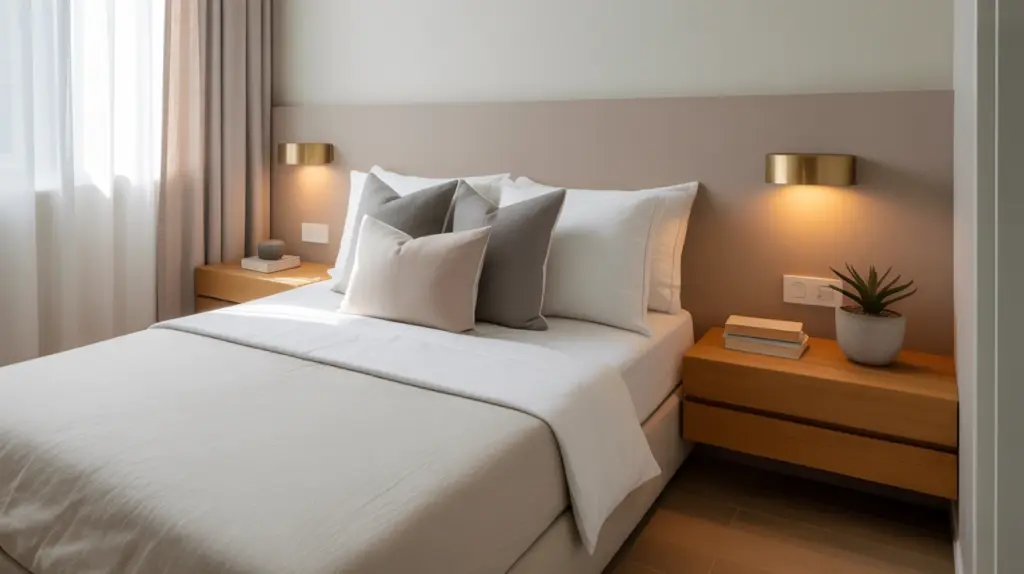
A table lamp takes up the entire surface of a small nightstand. Wall sconces move the light off the surface and place it exactly where guests need it for reading.
They also tend to look more intentional than a lamp balanced on a narrow shelf, which matters when the room is compact and every detail shows.
- Plug-in style: Plug-in sconces skip hardwiring entirely. They work in rental spaces, cause no installation damage, and take about 20 minutes to set up.
- Position height: Mount 24 to 30 inches above the mattress surface. Lower than that creates glare. Higher than that makes them useless for reading.
- Bulb temperature: Warm-toned bulbs in the 2700K to 3000K range are the right call for a bedroom. Cool white light at night works against sleep.
6. Add a Large Mirror to Open Up the Room

A large mirror reflects light and creates visual depth. It’s genuinely one of the few decor changes that makes a small room feel bigger without construction or furniture removal. Placed correctly, it can make a compact guest bedroom feel half a size larger than it actually is.
- Light reflection: Position the mirror on a wall directly opposite a window. That pushes natural light deeper into the room and makes it feel brighter throughout the day.
- Leaning option: A floor-leaning mirror adds perceived height and avoids any wall drilling.
- Door mirrors: Mirrored closet sliding doors serve the same space-expanding function while staying fully practical.
| Avoid placing a large mirror directly facing the bed. Many guests find it disruptive to sleep, and it’s an easy placement mistake in a small room where wall options are limited. |
7. Choose Light, Neutral Colors for Walls

Light wall colors reflect more natural and artificial light, which is the single highest-impact, lowest-effort change in a small guest bedroom.
Dark walls absorb light and visually shrink the room. Soft neutrals do the opposite. I’ve repainted rooms where furniture placement was nearly identical and the difference in perceived space was immediate.
- Warm neutrals: Greige and soft cream tones feel inviting without the clinical edge of stark white. They’re also more forgiving under different lighting conditions.
- Ceiling color: Paint the ceiling the same shade as the walls or slightly lighter. It pushes the visual height of the room upward and reads as more intentional than a flat white ceiling against a colored wall.
- Paint finish: Matte or eggshell. Both reduce surface glare and hide the inevitable minor wall imperfections in a room that gets used occasionally.
8. Keep Bedding Simple and Lightweight

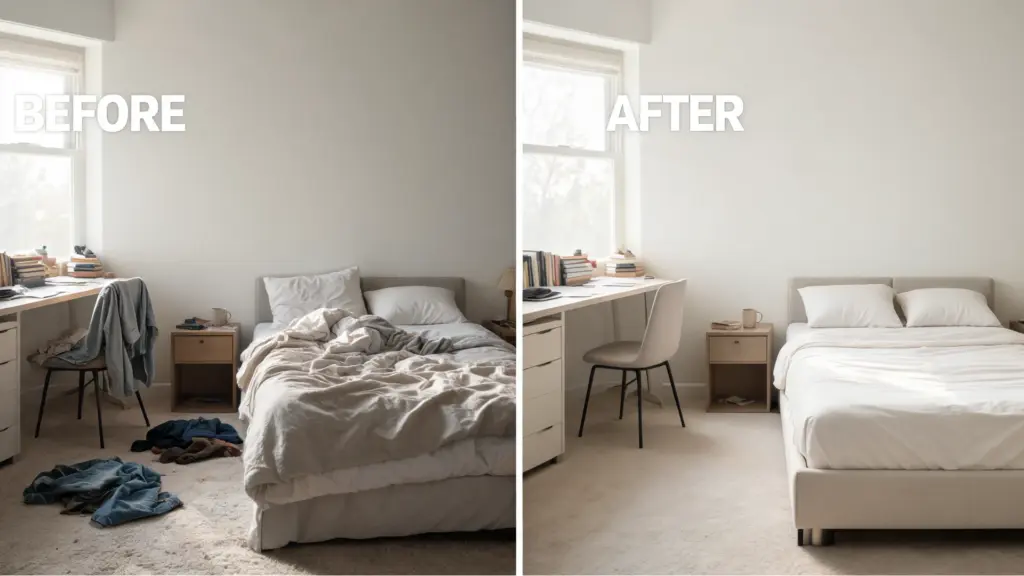
A thick, oversized duvet dominates a small bed and makes the whole room feel stuffed. A well-fitted, low-profile coverlet sits flat, reads as tidy at a glance, and takes about 90 seconds to straighten after a guest has slept in it.
The difference between a room that looks organized and one that looks chaotic often comes down to the bed, because it’s the largest visible surface in the space.
- Coverlet choice: A flat coverlet lies clean and is far easier to style than a thick duvet that has to be shaken and positioned each time.
- Pillow count: Two sleeping pillows plus one small decorative pillow at most. More than that and the bed reads as overdressed, which shrinks the visual space.
- Color tone: Neutral bedding shades, particularly in the white-to-greige range, reduce visual noise and let the surrounding room breathe.
9. Use Vertical Shelving Instead of Wide Cabinets

A wide storage cabinet trades floor space for storage. Vertical shelving gives you the storage without the trade-off.
Drawing storage upward keeps the walkable area open and actually makes the ceiling feel higher in a room where square footage is limited. It’s counterintuitive but shelving that runs near ceiling height makes low-ceilinged rooms feel taller, not more cramped.
- High placement: Reserve upper shelves near the ceiling for items guests won’t need daily. Extra blankets, spare towels, seasonal linens.
- Shelf depth: Keep each shelf at 10 to 12 inches deep so the unit doesn’t protrude too far into usable room space.
- Organized bins: Matching baskets or uniform bins on open shelves prevent the stored items from making the whole setup look chaotic.
10. Add Hooks Behind the Door

The back of a door is prime storage space that most small guest bedrooms ignore entirely. A simple hook rail there gives guests a spot for robes, bags, and towels without touching a single wall.
Over-the-door rack options require no tools and cause no damage to the door or door frame, which matters in a rental or in any room where you want to preserve wall space for other things.
- No-drill rack: Over-the-door hook racks hang over the top of the door and require zero installation. They come off in seconds.
- Pocket organizer: An over-the-door organizer with deep pockets stores shoes, toiletries, and small bags off the floor entirely.
- Finish style: Brushed metal or matte black hooks look deliberate rather than improvised.
11. Use a Foldable Luggage Rack

A suitcase without a designated spot ends up on the floor, which creates a tripping hazard and visually clutters the room.
A foldable rack solves both problems and stores flat under the bed when guests aren’t there. It’s one of the lowest-cost additions with the highest immediate impact on guest comfort.
If you pack your own bags often, you already know how frustrating it is to work off the floor. Read my guide on how to pack a suitcase efficiently for more on why luggage organisation matters during a trip.
- Base material: Canvas or webbing straps, not thin decorative ones. The rack needs to hold real bag weight repeatedly.
- Visual appeal: Bamboo or wood-frame racks look more considered than folding metal versions. The price difference is usually small.
- Room position: Place at the foot of the bed or tucked into a corner. Keep main walkways clear.
| A luggage rack is consistently one of the details guests mention afterward. It signals that you thought about what they actually need, not just how the room looks. |
12. Place the Bed in a Corner for More Walking Space

Pushing the bed into a corner removes one full accessible side and frees up a noticeable strip of floor space. In rooms under 120 square feet, that difference makes the room significantly easier to move around in.
It can feel like a design limitation, but with the right styling it reads as intentional and often feels cozier than a bed floating in the middle of a small room.
- Cozy styling: Add extra pillows along the wall-facing side to make the corner placement look deliberate and comfortable rather than cramped.
- Clear pathways: Keep at least 24 inches of clear walking space on both accessible sides of the bed.
- Best fit: Corner placement works especially well with twin beds, daybeds, and full-size frames in narrow rooms.
13. Use Multi-Functional Furniture Pieces

Every piece in a small guest bedroom should do more than one job.
Reducing the total number of furniture items while keeping full functionality is the most direct way to manage limited square footage without the room feeling stripped down.
Two well-chosen multi-functional pieces can often replace four single-purpose ones.
- Storage bench: A bench with interior storage replaces both a luggage surface and a separate linen storage cabinet in one compact footprint.
- Nesting tables: Small nesting side tables stack away completely when not in use and spread out when guests arrive.
- Convertible picks: Murphy beds, sofa beds, and fold-out chairs shift the room’s function based on who’s using it and when.
14. Add a Small Area Rug to Define the Space

A small area rug anchors the bed and gives the room a sense of structure. Without one, a small guest room often looks unfinished regardless of what else is in it.
The rug is frequently the piece that pulls the room together. I’ve walked into compact rooms that looked polished and compact rooms that looked incomplete, and the rug is usually the difference.
- Size rule: The front two legs of the bed should sit on the rug. A rug that floats in front of the bed without touching it reads as too small and looks like a mistake.
- Low pile: Flat-weave or low-pile rugs are easier to maintain and don’t visually shrink the floor area the way high-pile options do.
- Pattern scale: Small-scale or solid patterns work better in tight rooms than large, bold prints. Big patterns compete with everything else in the space.
15. Keep Decor Minimal but Personal

A small guest bedroom doesn’t need to feel bare to feel considered. A few carefully chosen pieces create warmth without overwhelming the limited wall and surface space.
The goal is for a guest to walk in and feel welcomed rather than housed. One framed photo or a small object that means something achieves that in a way that a generic print from a big-box store doesn’t.
- Wall art: One or two pieces, not a gallery wall. Negative space is part of the design in a small room.
- Live plants: A single small plant on a shelf adds life without adding clutter. Choosing plants by light level matters here, particularly if the room has limited natural light.
- Personal item: One framed photo or a meaningful object makes guests feel genuinely welcomed. It signals the room was prepared for them, not just cleared out.
16. Use Under-Bed Storage Bins

The space beneath a bed is one of the most consistently wasted areas in a small guest room. Low-profile rolling bins can hold spare linens, extra pillows, and off-season items without taking up any visible space.
The key is measuring the clearance before buying anything. Standard usable under-bed height runs from 7 to 12 inches depending on the frame.
- Rolling bins: Wheels make retrieval easy without lifting or shifting the entire bed frame.
- Vacuum bags: Vacuum-seal bags for bulky blankets and pillows can triple the usable capacity of each bin. Worth the investment if storage space is genuinely limited.
- Platform beds only: Under-bed storage doesn’t work with a box spring base. The box spring fills the space. Platform beds or low-profile frames are the ones that give you access.
17. Add a Compact Chair or Stool

A small chair or stool gives guests somewhere to sit other than the bed for putting on shoes, reading, or setting down a bag.
Without it, the bed ends up doing everything, which makes the room feel less complete as a guest space. It’s a small addition with noticeable practical value.
- Slim profiles: Chairs with open, tapered legs keep the floor visible and make the room feel less filled than upholstered armchairs with solid bases.
- Corner spot: Tuck it into a corner so it sits completely out of the main walking path.
- Foldable option: A folding chair that hangs on a wall hook or slides under the bed removes itself entirely when not needed.
18. Choose Curtains That Let in Natural Light

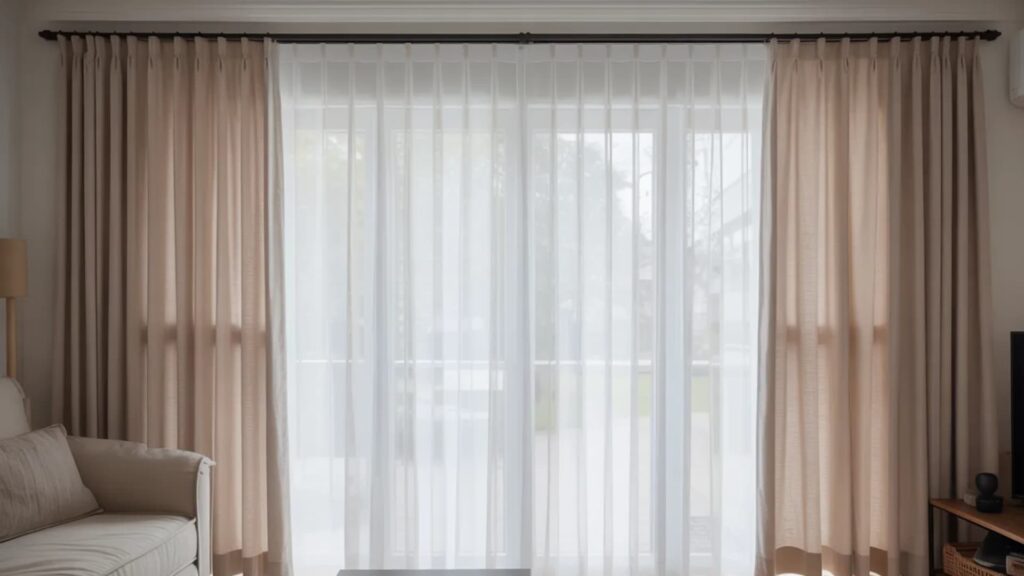
Heavy or dark curtains make a small guest bedroom feel closed off and dim during the day, which directly affects how spacious the room feels. Light-filtering options maintain privacy while keeping the room bright.
The one compromise worth making: a removable blackout liner clipped behind sheers gives guests who need complete darkness to sleep that option without sacrificing the daytime feel of the room.
- Sheer panels: White or off-white sheers diffuse incoming light without blocking it.
- Hang height: Mount the curtain rod close to the ceiling, not just above the window frame. This is one of the most effective ways to make a room feel taller without touching anything structural.
- Blackout liner: Clip-on blackout liners are available separately and slot behind any sheer panel. Guests who are sensitive to early morning light will appreciate having the option.
19. Use a Monochrome Color Scheme

Using different shades and textures of a single color reduces visual noise and makes a small room feel more pulled together. When the eye doesn’t jump between competing tones, the room reads as larger and calmer.
Monochrome doesn’t mean one flat shade. Varying textures within a single color family, linen, cotton, wood, ceramic, creates depth without adding visual complexity.
- Tone layering: Mix light, mid, and deeper shades of the same color for depth.
- Texture variety: Different materials within the same palette prevent the room from reading as flat or staged.
- Accent rule: One contrasting accent piece, a black lamp or natural wood frame, prevents the room from feeling sterile.
20. Add a Small Tray with Essentials for Guests

A stocked tray on the nightstand removes the awkwardness of guests searching through an unfamiliar space for things they need. It signals that the room was genuinely prepared for them rather than just cleared out and closed off.
In my experience, guests mention this detail more than almost anything else. It’s a small investment in guest comfort that takes about five minutes to put together.
- Core items: Phone charger, small bottle of water, notepad, pen.
- Comfort extras: Earplugs, sleep mask, small pack of pain reliever. These are things people often need at night and feel awkward asking for.
- Room reference: A small card with the WiFi password saves guests the trouble of asking for it, especially late at night.
21. Keep Floor Space Clear as Much as Possible
Open floor space is what makes a small room feel livable rather than cluttered.
Every furniture and storage decision in a small guest bedroom should work toward keeping as much floor visible as possible.
Even removing one unnecessary furniture piece, a chair that no one uses, a second side table, a basket that’s been sitting in the corner for three years, can make a compact room feel noticeably easier to move around in.
- Vertical shift: Move storage upward onto walls and shelves instead of keeping bins, baskets, or boxes on the floor.
- Cable control: A charging hub or cable clips on the nightstand keep cords off the floor entirely.
- Furniture audit: Remove any piece that doesn’t serve a clear, regular function for guests staying in the room. If you’re keeping it out of habit, it’s probably not earning its floor space.
Storage Ideas for Small Guest Rooms
The right storage placement keeps everything out of sight without making the room harder for guests to use. These are the five storage approaches I’d prioritise in any small guest bedroom, roughly in order of impact.
High shelves. Wall height above eye level is the most underused storage zone in most rooms. Shelves placed between five and seven feet hold labeled bins, spare linens, and folded items guests don’t need daily, all completely off the floor and out of the way.
Under-bed rolling bins. They handle the bulkiest items. Measure clearance before buying. Vacuum bags compress duvets and pillows to a fraction of their actual size, which makes this storage approach far more useful than it looks on paper.
Storage bench. A lidded bench at the foot of the bed works three ways: seating, a surface for luggage, and interior storage for spare blankets. It replaces two or three separate pieces in one compact footprint.
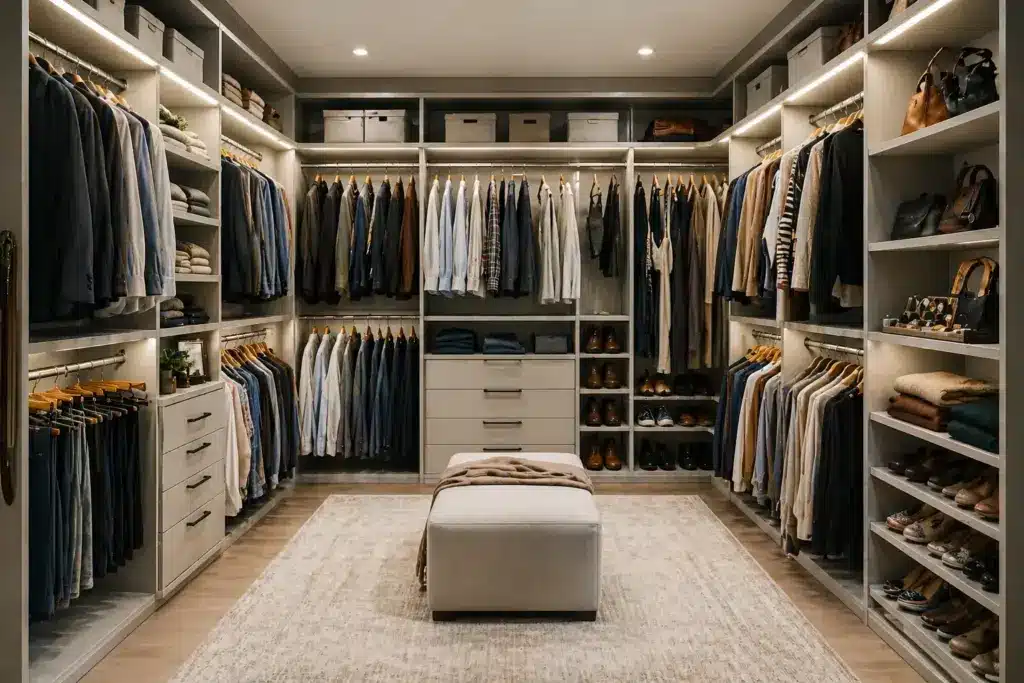
Smart closet organisation. Reserve half the hanging rod for guests. Leave one shelf for spare towels and a spare blanket. Keep the floor clear. A closet set up this way gets used. One that looks full or disorganised doesn’t.
Bedside tray. Stock it with a phone charger, water, a notepad, and the WiFi password. Everything a guest reaches for first, without needing to open a drawer or ask.
Color, Lighting, and Visual Tricks
These are the adjustments with the highest visual impact relative to the effort involved. Each one targets how the eye reads the room rather than the actual square footage.
| Topic | What to Do | Why It Works |
|---|---|---|
| Wall Colors | Soft white or light neutral shades | Reflects light, visually opens the room |
| Ceiling | Same shade as walls or slightly lighter | Makes the ceiling feel higher |
| Lighting | Wall sconces with warm bulbs (2700K to 3000K) | Saves surface space, adds layered depth |
| Mirrors | Place opposite a window | Boosts light, adds perceived depth |
| Surfaces | Keep items to a minimum | Reduces visual noise, room reads as more open |
| Curtains | Match wall color, hang near ceiling | Keeps lines clean, room looks wider and taller |
The ceiling and curtain height points are where most small guest bedroom setups fall short. Painting the ceiling to match the walls and mounting curtain rods near the ceiling rather than just above the window frame are both free or near-free changes that have an immediate effect on perceived room height.
How to Make Guests Feel Comfortable in a Small Bedroom
Guest comfort in a small room comes down to three things: covering the basics, adding a few extras they’ll actually use, and keeping the space genuinely clean. Getting all three right is what separates a room that guests compliment from one they just tolerate.
Must-Have Guest Essentials
Clean sheets, a supportive pillow, and a medium-weight blanket are the non-negotiables. A bedside lamp and easy access to a charging point follow directly.
Four to five empty hangers and a clear surface for a bag round out the functional basics. These things reduce friction and help guests settle in quickly rather than spending their first hour locating things.
Airflow matters more than most people give it credit for. If the room doesn’t get much natural ventilation, a small fan makes a real difference to sleep quality. Check before guests arrive, not the morning after.
Small Additions That Matter
The stocked bedside tray covered in idea 20 above handles most of this.
Beyond that: fresh towels within easy reach, a small mirror (a compact one on the floating nightstand or a full-length one leaning against the wall), and a couple of hooks for clothes or bags.
These are the things guests look for first and notice most when they’re missing. If you’re also thinking about how to keep the room tidy while a guest is staying, my guide on how to clean your room covers daily habits that work even in compact spaces.
Common Mistakes to Avoid in Small Guest Bedrooms
Most small guest bedrooms fail for the same predictable reasons. These are worth knowing before making any changes, because fixing a layout problem after furniture has been bought is more expensive than planning around it.
Too many furniture pieces. Adding items fills walking space faster than expected. A room that has enough square footage on paper can feel cramped if there are five or six pieces competing for that space. Start with less, add back only what’s genuinely useful.
Oversized furniture. A king-size or queen-size bed in a room that’s really suited to a full or twin dominates the space and leaves guests feeling like they’re sleeping in a furniture showroom. Scale the bed to the room, not to a preference for a larger sleeping surface.
Single ceiling light. One overhead fixture creates dull corners and flat visibility. Without layered lighting, the room feels smaller and less comfortable to spend time in, especially in the evening.
No clear storage for guests. Cluttered surfaces and nowhere obvious to put things make guests feel like they’re imposing rather than staying. Even a couple of dedicated hooks and one empty drawer changes that dynamic completely.
Decor overload. Too many decorative pieces on walls and surfaces create visual noise. A small room reads better with fewer, more intentional items than with everything on display at once.
Frequently Asked Questions
These are the questions I get most often from people working on a compact guest bedroom setup.
How do I make a small guest bedroom look bigger?
Light wall colors, a large mirror placed opposite a window, floating furniture with visible legs, and clear floor space are the four changes with the most impact.
Curtains hung near the ceiling rather than just above the window frame also add significant perceived height. Doing all five together makes a noticeable difference even in a very compact room.
What is the best bed for a small guest room?
A daybed or a full-size storage bed with built-in drawers are the two most practical options. A daybed frees up floor space during the day and functions as seating.
A storage bed eliminates the need for a separate dresser. Both work better in a small guest bedroom than a standard bed frame with no secondary function.
How do I decorate a small guest bedroom on a budget?
The highest-impact changes cost the least. Repainting in a light neutral, rearranging furniture to push the bed into a corner, adding over-the-door hooks, and clearing unnecessary items from the room are all free or near-free.
A set of floating shelves, a folding luggage rack, and a stocked bedside tray can be done for under $100 combined.
How much storage does a guest bedroom need?
For a short stay of one to three nights: a luggage rack, four to five empty hangers, one accessible shelf or drawer, and hooks for a coat and bag.
For longer stays, add under-bed storage for the host’s overflow items so the closet can be properly cleared for the guest. Most guests need less space than hosts think, but they need the space they do need to be clearly designated.
Should a small guest bedroom have a desk?
Only if guests are likely to work during visits. If yes, a wall-mounted fold-down desk is the only option worth considering in a genuinely small room.
It takes up zero floor space when closed and opens into a functional work surface in seconds. A standard desk takes up floor space permanently, which is not a trade worth making for an occasional-use room.
What color should a small guest bedroom be?
Soft white, warm greige, or light cream. These shades reflect the most light, which makes the room feel more open throughout the day.
Bring color in through textiles, artwork, and accessories rather than walls. A single accent color in bedding or cushions reads well against a neutral wall without reducing perceived space.
How do I arrange furniture in a small guest bedroom?
Start with the bed. Push it into a corner or against the longest wall to free up the maximum amount of walkable floor. Every other piece should be assessed on whether it earns its floor space.
Wall-mounted and floating options, nightstands, shelving, sconces, should replace floor-standing versions wherever possible. Leave at least 24 inches of clear walking space on both accessible sides of the bed.
Final Verdict
If I were setting up a small guest bedroom from scratch, I’d start with three things: get the bed into a corner, swap floor-standing nightstands for floating wall shelves, and add a foldable luggage rack.
Those three changes alone address floor clearance, surface clutter, and practical guest comfort in one pass. Everything else in this list builds on that foundation.
The cozy small guest bedroom ideas that cost the most to skip aren’t the expensive ones.
They’re the free ones: clearing unnecessary furniture, pushing the bed against a wall, mounting curtain rods near the ceiling. If you’re working with limited space, sort those first. Then come back to the lighting and storage upgrades.
The room responds faster to layout changes than to decor additions, and that order saves both money and frustration.
For more on how layout decisions play out in adjacent spaces, the same principles apply to small living room layouts.