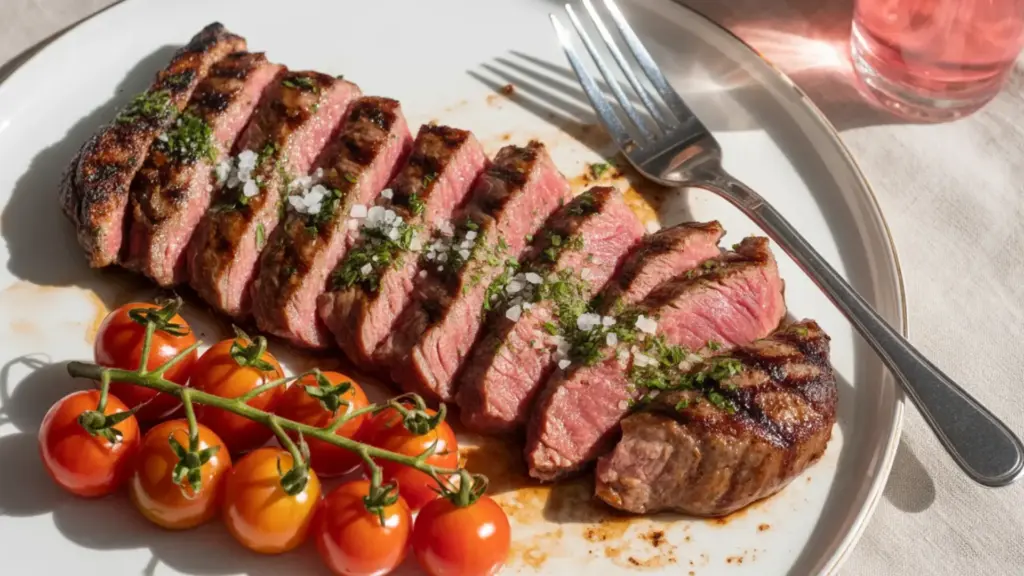

If you’ve ever thought flank steak is actually good for you, I’ve got you covered. I used to pick steaks based on taste alone, until I started paying closer attention to what was actually on my plate.
Flank steak surprised me. It’s one of the leanest cuts of beef out there, and it delivers serious protein without loading you up with extra calories.
If you’re tracking macros, eating keto, trying to build muscle, or just making smarter food choices, flank steak deserves a spot on your radar.
I’ll walk you through the flank steak nutrition facts, including calories by serving size, its full macro and micronutrient breakdown, health benefits, how it compares to other cuts, and tips for cooking it the right way.
What is Flank Steak?
Flank steak comes from the abdominal muscles of the cow, located just below the ribs and behind the plate. It’s a long, flat cut with a visible grain running through it.
Because these muscles work constantly, for breathing and core stability, they stay lean. That means less intramuscular fat and more usable protein per gram.
It’s different from skirt steak, which is thinner and comes from the plate section. Flank is thicker, has a straighter grain, and holds up better for grilling and broiling. The leanness isn’t a flaw. It’s a direct result of where the muscle sits and how hard it works.
I noticed this the first time I cooked flank steak at home. Compared to fattier cuts like ribeye, it cooked faster and needed a quick, high-heat sear to stay tender. Once I started slicing it against the grain, the texture improved dramatically.
Flank Steak Nutrition Facts
Flank steak is a lean beef cut. Here’s a detailed breakdown of its calories, protein, and fat. All values below are per 100g cooked.
| Nutrient | Amount per 100g |
|---|---|
| Calories | ~192 kcal |
| Protein | ~27–28g |
| Total Fat | ~7.1g |
| Saturated Fat | ~3.4g |
| Monounsaturated Fat | ~3.3g |
| Polyunsaturated Fat | ~0.32g |
| Carbohydrates | 0g |
| Dietary Fiber | 0g |
| Sugar | 0g |
Those numbers make it clear that flank steak gives you maximum protein and minimal carbs, all in under 200 calories per 100g.
How Cooking Methods Affect Flank Steak Nutrition
Cooking method plays a big role in how the calories and fat content of flank steak change. The protein stays strong, but added fats and moisture loss can shift the final numbers. Here’s how the most common cooking styles compare.
1. Grilled
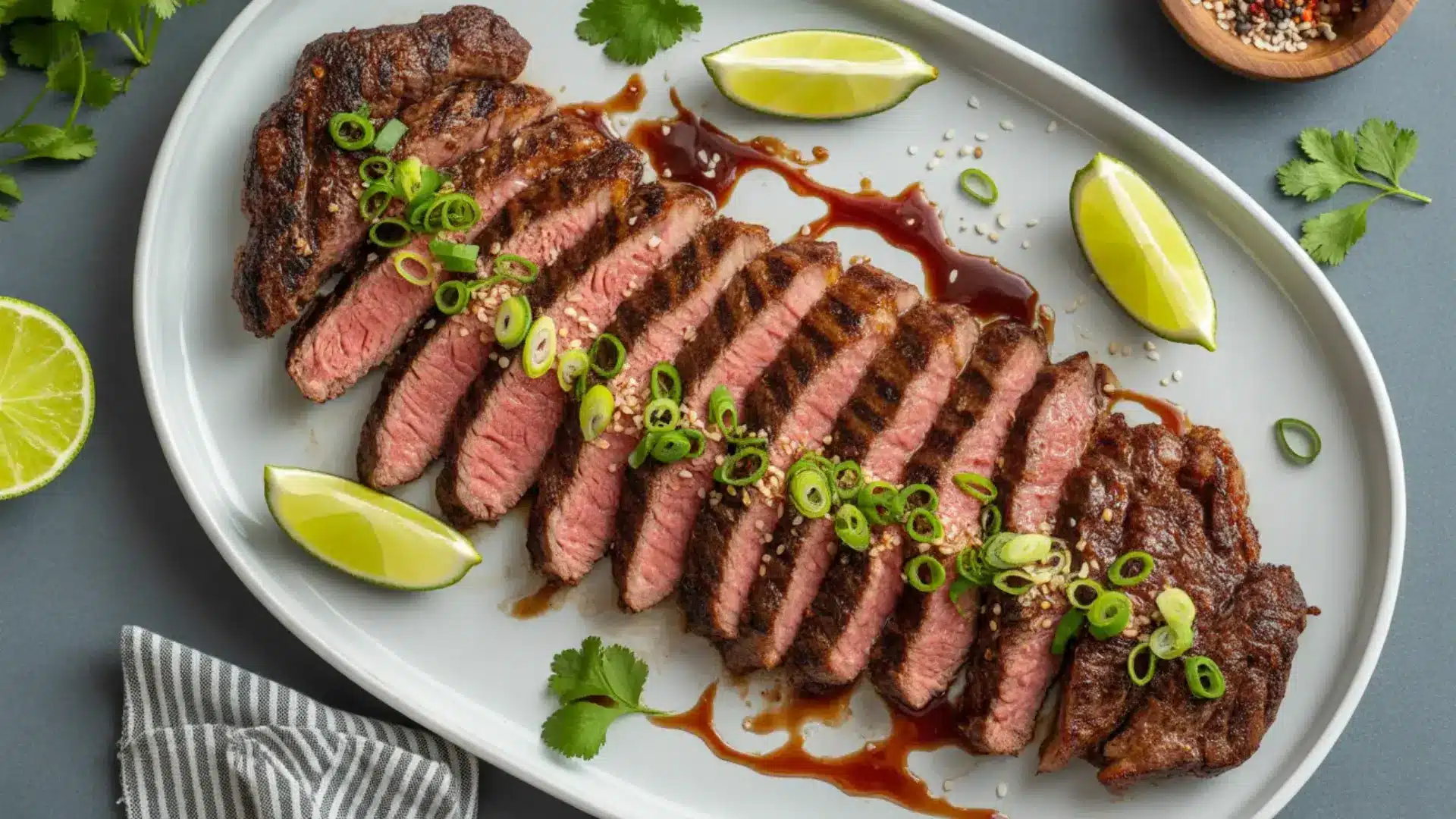
Grilling allows excess fat to drip away while keeping protein intact. At around 192 kcal per 100g, it’s one of the leanest ways to prepare flank steak.
From my experience, flank steak is one of the easiest cuts to grill because it cooks quickly and develops a strong char without needing much seasoning.
- Delivers roughly 27–28g of protein and ~192 kcal.
- Allows some fat to render off during cooking, keeping the final fat at around ~7g per 100g
- Adds no extra calories if no oil or butter is used
Choosing ‘no added oil’ means no extra calories, making it the healthiest choice for those monitoring macros closely. Grilling is ideal for preserving the natural flavors of flank steak without any additions.
2. Broiled
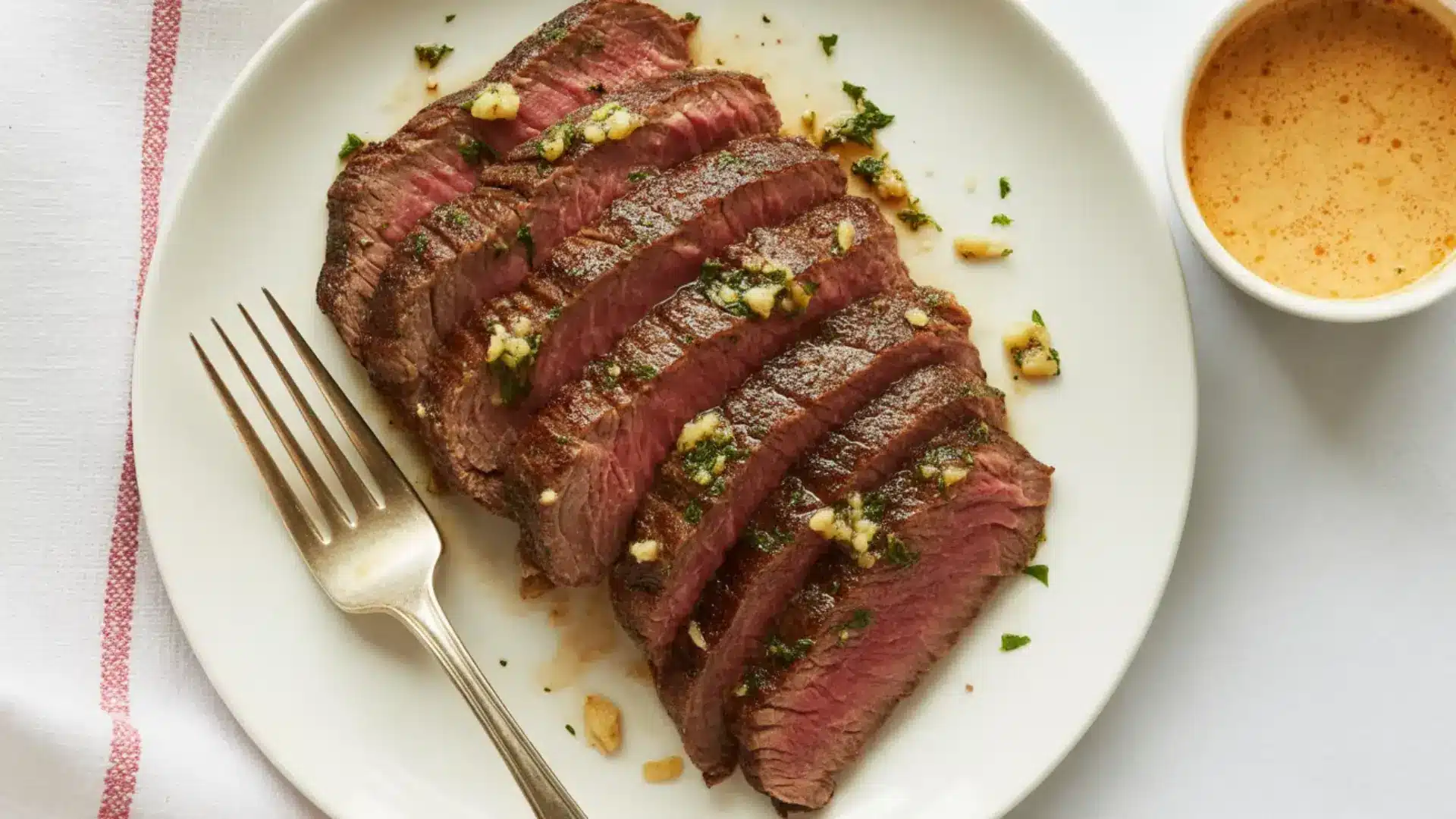
Broiling uses high oven heat that works similarly to grilling. It retains nutrients well and sits at around 192 kcal per 100g cooked.
- Delivers roughly 27–28g of protein and ~192 kcal
- Helps reduce surface fat as it cooks, landing at around ~7.1g of fat per 100g
- No added calories unless marinades contain oil or sugar
Nutrition stays close to the steak’s natural values as long as marinades are kept oil-free and sugar-free.
3. Pan-Seared
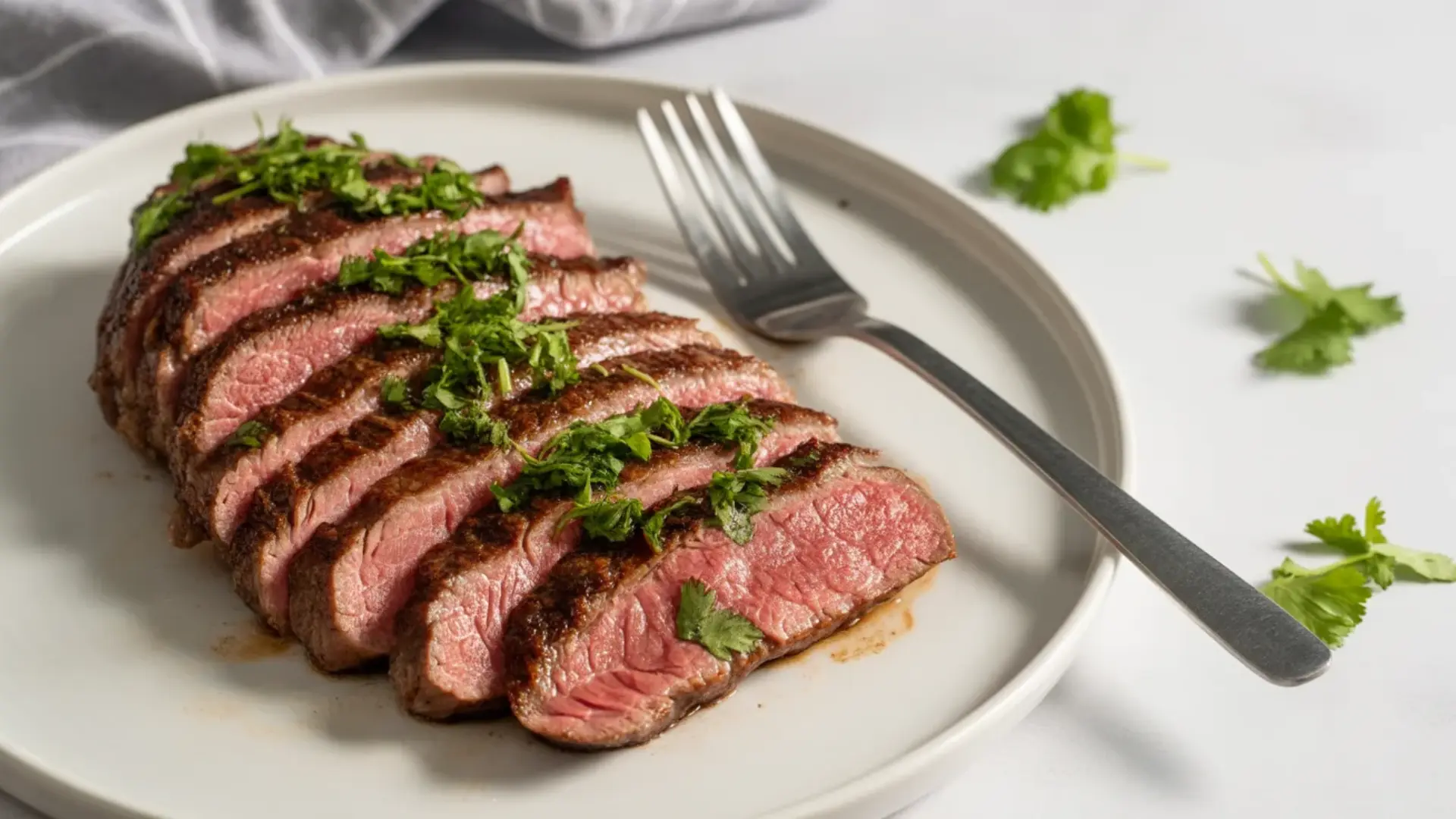
Pan-searing can quickly raise the calorie count, depending on what you cook it in. A dry pan keeps it at around 192 kcal per 100g, but oils and butter push that number up fast.
Using a screaming-hot dry cast-iron pan reduces the need for added fat entirely. When I cook flank steak indoors, this is usually the method I rely on because it gives a crust similar to grilling.
- Delivers roughly 27–28g of protein per 100g cooked, but calories climb when oil is used generously
- Added oils increase total fat and calorie count; fat can rise well above ~7g per 100g, depending on how much oil is used
- Minimal oil keeps the macro profile manageable
Using a screaming-hot dry cast-iron pan reduces the need for added fat entirely. If you pan-sear, measure your oil. One tablespoon already adds 120 calories before the steak hits the pan.
4. Braised
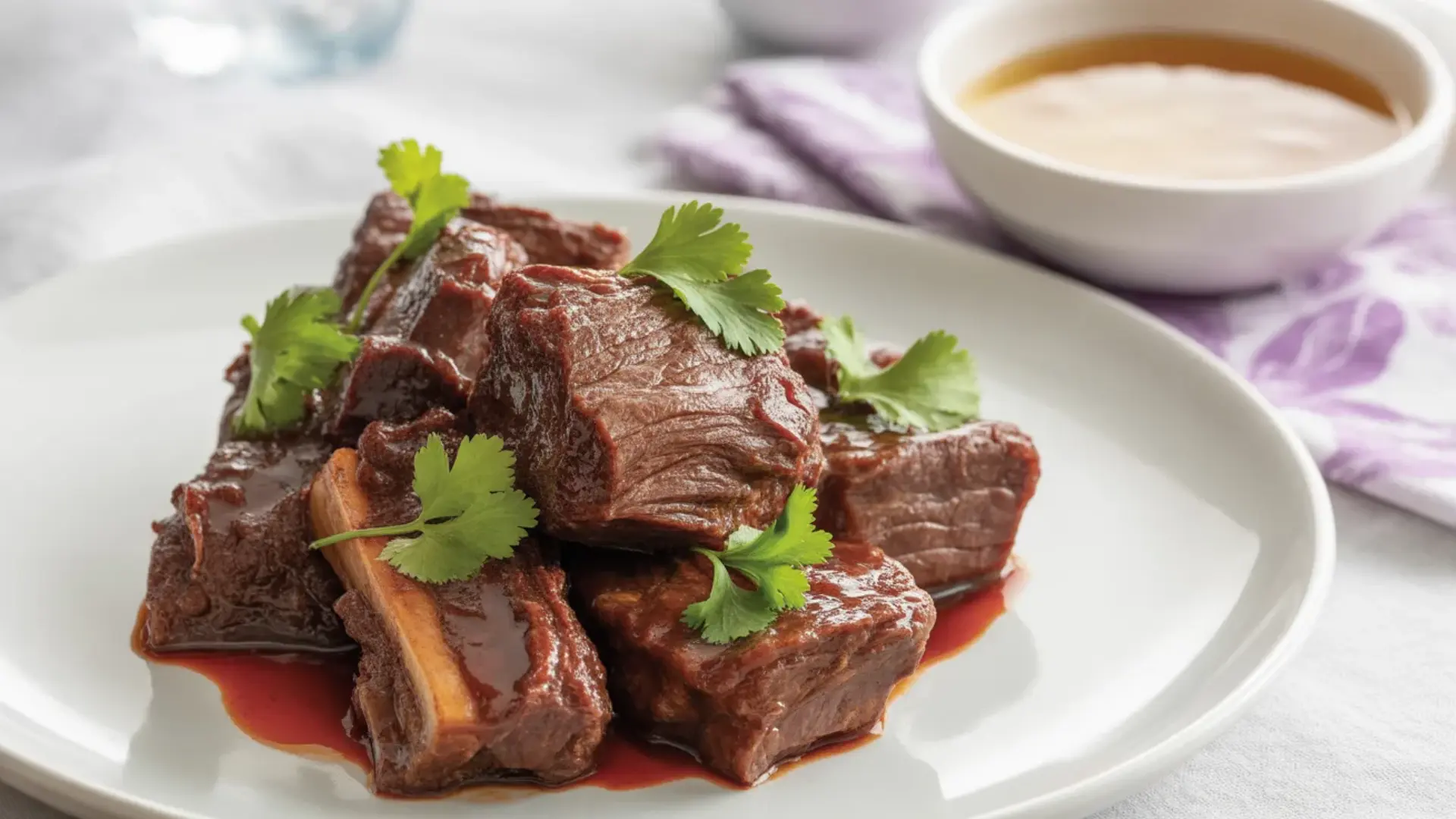
Braising cooks flank steak slowly in liquid, which keeps it at around 180–190 kcal per 100g cooked. It keeps the meat tender but can add calories depending on what’s in the pot.
- Delivers roughly 24–26g of protein and ~180–190 kcal
- Protein reads slightly lower than dry-heat methods because braising retains moisture, which dilutes the concentration per gram; total protein in the portion remains strong
- Cooking liquids may add extra calories to the final dish, and fat stays around ~7g if the broth is kept lean
- Retains moisture, which makes the lean cut far more tender
Choosing a low-fat broth over cream or butter-based liquids keeps this method balanced and macro-friendly. Keep the braising liquid simple and low-fat; the steak’s nutrition does the heavy lifting on its own.
Raw vs. Cooked: Why the Numbers Differ
Raw and cooked flank steak show different calorie counts for one simple reason: moisture loss. Flank steak loses 20–25% of its weight during cooking as water evaporates.
This concentrates the protein and calories per gram. So, cooked flank steak will always look more calorie-dense than raw, even though no nutrients were added.
| State | Calories (per 100g) | Protein | Fat | Water |
|---|---|---|---|---|
| Raw | ~149 kcal | ~21–22g | ~6g | Higher |
| Cooked (Broiled) | ~192 kcal | ~27–28g | ~7.1g | Reduced |
| Cooked (Grilled) | ~192–200 kcal | ~27–28g | ~7–7.5g | Reduced |
Always note whether you’re logging raw or cooked weight. Getting that wrong is the most common tracking mistake I see.
I made this mistake myself when I first started tracking macros. I logged cooked steak as raw weight and ended up underestimating my calories for weeks.
Flank Steak for Specific Diets
Because it’s high in protein and naturally carb-free, flank steak fits into several popular diet plans. Here’s how it works for different nutrition goals.
1. Keto Diet
If you’re following a ketogenic diet, keeping carbs extremely low is your main priority. Flank steak makes staying in ketosis simple and satisfying.
- Contains zero carbohydrates and zero sugar
- Provides moderate fat to support energy needs
- Helps preserve muscle mass while in a calorie deficit
Since keto focuses on fat and protein, this cut fits naturally into meal plans without requiring adjustments. Just watch added oils and portion sizes.
2. High-Protein Diet
High-protein diets are designed to support muscle growth, recovery, and appetite control. Flank steak delivers dense protein without unnecessary carbohydrates.
- Provides over 27g of protein per 100g cooked
- Contains all nine essential amino acids
- Helps increase fullness and reduce snacking
If your goal is to build strength or maintain lean mass, this cut offers a reliable and efficient protein source.
3. Low-Carb Diet
Low-carb eating focuses on reducing blood sugar spikes and controlling cravings. Since flank steak has no carbohydrates, it fits perfectly into this approach.
- Zero carbs and zero sugar, glycemic index of 0
- Does not raise blood glucose levels
- Pairs well with vegetables and healthy fats
For anyone limiting carbs but not strictly keto, this steak makes meal planning easier and more flexible.
4. Bodybuilding Meal Prep
Bodybuilders often need high protein with controlled fat levels. Flank steak offers a balance that supports muscle growth without excess calories.
- High-quality complete protein with all essential amino acids
- Moderate fat compared to ribeye
- Easy to portion and track for macros
When grilled or broiled, it becomes a practical meal prep protein that supports recovery and consistent strength gains.
5. Weight Loss & Calorie Control
For weight loss, controlling calories while staying full is essential. Flank steak can help when portions are measured carefully.
- High protein improves satiety and reduces hunger between meals
- Moderate fat prevents overeating
- Works best when grilled or broiled without heavy oils
When paired with vegetables and whole foods, flank steak fits into a balanced, calorie-controlled plan without feeling restrictive. Knowing smart low-calorie snack options helps you fill the gaps between meals without undoing the progress a protein-rich dinner like this supports
Vitamins & Minerals in Flank Steak
Flank steak isn’t just about protein. It’s loaded with vitamins and minerals your body genuinely needs every single day.
% Daily Value (% DV) shows how much of a nutrient one serving provides toward your full day’s requirement, based on a 2,000-calorie diet.
A 20% DV or higher means it’s a strong source. So when flank steak shows 50–60% DV for B12, one serving covers more than half your daily need.
All values below are per 3 oz (85g) cooked serving, based on a 2,000-calorie daily diet.
| Nutrient | % Daily Value (per 3 oz cooked) | What It Does |
|---|---|---|
| Vitamin B12 | ~50–60% DV | Supports nerve function and helps form healthy red blood cells |
| Zinc | ~30–40% DV | Boosts immune health and speeds up wound healing |
| Niacin (B3) | ~40–45% DV | Aids energy metabolism; top 18% of all foods |
| Selenium | ~25–30% DV | Acts as an antioxidant, protecting cells from damage |
| Phosphorus | ~20–25% DV | Strengthens bones and teeth |
| Iron (Heme) | ~15–20% DV | Carries oxygen in the blood; absorbs better than plant-based iron |
| Vitamin B6 | ~15–20% DV | Supports brain health and mood regulation |
| Choline | ~15–20% DV | Supports liver function and brain development |
| Riboflavin (B2) | ~10–15% DV | Helps convert food into usable energy |
| Pantothenic Acid (B5) | ~8–10% DV | Essential for hormone production and metabolism |
| Potassium | ~8–10% DV | Helps regulate blood pressure and muscle contractions |
One 3-oz serving covers nearly half your daily B12 and zinc needs. That’s hard to beat from a single food.
Flank Steak vs. Other Cuts: Nutrition Comparison
Not all steak cuts are equal when it comes to calories, protein, and fat. Here’s how flank steak compares to other popular protein choices.
All values are per 3 oz (85g) cooked serving.
| Cut | Calories | Protein | Fat |
|---|---|---|---|
| Flank Steak | ~163 kcal | ~24g | ~6g |
| Top Sirloin | ~160 kcal | ~26g | ~6g |
| Skirt Steak | ~175 kcal | ~22g | ~10g |
| Ribeye | ~250+ kcal | ~22g | ~18g |
| Chicken Breast | ~165 kcal | ~31g | ~3.5g |
Note: The nutrition facts table earlier uses per 100g for direct USDA comparison. This table uses per 3 oz (85g). the standard US serving size, for practical meal planning.
Flank steak vs. ribeye delivers comparable protein at roughly 90 fewer calories per 3 oz. Flank steak vs. chicken breast, chicken wins on protein per calorie, but flank delivers significantly more iron.
For protein-per-calorie efficiency in beef, flank and sirloin are the top two options. If you regularly rotate between beef and poultry, understanding the fat content of chicken thighs helps you make a more informed comparison when planning your weekly meals.
Who Should Be Cautious?
Flank steak is healthy for most people. But a few groups should pay closer attention to portion size. Whenever I talk about red meat nutrition, I usually remind people that moderation matters more than avoiding foods entirely.
- High cholesterol: An 8-oz serving contributes a notable amount of dietary cholesterol. Those managing existing levels should consult a doctor about the appropriate portions to eat regularly.
- Gout sufferers: Flank steak is moderately high in purines at around 100–110mg per 100g. High purine foods can raise uric acid levels and trigger flare-ups.
- General red meat caution: Studies link excessive red meat consumption to increased risk of certain cancers, type 2 diabetes, and heart disease. Flank steak can be part of a healthy diet — not the entire diet.
When eaten in reasonable portions and balanced with vegetables, whole grains, and other protein sources, flank steak fits into a well-rounded eating plan.
Final Thoughts
By now, you can see that flank steak is among the smartest beef cuts. It’s lean, high in protein, rich in essential vitamins and minerals, and suitable for most diets, from keto to calorie counting.
Flank steak nutrition profile backs it up. High protein, low carbs, meaningful B12 and zinc in a single serving, that’s a strong case for any cut of meat to make.
From my own experience, the key is preparation. Skip the butter, use a simple marinade, cook it hot and fast, and always slice against the grain. Do those four things, and flank steak rewards you every time.
If this helped you understand what’s actually in your steak, drop a comment below. I’d love to know your go-to way to cook flank steak.