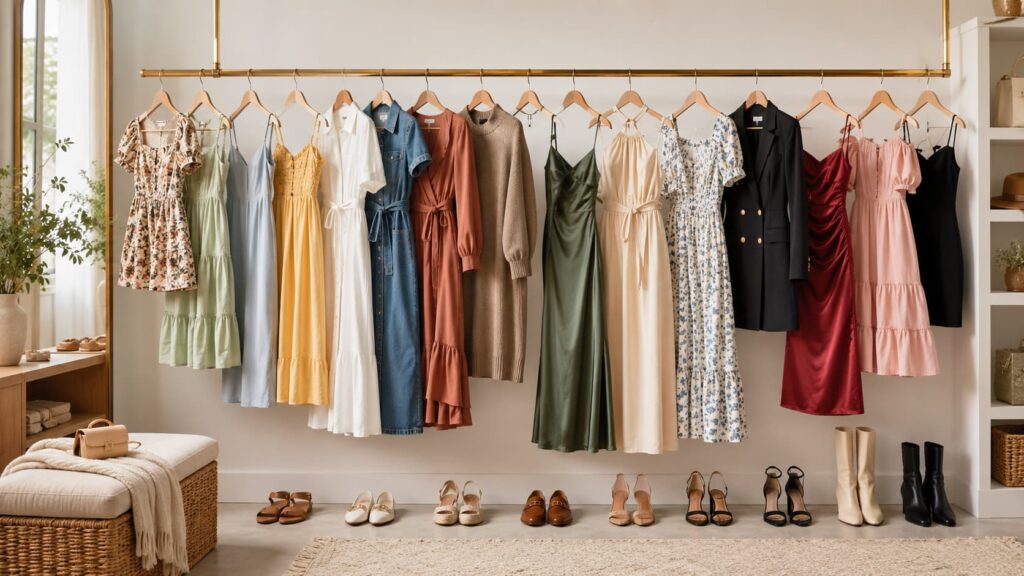

Shopping for dresses should feel fun, but the names can get confusing fast. You see words like A-line, shift, sheath, wrap, bodycon, midi, maxi, and slip, then wonder what each one actually means.
I’ve had that same moment while scrolling through dress pages and trying to guess the shape from a single model’s photo. The good thing is that dress names get much easier once you know the basic shape, length, and fit.
This simple breakdown of the most common types of women’s dresses will help you spot each one, know when to wear it, and choose a dress that fits your real plans.
How to Identify Dress Types by Their Features
The main types of women’s dresses are grouped by shape, length, design, fabric, and occasion. That is why one dress can fit into more than one group. A satin slip dress can also be a midi dress. A floral A-line dress can also be a wedding guest dress.
Here are the easiest ways to sort them:
- By shape: A-line, shift, sheath, fit-and-flare, bodycon
- By length: mini, knee-length, midi, maxi
- By design: wrap, shirt dress, slip, smocked, halter
- By season: sundress, sweater dress, linen dress, denim dress
- By occasion: work dress, cocktail dress, wedding guest dress, vacation dress
Once you understand these groups, shopping feels less like guessing. You can look at the waist, hem, neckline, and fabric, and then tell what kind of dress you are looking at.
Dress Types by Length: Mini, Midi, and Maxi
Dress length changes how a dress feels, moves, and fits your plans. A short dress can feel casual or party-ready. A midi dress can work for daily wear. A maxi dress gives more coverage and often feels relaxed.
1. Mini Dress

A mini dress has a short hemline that usually falls above the knee. It can be loose, fitted, sporty, casual, or dressy based on the fabric and cut. Cotton mini dresses work well for daytime, while satin, ribbed, or fitted mini dresses are better for evening plans.
Mini dresses are common for college events, birthdays, concerts, casual weekends, date nights, and nights out.
- Best suited for: petite frames, rectangle shapes, hourglass shapes, and anyone who likes shorter hemlines
- Shoes to wear: sneakers, ankle boots, cowboy boots, platform sandals, heels
- Occasions: concerts, birthdays, college events, casual weekends, night plans
2. Midi Dress

A midi dress falls between the knee and ankle. It is one of the easiest dress lengths to wear because it gives coverage without feeling too formal. You can find midi dresses in A-line, fitted, wrap, shirt, slip, and smocked designs.
A cotton midi works well for daytime. A satin or fitted midi can work for dinner, parties, and semi-formal plans. It’s the length I reach for most when I only want to pack one dress for a trip.
- Best suited for: hourglass shapes, pear shapes, tall frames, petite frames with the right hem length
- Shoes to wear: loafers, block heels, sandals, ballet flats, ankle boots
- Occasions: work, brunch, dinner, church, family events, casual weddings
3. Maxi Dress

A maxi dress has a long hemline that usually reaches the ankles or floor. It can look casual, beach-ready, or dressy based on the fabric, print, and neckline. Printed, cotton, and soft summer maxis are popular in warm weather.
Maxi dresses are often worn for vacations, beach dinners, outdoor weddings, baby showers, resort stays, and family events.
- Best suited for: tall frames, pear shapes, rectangle shapes, and anyone who wants a longer, relaxed fit
- Shoes to wear: flat sandals, wedges, low heels, slides
- Occasions: vacations, beach dinners, outdoor weddings, baby showers, summer events
Types of Dresses for Women by Silhouette
A dress silhouette means the shape of the dress. Learning these dress silhouette types helps you understand how a dress will sit on your body before you even try it on. Some silhouettes skim the body, some open out from the waist, and some hang straight from the shoulders.
4. A-Line Dress
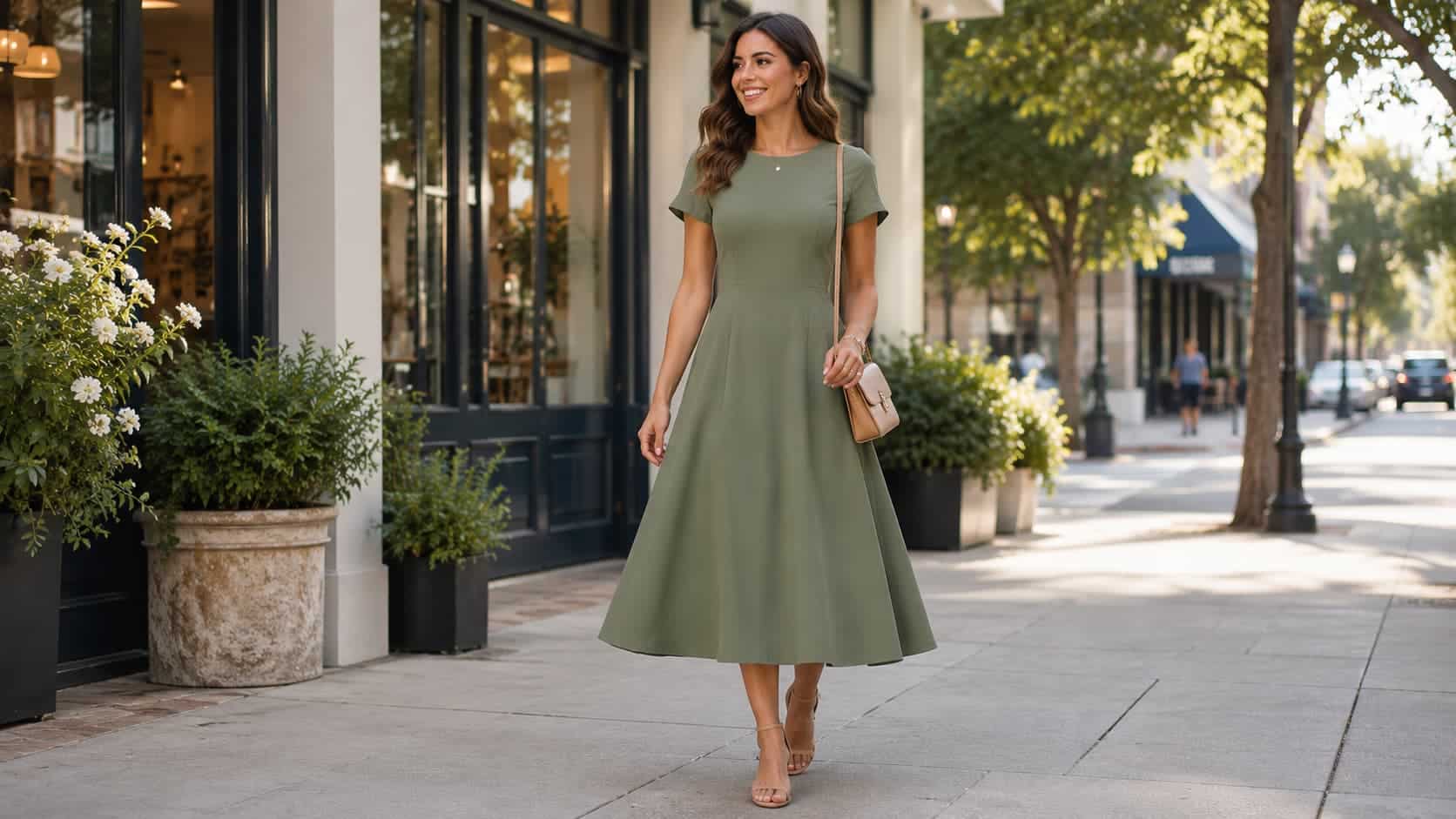
So, what is an A-line dress? An A-line dress is fitted near the top and slowly widens toward the hem. The shape looks like the letter A, which is where the name comes from.
This silhouette is popular because it gives shape without feeling too tight. You can find A-line dresses in mini, midi, and maxi lengths.
The cut actually goes back to a 1955 Christian Dior collection, and it’s stuck around this long for a simple reason: it skims the body instead of clinging to it. Among dress silhouette types, it’s usually the easiest one for beginners to spot on a rack.
- Best suited for: pear shapes, hourglass shapes, rectangle shapes, and anyone who wants a balanced fit
- Shoes to wear: flats, heels, sandals, loafers, boots
- Occasions: work, brunch, weddings, dinners, casual days
5. Shift Dress

A shift dress has a straight shape that hangs from the shoulders. It does not hug the waist, so it feels easy and simple to wear. Many shift dresses come in cotton or linen-style fabrics, solid colors, or prints.
This dress works well when you want something neat without a tight fit.
- Best suited for: rectangle shapes, apple shapes, and anyone who likes a straight, loose shape
- Shoes to wear: loafers, sandals, low heels, flats
- Occasions: work, summer days, lunch plans, casual events
6. Sheath Dress

A sheath dress follows the body more closely than a shift dress. It often has a clean, fitted shape that works well for office outfits, meetings, dinners, and dressier events. This is usually the first dress I suggest for a job interview, since it reads polished without any extra effort.
Many women wear sheath dresses with blazers, pumps, pointed flats, or simple jewelry.
- Best suited for: hourglass shapes, rectangle shapes, and anyone who likes a closer fit
- Shoes to wear: pointed flats, pumps, low heels, slingbacks
- Occasions: work, meetings, dinner events, formal lunches
7. Fit-and-Flare Dress

A fit-and-flare dress has a fitted top and a skirt that opens out from the waist. It gives shape at the waist while still giving room to move.
This silhouette is common for parties, bridal showers, graduations, dates, and daytime events.
- Best suited for: pear shapes, hourglass shapes, rectangle shapes, and anyone who likes a waist shape with a fuller skirt
- Shoes to wear: block heels, ankle-strap sandals, ballet flats
- Occasions: parties, brunch, school events, weddings, showers
8. Bodycon Dress

A bodycon dress fits close to the body from top to bottom. It is often made from stretchy fabrics such as ribbed knit, jersey, or spandex blends.
Bodycon dresses are common for date nights, birthdays, club plans, and fitted casual outfits. A long-sleeve bodycon midi can also work in fall with styled ankle boots and a coat.
- Best suited for: hourglass shapes, athletic builds, and anyone who likes a fitted look
- Shoes to wear: heels, boots, strappy sandals
- Occasions: parties, date nights, birthdays, night plans
9. Empire Waist Dress

An empire waist dress has a waistline that sits right under the bust. The skirt falls from a higher seam, giving the dress a soft, loose shape below the chest.
This style is often seen in summer dresses, baby shower dresses, vacation dresses, and some formal gowns.
- Best suited for: apple shapes, pear shapes, maternity-friendly outfits, and anyone who wants less cling at the waist
- Shoes to wear: flat sandals, wedges, light heels
- Occasions: summer events, baby showers, vacation dinners, outdoor plans
10. Drop-Waist Dress

A drop-waist dress has a waist seam that sits lower, closer to the hips. This changes the body line and gives the dress a different shape from regular waist dresses.
You may see drop-waist dresses in mini styles, cotton summer dresses, and party outfits.
- Best suited for: rectangle shapes, tall frames, and anyone who likes a lower waistline
- Shoes to wear: ballet flats, slingbacks, strappy sandals
- Occasions: casual parties, vacations, daytime events, trend-based outfits
Dress Types by Design: Wrap, Shirt, Slip, and More
Some dresses are named by their design details. These details can include buttons, straps, neckline, fabric drape, or waist closure.
11. Shirt Dress

A shirt dress looks like a longer button-down shirt. It usually has a collar, buttons, cuffs, and sometimes a belt or waist tie. Some shirt dresses feel crisp and work-friendly, while others feel soft and casual.
This is a useful dress when you want something neat but not too formal, and it’s one of the easiest pieces to build a personal clothing style around, since it swings from polished to relaxed depending on what you pair it with.
- Best suited for: rectangle shapes, apple shapes, pear shapes, and anyone who likes a relaxed, clean fit
- Shoes to wear: loafers, white sneakers, ballet flats, ankle boots
- Occasions: work, coffee runs, travel days, errands, weekend lunches
12. Wrap Dress

A wrap dress crosses over the front and ties at the side or waist. It often creates a V-neck shape and lets you adjust the fit. Wrap dresses can come in mini, midi, and maxi lengths. Diane von Furstenberg introduced the style in 1974, and it has stayed a wardrobe staple ever since, mostly because the tie waist adjusts to your body with zero tailoring.
This dress works well because it can transition from work to dinner to travel to family plans.
- Best suited for: hourglass shapes, pear shapes, apple shapes, and anyone who wants an adjustable waist
- Shoes to wear: flats, loafers, block heels, heeled sandals
- Occasions: work, dinner, travel, family events, brunch
13. Slip Dress

A slip dress has thin straps and a smooth, soft shape. It is often made from satin or silk-like fabric, but casual versions can be made from cotton blends or ribbed materials.
Slip dresses can feel simple, but they can look dressy with the right shoes and layers. You can wear one with a cardigan, blazer, denim jacket, or one of the classic tops for women you already own underneath.
- Best suited for: rectangle shapes, hourglass shapes, petite frames, and anyone who likes a soft drape
- Shoes to wear: slingback flats, strappy sandals, low heels, boots
- Occasions: dinner dates, parties, weddings, vacations, layered fall outfits
14. Smocked Dress

A smocked dress has stretchy gathered fabric around the bust, waist, or bodice. This gives the dress shape while still keeping it comfortable.
Smocked dresses are often made from cotton, linen-style fabric, or soft summer material. They are common for warm-weather plans because they feel easy and flexible.
- Best suited for: pear shapes, hourglass shapes, apple shapes, and anyone who wants to stretch through the bodice
- Shoes to wear: flat slides, sandals, white sneakers, espadrilles
- Occasions: picnics, vacations, brunch, outdoor markets, casual summer events
15. T-Shirt Dress

T-shirt dress looks like a longer tee. It is soft, casual, and easy to wear. Some versions are oversized, while others are straight or slightly fitted.
This is one of the most casual types of dresses for women. It works well when you want a quick outfit that still feels comfortable.
Best suited for: rectangle shapes, apple shapes, athletic builds, and anyone who likes a loose everyday fit
Shoes to wear: sneakers, slides, flat sandals, casual boots
Occasions: college, errands, road trips, airport outfits, weekend plans
16. Halter Dress

A halter dress has straps that go around the neck or tie behind it. This style shows the shoulders and is often worn in warm weather.
Halter dresses can be mini, midi, or maxi length. They work well for beach dinners, summer parties, outdoor events, and vacations.
- Best suited for: pear shapes, hourglass shapes, athletic builds, and anyone who likes shoulder-focused necklines
- Shoes to wear: flat sandals, wedges, strappy heels, slides
- Occasions: vacations, beach dinners, summer parties, outdoor events, date nights
17. Babydoll Dress

A babydoll dress has a high waistline and a loose skirt. It often has a short length and a soft, easy fit. Some versions have puff sleeves, square necklines, or cotton fabric.
This dress works well when you want a style that does not cling to the waist or hips.
- Best suited for: apple shapes, petite frames, rectangle shapes, and anyone who likes a loose waist fit
- Shoes to wear: platform sandals, sneakers, ballet flats, ankle boots
- Occasions: campus days, brunch, summer errands, weekend outings, casual dates
Once you understand these dress types, picking the right one feels much easier. A maxi may be right for vacation, a wrap dress may work for dinner, and a T-shirt dress may feel right for errands or casual weekends.
Dress Types by Fabric and Season
Fabric can change the full feel of a dress. A cotton dress may feel casual. A satin dress may feel dressy. A knit dress may feel better in cold weather. This is why the season matters when choosing a dress.
18. Sundress

A sundress is a light dress made for warm weather. It often comes in cotton, linen-style fabric, floral prints, soft solids, or simple summer patterns. You may see it with thin straps, wide straps, sleeveless cuts, or a relaxed shape.
Sundresses are common for beach days, college classes, summer errands, backyard parties, and weekend plans.
- Best suited for: pear shapes, rectangle shapes, hourglass shapes, and anyone who likes a relaxed warm-weather fit
- Shoes to wear: white sneakers, flat sandals, slides, espadrilles
- Occasions: beach days, farmers’ markets, college classes, summer errands, backyard parties
19. Denim Dress

A denim dress is made from denim or chambray. It can come as a shirtdress, minidress, jumper dress, fitted dress, or button-front dress. Denim gives the dress a casual and structured feel.
This dress works well for college outfits, concerts, casual dates, errands, and spring-to-fall layering.
- Best suited for: rectangle shapes, pear shapes, petite frames, and anyone who likes structured casual dresses
- Shoes to wear: sneakers, ankle boots, cowboy boots, flat sandals
- Occasions: concerts, college, errands, weekend plans, casual lunches
How to Pick the Right Dress Type
You do not need a closet full of dresses to feel ready for different plans once you understand the basic types of dresses for women. A few smart choices can go a long way.
Start with these questions:
- Where will you wear it?
- Will you sit, walk, dance, or travel in it?
- Is the fabric right for the weather?
- Do you want a loose fit, a close fit, or a shaped waist?
- Can you wear it with shoes and layers you already own?
If you want a dress for daily use, start with a midi, shirt dress, sundress, or T-shirt dress. If you need a dress for work, try a wrap, sheath, A-line, or shirt dress, the same structured shapes that work well within a smart casual dress code for women. For parties, a slip dress, cocktail dress, blazer dress, or bodycon dress may fit the plan better.
Common Dress Shopping Mistakes
Buying a dress online can be tricky, and I see the same handful of mistakes repeated no matter who I’m helping shop. A dress may look good in the photo, but the fit, fabric, or length may not work for your real plans. Before you buy, think about where you’ll wear it, how it feels, and what shoes or layers you already own.
- Buying Only for the Photo: A dress can look perfect online, but feel hard to wear in real life. A satin slip dress may work for dinner, but not for a long college day or errands. Choose a dress that fits your actual plans.
- Ignoring the Fabric: Fabric matters a lot. Cotton and linen-style dresses feel better for summer, while sweater dresses work well in colder months. Always check the fabric before adding a dress to your cart.
- Choosing the Wrong Length: Mini, midi, and maxi dresses all feel different when you walk or sit. Pick a length that suits your height, shoes, and comfort.
- Forgetting About Shoes: A dress should work with shoes you already own. A midi dress can look casual with sneakers, neat with loafers, or dressy with heels.
- Skipping the Size Chart: Sizes change from brand to brand. Check the bust, waist, hips, and length before buying, especially for fitted dresses.
- Picking Trend Over Comfort: A trendy dress is not worth it if you keep adjusting it. A good dress should let you move, sit, and feel relaxed.
- Not Thinking About Layers: Some dresses work better when you can layer them. If a dress can be styled more than one way, you’ll likely wear it more often.
Shopping for dresses gets easier when you slow down and think beyond the first look. A dress should match your plans, comfort, weather, and closet. When you choose with those things in mind, you are more likely to buy dresses you actually wear, not pieces that only look good for a few seconds online.
Frequently Asked Questions
What is an A-line dress?
An A-line dress fits closely at the bust and shoulders, then flares out toward the hem in the shape of a capital A. It’s considered one of the most universally flattering silhouettes because it skims the hips and thighs instead of clinging to them.
What’s the difference between a wrap dress and a shirt dress?
A wrap dress ties at the waist and adjusts to your body each time you put it on. A shirt dress buttons down the front like a men’s shirt and holds a fixed, structured shape. Reach for a wrap when you want flexibility, and a shirt dress when you want the same crisp look every time.
What type of dress is best for travel?
A T-shirt dress, shirt dress, wrap dress, or maxi dress works well for travel. These styles are easy to pack and can be worn with simple shoes. Choose a soft fabric that does not wrinkle much and feels comfortable when sitting or walking.
How do I make a simple dress look better?
Start with shoes, a jacket, and one good accessory. A sundress can look nicer with sandals and a small bag. A slip dress can feel more complete with a cardigan. A shirt dress can look cleaner with loafers and simple jewelry.
Can one dress work for both day and night?
Yes, some dresses can work for both. A wrap dress, slip dress, shirt dress, little black dress, or midi dress can change with shoes and layers. Wear sneakers or flats during the day, then switch to heels, boots, or a dressier bag at night.
Final Thoughts
Learning the main types of dresses for women makes shopping much easier. Once you know the difference between an A-line, shift, sheath, wrap, slip, midi, and maxi dress, these dress silhouette types stop feeling random and start making sense as soon as you look at a product photo.
For most American women, a useful dress closet starts with a casual day dress, a work-friendly dress, a warm-weather dress, and one dressy option for events.
Save this list before your next shopping trip so you can compare each dress by fit, length, fabric, and real-life use, rather than guessing from the name alone. If a dress type here surprised you, drop a comment and let us know which one.