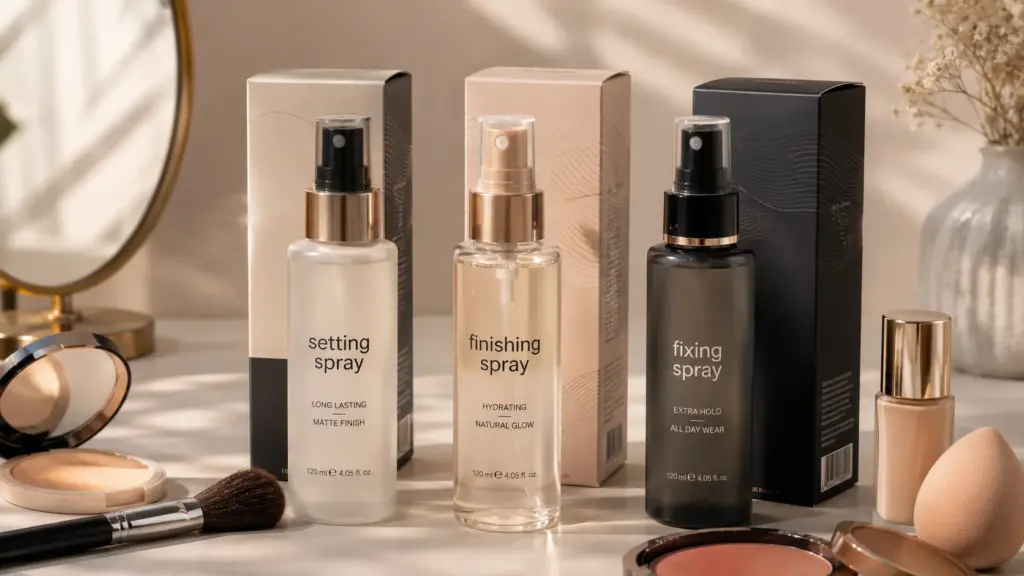

Your makeup is done, but the last step still feels oddly confusing. One bottle says “set,” another says “finish,” and then a fixing spray joins the shelf. I get why this feels messy. These names sound close, but they do not always do the same job.
The setting spray vs finishing spray difference comes down to wear and texture. One helps makeup stay in place longer. The other helps makeup look softer, smoother, and less powdery. Fixing spray often means stronger hold, but brands may use the name differently.
Once you know what each spray is meant to do, choosing one becomes much easier, so you can leave home with less doubt.
The Quick Makeup Spray Test: Hold or Finish?
Before you compare bottles, ask one simple question: do you want your makeup to last longer, or do you want it to look softer?
That answer usually tells you which spray to reach for.
- Setting spray: Use it when makeup fades, transfers, separates, or gets oily before the day ends. It is mainly for wear time.
- Finishing spray: Use it when makeup looks dry, powdery, flat, or cakey after you finish applying it. It is mainly for the final look.
- Fixing spray: Use it when you need a stronger hold for heat, sweat, photos, or long events. Some setting sprays also offer serious long-wear, so check the product claims.
If you use both finishing and setting products, use finishing spray first. Let it dry. Then use setting spray or fixing spray as the final layer.
This simple check keeps the choice easy before the product names start to feel confusing.
What Each Spray Actually Does
The easiest way to understand these sprays is to look at the job each one performs. Setting spray is about wear, finishing spray is about the final look, and fixing spray is usually about stronger hold.
1. Setting Spray

Setting spray helps makeup stay in place longer. It is the one to reach for when your foundation fades, transfers, separates, or gets shiny too fast.
It works best when the problem is wear. If your makeup looks good in the morning but starts breaking down by lunch, the issue is sometimes the right foundation type more than the spray itself, since a mist can only hold what’s already suited to your skin. Look for words like long-wear, transfer-resistant, matte, sweat-resistant, waterproof, or oil control.
Some setting sprays feel light and flexible, while stronger ones may feel firmer or drier on certain skin types. If your skin feels tight easily, prep with a CeraVe moisturizer for your face and use a light mist instead of soaking your face.
2. Finishing Spray

Finishing spray helps makeup look smoother after everything is already applied. It is more about texture than wear.
Use it when your makeup looks dry, flat, powdery, or cakey. It can soften powder and make foundation, blush, bronzer, and highlighter look less separate. This is helpful if your makeup has the right color but still looks like product sitting on top of the skin.
Look for words like hydrating, dewy, powder-melting, skin-like finish, or refreshing mist. Finishing spray is often a better pick for dry, mature, or textured skin, especially when powder makes the face look dull, and that dewy look holds up better when your glass skin routine underneath is already doing its part.
3. Fixing Spray

Fixing spray usually means stronger hold, but brands do not always use the term the same way. Some fixing sprays act like strong setting sprays, while others feel more like a finishing mist.
In most routines, fixing spray is best for heat, sweat, long events, photos, or stage-style makeup. It can feel firmer than a regular setting spray, so it is not always needed for everyday makeup.
The safest rule is to check the product claims. If the bottle talks about wear, sweat, transfer, or waterproof hold, treat it like a setting or fixing spray. If it mentions hydration, glow, or powder softening, treat it more like a finishing spray.
| Spray Type | Main Job | Best For | What to Check |
|---|---|---|---|
| Setting spray | Helps makeup last longer | Fading, transfer, oil, long days | Long-wear, matte, transfer-resistant |
| Finishing spray | Makes makeup look smoother | Dry, powdery, cakey, flat makeup | Hydrating, dewy, powder-melting |
| Fixing spray | Gives a stronger hold | Heat, sweat, events, photos | Waterproof, sweat-resistant, strong hold |
Once you know the job of each spray, the choice gets much easier. Pick a setting spray for wear, a finishing spray for texture, and a fixing spray when regular hold is not enough.
Which Spray Goes First?
If you use more than one spray, order matters because one spray helps the surface look better, and the other helps hold the result.
Use this order for a full makeup routine:
- Apply skin prep, primer, foundation, and concealer.
- Add cream products if you use them.
- Powder the areas that need it.
- Add blush, bronzer, and highlighter.
- Mist finishing spray to soften the surface.
- Let it dry fully.
- Apply setting spray or fixing spray as the last step.
You do not need both every day. Use setting spray if your makeup fades, transfers, or gets oily fast. Use finishing spray if your makeup looks dry, powdery, or cakey. Use fixing spray if you need stronger hold for heat, sweat, long events, or stage-style makeup.
Some sprays can handle both light hold and a softer finish, but not all do. Check the product claims before you expect one bottle to do every job. The easiest order is simple: soften the look first, then hold it in place.
Choose by Makeup Problem

The fastest way to pick a spray is to name the problem you want to solve before you buy anything.
| Makeup Problem | Best Choice | Why |
|---|---|---|
| Makeup fades fast | Setting spray | Helps the base last longer |
| Foundation transfers | Setting or fixing spray | Helps seal the final layer |
| Makeup looks cakey | Finishing spray | Softens powder and dry texture |
| Skin looks flat | Finishing spray | Makes makeup look less dry or dull |
| Face gets oily fast | Matte setting spray | Helps reduce shine and movement |
| Makeup melts in heat | Fixing spray | Gives stronger hold |
| Powder looks heavy | Finishing spray | Makes powder look less obvious |
| Event makeup must last | Finishing spray, then setting spray | Soften first, hold last |
| Light daily makeup | One gentle spray | Pick based on wear or texture |
If you only want one, choose the setting spray for wear, the finishing spray for texture, and the fixing spray for a stronger hold. Start with the problem you notice most.
This keeps the choice simple and stops you from buying a spray that does not match your makeup issue.
Best Pick by Skin Type

Your skin type changes how a spray feels and performs, so the same product can look great on one person and feel wrong on another.
| Skin Type | Best Pick | Simple Tip |
|---|---|---|
| Oily skin | Matte setting spray | Powder oily areas first, then spray |
| Dry skin | Hydrating finishing spray | Use less powder and avoid heavy hold sprays unless needed |
| Combination skin | Matte spray where oily, hydrating spray where dry | Use a light mist, not a full soak |
| Mature or textured skin | Light finishing spray | Keep the powder light and let each layer dry |
For oily skin, focus on wearing first, and that usually starts with building your skincare routine around oil control before you even reach for a spray. For dry or textured skin, focus on the final look first. For combination skin, use the spray only where you need it, rather than treating the whole face the same way.
For mature skin specifically, a lot of what reads as texture is really about improving your skin elasticity, which changes how any spray sits on top. When your spray matches your skin type, your makeup usually looks better and feels easier to wear.
Label Clues That Help You Choose

Product names can be unclear, but the label usually offers clearer clues if you know what to look for. Claims matter more than the front name because brands use these terms differently.
| If the Label Says | It Usually Means |
|---|---|
| Long-wear | Setting or fixing spray |
| Transfer-resistant | Setting or fixing spray |
| Sweat-resistant | Fixing or strong setting spray |
| Waterproof | Strong setting or fixing-style spray |
| Matte | Often setting spray |
| Oil control | Often setting spray |
| Hydrating | Often finishing spray |
| Dewy | Finishing spray |
| Powder-melting | Finishing spray |
| Refreshing mist | Usually finishing spray |
| Skin-like finish | Usually finishing spray |
If the bottle talks about wear, transfer, sweat, or oil, think of setting or fixing. If it mentions glow, hydration, powder, or a soft, final look, think finishing. That small label check can save you from buying the wrong spray for your routine.
Common Mistakes to Avoid
Even a good spray can fail if it is used the wrong way, so your technique matters as much as the product.
- Spraying too close: This can leave wet spots and make makeup look patchy. Hold the bottle 8 to 12 inches away from your face.
- Using too much: Too much spray can make makeup feel sticky, shiny, or heavy. Start with a light mist.
- Not letting it dry: Touching your face too soon can move the makeup. Let the spray dry fully before adding anything else.
- Rubbing the face after spraying: Rubbing can break apart the makeup layer. Let the mist settle on its own.
- Not shaking the bottle when needed: Some formulas can spray unevenly if they are not mixed first. Follow the bottle directions before use.
The biggest mistake is expecting one spray to solve every makeup issue. A spray can help, but it works best when the rest of your routine matches your skin. Use less than you think at first. You can always add a little more, but fixing an over-sprayed face is harder.
Frequently Asked Questions
Can it replace primer?
No. Primer prepares the skin before makeup, while spray works after makeup is on. If your base slips often, use primer first, then choose a spray based on the day’s wear, texture, or need for a stronger hold.
What goes first if I use both?
Use finishing spray first to soften powder and help makeup look smoother. Let it dry fully, then use setting spray or fixing spray as the final step so the finished look has better overall hold.
Can I reapply it during the day?
Yes, but use a light layer. A hydrating mist can refresh dry-looking makeup, while a hold spray can help worn areas. Blot oil first so the spray does not trap shine or sweat underneath later.
Does it work without powder?
It can, but powder helps keep oily areas more under control. If your skin is dry, you may not need much powder. If your T-zone gets shiny, powder first, then spray lightly over makeup afterward too.
Final Takeaway
The setting spray vs finishing spray choice gets easier when you stop trusting the product name alone. Look at what your makeup needs after it is done.
If it fades, transfers, or melts, pick setting spray. If it looks dry, flat, or cakey, pick finishing spray. If heat, sweat, photos, or long events are the issue, fixing spray may be a better fit.
I would start with one spray that solves your biggest makeup problem. Add another only when your routine needs both a better final look and stronger hold.
Check the label, test it on a normal day, and use this simple check before your next makeup buy today. It saves space too.