
Hair texture can be confusing, especially when strands fall somewhere between loose waves and tighter curls. I often notice that many people question the difference between wavy vs curly hair when their hair shows mixed patterns.
Small details in curl shape, volume, and how the strands behave usually reveal the real texture. In this guide, I take a closer look at what defines wavy hair and what sets curly hair apart.
This also explains simple ways to identify natural patterns and understand where hair falls within the curl typing system.
By the end, recognizing the difference between wavy and curly hair becomes much clearer and easier to understand.
Understanding Hair Types
Most people spend years using the wrong products simply because they never figured out their actual hair type. I’ve seen it happen with friends and family more times than I can count.
Hair generally falls into four textures: straight, wavy, curly, and coily. Each one has a different structure that affects how your hair curls, behaves, and responds to products.
Knowing your hair type takes the guesswork out of your routine. It helps you pick the right products, style more easily, and avoid unnecessary damage and frizz. Once you understand your hair, everything from washing to styling starts to make a lot more sense.
What is Wavy Hair?

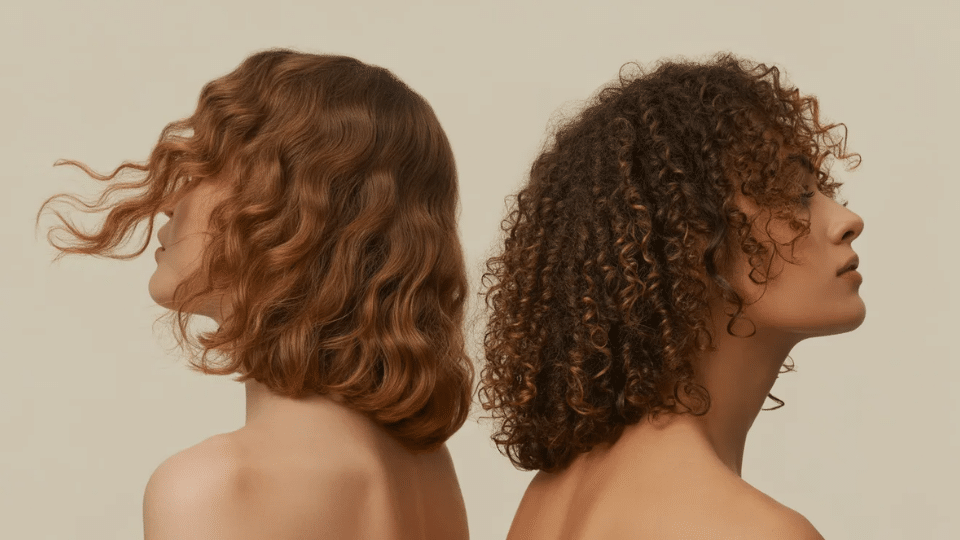
Wavy hair sits between straight and curly textures. The strand usually forms a soft S-shaped pattern rather than tight loops.
In many cases, the root area stays flatter while the wave begins around the mid-lengths or toward the ends. Because the pattern is loose, brushing can sometimes make the hair appear almost straight for a while.
Humidity can also affect this texture. Waves may stretch out, become frizzy, or lose definition during the day. An oily scalp can have a similar effect, weighing waves down faster, which is why following a targeted oily skin routine for your scalp and face together helps keep both feeling balanced and clean.
From what I often notice when comparing hair textures, waves bend gently along the strand instead of forming full spirals. This softer shape is what gives wavy hair its relaxed, flowing appearance.
What is Curly Hair?

Curly hair forms ringlets or spiral-shaped curls along the strand. The curl pattern often begins closer to the scalp, which gives the hair a fuller appearance.
Because the strands coil more tightly, the texture feels more defined and distinct compared to wavy hair. Moisture plays an important role in how curly hair looks and behaves.
Curly strands often need more hydration to stay soft and defined because natural oils move down the curl pattern more slowly.
From what I often notice when looking at curl patterns, these tighter coils create the texture and lift that make curly hair stand out.
Wavy vs Curly Hair: What’s the Difference?

When I try to tell hair textures apart, I usually start with a simple side-by-side comparison. It quickly highlights differences.
1. Volume and Density
Wavy Hair: Sits closer to the head and can look flatter when unstyled. The S-shaped bends don’t create the same lift as spirals, so volume depends more on technique and product.
Curly Hair: Coils from root to tip create natural lift and body, making curly hair appear thicker and fuller even without any styling or added product.
2. Porosity and Moisture Needs
Wavy Hair: Has a smoother cuticle with gentler bends, making it less prone to dryness. Natural oils travel more easily down the strand, providing some built-in moisture naturally.
Curly Hair: Sharp bends raise the cuticle layer, making moisture retention harder. Regular deep conditioning is essential to keep curls hydrated, soft, and properly defined over time.
3. Frizz and Manageability
Wavy Hair: Generally easier to manage with less frizz overall. It can still frizz at the ends or in high humidity, but responds well to lighter anti-frizz products.
Curly Hair: More prone to frizz, especially in humidity. Without enough hydration or hold, curls lose definition. Richer, more emollient formulas are needed to seal the cuticle effectively.
4. Styling and Product Differences
Wavy Hair: Responds well to lightweight creams, mousses, and sea salt sprays. Heavy products weigh waves down flat, so keeping formulas light is key for maintaining natural bend.
Curly Hair: Thrives with curl creams, gels, and leave-in conditioners that provide moisture and hold. Using products that are too light often results in undefined, frizzy, and unmanageable curls.
5. Shrinkage and Length Perception
Wavy Hair: Retains much more visible length since the gentle S-bend doesn’t compress the strand significantly. What you see is generally close to the hair’s actual measured length.
Curly Hair: Can appear significantly shorter than its actual length when dry. Each coil contracts along its spiral, making shrinkage one of the most noticeable traits of curly hair.
Care Tips for Wavy and Curly Hair
Both wavy and curly hair thrive with a little extra attention, but the approach differs depending on your curl pattern. Here is a simple breakdown of what works best for each:
| Care Step | What to Do | Wavy Hair | Curly Hair |
|---|---|---|---|
| Wash Routine | Use sulfate-free shampoo | Can handle more frequent washing | Best washed two to three times a week |
| Conditioning | Condition from mid-length to ends | Deep condition bi-weekly | Deep condition weekly with a leave-in conditioner |
| Detangling | Detangle wet hair from the ends upward | Wide-tooth comb with light pressure | Finger detangle to protect the curl pattern |
| Drying | Use a microfiber towel or a cotton T-shirt | Air dry to let the waves set naturally | Diffuse on low heat to maintain curl definition |
| Overnight Protection | Use a satin or silk pillowcase | Loosely wrap to preserve the wave shape | Use a satin bonnet or scarf to protect curls |
| Trimming | Trim every eight to twelve weeks | Keeps waves defined and fresh | Seek a stylist who cuts curls dry |
In my experience, the people who see the biggest difference are the ones who stay consistent with even the smallest habits. For those with fine wavy strands in particular, finding a lightweight mask for fine hair makes a noticeable difference in how well the wave pattern holds between washes. Stick to what works for your pattern, and your hair will thank you for it.
How to Tell if Your Hair is Wavy or Curly
Hair texture can feel confusing at times. I usually rely on a few simple checks that reveal the natural pattern clearly.
1. Look at Your Natural Curl Pattern: Start by observing the natural shape of hair strands without brushing or styling. Let hair dry naturally and note the pattern along the length, including how it bends, its consistency, and whether it stretches or coils.
2. Observe Your Hair When Wet: After washing, observe how wet hair behaves. Notice if strands stay close or form shapes like bends, coils, or loops naturally without styling products.
3. Try the Scrunch Test: Wet hair, then gently scrunch small sections upward toward the scalp with both hands. Avoid brushing or combing afterward. Let the hair air dry undisturbed so the natural pattern forms.
4. What Your Results Mean: After these checks, the pattern often becomes clearer when observing how strands bend and hold shape.
- Soft S-shaped bends along the strand usually indicate a wavy hair pattern.
- Visible spirals or ringlet-shaped curls usually indicate a curly hair pattern.
Hair Types: Wavy (2A–2C) and Curly (3A–3C)

Hair texture often falls into a range of wave and curl patterns. Looking closely at the shape usually helps identify the type.
| Hair Type | Pattern Description | Common Traits |
|---|---|---|
| 2A (Wavy) | Very loose, relaxed waves | Hair appears close to straight with light bends and minimal volume |
| 2B (Wavy) | Clear S-shaped waves | More visible texture through mid-lengths with some frizz and natural movement |
| 2C (Wavy) | Strong waves with slight curl | Thicker waves that may begin near the roots and sometimes resemble loose curls |
| 3A (Curly) | Loose spiral curls | Large ringlets with bounce and moderate volume |
| 3B (Curly) | Springy, defined curls | Tighter curls with fuller volume and stronger frizz potential |
| 3C (Curly) | Tight corkscrew curls | Dense curls with noticeable shrinkage and compact curl pattern |
Seeing these patterns together usually makes hair type easier to recognize before choosing styling methods or products suited to texture.
Styling Tips for Wavy Hair and Curly Hair
Styling wavy and curly hair requires different approaches depending on the texture and what each hair type needs. Here is how the two compare across the most common styling situations:
- Everyday Styles: Wavy hair suits loose, tousled looks naturally, while curly hair shines in defined wash-and-go styles or twist-outs that enhance the natural coil pattern.
- Protective Styling: Curly hair benefits from braids and twists to retain moisture, while wavy hair does well with loose braids or buns to prevent overnight frizz.
- Heat Styling: Wavy hair handles occasional heat with a light protectant, while curly hair needs a stronger protectant and lower heat settings to protect the curl pattern.
- Product Layering: Wavy hair works best with light layers like a leave-in and mousse, while curly hair needs richer layers of leave-in, curl cream, and gel for definition.
- Refreshing Between Washes: Wavy hair refreshes with a light water mist and mousse, while curly hair benefits from a water and leave-in mix to reactivate curls without weighing them down.
Once you know what your hair responds to, styling becomes less of a guessing game and more of a simple routine you can rely on.
The Bottom Line
Understanding hair texture becomes much easier after looking closely at curl shape and how strands behave day to day. When comparing wavy vs curly hair, I usually focus on how the strand bends and holds its pattern.
Waves tend to form softer bends along the length, while curls create tighter spirals that add noticeable lift and volume.
Curl typing systems and simple observation methods can help place these patterns within the broader hair texture range. Small details like shrinkage, density, and moisture needs also influence how each texture responds to styling.
Looking at these signals often makes the difference between wavy and curly hair clearer over time. If this guide helped, feel free to keep reading related posts or share your thoughts in the comments.