The first time I noticed a Tudor-style home, I stopped and looked twice. Something about the steep rooflines, dark timber framing, and tall chimneys felt different from the houses around it.
If you’ve ever wondered what defines this architectural style, you’re not alone. I had the same question and started digging into its history and design details.
I’ll walk you through what makes a Tudor house recognizable, where the style originally came from, and why it still appears in neighborhoods today.
You’ll learn the key exterior features, common materials, and interior characteristics that shape the look. By the end, you’ll know exactly what to watch for when you spot a Tudor home.
Understanding the Tudor Style House?
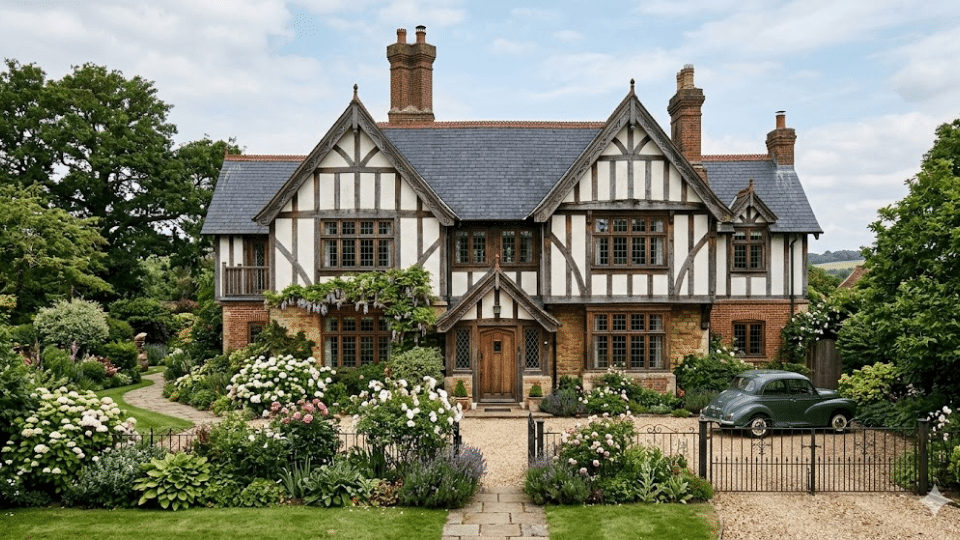
A Tudor-style house is a residential design inspired by homes built in England during the Tudor period (1485–1603). These houses are easy to recognize once you know their signature features.
You’ll often notice steep gabled roofs, exposed timber framing set against light plaster walls, and tall brick chimneys that extend above the roofline. Narrow windows with small panes and arched doorways also add to the distinctive appearance.
The overall design usually feels irregular and organic rather than perfectly balanced. Because of these strong visual elements, Tudor homes have a storybook quality that makes them stand out in many neighborhoods.
The Origins of Tudor House Style
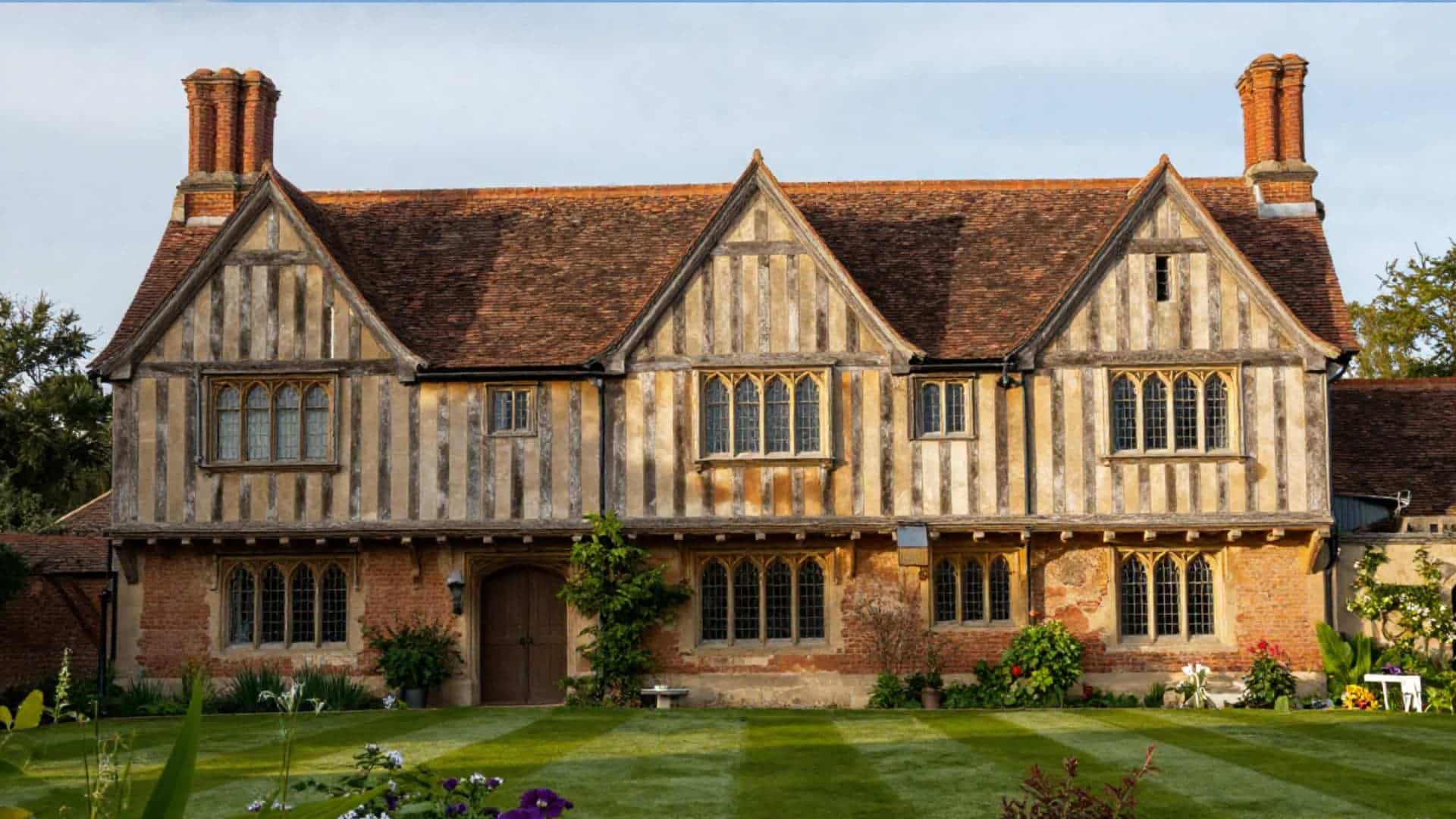
Tudor architecture developed in England during the late medieval period. Builders relied heavily on timber framing combined with plaster infill, creating the striped exterior pattern that later became a defining feature of the style.
Large fireplaces and chimneys played an important role in these homes, serving both practical and social purposes. House layouts were rarely symmetrical and often expanded gradually as families added new rooms over time.
In the late 19th and early 20th centuries, architects revived these historic design elements. This movement, known as the Tudor Revival, brought the style into modern neighborhoods, especially in the United States between 1890 and 1940.
Most houses people describe as Tudor today belong to this revival period rather than the original Tudor era in England.
Key Characteristics of Tudor Style Houses
When I first started paying attention to Tudor homes, I realized their details stand out immediately. Once you know these features, you’ll start recognizing this architectural style almost everywhere.
1. Steeply Pitched Roofs
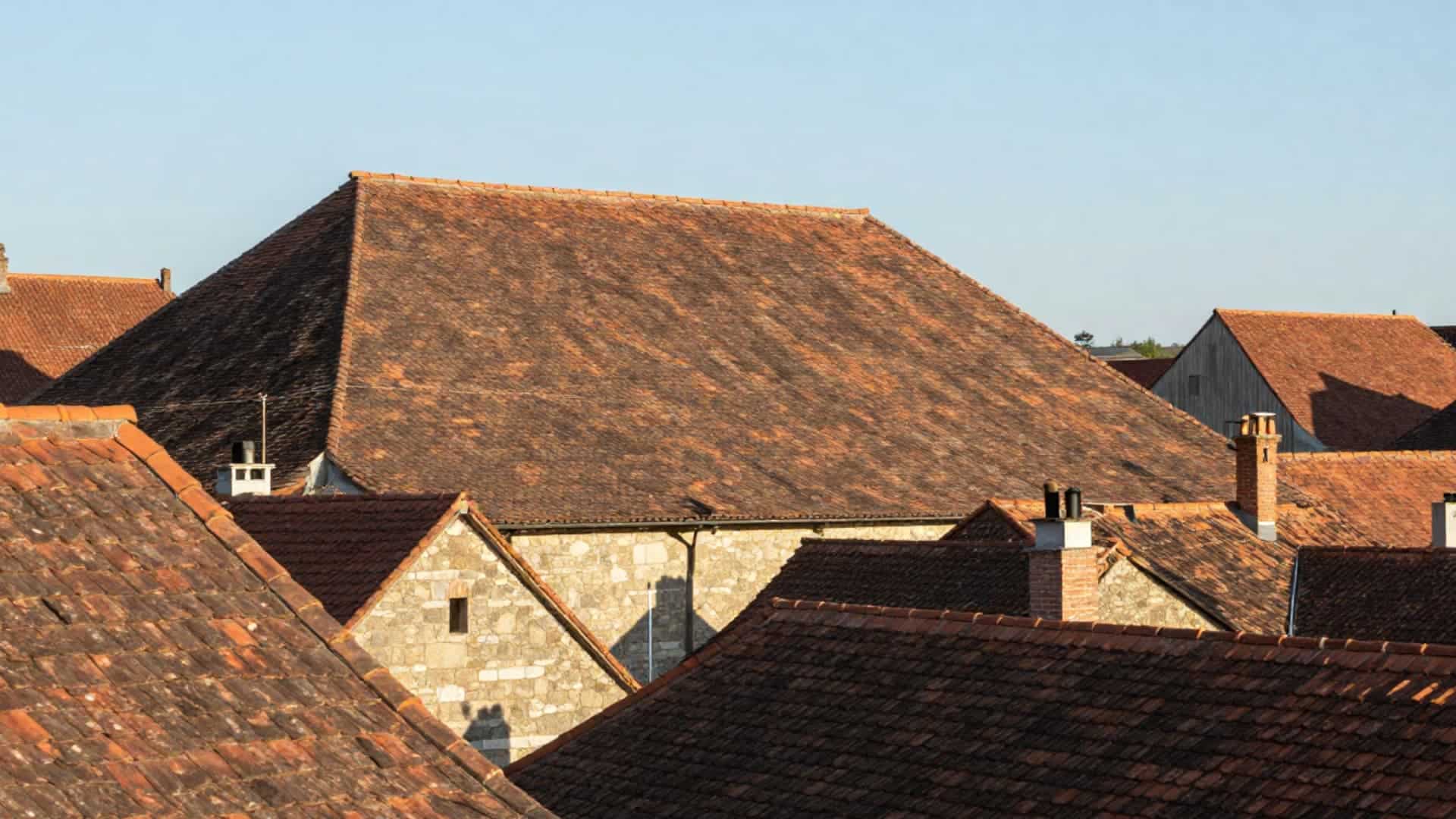
The roofline is usually the first thing that stops people in their tracks. Tudor homes are defined by tall, sharply angled pitches that create an unmistakable silhouette:
- Multiple front gables facing the street
- Dramatic height that draws the eye upward
- A storybook quality unlike any other residential style
These steep rooflines give Tudor houses their dramatic profile. The tall angles create a bold silhouette and make the home look taller and more striking from the street.
2. Half-Timber Framing
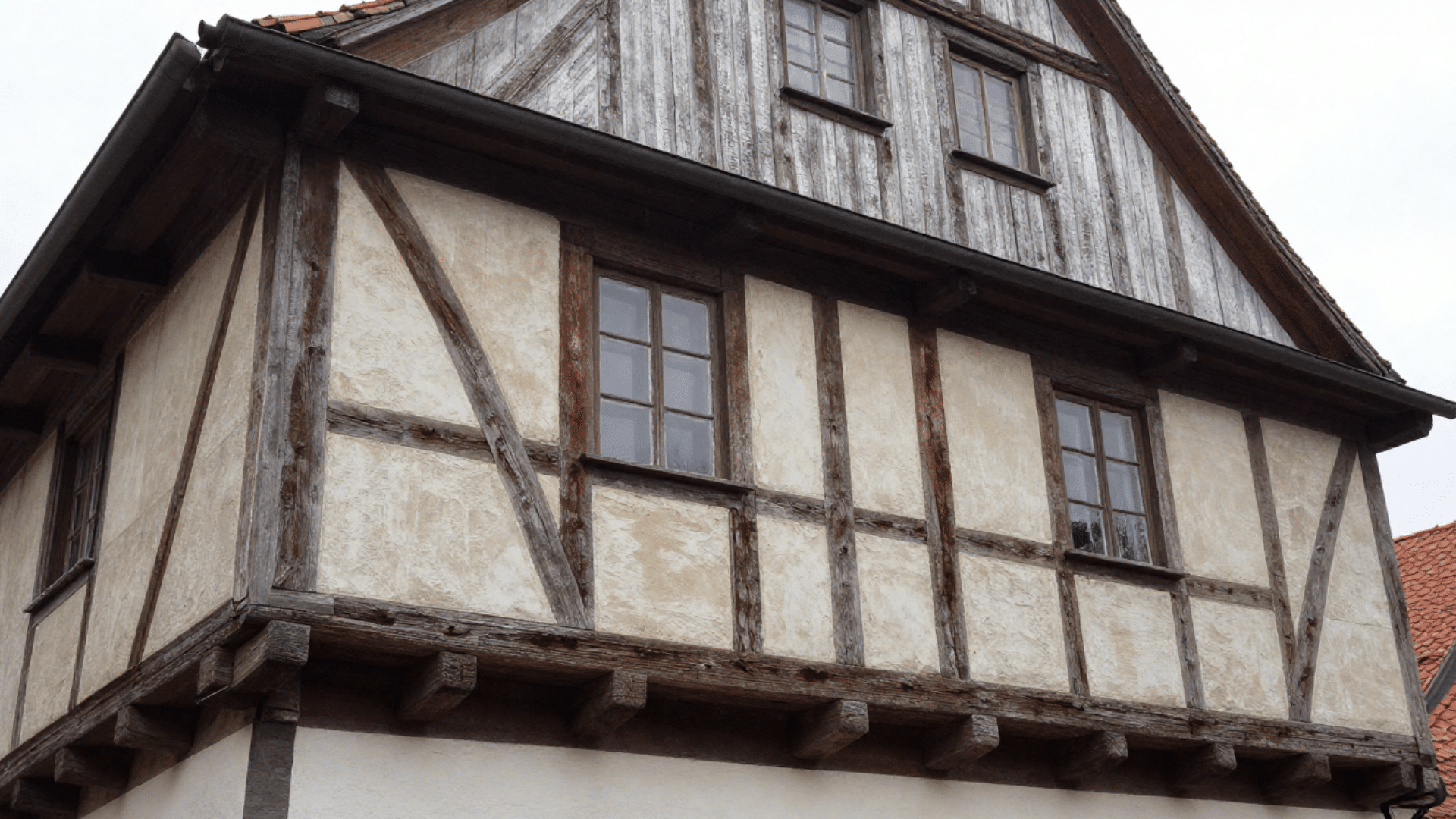
Few details are more synonymous with Tudor architecture than the bold pattern of dark wood beams against light walls. Originally a structural technique, it later became decorative:
- Thick timber beams are visible across the exterior walls
- Stucco or masonry fills the spaces between
- A handcrafted, textured look that ages beautifully
Half-timber framing creates the classic Tudor look. The dark wood beams contrast with light wall surfaces, giving the exterior a handcrafted appearance that feels historic and distinctive.
3. Tall Decorative Chimneys
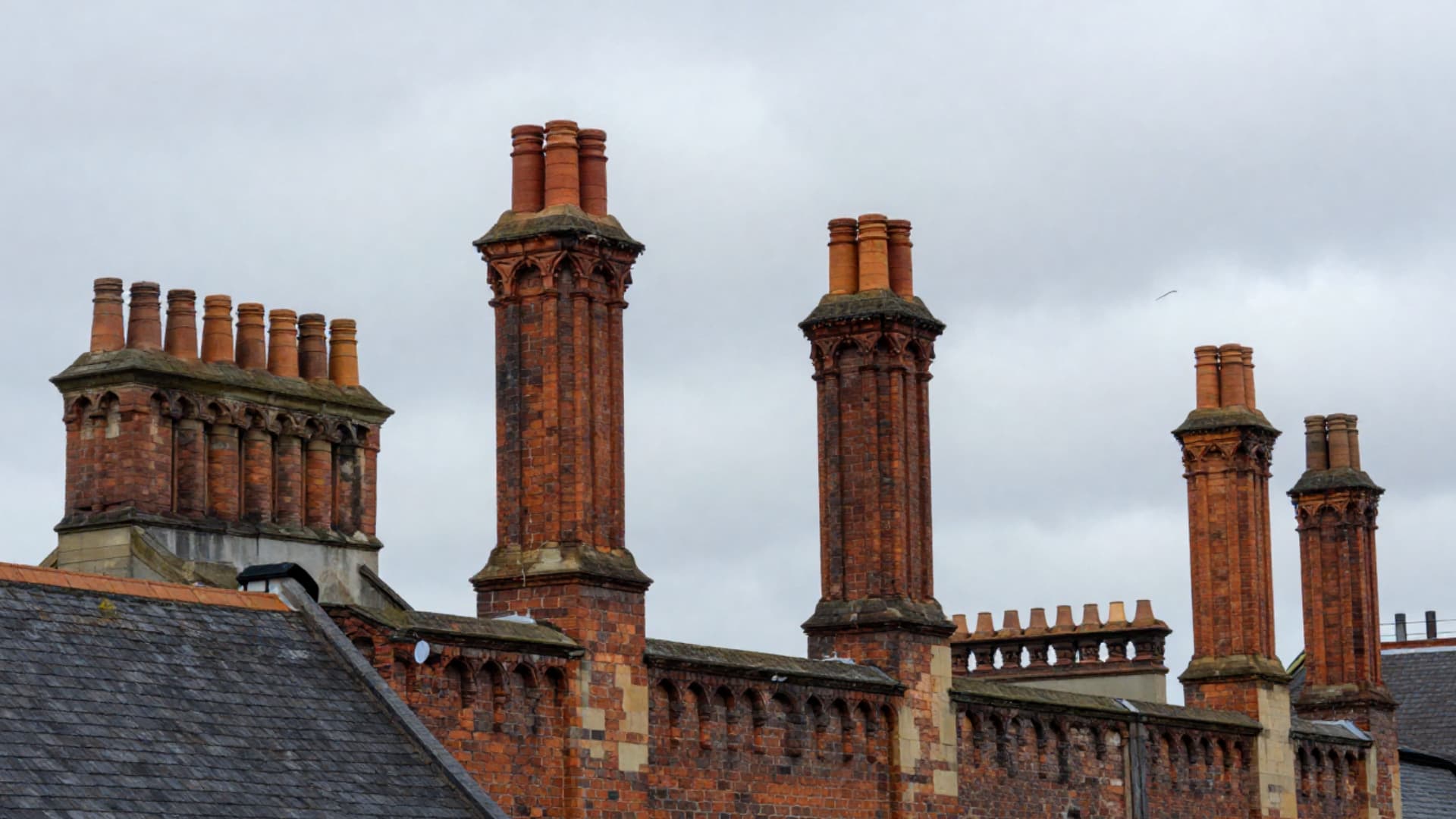
Once indoor fireplaces replaced central hearths, chimneys became a canvas for architectural expression. On Tudor homes, they’re anything but understated:
- Large brick chimneys rising well above the roofline
- Often topped with ornamental chimney pots
- A feature that adds height, drama, and old-world character
Tudor chimneys are designed to stand out. Their height and detailed brickwork add character to the home and reinforce the historic feel associated with traditional Tudor architecture.
4. Narrow Windows with Small Panes
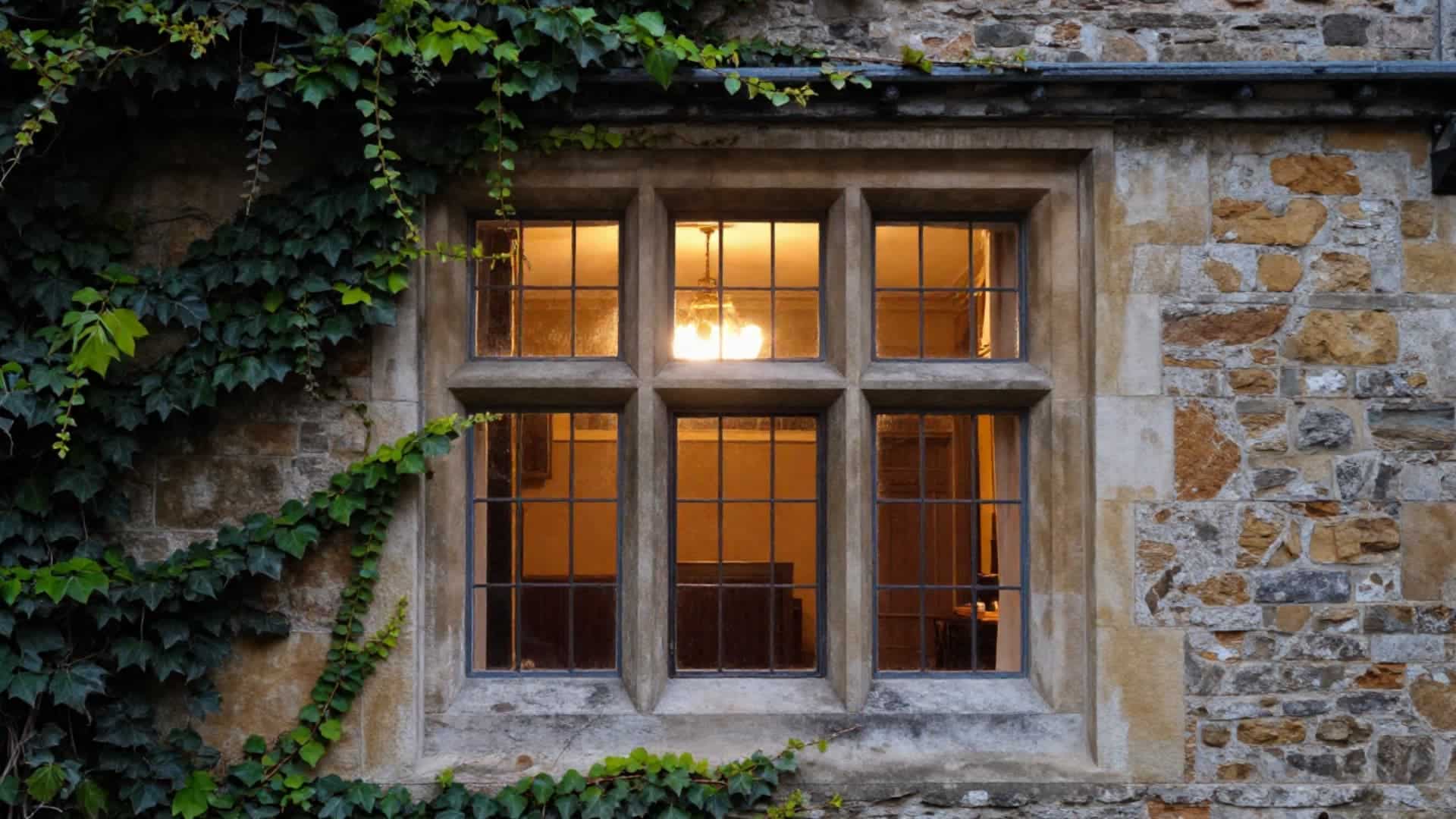
Tudor windows are tall, narrow, and full of personality. The glazing style alone sets them apart from windows found on most other home styles:
- Leaded or diamond-pattern glass throughout
- Small individual panes set within iron or wood frames
- A detail that feels handcrafted and distinctly historical
These windows give Tudor houses a historic appearance. The small panes and decorative patterns create visual interest while allowing natural light to enter the interior spaces.
5. Arched Doorways
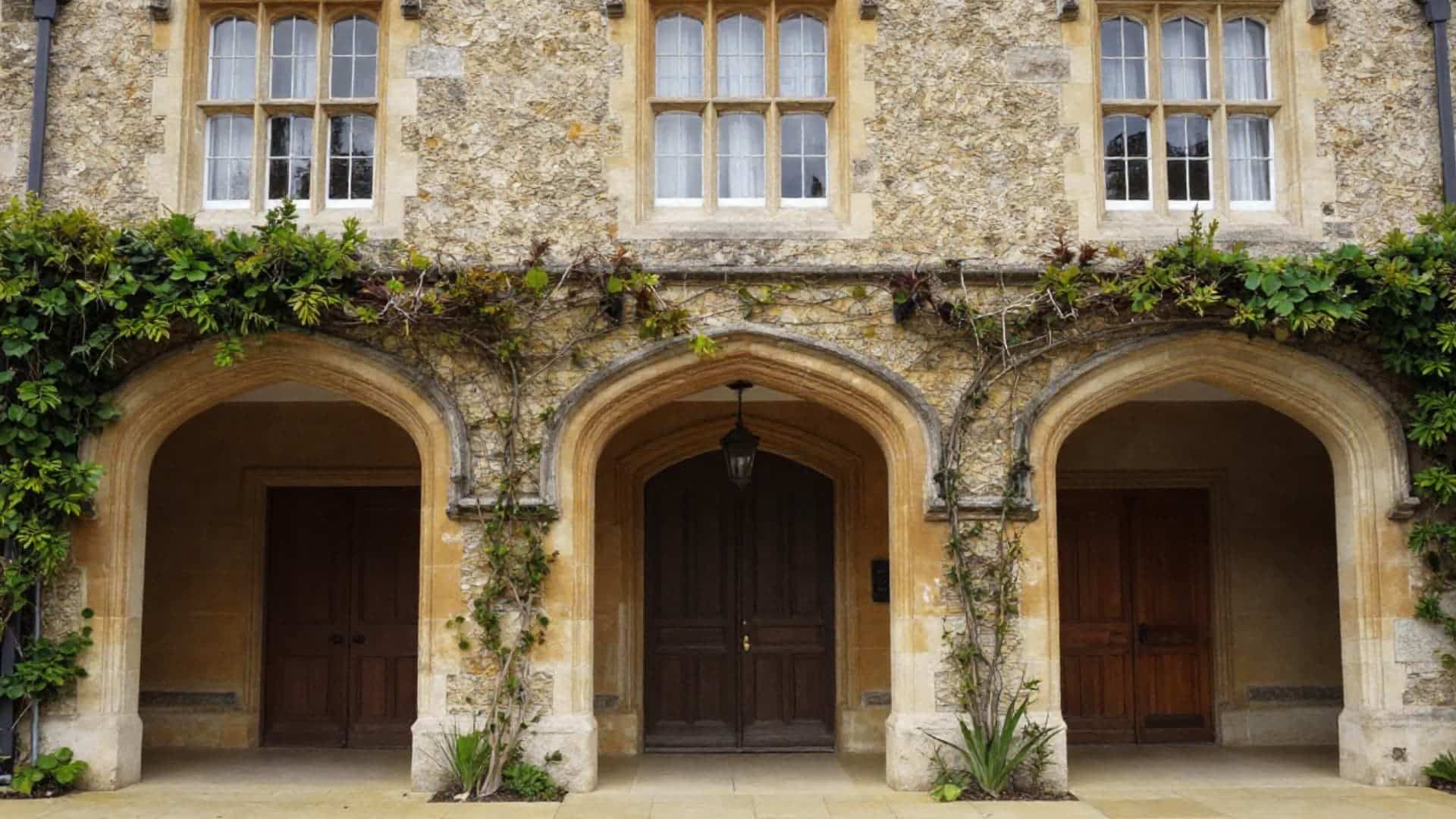
The Tudor arch is arguably the style’s single most iconic detail, instantly signaling the architecture before anything else registers:
- Wide but slightly flattened arch shape
- Most commonly framing the main entrance
- Sometimes repeated across windows and interior openings
Arched doorways add a distinctive touch to Tudor homes. The soft curve at the top of the entrance gives the home a welcoming look and reflects traditional architectural craftsmanship.
Common Exterior Materials in Tudor Houses
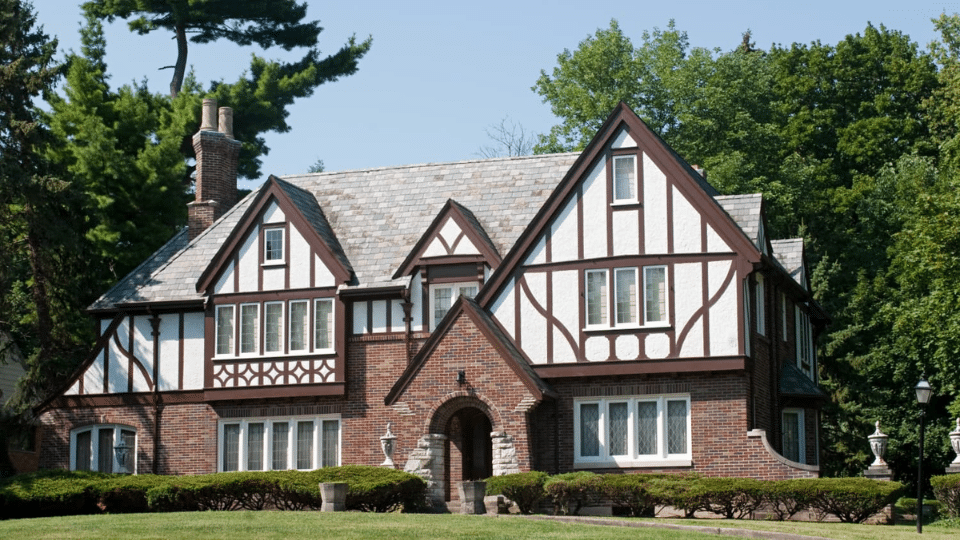
Tudor homes were built from whatever was locally available and structurally dependable. These materials shaped the style and still define it today.
- Brick: One of the most widely used materials in Tudor construction. Brick was durable, fire-resistant, and readily available across England, making it a practical and lasting choice for walls and chimneys alike.
- Stucco: Applied between timber frames as infill, stucco was an affordable way to seal and insulate exterior walls. Over time, its contrast against dark wood beams became one of the style’s most defining visual traits.
- Stone: Used in grander Tudor homes and public buildings, stone conveyed wealth and permanence. In revival versions, it often appears as decorative accents around entryways, window surrounds, and foundation bases.
- Timber Framing: The structural backbone of original Tudor construction. Heavy wooden beams were cut and joined to form the frame of the home, with other materials filling the gaps: a method that was both efficient and visually striking.
- Clay Roof Tiles: Before slate became widely available, clay tiles were the standard roofing material. They were locally sourced, long-lasting, and sat naturally against the steep pitches that Tudor rooflines demanded.
- Flint: More common in rural English Tudor buildings, flint was used where stone and brick were scarce. Knapped and set into mortar, it created distinctive textured wall surfaces still visible on historic English cottages today.
What makes Tudor exteriors so visually rich is precisely this layering of materials; no single element works alone. It’s the combination of rough stone, dark timber, and textured plaster that gives these homes their unmistakable depth and character.
Interior Characteristics of Tudor Homes
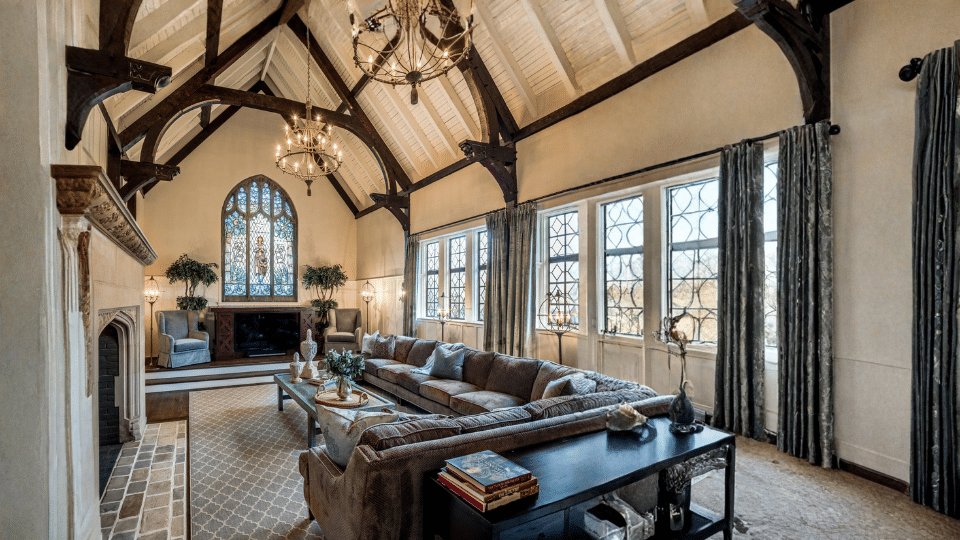
The inside of a Tudor home carries the same sense of craftsmanship and weight as the exterior. Dark, textured, and built to last, here’s what defines a Tudor interior.
- Exposed Wood Ceiling Beams: Heavy timber beams left visible overhead were a natural extension of the structural framing outside. They add warmth and a sense of solidity that feels distinctly pre-industrial.
- Large Fireplaces: Central to both function and design, Tudor fireplaces were grand and prominent. Often framed with decorative stonework or brick, they anchored entire rooms and served as the home’s primary heat source.
- Wood Paneling: Walls were frequently lined with dark oak paneling, offering insulation as much as decoration. In grander homes, carved detailing elevated paneling from a practical finish to genuine craftsmanship.
- Dark Hardwood Floors: Wide-plank hardwood floors in deep, rich tones were standard throughout. They complemented the heavy overhead beams and created a cohesive, grounded interior palette.
- Small Divided Windows: The same narrow, leaded windows found on the exterior carry through inside. They filter light softly and reinforce the cozy, enclosed atmosphere that Tudor interiors are known for.
Together, these elements create an interior that feels rooted, handcrafted, and quietly dramatic, a natural reflection of everything happening on the outside of the home.
Where Tudor-Style Houses Are Most Common Today
Although Tudor architecture originated in England, many Tudor-style homes you see today come from the Tudor Revival movement.
These houses became popular in several countries during the early 20th century.
You can often find Tudor-style homes in:
- United States: especially neighborhoods built between 1890 and 1940
- United Kingdom: historic towns and preserved villages
- Canada: older residential districts influenced by British architecture
- Australia: suburbs developed during the early 1900s
In the United States, Tudor homes are especially common in cities with older neighborhoods such as Cleveland, Chicago, and Philadelphia.
These homes often appear in established communities where historic architectural styles were preserved.
How to Identify a Tudor-Style House
If you want to recognize a Tudor home quickly, look for a few defining details. Most Tudor houses include several of these features at once.
- Steeply pitched rooflines with multiple front-facing gables
- Decorative half-timber framing with light stucco or plaster walls
- Tall brick chimneys, often topped with decorative chimney pots
- Narrow windows with small panes or diamond-pattern glass
- Arched doorways, especially at the main entrance
- Asymmetrical design, meaning the house does not appear perfectly balanced
If you see several of these elements together, there is a strong chance the home follows Tudor-style architecture.
Tudor House Style vs. Other Architectural Styles
When I first looked into historic homes, many styles seemed similar. If you’re learning about Tudor house style, comparing it with other designs quickly helps you recognize its unique features.
| Style | Time Period / Origin | Roof Style | Exterior Materials | Windows | Overall Design | Key Identifying Feature |
|---|---|---|---|---|---|---|
| Tudor | England, 15th–16th century (Tudor Revival in 1900s) | Steeply pitched roofs | Brick, stucco, half-timbering | Tall, narrow, multi-pane | Asymmetrical | Decorative half-timber framing and large chimneys |
| Colonial | America, 1600s–1700s | Side-gabled or symmetrical roof | Brick or wood siding | Evenly spaced rectangular windows | Symmetrical layout | Balanced façade with central entrance |
| Victorian | 1800s (Queen Victoria era) | Complex, steep roofs with towers | Wood, decorative trim | Large bay windows | Highly decorative | Ornate details and elaborate trim |
| Cottage | European countryside | Simple pitched roof | Stone, brick, or wood | Small windows | Compact and cozy | Small scale and storybook appearance |
| Craftsman | Early 1900s America | Low-pitched roof | Wood siding, stone accents | Wide windows | Functional and horizontal | Large front porch with tapered columns |
Once you notice the details, Tudor homes become easy to identify. Their steep roofs, half-timbering, and tall chimneys create a historic look you’ll start recognizing in many neighborhoods.
The Bottom Line
By now, you should have a clear understanding of what defines a Tudor-style home.
I covered its historical background, the exterior features like steep roofs and half-timber framing, and the interior details that give these houses their distinctive character.
When I first learned about this style, those small architectural details changed the way I noticed homes in older neighborhoods.
Once you know what to look for, Tudor houses become much easier to recognize. This knowledge can help you if you’re researching architecture, planning a home design, or simply curious about historic houses.
I’m curious about your experience, too. Have you come across a Tudor-style home that stood out to you?
Share your thoughts or observations in the comments below.
Frequently Asked Questions
What Is the Difference Between Tudor and Tudor Revival?
Original Tudor homes were built in England between 1485 and 1603. Tudor Revival homes were built later, mainly between 1890 and 1940, using similar design elements.
Are Tudor Homes Expensive to Maintain?
They can require more maintenance because of materials like timber framing, stucco, and older window designs. However, modern Tudor Revival homes often use updated materials that are easier to maintain.
Why Do Tudor Homes Have Steep Roofs?
The steep roof design helped prevent snow and rain from accumulating. It also allowed for upper-level living spaces within the roof structure.
Are Tudor Homes Still Being Built Today?
Yes. Some modern homes still borrow Tudor-inspired elements such as half-timber framing, steep gables, and arched doorways.