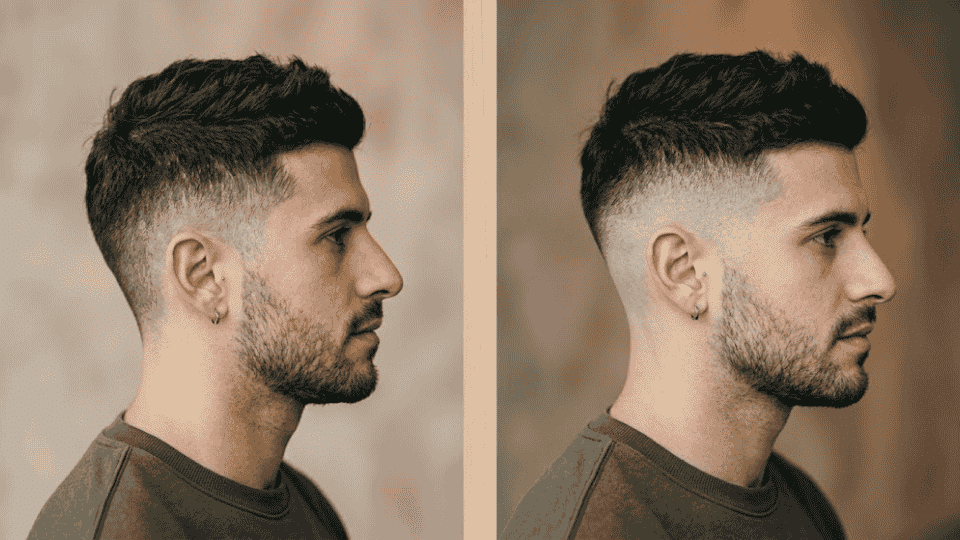

It’s easy to feel confused when taper and fade haircuts look almost the same at first glimpse. In this guide on taper vs fade, you’ll clearly understand the real difference between these two popular styles and how a haircut changes your overall look.
I’ll break down how each cut is done, how it grows out, maintenance needs, face shape suitability, styling flexibility, and what to tell your barber so you leave the chair confident and satisfied.
What is a Taper Haircut?

A taper haircut achieves gradual shortening centered on the neckline (nape) and sideburns, blending longer top hair down to shorter edges seamlessly.
Barbers typically use #2–#4 guards on the sides, then scissor-blend around the ears and nape. The scalp is not exposed.
This cut underscores the taper vs. fade core difference: more length preserved versus skin-shaved sides. Hair regrows evenly over 3–4 weeks, skipping patchy stages thanks to low-contrast blending from the nape upward.
Subtle character arises from clean, professional polish without bold reveals. Suit office environments, longer top styles, scalp-shy preferences, and lower-maintenance schedules.
Versatile for American routines, from corporate desks to casual weekends, delivering barbershop neatness without frequent visits.
Best For:
- Office settings
- Longer hairstyles
- People who don’t want the scalp showing
- Lower maintenance preference
What is a Fade Haircut?

A fade haircut blends sides from long top hair down to ultra-short or skin level through precise clipper work.
Skin fades buzz directly to scalp with #0 guard for bald effect; shadow fades leave subtle stubble for gentler transition.
Fade height alters the entire look: low stays near ears and neckline, mid climbs to temple level, high begins at crown for dramatic exposure. Higher placement boosts contrast, slimming round faces or sharpening wide jawlines with bold definition.
Hair grows out visibly within 1 week as stubble emerges, hitting patchiness by week 2, necessitating bi-weekly trims to maintain those crisp barber lines.
Suits short hairstyles, defined structure, bold or clean aesthetics, and frequent shop-goers seeking a pro-athlete edge.
Best For:
- Short hairstyles
- Defined structure
- Bold or clean aesthetic
- Frequent barber visits
Taper vs Fade Haircuts: Core Difference
Taper keeps more hair with gradual edge cleanup; fade shears sides much shorter, often to skin. Compare them side-by-side before your next US barber chair sit-down.
| Area | Taper | Fade |
|---|---|---|
| How short it gets | Short, not skin (1/4–1/2 inch, classic length) | Often skin or #0 buzz (zero fade, military crisp) |
| Contrast | Low (smooth blend for office or dad vibes) | High (dramatic drop like a superhero jawline) |
| Blend height | Low on head (sideburns/neckline trim only) | Low, mid, or high (mid like Ja Morant’s NBA style) |
| Maintenance | Moderate (3–4 weeks; grows even like Kelce’s) | High (every 2 weeks for that fresh Chiefs cut) |
Tapers fit busy dads and execs; fades dominate NYC barbershops for guys chasing bold, pro-athlete swagger. Pick based on your lifestyle, low-key or high-drama?
Where the Hair Changes: Visual Breakdown
To clarify taper vs. fade, examine transitions across three key zones where hair length shifts distinctly for each style.
1. Sideburn Area
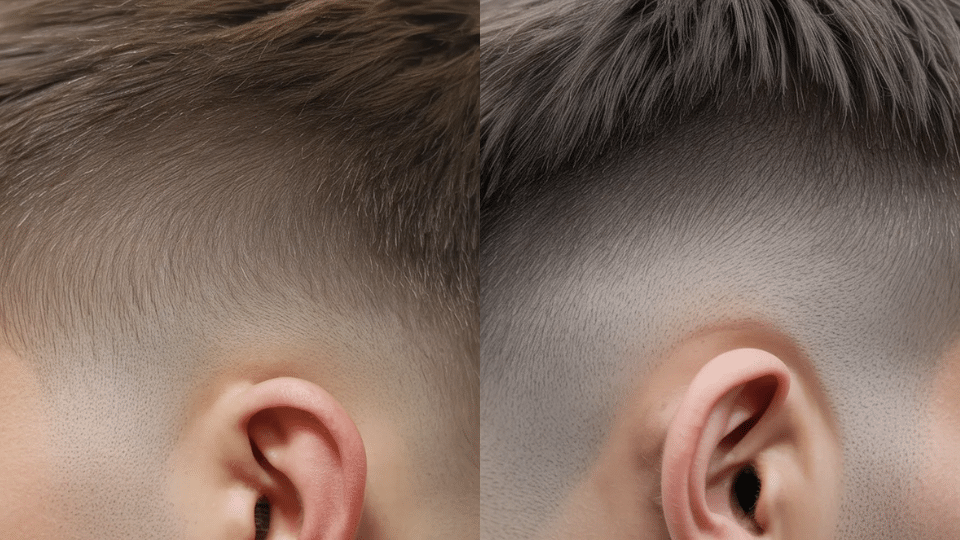
Near the ears, this zone sets the base for the haircut’s edge and overall flow.
- Taper: This style shortens hair from the top to a visible short length at the sideburns, maintaining coverage for a softer, natural edge that blends without exposing skin. It’s ideal for conservative or professional looks, favoring smoothness over contrast.
- Fade: It blends from longer hair to skin at the sideburns, creating a seamless zero-length start that emphasizes precision and modernity. This often results in a bolder look, highlighting facial structure through high-contrast transitions.
2. Mid-Sides
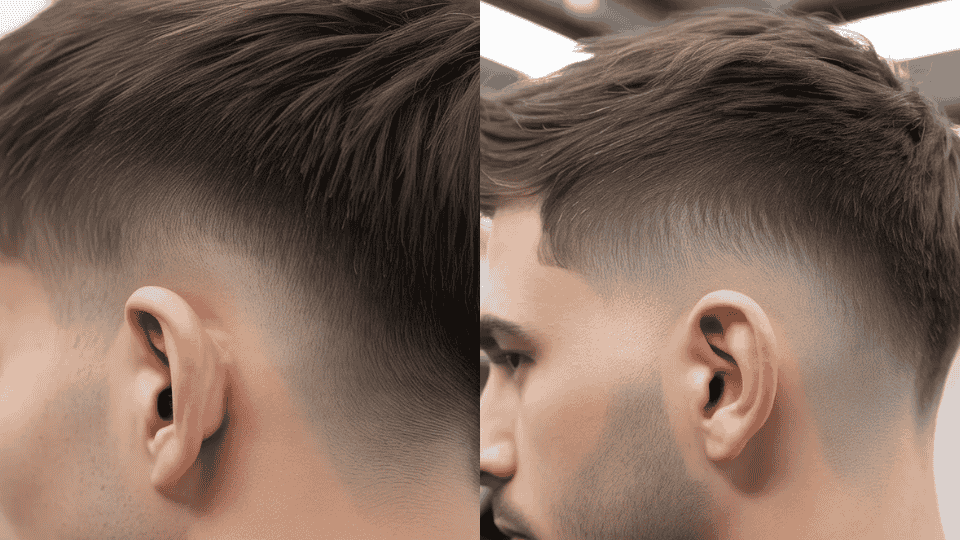
Around the temples, blending occurs midway up the head, influencing the haircut’s side profile and dimension.
- Taper: Here, the length gradually decreases from the crown to the ears, maintaining a uniform short layer without exposing skin. This gentle gradient preserves volume and texture, making it versatile for different hair types and easier to grow out naturally.
- Fade: The gradient sharpens, nearing bald for high contrast and definition, creating an illusion of height and sharpness. It’s popular in styles like high fades, where mid-sides serve as a transition point for dramatic impact.
3. Back Neckline
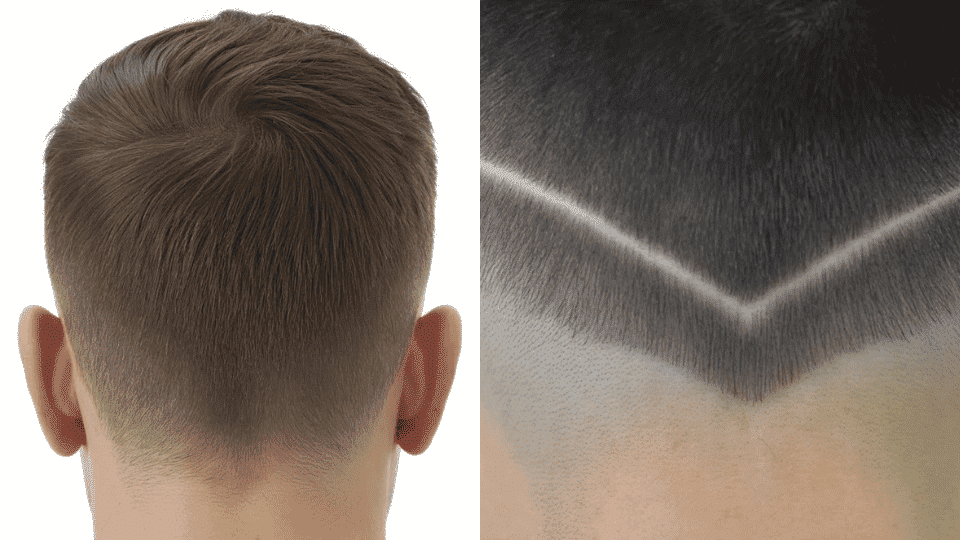
At the nape, this defines the rear outline, affecting the haircut’s cleanliness and rear view symmetry.
- Taper: It tapers to a short, neat trim at the neck, avoiding bald spots for a natural flow that follows the head’s contour. It offers a polished, understated finish that’s low-maintenance, ideal for those preferring a classic, timeless look without aggressive shaving.
- Fade: This drops sharply to skin level, creating a contoured edge that blends into longer hair, highlighting the back’s sculpted look with clean lines. It’s a style suited for edgy, modern vibes, often showcasing neck tattoos or muscular builds with precise, skin-exposed gradients.
Face Shape and Hair Type Considerations
Choosing between a taper and a fade depends on your face shape and hair type for optimal balance and enhancement. Tailor the style to complement features rather than relying on one-size-fits-all advice.
| Aspect | Taper Recommendation | Fade Recommendation |
|---|---|---|
| Round Face | Mid-taper adds width softly, balancing roundness for a natural profile. | High fade elongates with vertical lines, slimming fullness effectively. |
| Long Face | Low taper adds horizontal width, shortening perceived length for symmetry. | Avoid high fade to prevent exaggerating verticality; mid-fade if needed. |
| Thick/Coarse Hair | Gradual taper controls volume neatly, maintaining texture without bulk. | Fade removes bulk efficiently, ensuring a sleek, manageable finish. |
| Fine/Thin Hair | Taper preserves density illusion, avoiding scalp exposure for a fuller look. | Subtle mid-fade possible, but high risks thinning visibility. |
Ultimately, experiment with taper or fade variations, considering your face and hair specifics, to achieve a personalized, stylish cut that boosts confidence daily.
When Barbers Use Both Techniques?
In reality, most modern men’s haircuts aren’t strictly taper or fade; they combine both for versatile, personalized styles that suit individual preferences and hair types.
A common hybrid is a tapered neckline paired with faded sides: The nape tapers gradually for a natural, low-maintenance edge, while sides fade sharply to skin for high-contrast definition, blending seamlessly into longer top hair.
Terminology overlaps because “taper” broadly means gradual shortening, often encompassing fades as an extreme version; barbers use terms interchangeably based on regional or shop lingo, leading to confusion.
Ultimately, clear communication trumps labels. Describe desired length, blend, and zones to your barber, using photos for reference, to avoid mishaps and get the exact cut you envision.
Final Thoughts
In essence, taper haircuts offer subtle, low-maintenance blending for everyday polish, while fade haircuts deliver high-contrast drama ideal for bold statements.
Visual breakdowns highlight zone-specific transitions, face shape pairings ensure flattering fits, and hybrids like the taper fade blend the best of both worlds.
Maintenance varies, tapers forgive slower regrowth, fades demand crisp bi-weekly refreshes. Master barber communication with photos and specifics to nail your style.
Ready to choose? Drop a comment on your go-to taper vs fade haircut, or read our guide on barber shop etiquette next!
Frequently Asked Questions
Is a taper a type of fade?
No, they’re distinct: a taper gradually shortens hair without reaching skin, while a fade is an extreme taper that blends to bald for a sharper contrast. However, barbers often use “taper” broadly, causing overlap in terminology.
What is a taper fade?
A taper fade combines both techniques, starting with a gradual taper that transitions into a skin-level fade. It’s a popular hybrid style offering clean sides and back with versatile blending, essentially a refined fade variant.
Can you ask for both?
Yes, absolutely, many modern cuts incorporate elements of both, like faded sides with a tapered neckline. Communicate specifics to your barber using photos or descriptions to ensure they blend the techniques as desired.
Which grows out cleaner?
Tapers grow out cleaner with a natural, gradual blend that avoids stark lines, making maintenance easier over time. Fades show regrowth faster due to skin exposure, often requiring more frequent touch-ups for sharpness.