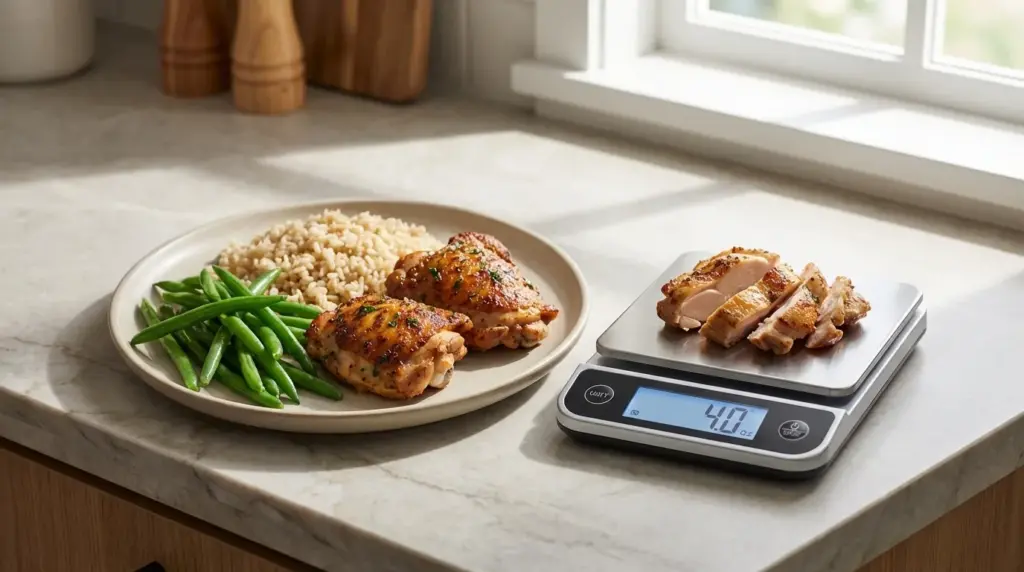

Chicken thighs are often labeled the “higher calorie” option, which can make you hesitate before adding them to your plate. My first reaction used to be the same.
Dark meat sounded heavier, richer, and harder to fit into a balanced routine. But once you actually look at chicken thigh nutrition facts, the numbers tell a more reasonable story.
Thighs do contain more fat than breast meat, yet they also deliver solid protein and key minerals. The real difference comes down to skin, bone, and cooking method. When you understand those details, you can decide what works best for your meals.
Chicken Thigh Nutrition Facts: Calories, Protein, and Fat
When you search for chicken thigh nutrition facts, you usually want to know how many calories and nutrients you’re getting in one serving. That often comes down to protein, total fat, saturated fat, and carbohydrates.
Plain chicken has zero carbs, so nearly all the calories come from protein and fat. The numbers are not fixed, though.
They shift depending on a few factors: whether the skin is on or off, whether the cut is bone-in or boneless, whether you’re measuring it raw or cooked, and how large your portion is.
Dark meat naturally contains more fat than breast meat, which raises calories but also keeps the meat juicy during cooking.
From my own meal planning, once these basics are clear, comparing portions and tracking intake feels much more straightforward and manageable.
How Many Calories are in a Chicken Thigh?
Calories vary by preparation, but the difference is easy to see when you compare equal portions. Here’s a simple breakdown per 100 grams of cooked chicken thigh so you can judge clearly:
| Type (Cooked, 100g) | Calories | Protein | Fat | Carbs |
| Skinless, Boneless | 170–180 | 24–26g | 8–9g | 0g |
| With Skin | 220–240 | ~25g | 15–17g | 0g |
Protein stays nearly the same in both versions. The added calories mainly come from fat in the skin. Removing the skin after cooking reduces fat while keeping most of the protein intact.
Protein Content by Type
Protein is usually the main reason chicken ends up on your plate. Thigh meat provides steady protein, but fat levels change depending on preparation.
Here’s how the common cooked options compare clearly:
1. Skinless (Cooked)

Removing the skin lowers total fat while keeping protein levels strong. This option gives you better control over calories without changing the core nutrient profile of the meat.
Here’s what you get per 100 grams cooked:
- Provides 24–26 grams of protein per 100 grams cooked serving
- Contains lower total fat compared to skin-on preparation styles
- Has zero carbohydrates in plain, unseasoned cooked form
Choosing skinless thighs keeps meals balanced and easier to track. You reduce extra fat while still getting reliable protein to support your daily intake goals.
2. Boneless (Cooked)

Boneless thighs offer the same meat nutrition but remove the weight of the bone. That makes portion tracking more accurate when you measure by grams or ounces.
Here’s how boneless thighs compare per 100 grams:
- Delivers roughly 24–26 grams of protein per 100 grams cooked
- Fat level depends mostly on whether the skin remains attached
- Eliminates bone weight, greatly improving portion-size accuracy
If you measure your food regularly, boneless cuts make tracking easier. The protein stays steady, and your numbers reflect only the edible meat, not the added bone weight.
3. Skin-On (Cooked)
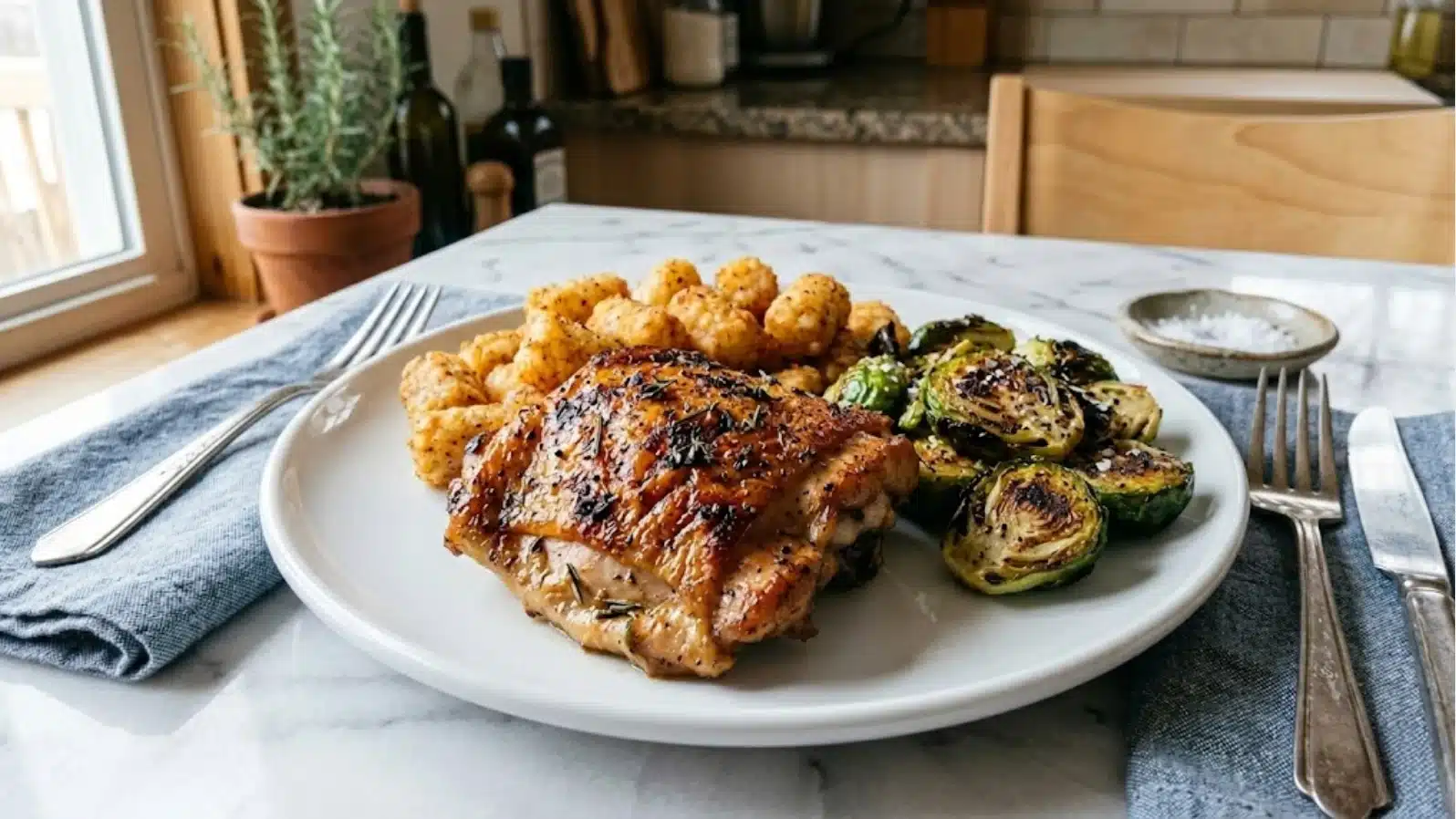
Keeping the skin increases fat more than protein. The meat underneath still provides substantial protein, but the attached skin raises the overall calorie density. Here’s what changes per 100 grams cooked:
- Provides about 25 grams of protein per 100 grams cooked
- Contains significantly higher total fat from the attached skin layer
- Results in a higher calorie count than skinless preparation
If calorie control matters to you, removing the skin after cooking reduces fat quickly. Protein remains nearly the same, helping you maintain consistent intake.
Raw vs Cooked Protein Comparison
Raw and cooked weights often cause confusion when measuring portions. Cooking reduces water content, which concentrates nutrients per gram. This comparison makes those differences easier to understand at a glance:
| State (Skinless) | Calories (per 100g) | Protein (per 100g) | Fat (per 100g) | Water Content |
| Raw | 120–140 | 16–18g | 5–7g | Higher |
| Cooked (Baked) | 170–180 | 24–26g | 8–9g | Reduced |
| Cooked (Grilled) | 175–185 | 24–26g | 8–10g | Reduced |
| Cooked (Pan-Seared) | 190–210 | 24–26g | 10–12g | Reduced |
Raw meat shows lower calories and protein per 100 grams because water remains inside. After cooking, moisture decreases and nutrients concentrate, raising the numbers per gram even though the total protein remains similar overall.
Understanding Serving Sizes
Serving size creates confusion because labels show different measurements. Some list ounces, others list pieces. What really counts is the edible portion after trimming bone and skin, not the raw packaged weight.
1. One Medium Cooked Thigh (Skinless)
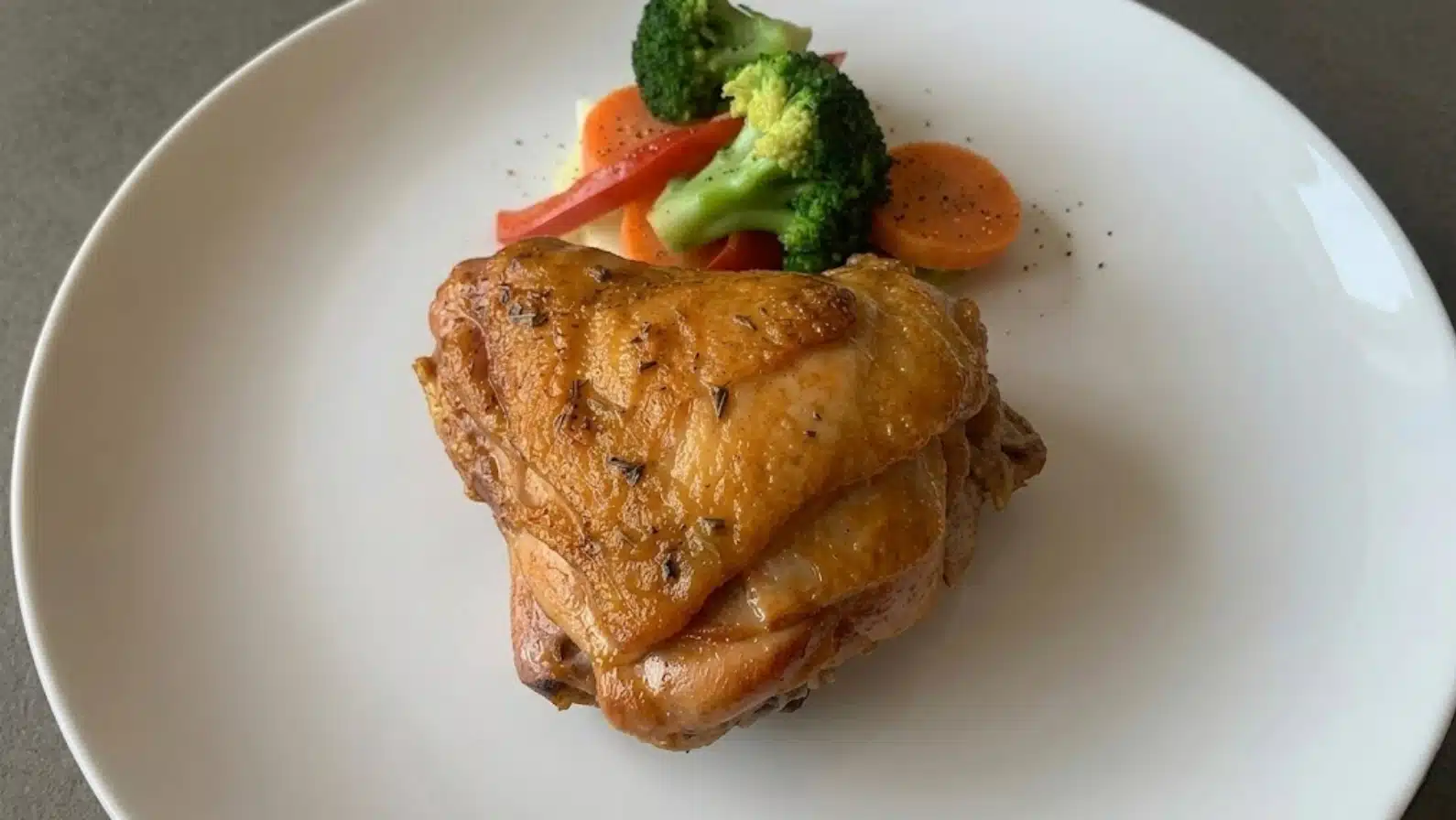
A medium skinless cooked thigh usually provides about 150–180 calories, along with 20–24 grams of protein and roughly 7–9 grams of fat. This is a common portion in home meals.
When you place one thigh on your plate, you are typically looking at a balanced serving that fits easily into a moderate calorie target.
2. Four Ounces Cooked
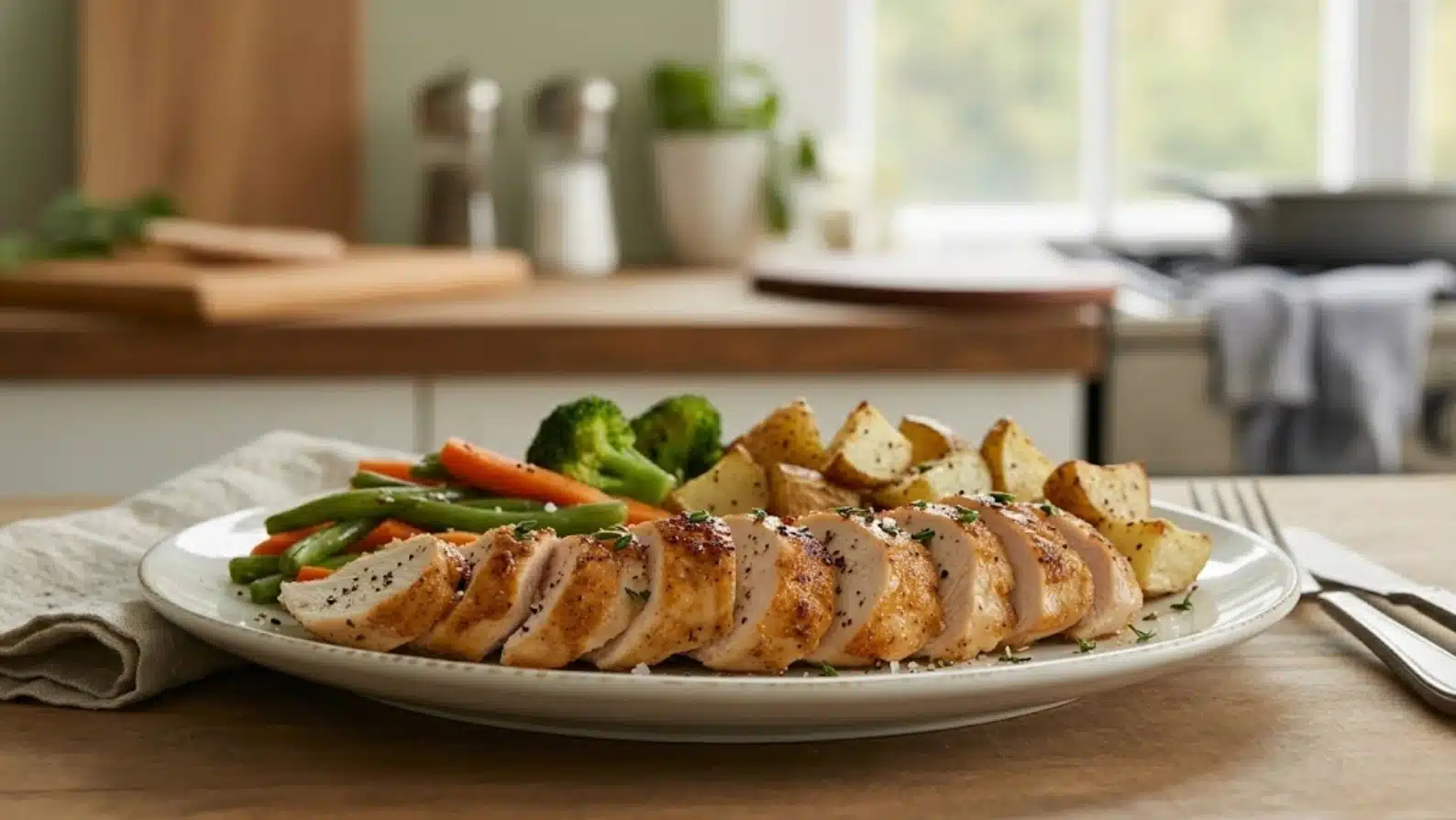
A measured four-ounce cooked portion contains around 180–210 calories and about 23–25 grams of protein, depending on trimming. Fat usually ranges from 9 to 11 grams
Four ounces is often slightly larger than a single average thigh after cooking. Using a kitchen scale gives you clearer control over portion accuracy.
3. Large Bone-In Thigh With Skin
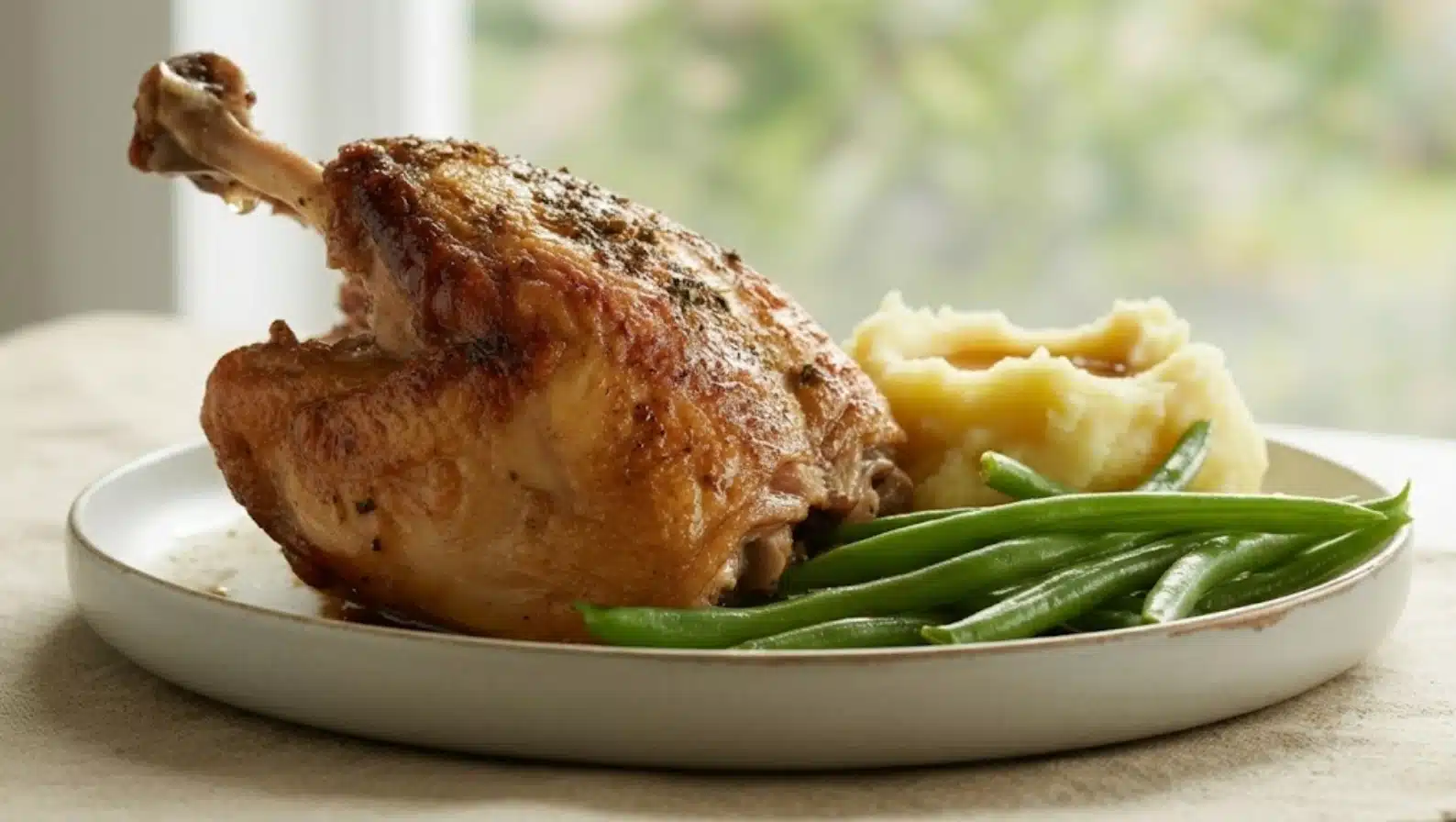
A large bone-in thigh with skin can range from 250–300 calories and contain about 25–28 grams of protein. The higher calorie count comes from the skin and the total raw weight, which includes bone.
The edible meat portion is smaller than the package weight suggests, so the cooked measurement improves accuracy.
Chicken Fat, Macro Balance, and Key Micronutrients
Fat content and micronutrients both shape the overall value of thigh meat. Here is a clear summary of macro balance and key vitamins and minerals, so you can see everything in one place:
| Category | Skinless Thigh (Cooked) | Skin-On Thigh (Cooked) |
| Calorie Source | 45–50% protein, 50–55% fat | Higher percentage of calories from fat |
| Total Fat Level | Moderate | Higher due to attached skin |
| Saturated Fat | Lower than skin-on | Slightly higher |
| Iron | Good source | Good source (slightly higher in dark meat) |
| Zinc | Supports immune function | Similar, slightly higher in dark meat |
| Vitamin B12 | Supports nerve health | Present |
| Niacin | Supports energy metabolism | Present |
| Selenium | Supports cell protection | Present |
Skin removal lowers fat without changing protein much. Along with steady protein, thigh meat also provides iron, zinc, and B vitamins, which support red blood cell production, immunity, and daily energy.
Chicken Thigh vs Chicken Breast
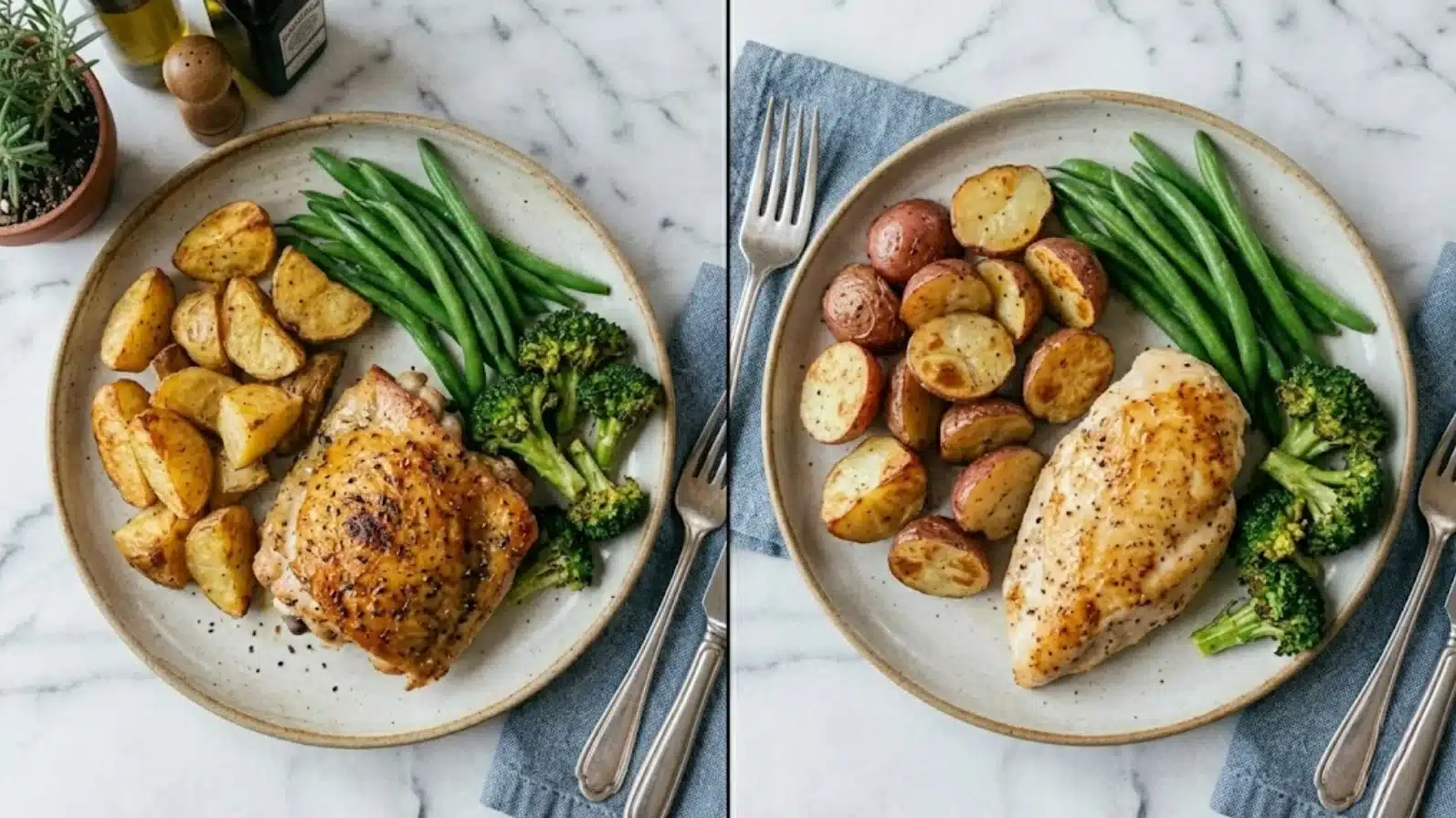
When you compare them side by side, the difference is mostly about protein density and fat content. Per 100 grams cooked and skinless, a chicken breast contains about 160–170 calories, 30–31 grams of protein, and only 3–4 grams of fat.
A thigh comes in slightly higher at 170–180 calories, with 24–26 grams of protein and 8–9 grams of fat. Breast gives you more protein per calorie, while thigh provides more natural fat and a richer texture.
The calorie gap is smaller than many expect, which can make the choice less dramatic than it sounds. Texture also matters in my weekly planning. Thigh meat stays moist during cooking, while breast can dry out if not monitored carefully.
Fitting Thighs Into Different Diet Goals
Different goals call for small changes in portion size, skin choice, and preparation style. This table breaks it down clearly so you can adjust intake based on what you’re working toward:
| Diet Goal | Skin Choice | Portion Strategy | Pair With |
| Calorie Control | Remove skin | Measure servings carefully | Steamed or roasted vegetables |
| Muscle Building | Skinless or moderate skin | Moderate, consistent portions | Rice, potatoes, whole grains |
| Lower-Carb Plan | Skin-on allowed | Focus on steady protein intake | Non-starchy vegetables, leafy greens |
Your overall daily intake matters more than a single cut of meat. Adjust skin, portion size, and side dishes so thighs support your calorie and macro targets consistently.
Practical Portion Tips
Estimating portions at home can feel uncertain at first. Simple visual cues and basic tools make it easier to stay consistent without guessing or relying only on package labels:
- A deck of cards in size equals about three ounces of cooked meat
- One medium thigh often matches the size of your palm
- Four ounces cooked looks slightly larger than a standard palm
- A kitchen scale provides the most accurate portion measurement
- Repeated measuring builds visual awareness for future estimates
After measuring a few times, you start to recognize portion sizes without constantly weighing. That habit reduces stress, supports steady tracking, and helps keep your daily intake aligned with your goals.
Final Thoughts
Understanding the nutrition facts for chicken thighs helps you move past assumptions and focus on real numbers.
A skinless, cooked thigh averages around one hundred and seventy calories per hundred grams, with high protein and moderate fat.
Skin raises calories, but protein stays consistent. Bone weight affects labeling, while cooking methods change totals more than many realize. For my own meals, clarity around portion size makes planning easier and removes guesswork.
When you compare thighs with breasts, the calorie difference is smaller than expected. If you manage portions and cooking style, chicken thighs can fit comfortably into a balanced eating routine. If you have any questions, drop a comment below.