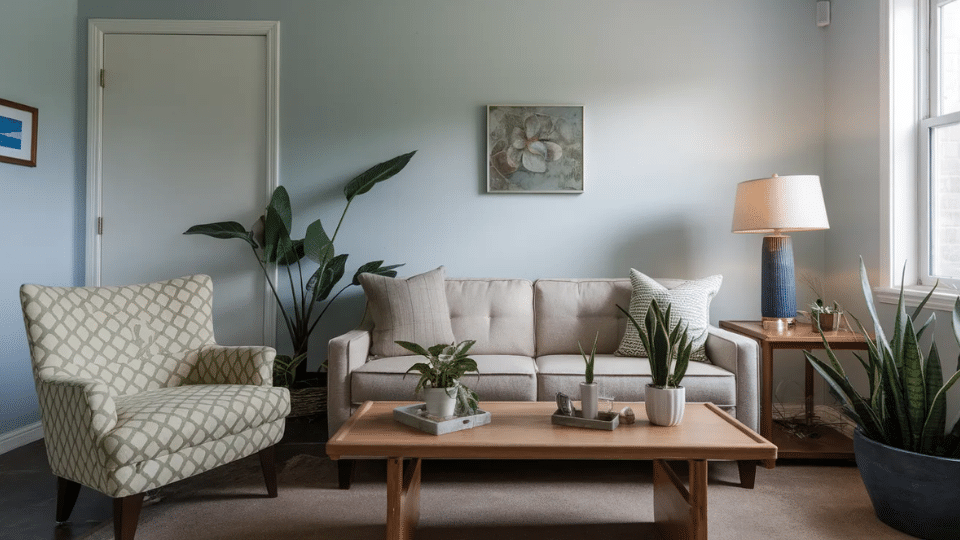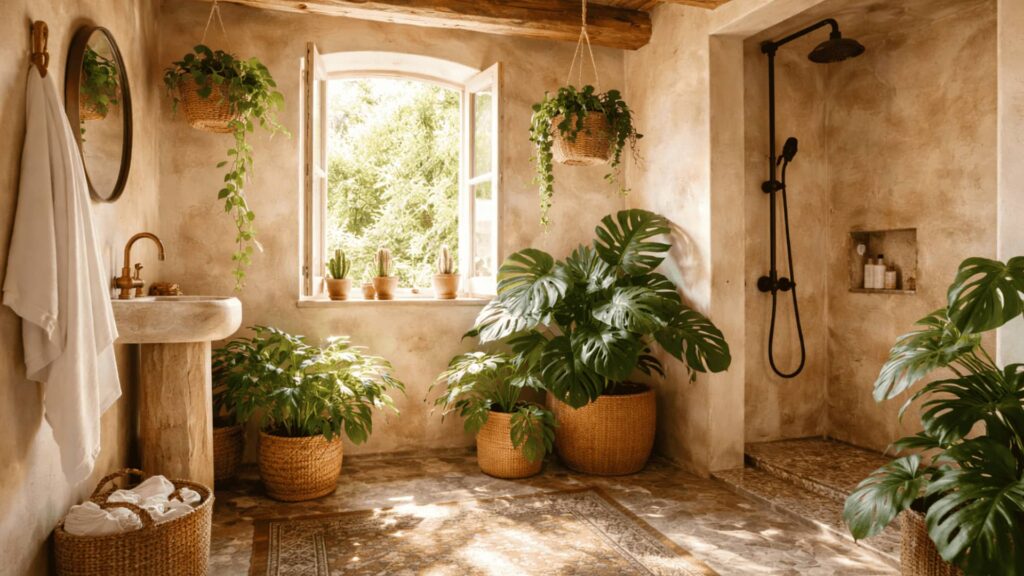

The moment I added a plant to my bathroom, it stopped feeling like just a utility room. One small green addition and the whole space felt warmer, calmer, and more alive.
I never expected such a simple change to make that much difference. A few trials later, some successful and some not, I learned that finding the best plants for bathroom spaces is less about luck and more about knowing what each plant actually needs.
Steam, low light, and splashing water are not problems for every plant. Some actually flourish in exactly those conditions. By the end of this, you will know exactly which plant fits your bathroom and why.
What Makes a Plant Perfect for a Bathroom?
Not every plant can handle a bathroom. The humidity, low light, and poor airflow make it a tough spot for most houseplants. Picking the best plants for bathroom spaces means looking beyond just appearance; the plant needs to actually survive the conditions.
- High humidity tolerance is the first thing to check. The plant should handle daily steam without wilting or rotting.
- Low-to-medium light needs matter too, since most bathrooms get little to no direct sunlight.
- Root rot resistance is just as important in consistently moist conditions.
- Compact size helps the plant fit without crowding a shelf or vanity.
- And good airflow compatibility keeps it healthy even when ventilation is limited.
Best Plants for Low Light Bathrooms
Most bathrooms don’t get much natural light. These plants handle dim conditions well and still stay healthy without needing a sunny windowsill or grow lights.
1. ZZ Plant
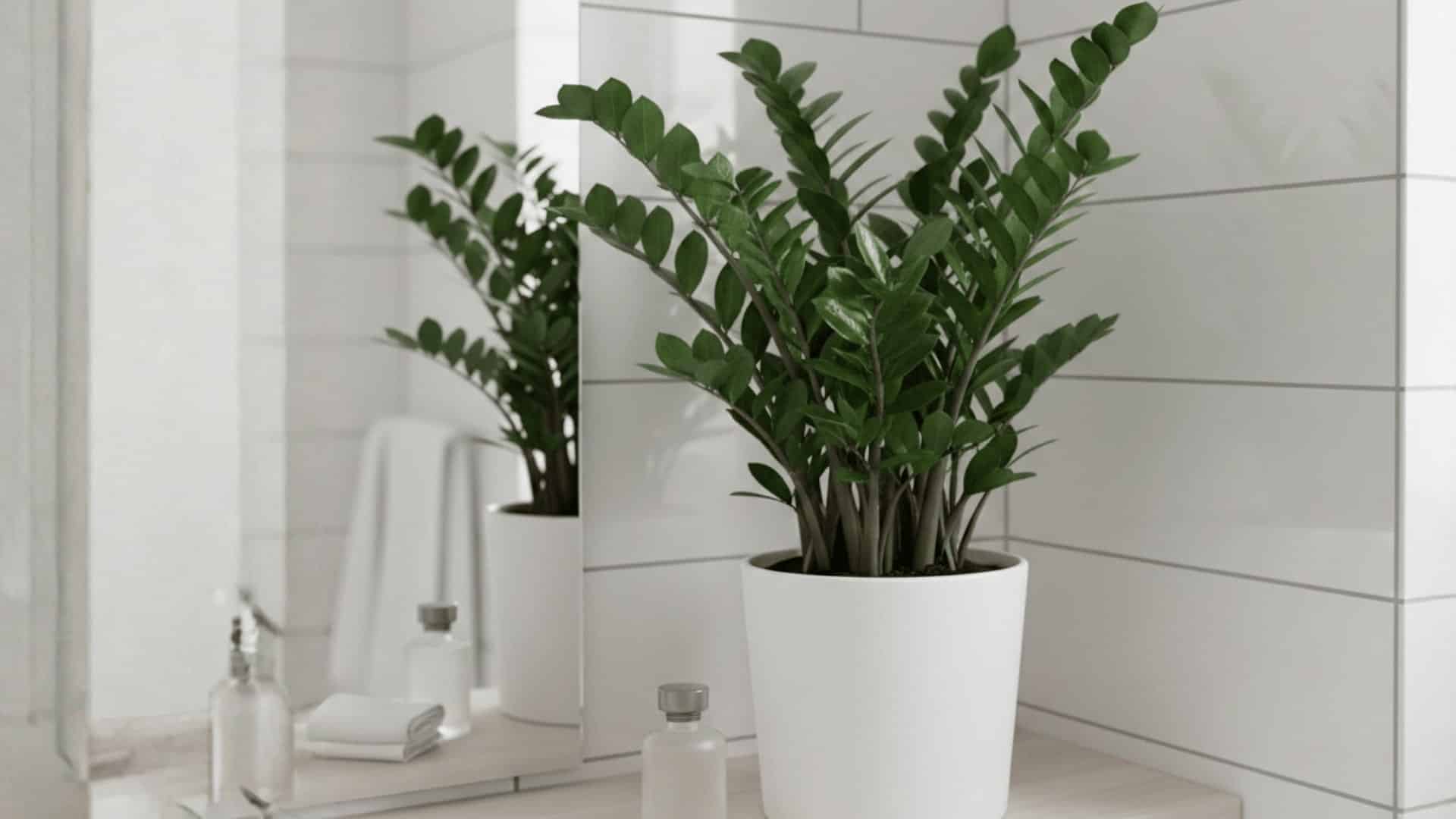
I’ll be honest, the ZZ plant was not my first pick when I started looking at bathroom plants. It felt too simple. But after watching flashier options struggle in low light, the ZZ just kept going.
It doesn’t need much water, handles dim bathrooms better than most, and never really looks bad. If you want something reliable on a vanity shelf without much effort, this one rarely disappoints.
2. Snake Plant
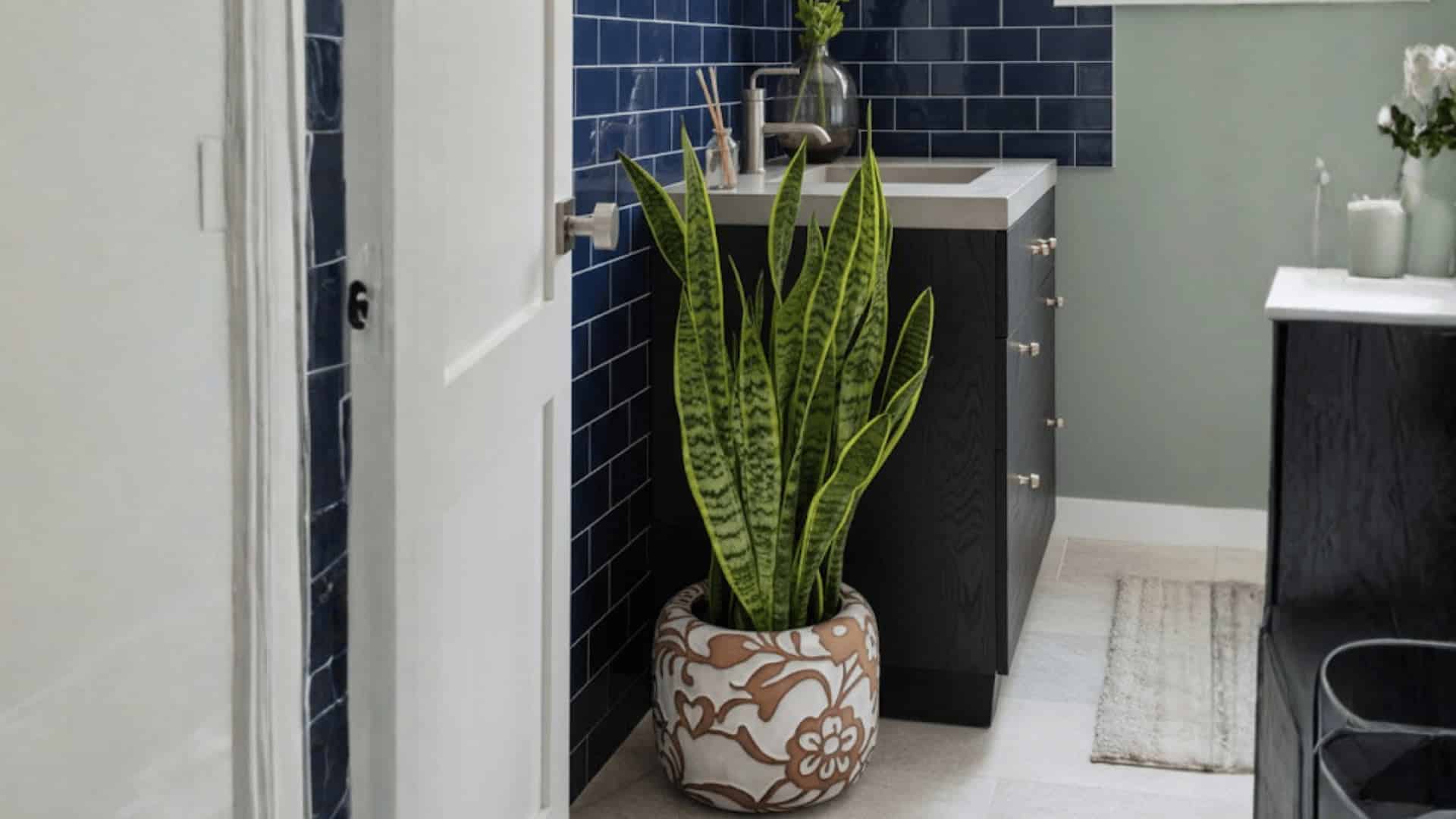
Snake plants are hard to kill, which makes them a reliable pick for dim bathrooms. They tolerate low light and high humidity better than most. Place one on the floor near the vanity or on a wide shelf.
Water sparingly, once every two to three weeks, is enough. Overwatering is the only real risk here, so let the soil dry out fully between waterings.
3. Pothos
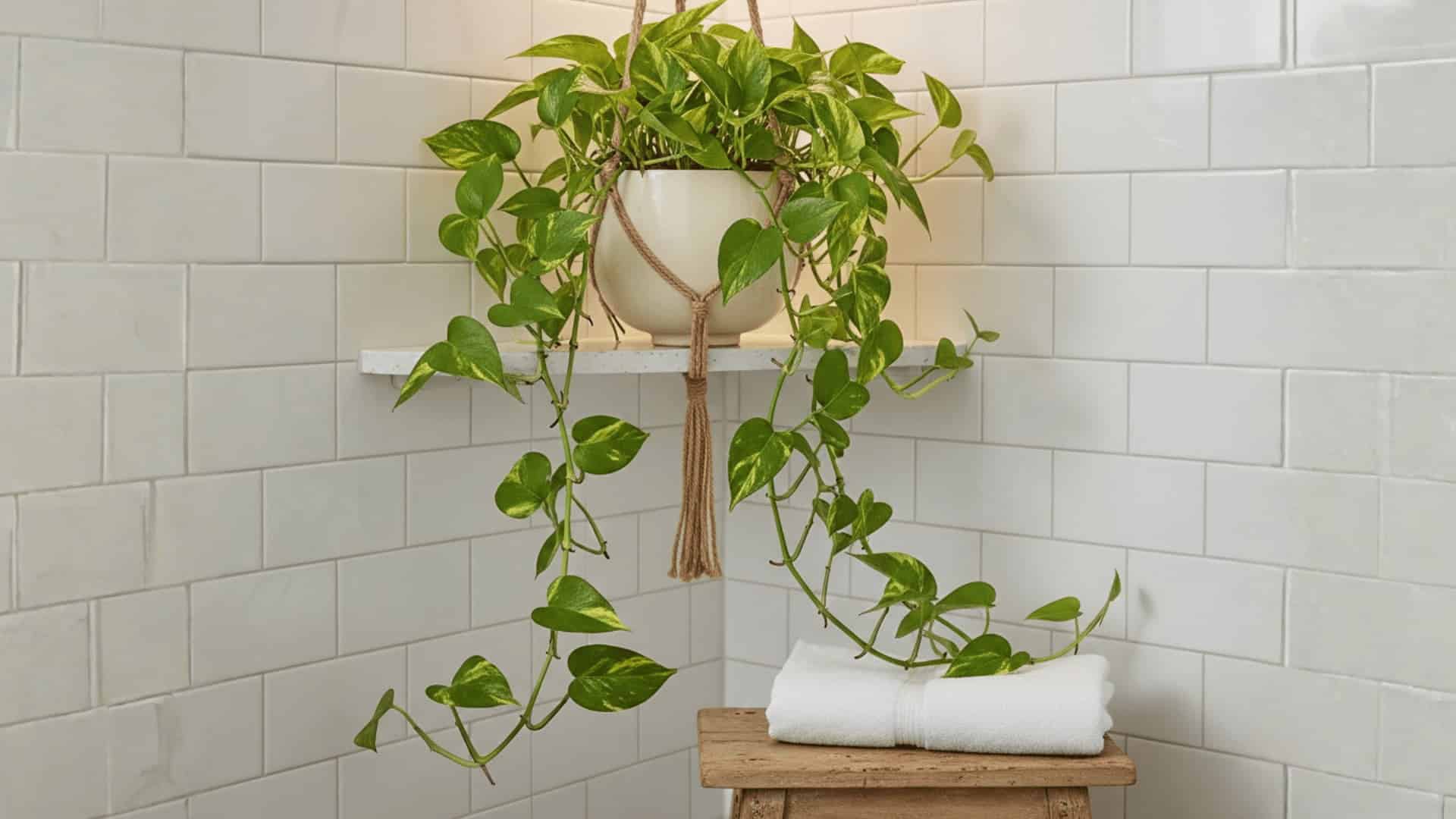
Pothos is a go-to for bathrooms with little natural light. Its trailing vines look great on a high shelf or hanging planter, and it handles steam without much fuss. It grows quickly and forgives irregular watering.
Let the soil dry slightly between waterings and trim the vines occasionally to keep them from overtaking the space. It also works well in corners with indirect light.
4. Peace Lily
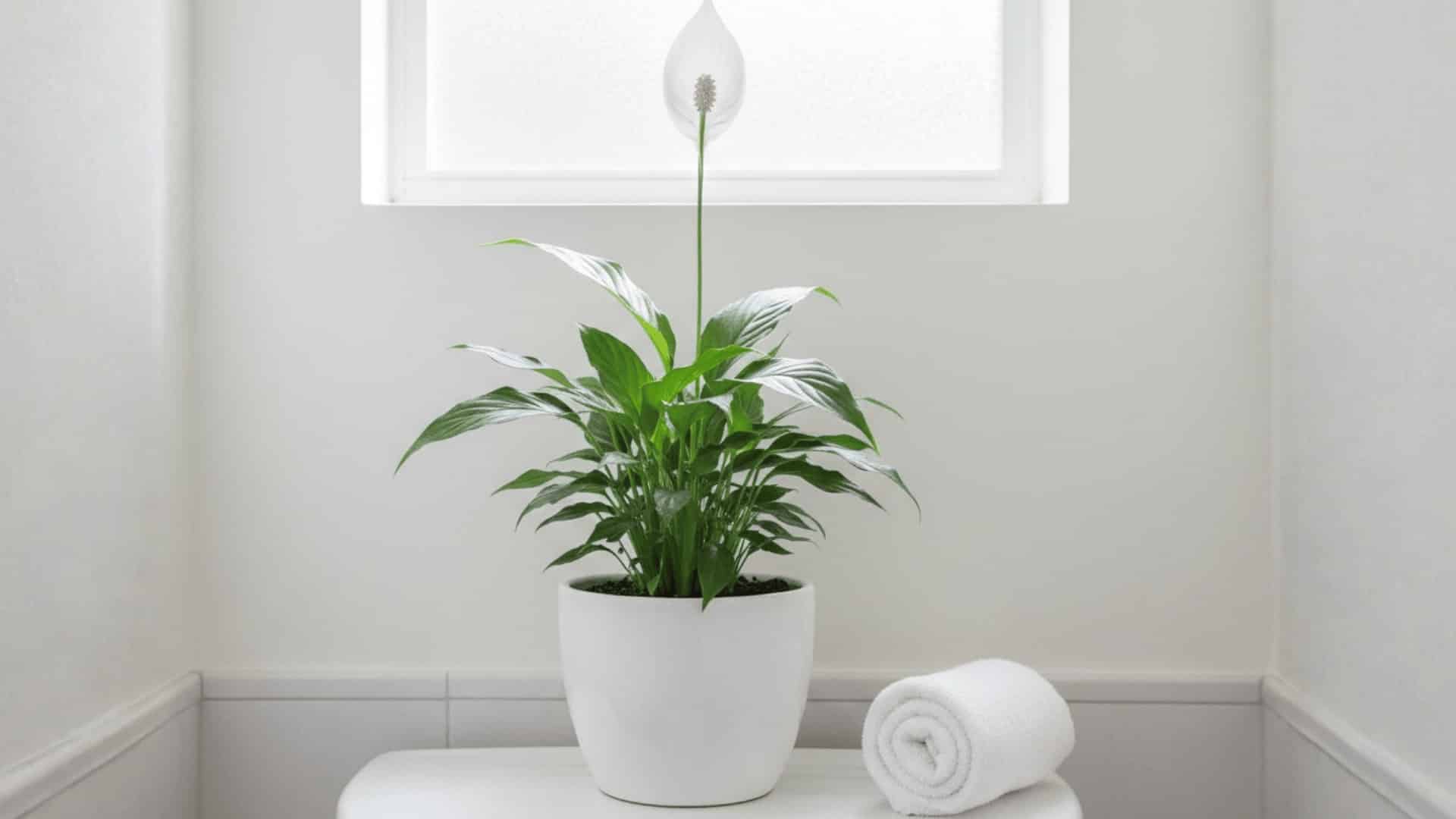
Peace lilies actually prefer low light over direct sun, making them a solid bathroom choice. They also signal when they need water; the leaves droop slightly, then bounce back after a drink.
Place one on a stable shelf or the floor in a bright-ish corner. Keep the soil lightly moist and mist the leaves occasionally. Note: toxic to pets, so place carefully if you have animals.
5. Cast Iron Plant
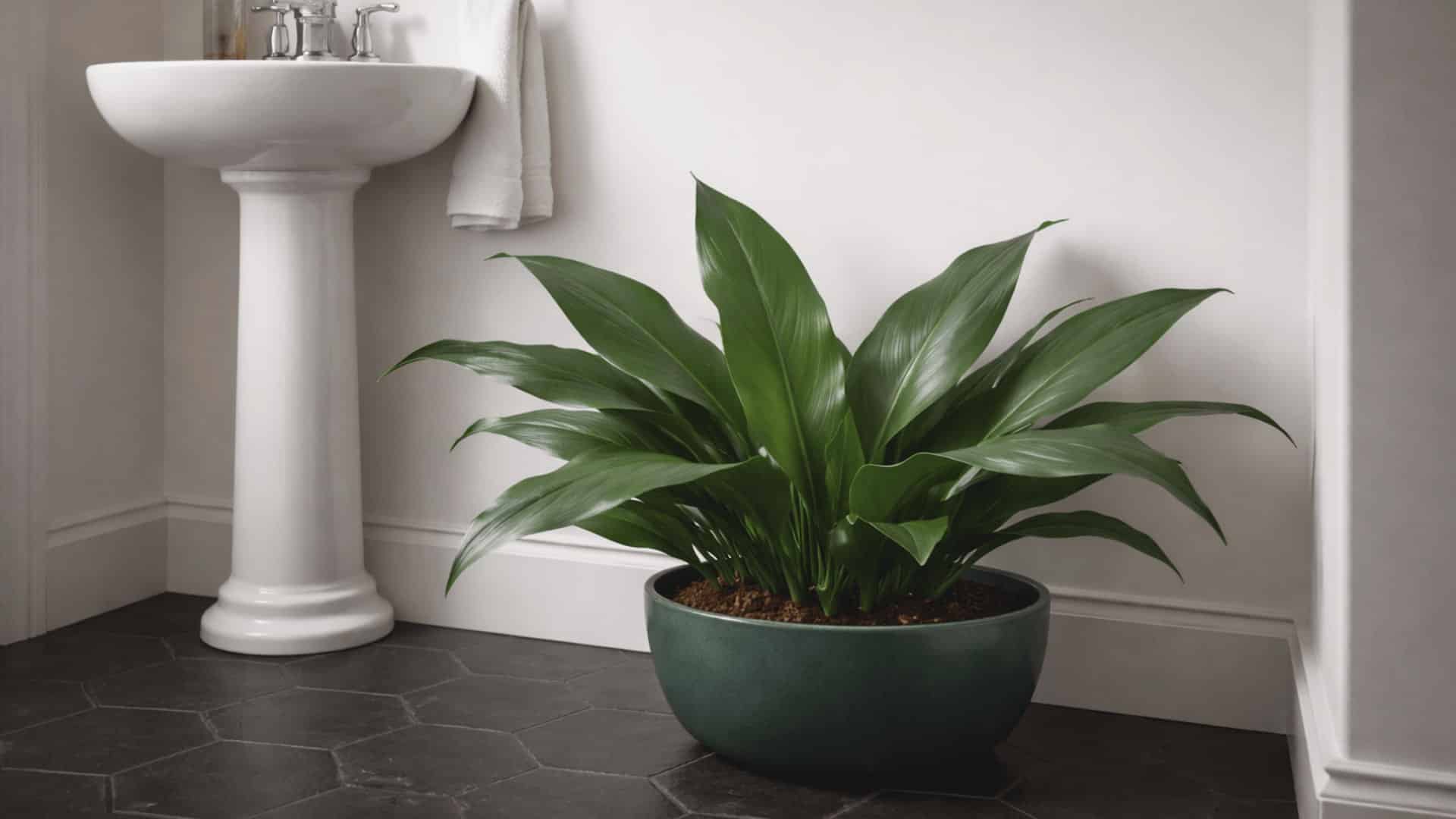
The cast-iron plant lives up to its name. It handles low light, temperature swings, and neglect better than almost any other houseplant. In a bathroom, it does well in a floor pot or on a low shelf away from direct water splashes.
Water it once every two to three weeks. It grows slowly, so it won’t outgrow its space quickly, making it ideal for smaller bathrooms.
6. Dracaena
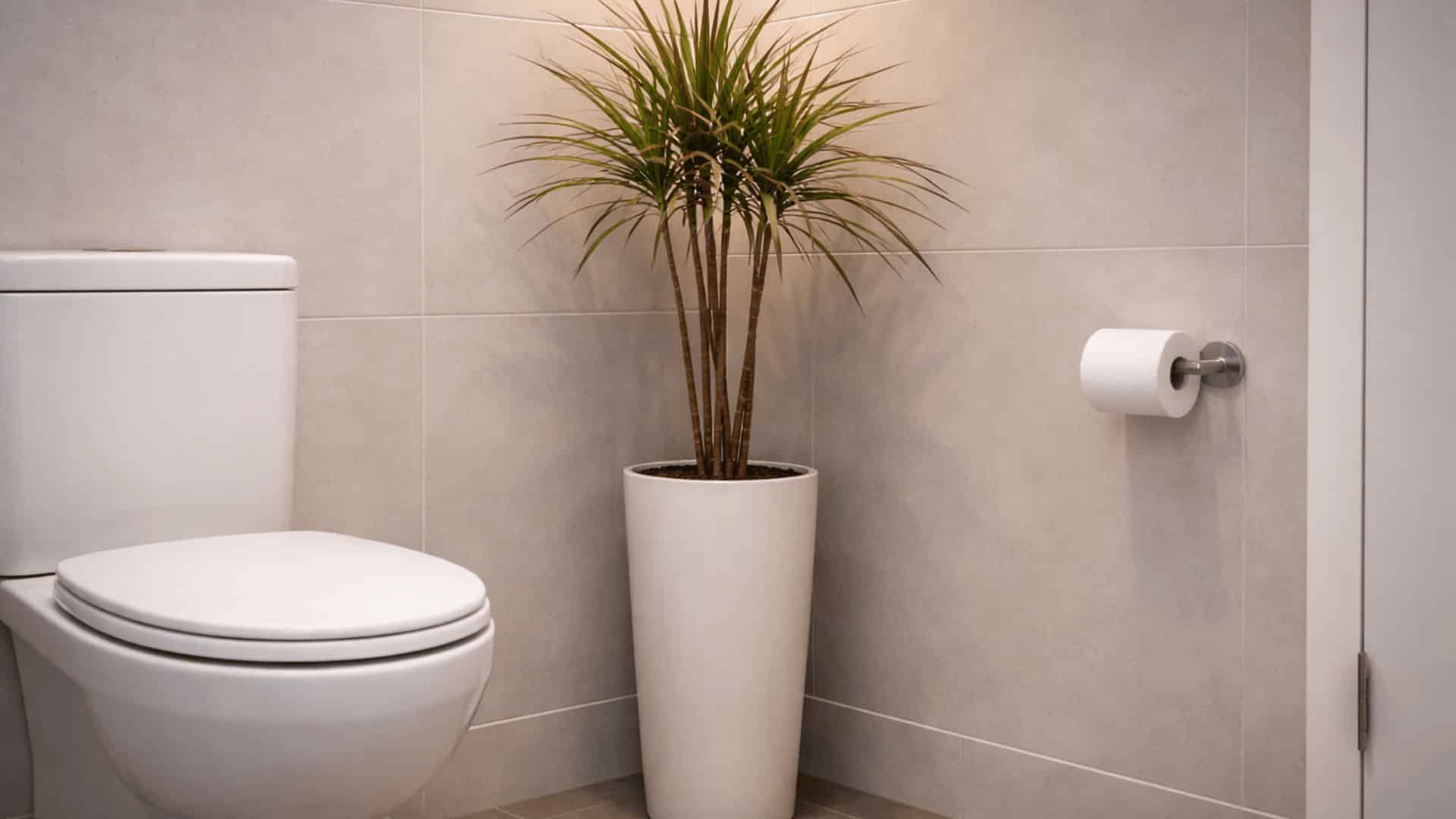
Dracaena varieties like Janet Craig or Warneckii handle low light reasonably well and add height to a bathroom without taking up much floor space. Place it in a corner or beside the vanity.
Water every one to two weeks, allowing the top inch of soil to dry between sessions. Avoid fluoride-heavy tap water if possible, as it can cause leaf tip browning over time.
7. Chinese Evergreen
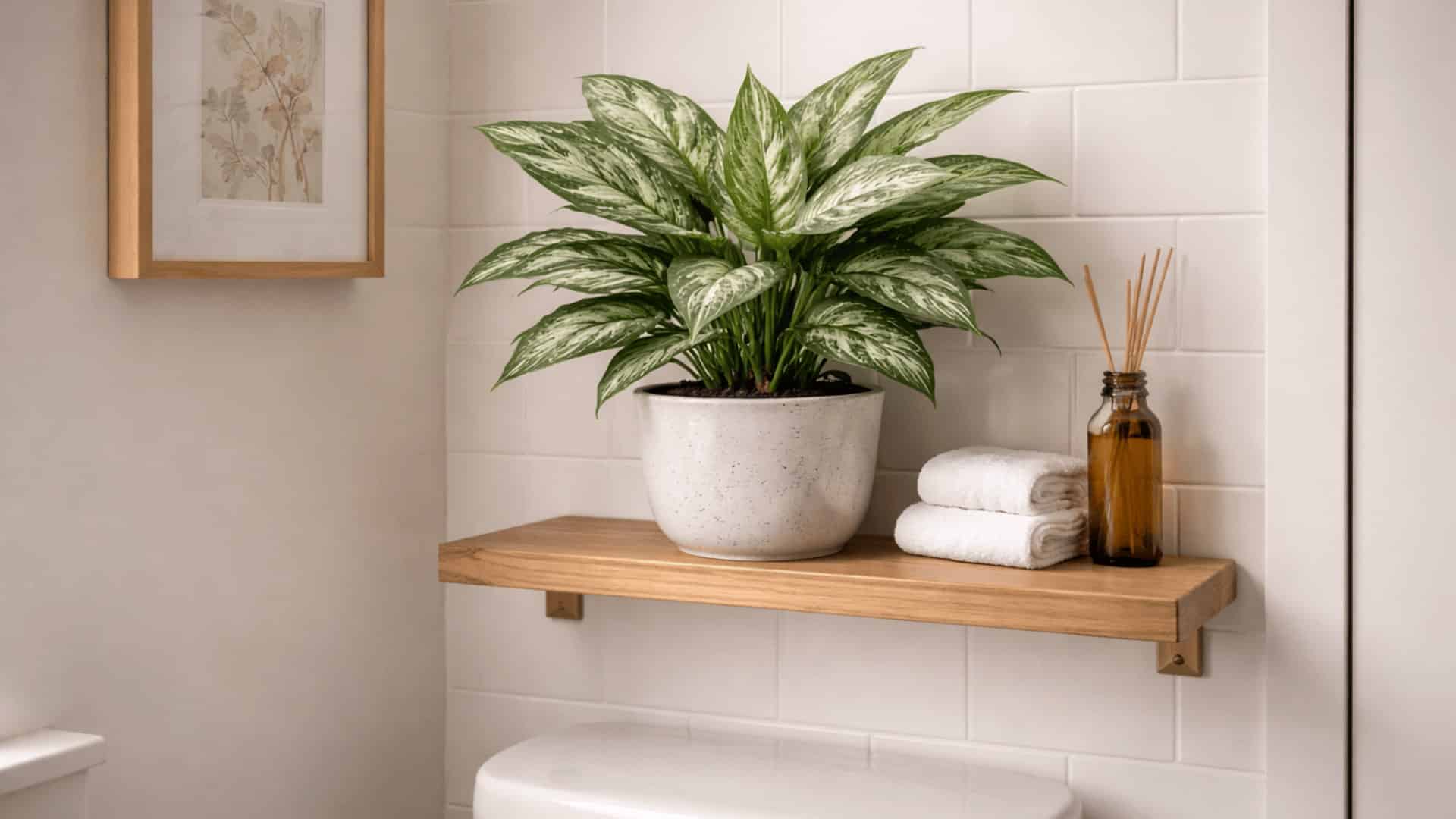
Chinese evergreen is one of the more forgiving plants for a low-light bathroom. Its patterned leaves add visual interest without needing much upkeep. Keep it on a shelf or vanity where it gets indirect light.
Water every one to two weeks and let the soil dry slightly between waterings. It handles humidity well but doesn’t like sitting in waterlogged soil, so drainage is important.
Best Plants for Bathrooms with Windows
A window changes everything. These plants do well with the indirect light and natural humidity that a windowed bathroom provides throughout the day.
8. Boston Fern
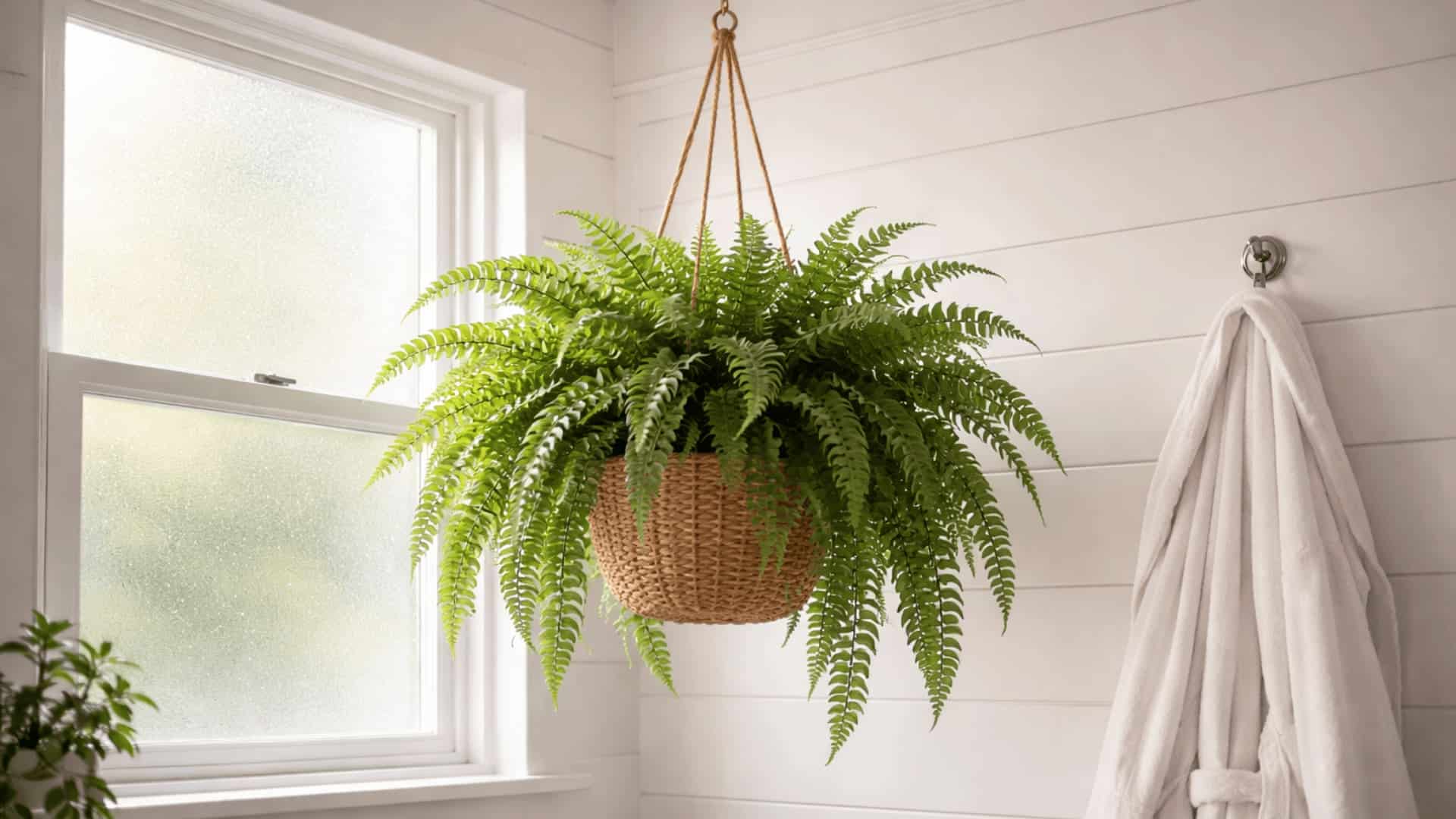
Boston ferns look incredible in a bathroom, full, lush, and genuinely dramatic in a hanging basket. That said, they do shed and need consistent moisture.
I’ve had these for years and found them more rewarding when placed near a window with good airflow rather than in a stuffy corner. They’re not completely effortless, but when the conditions are right, they’re one of the better-looking options a bathroom can have.
9. Calathea
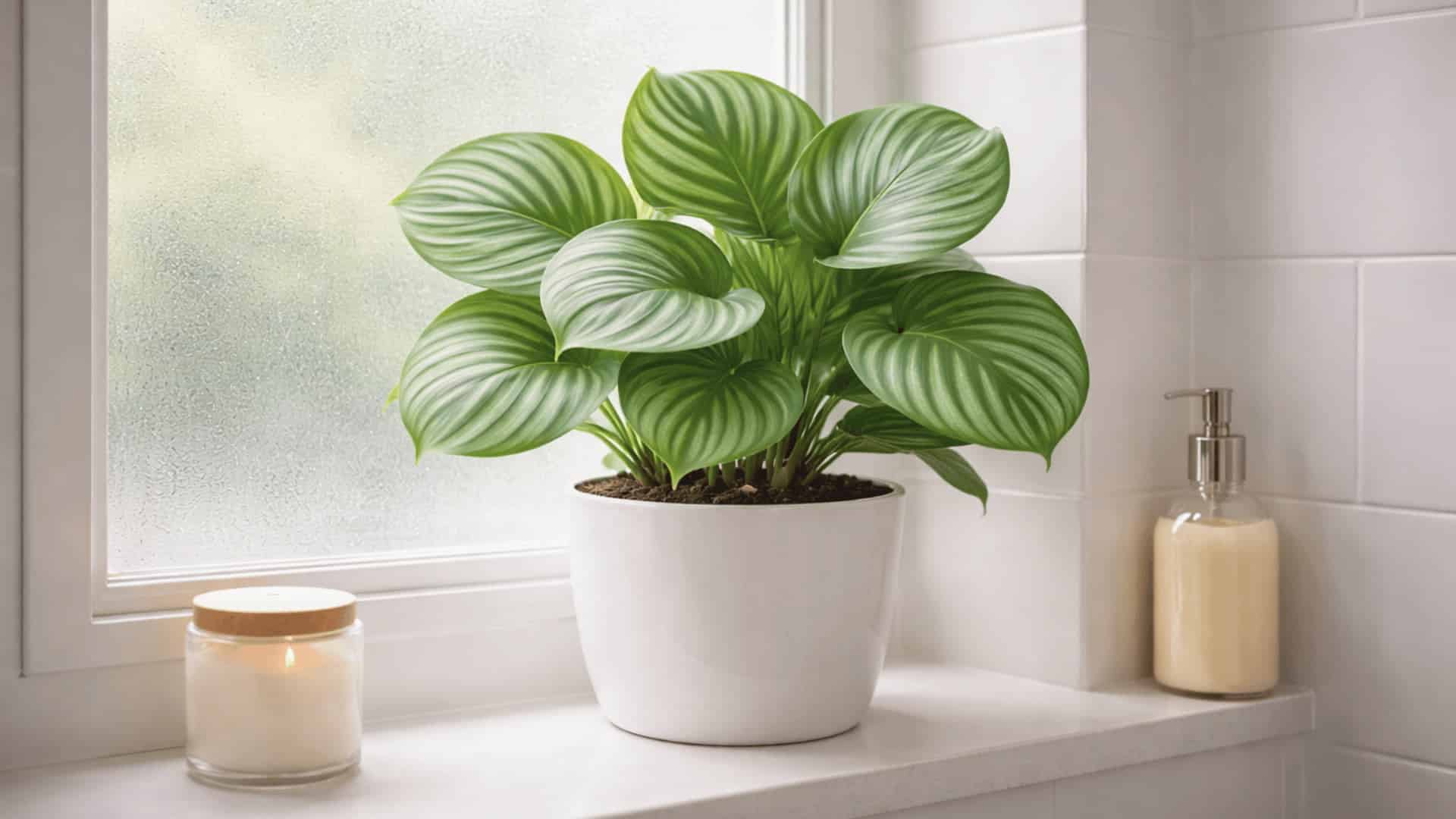
Calathea grows in indirect light and humid conditions, so a bathroom with a frosted or small window works well for it. Its patterned leaves are striking and add a decorative quality to the space. Place it on a vanity or shelf within a few feet of the window.
Water regularly with room-temperature water and keep the soil moist but not soggy. Avoid cold drafts near vents or air conditioning.
10. Spider Plant
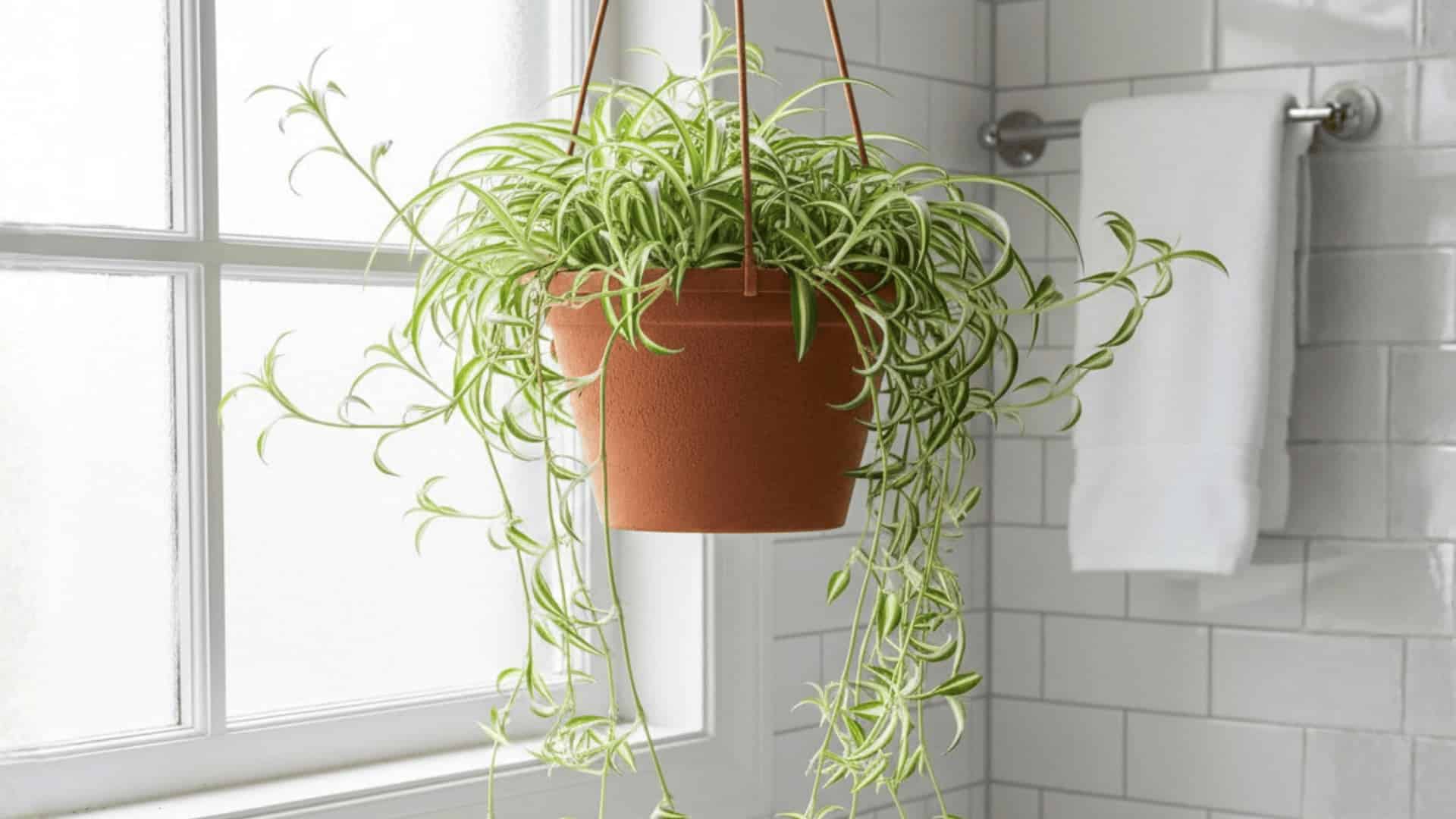
Spider plants are easy to grow and well-suited for a bathroom with indirect light. They produce trailing offshoots called spiderettes, which look great in a hanging planter near a window.
Water once a week and let the soil dry slightly between waterings. They’re also pet-safe, which is a bonus for households with cats or dogs. They handle fluctuating humidity without showing much stress.
11. Monstera
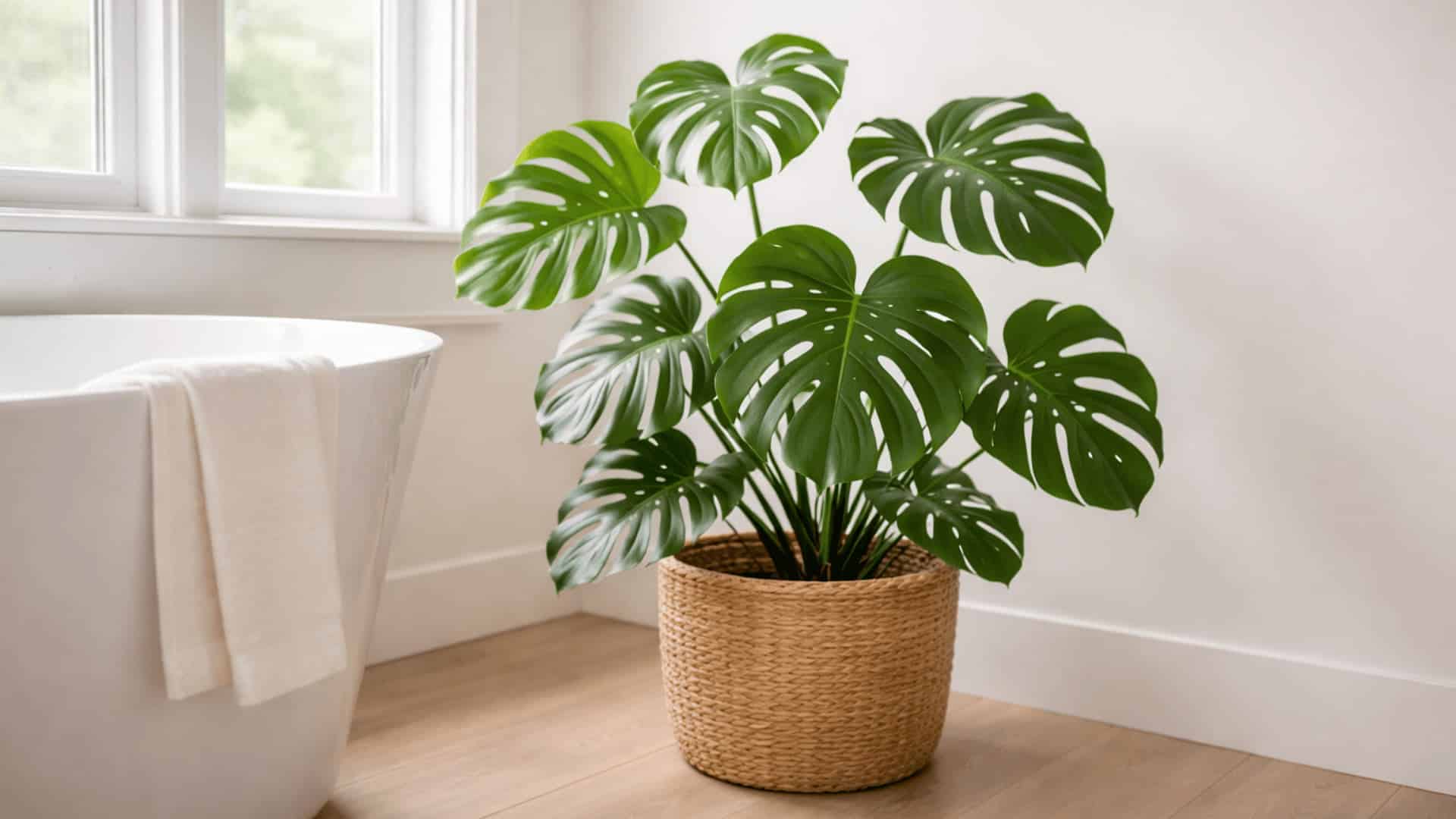
Monstera gets a lot of attention, and most of it is deserved. The split-leaf is hard to ignore, and it grows well in a bathroom with a decent-sized window. It does get wider over time, so floor space matters.
I wouldn’t put one in a small bathroom and expect it to stay manageable, but in a spacious bathroom with good indirect light, it makes a real visual difference.
12. Bird’s Nest Fern
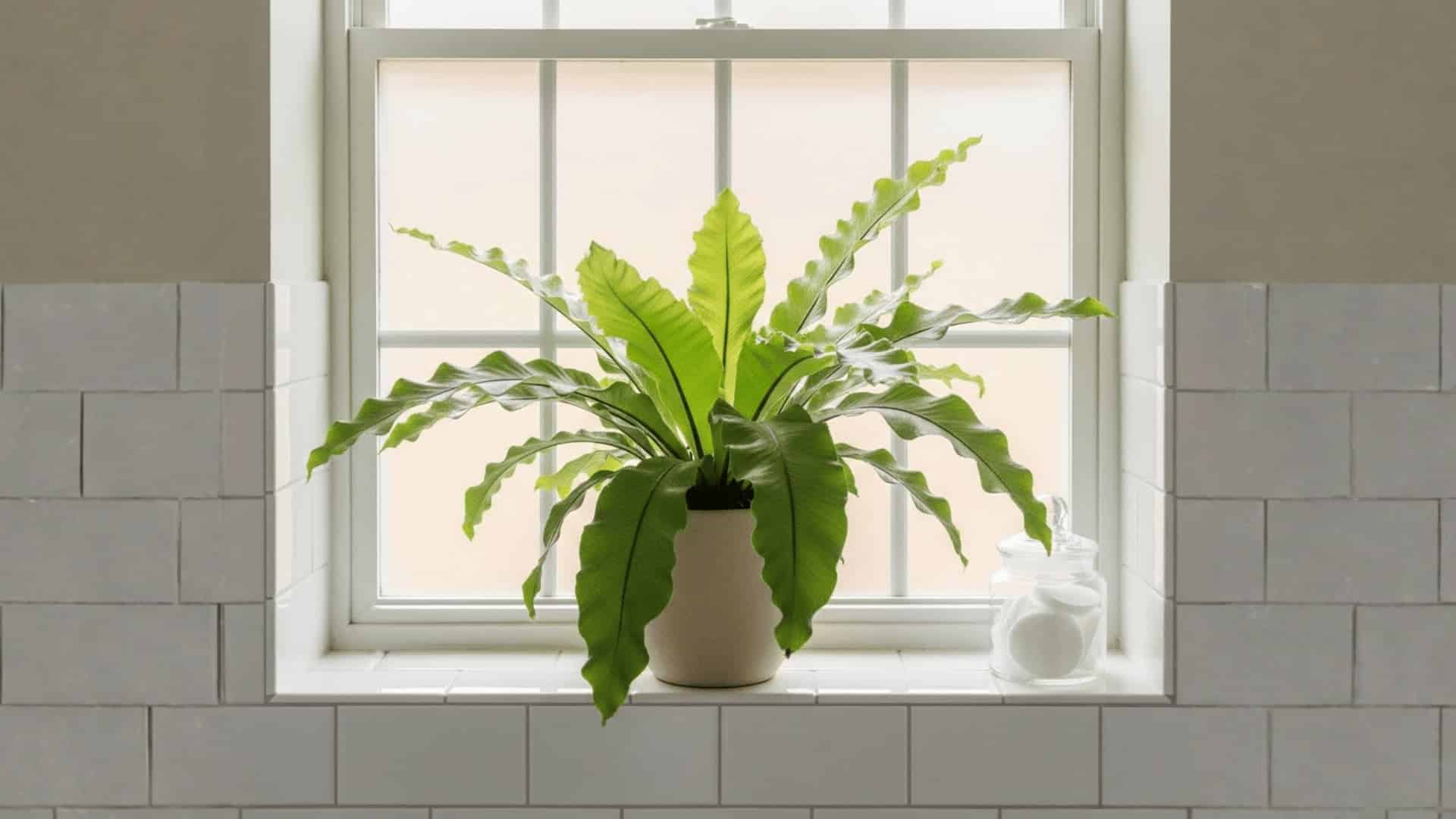
Bird’s nest fern is better suited for bathrooms than most ferns because it’s more tolerant of lower light and irregular care. Its broad, wavy fronds fan out from the center and look great on a windowsill or shelf.
Keep the soil moist and avoid watering directly into the center of the plant, as this can cause rot. It grows in humidity and rarely needs much attention beyond regular watering.
13. Bamboo Palm
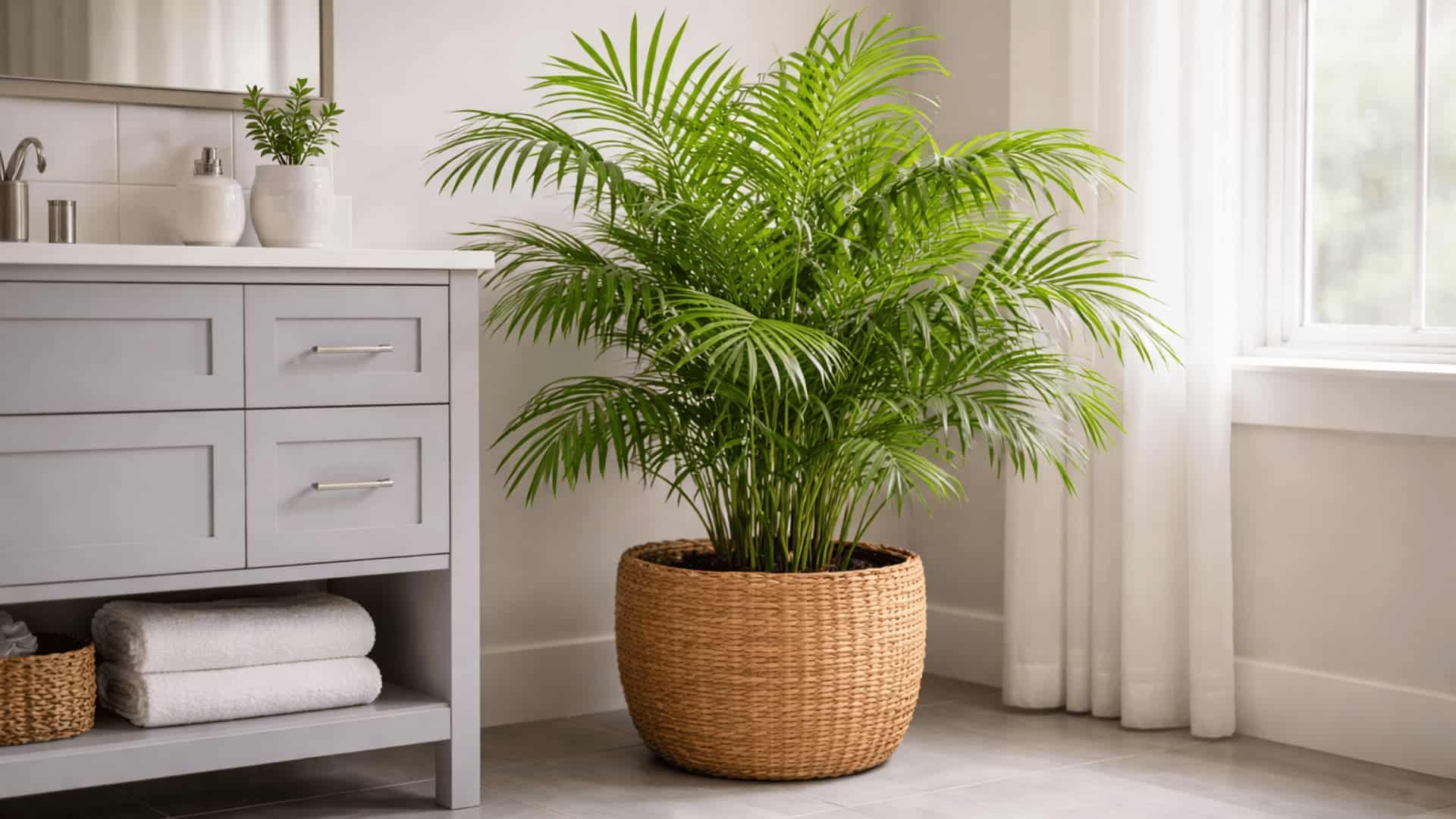
The bamboo palm handles indirect light well and brings a relaxed, natural feel to a bathroom with a window. It grows upright, so it fits well in a floor pot beside the window without spreading too wide.
Water regularly and keep the soil moist but not waterlogged. It’s also pet-friendly and known for tolerating indoor humidity. Wipe the fronds occasionally to prevent dust buildup on the leaves.
14. Philodendron
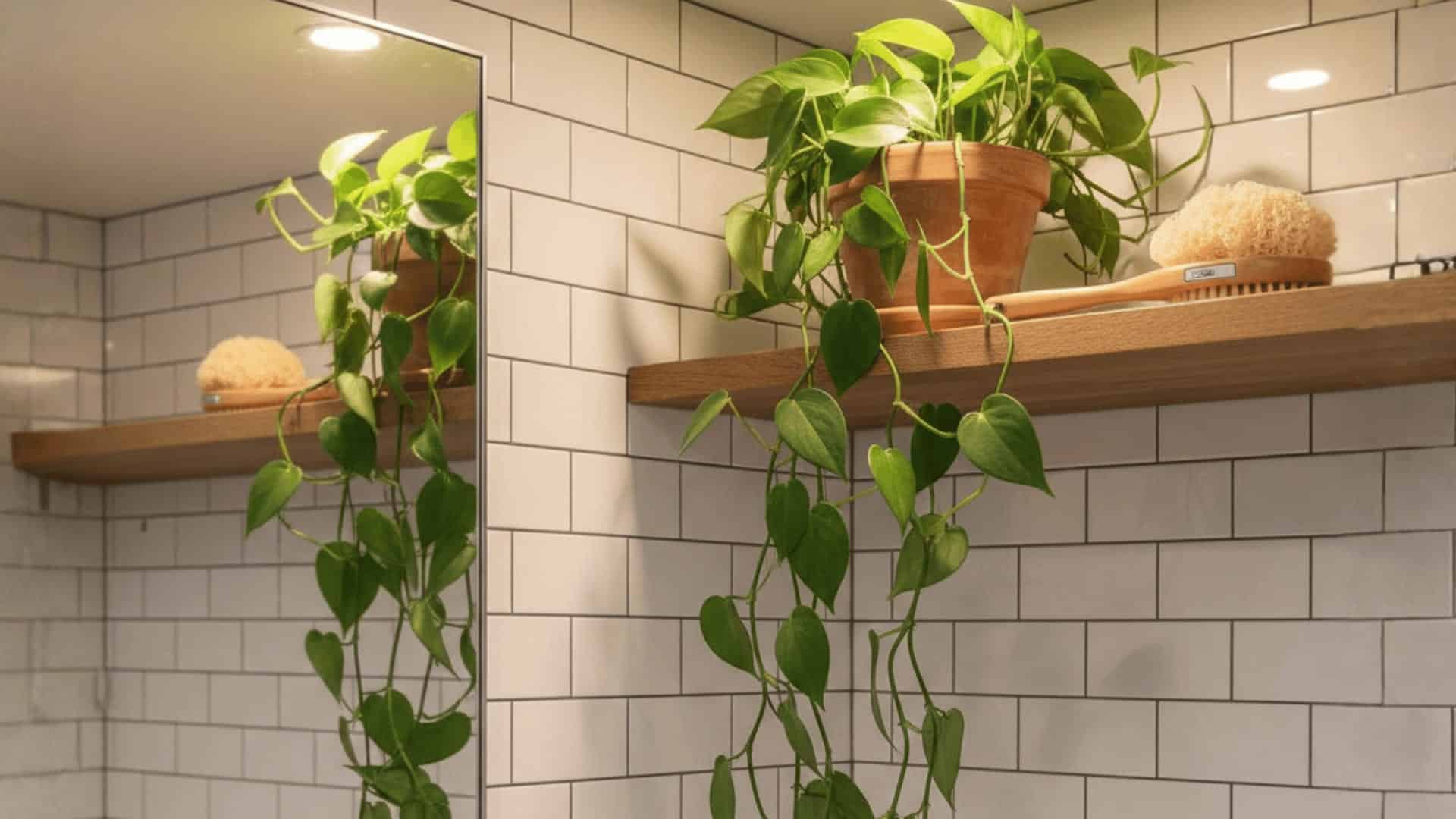
Philodendrons are adaptable and do well in the filtered light of a bathroom with a window. Heart-leaf philodendron is a popular choice; it trails nicely from a shelf or hanging planter.
Water when the top inch of soil feels dry and keep it away from direct sunlight, which can scorch the leaves. It handles humidity without issue and grows steadily, giving the bathroom a full, layered look over time.
Best Hanging Plants for Bathrooms
Hanging plants make good use of vertical space. These trailing varieties work well in bathrooms where shelf and floor space is limited, but ceiling hooks are an option.
15. English Ivy
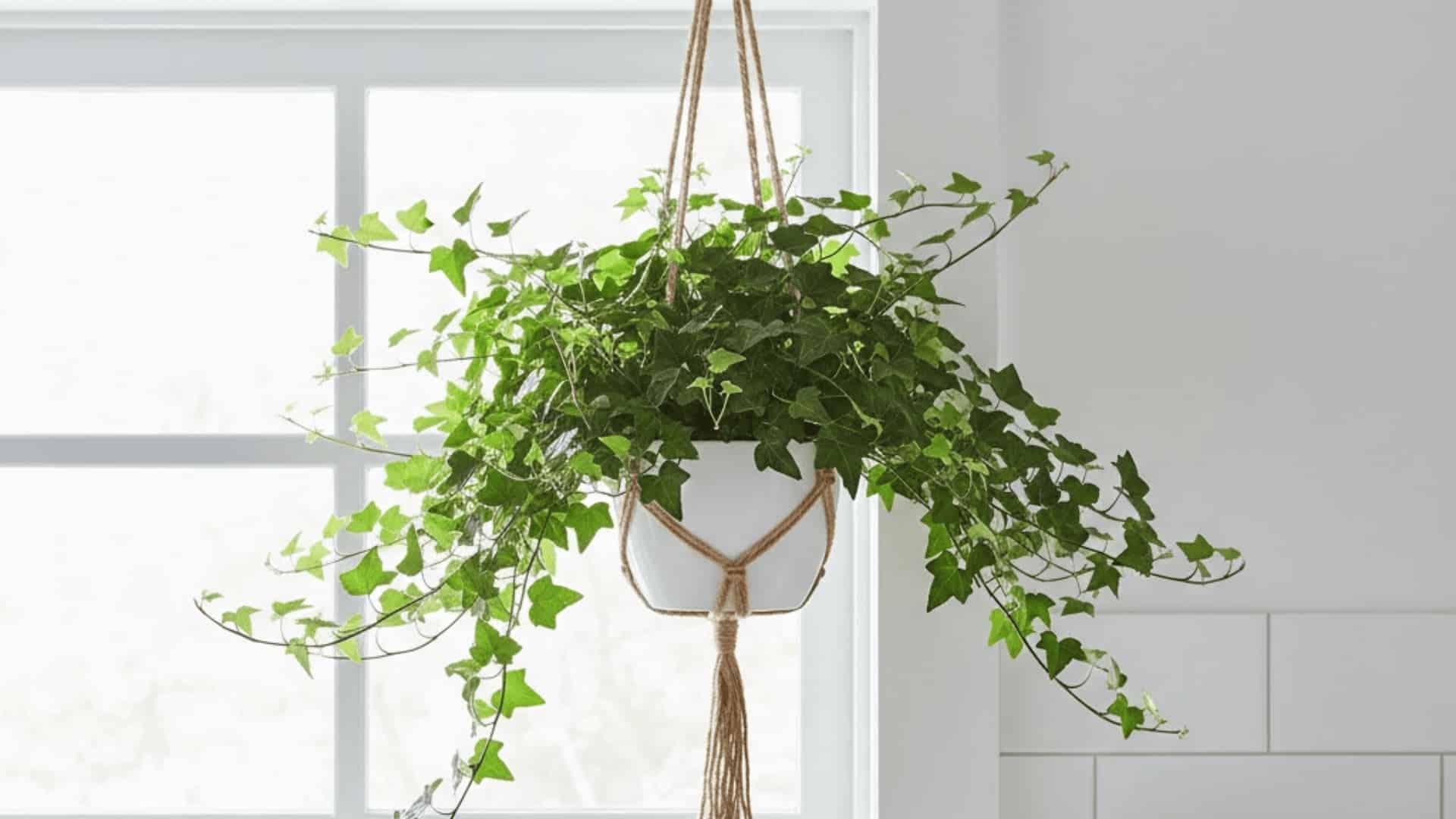
English ivy works well as a hanging plant in bathrooms with moderate light. It trails gracefully and fills vertical space without taking up shelf or floor room. Hang it near a window or in a spot with decent indirect light.
Water when the top layer of soil feels dry and mist the leaves occasionally. Keep an eye on growth; ivy spreads quickly and may need trimming every few weeks.
16. Tradescantia (Spiderwort)
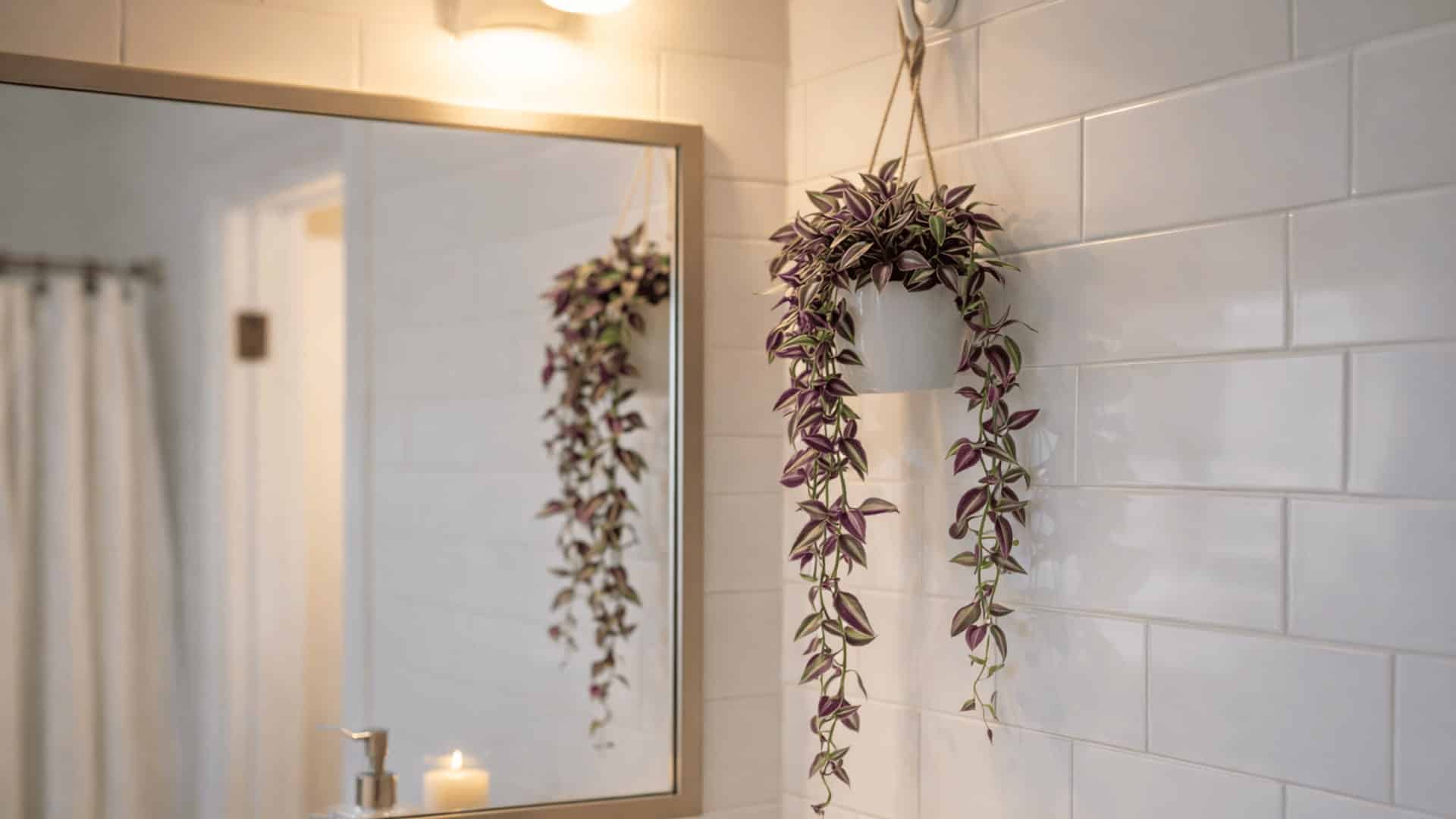
Tradescantia is one of the more visually interesting hanging plants for a bathroom. Its striped purple-and-green leaves trail quickly and look striking from a distance. It handles indirect light and humidity without much fuss.
Hang it near a mirror or on a wall hook beside the vanity. Water when the top inch of soil feels dry and trim regularly to keep it full.
17. String of Pearls
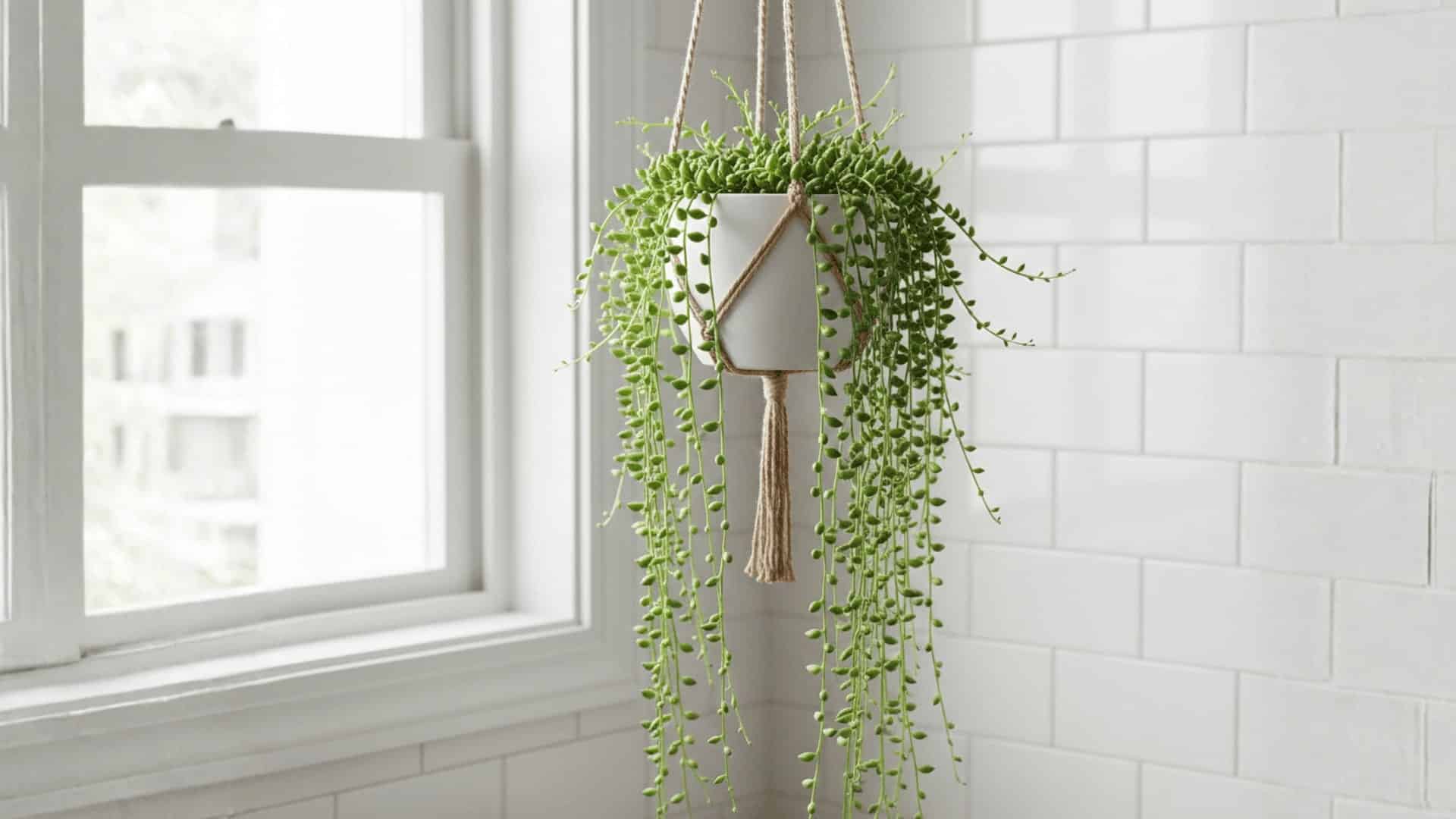
String of pearls is a more delicate hanging option that suits bathrooms with bright, indirect light, ideally near a window. Its bead-like trailing stems are visually distinctive.
Water sparingly, as it’s a succulent and prone to root rot in overly moist conditions. Use a well-draining mix and a pot with drainage holes. It does better in bathrooms with good airflow rather than constantly steamy, enclosed spaces.
18. Air Plants (Tillandsia)
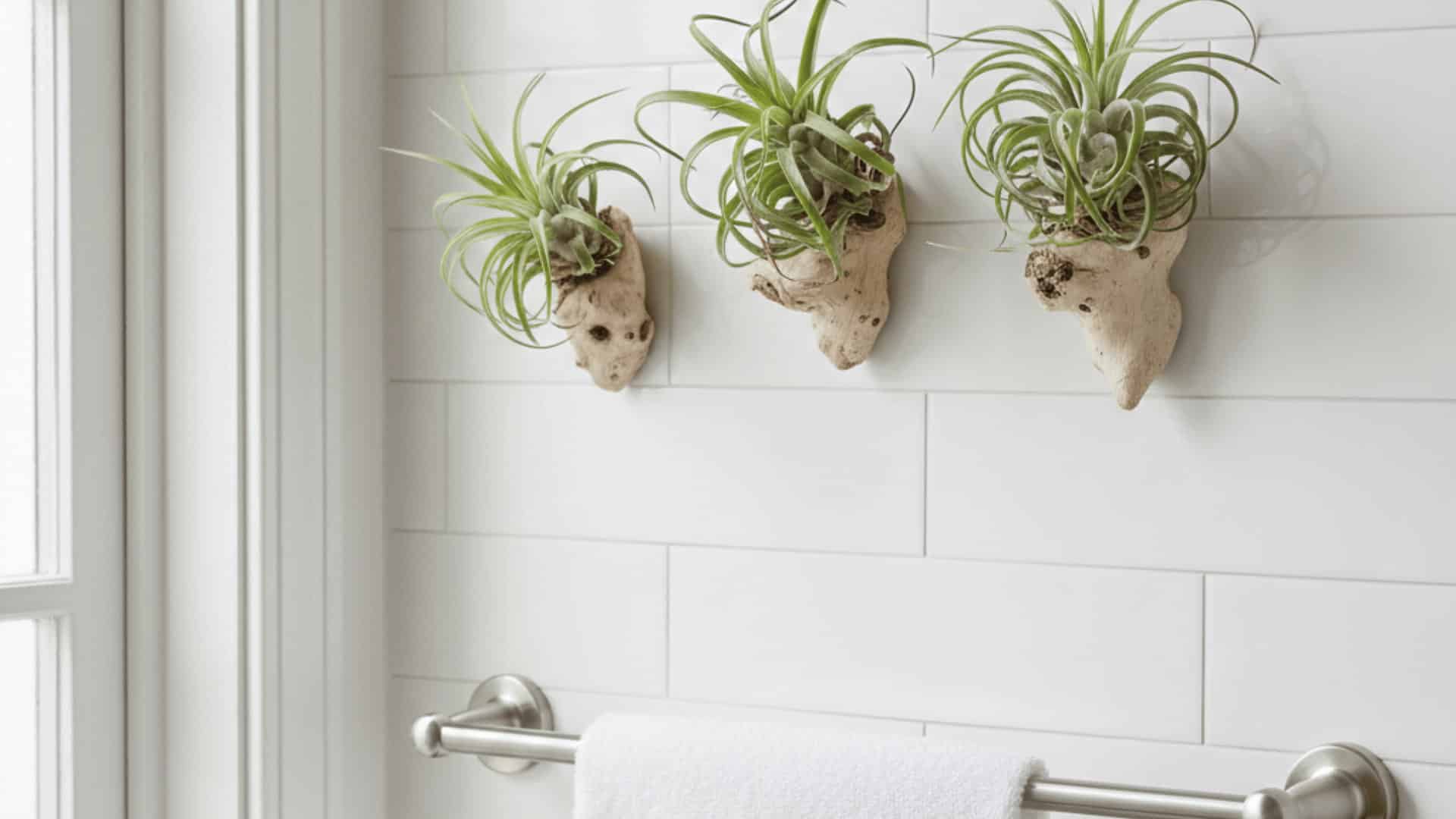
Air plants took me a while to warm up to. They look almost too minimal at first. But mounting a few on driftwood on a bathroom wall genuinely works; they need no soil, handle the steam naturally, and stay out of the way.
Misting them a few times a week is about all the effort involved. For a windowless or small bathroom, they’re one of the more practical options I’ve come across.
19. Burro’s Tail
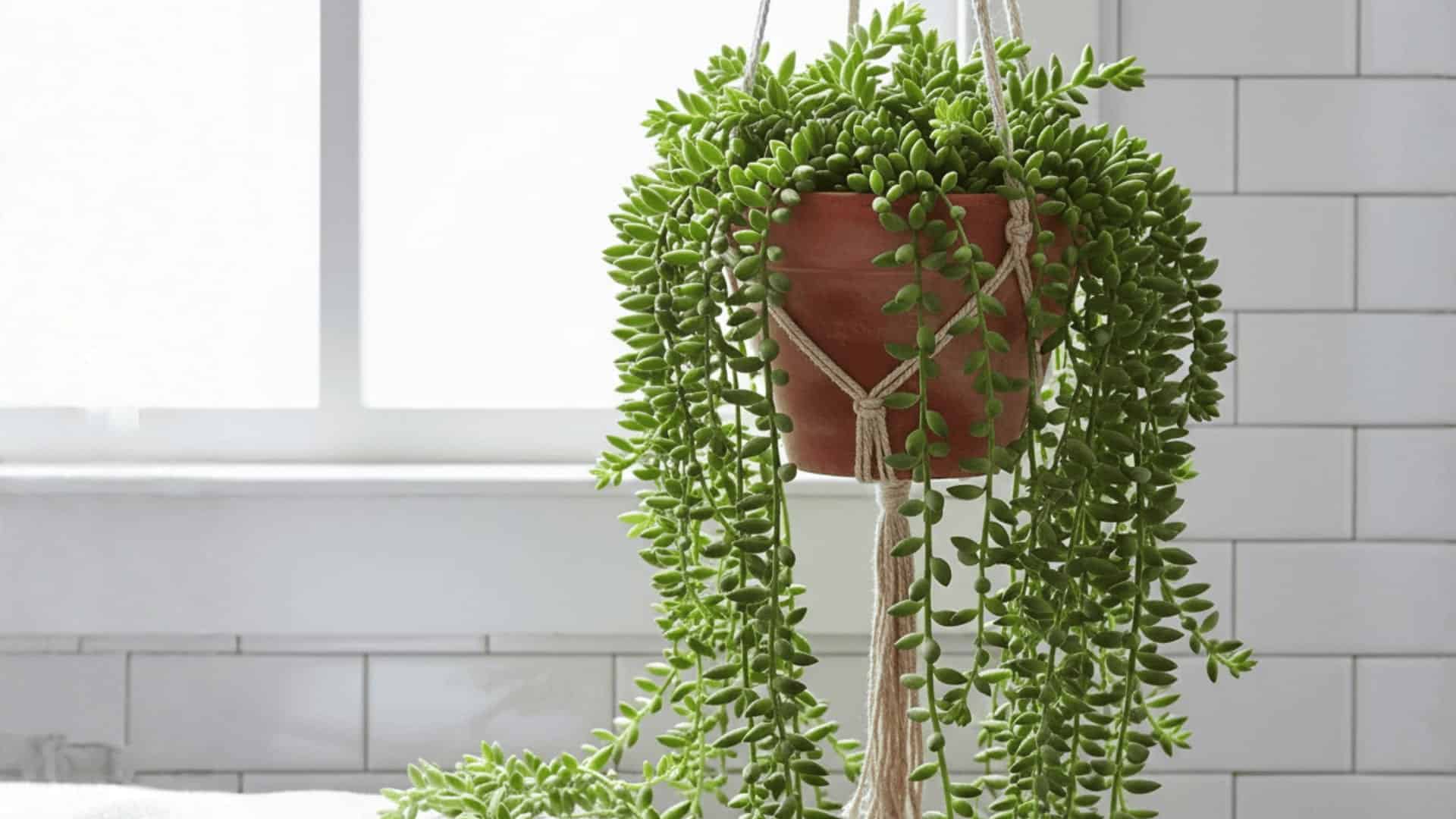
Burro’s tail is a trailing succulent that works in a hanging planter in a bathroom with a bright window. Its thick, bead-like stems cascade downward, making it visually interesting from above.
Water every two to three weeks and avoid misting; it prefers drier conditions than most bathroom plants. It suits bathrooms that are humid but not constantly steamy, and needs decent light to stay full and healthy.
20. Creeping Fig
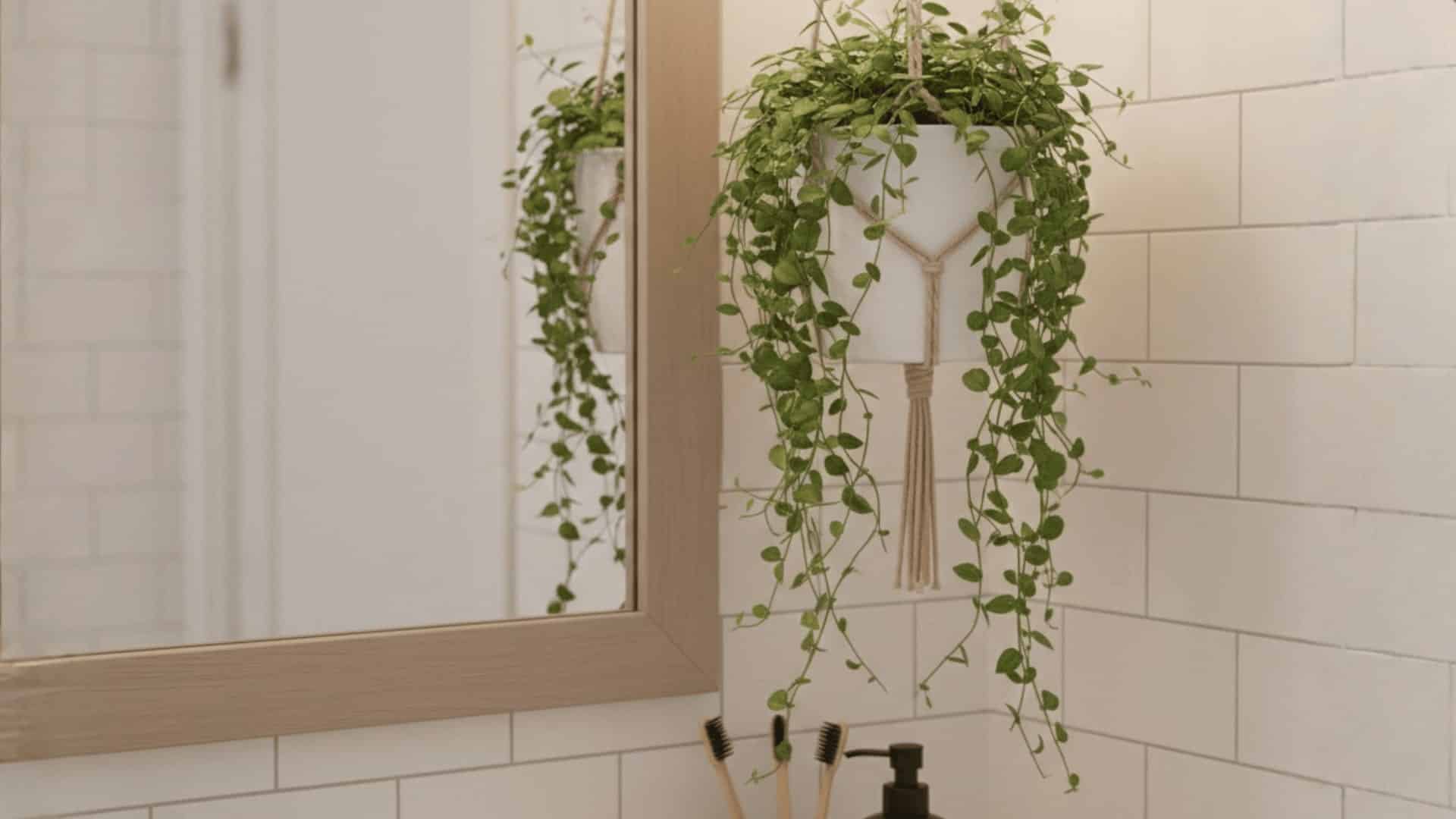
Creeping fig is a small-leafed trailing plant that hangs well and tolerates moderate humidity. It works in a bathroom with indirect natural light. Hang it in a lightweight planter near a window or on a high shelf.
Keep the soil consistently moist but not waterlogged. It grows relatively fast and may need occasional trimming. Its fine, dense foliage gives a softer, more textured look compared to larger-leafed hanging plants.
Best Flowering Plants for Bathrooms
Not all bathroom plants have to be purely green. These flowering varieties handle indoor humidity reasonably well and add color to an otherwise plain bathroom space.
21. Orchid (Phalaenopsis)
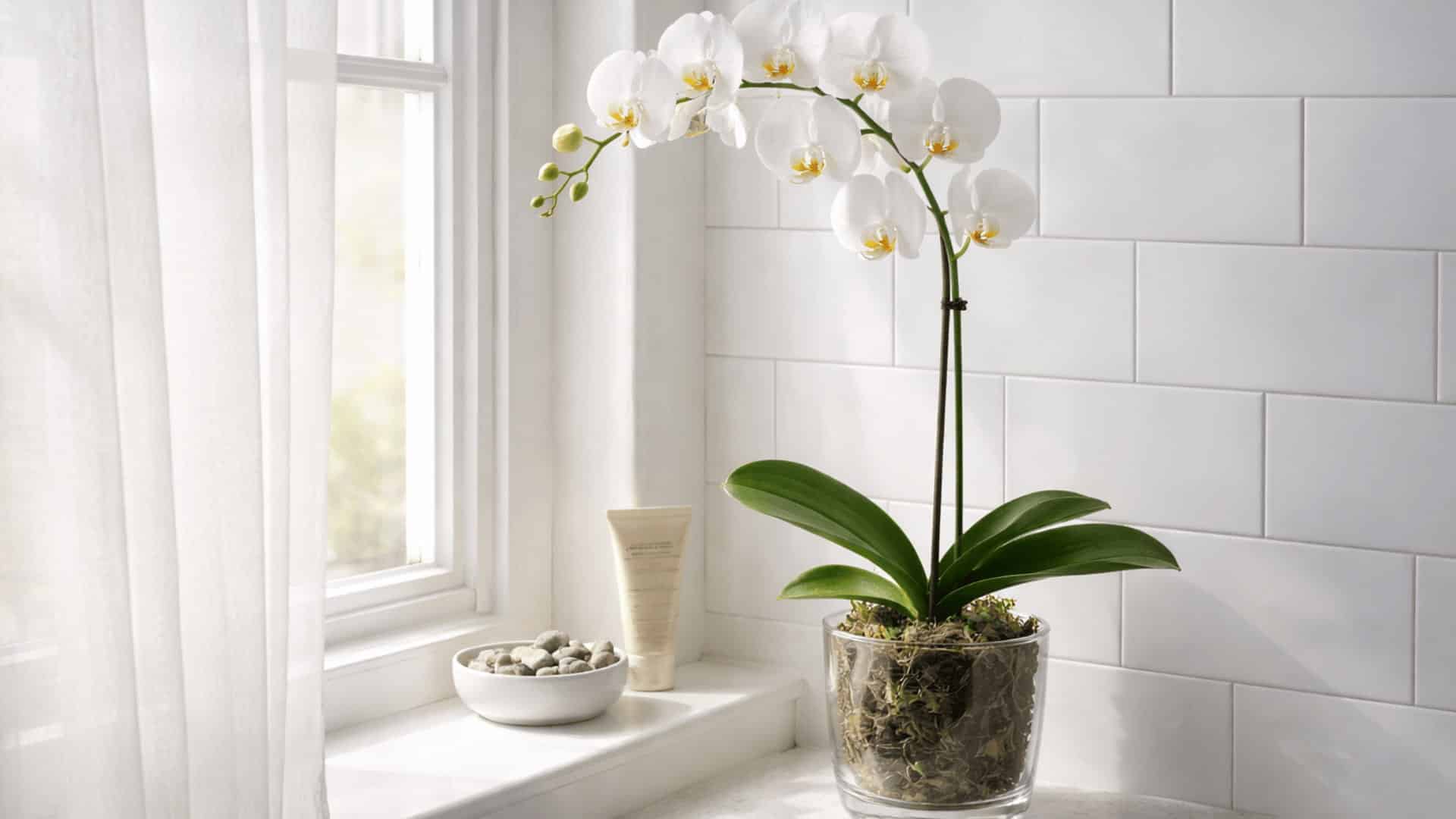
Orchids have a reputation for being difficult, and I understand why. But Phalaenopsis orchids in a bathroom are genuinely more forgiving than people expect. The humidity does a lot of the work for you.
I placed one on a windowsill, watered once a week, and let the bathroom conditions handle the rest. When it blooms, it looks polished in a way that most other bathroom plants simply don’t.
They look polished and add a clean, refined quality to the bathroom without demanding constant attention.
22. Anthurium
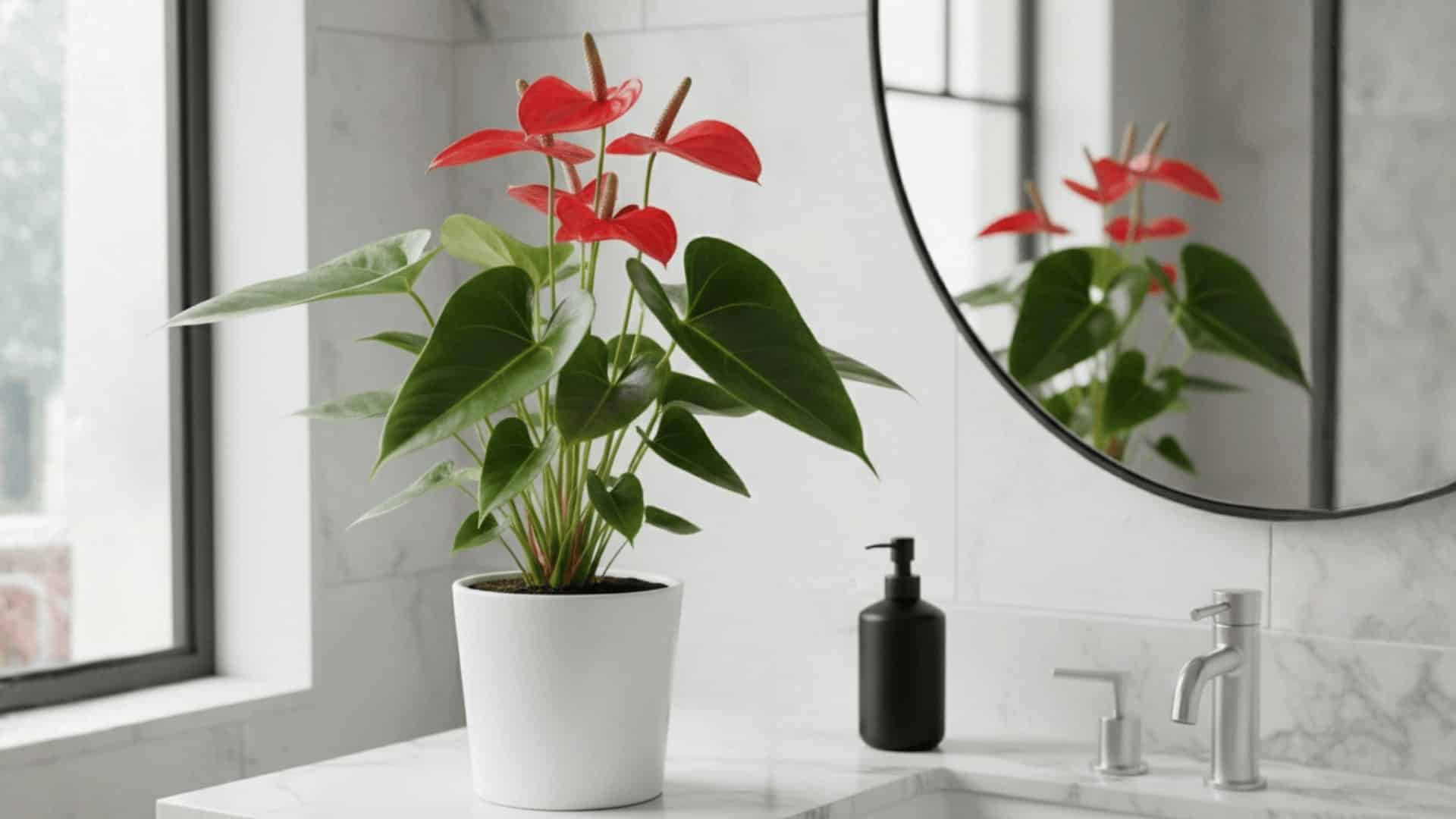
Anthurium produces waxy, long-lasting blooms and handles bathroom humidity well. It prefers bright, indirect light, so a spot near a window works best. Water every one to two weeks and let the top inch of soil dry between waterings.
The glossy leaves and red or pink spathes make it one of the more visually striking flowering options for a bathroom. Keep it out of direct sunlight to prevent leaf scorch.
23. Bromeliad
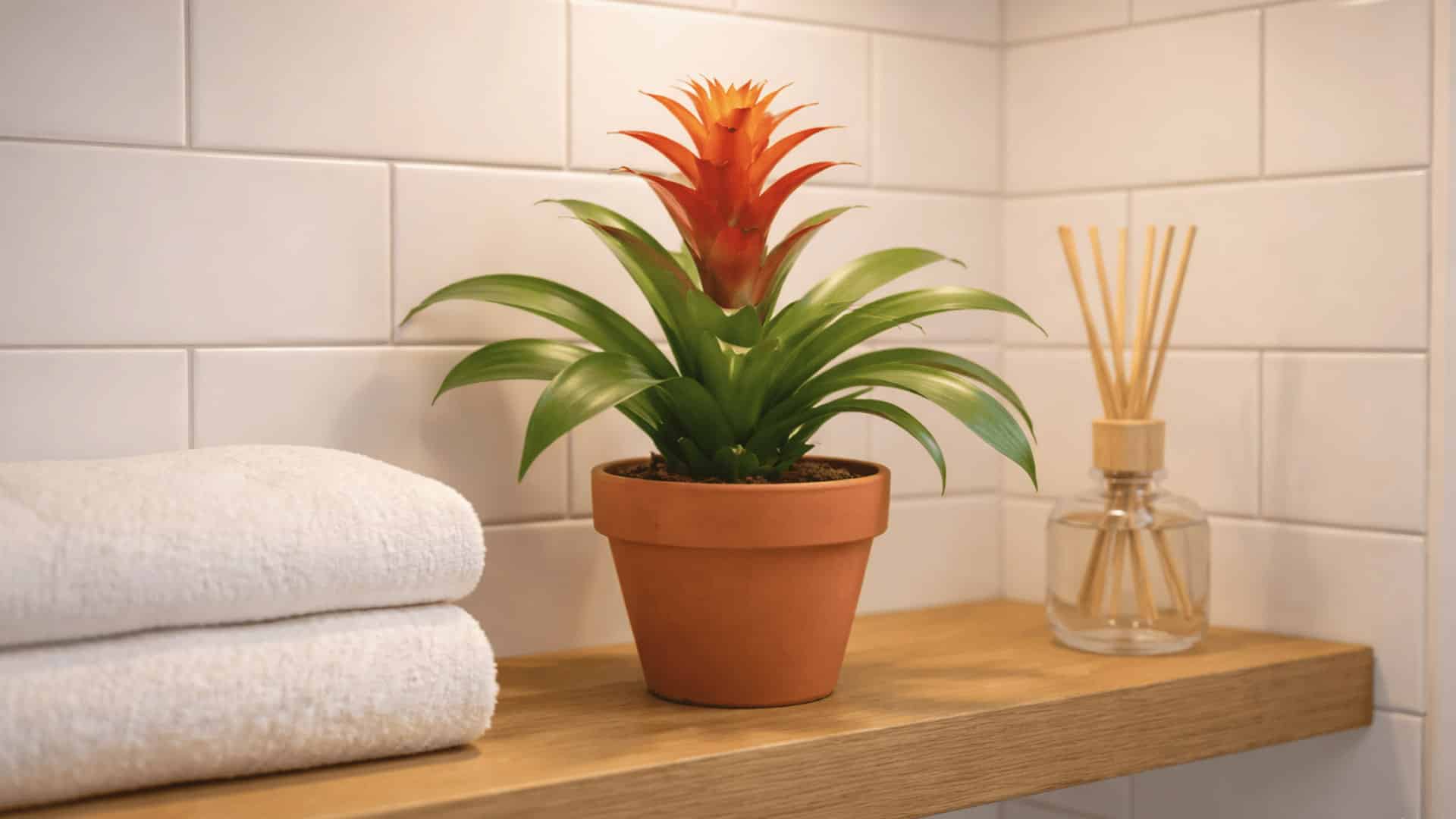
Bromeliads are tropical plants that do well in the warm, humid environment of a bathroom. They produce colorful blooms that last for weeks and require very little care. Place one near a window with indirect light.
Water into the central cup of the plant and keep it topped up. They don’t need frequent watering of the soil once established. After the main bloom fades, the plant produces offsets, small pups that can be repotted.
24. Gardenia
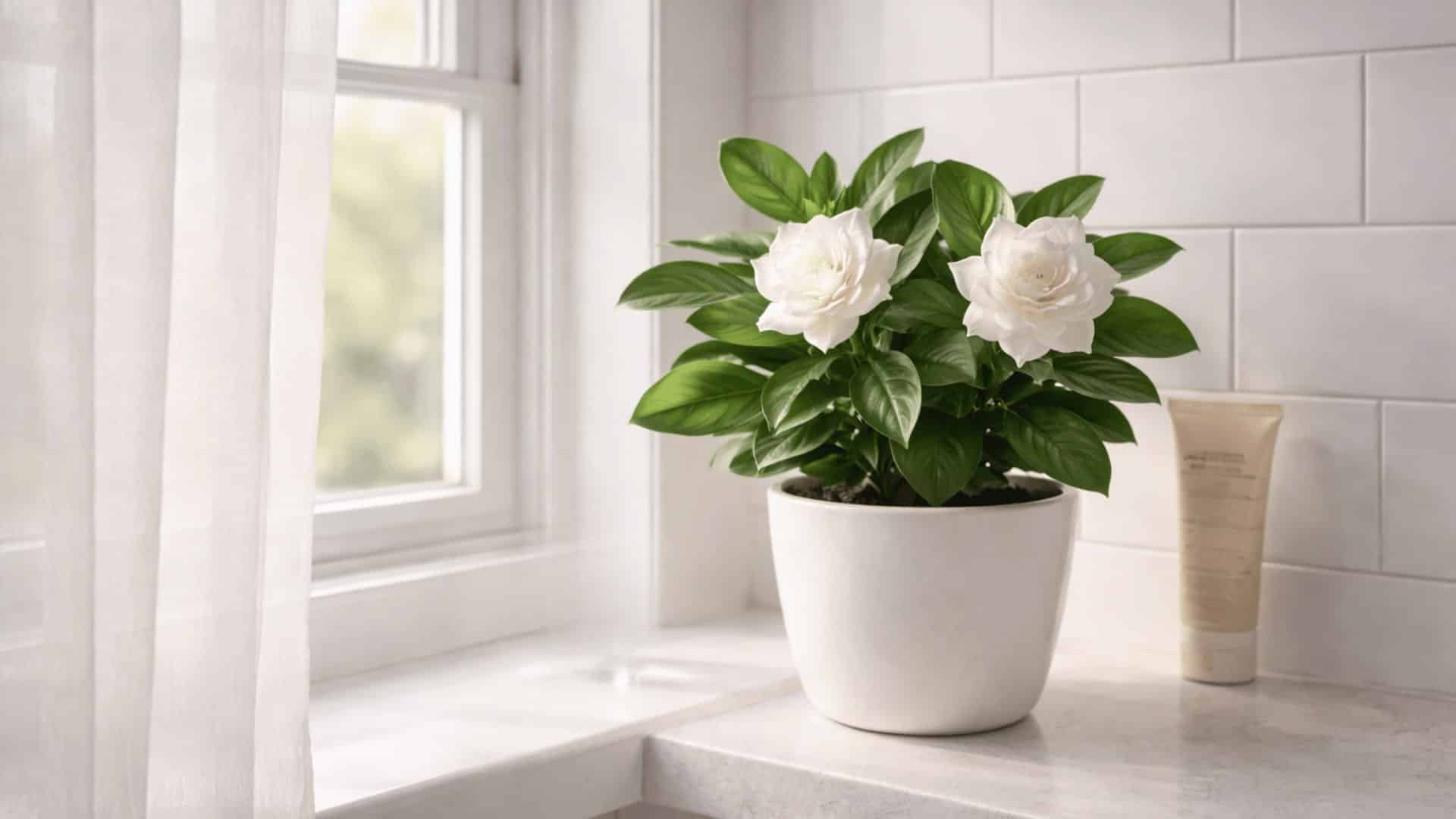
Gardenias are demanding; there’s no getting around that. They’re sensitive to temperature changes, particular about watering, and not the easiest to keep happy indoors.
But the fragrance from even one open bloom in a bathroom is genuinely hard to match. If you’re willing to give it a consistent spot near a window and check on it regularly, it pays off. Just don’t expect the same forgiveness you’d get from a pothos.
25. Begonia
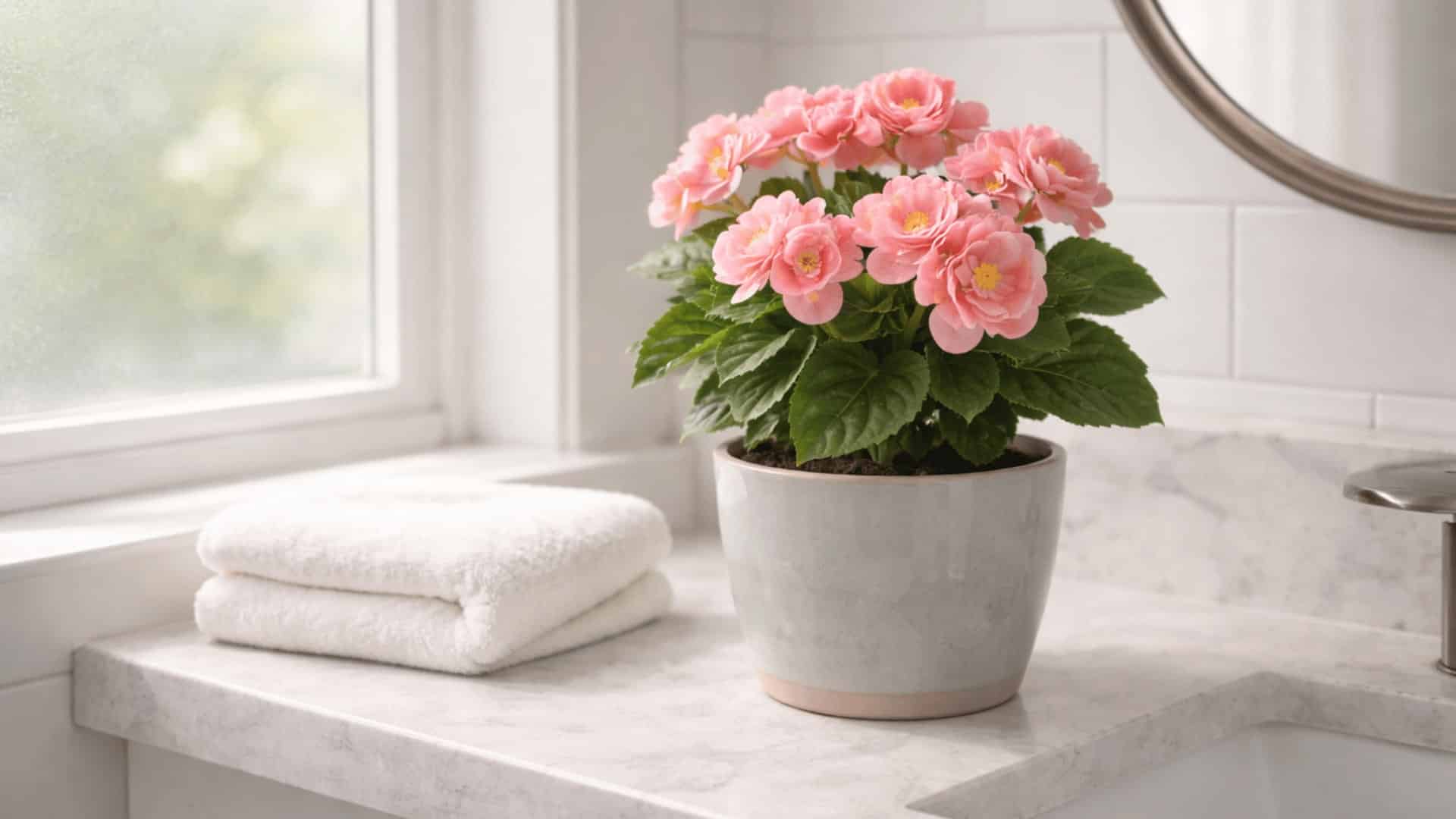
Begonias handle indirect light and humidity reasonably well, making them a workable flowering option for a bathroom with a window. They produce soft blooms in shades of pink, red, white, or orange.
Place on a windowsill or shelf with filtered light and water when the top of the soil feels dry. Avoid waterlogging, they’re prone to root rot. Trim spent blooms to encourage new ones and keep the plant looking tidy.
Best Large Statement Plants for Bathrooms
For bigger bathrooms with decent light, a larger plant can anchor the space visually. These varieties grow tall or wide enough to make a noticeable difference.
26. Bird of Paradise
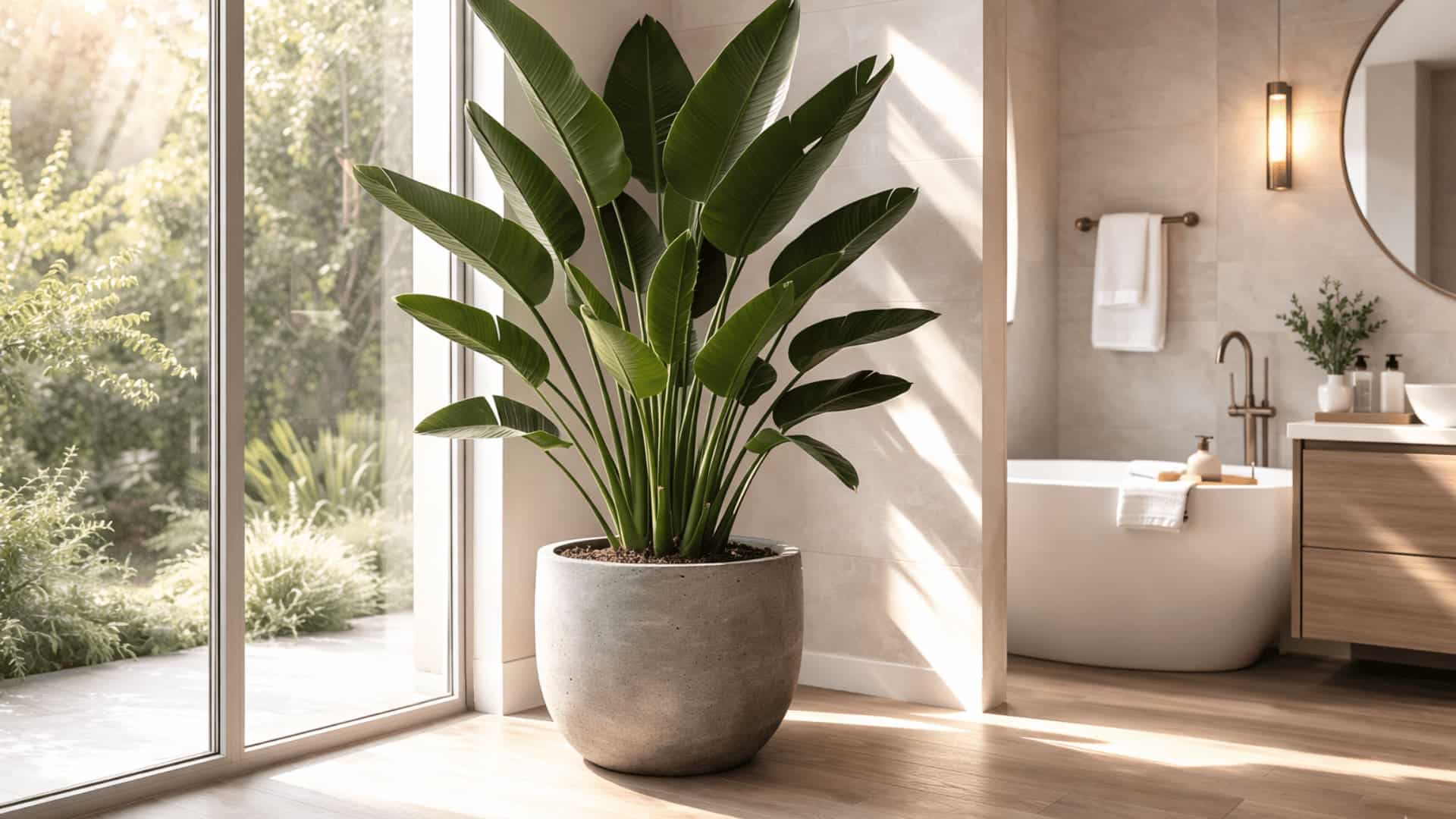
Bird of paradise suits a large, bright bathroom with a good-sized window. It grows tall and wide over time, so floor space is essential. Place it in a corner near the window where it gets several hours of indirect light daily.
Water every one to two weeks and let the soil dry partially between sessions. It’s a slow grower indoors but makes a strong visual impact even before it reaches full size.
27. Rubber Plant
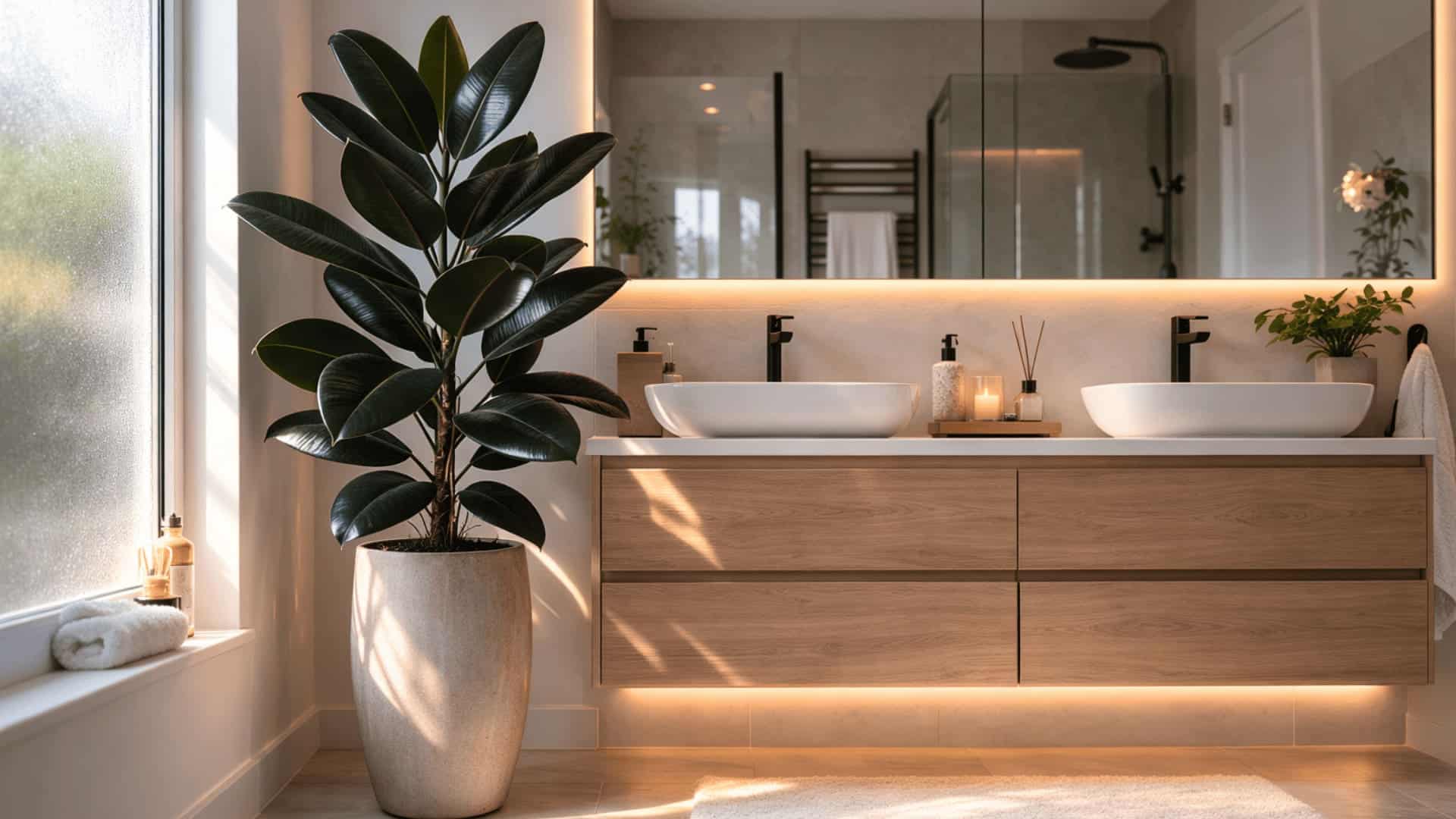
The rubber plant is one I keep coming back to for larger bathrooms. The dark glossy leaves look intentional and considered rather than just decorative.
It grows upright without spreading too wide, handles moderate light reasonably well, and doesn’t need constant attention. Wipe the leaves occasionally and water every couple of weeks.
It’s one of those plants that looks like it belongs in a well-designed space without trying too hard.
28. Parlor Palm
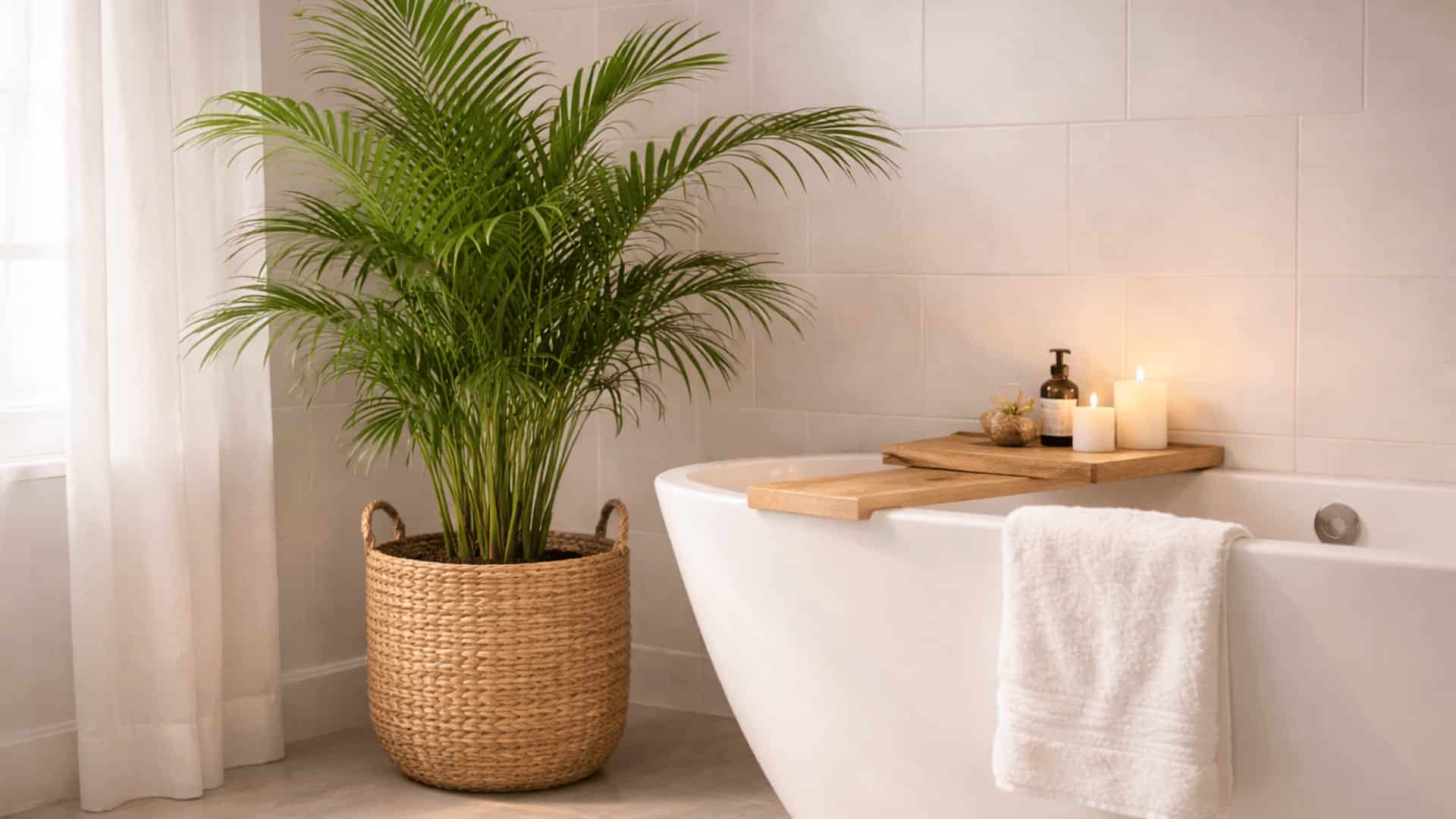
Parlour palm is one of the better large plants for bathroom use because it handles low light and humidity without complaint.
It grows upright in a manageable spread and fits well in a floor pot beside the vanity or in a corner. Water every one to two weeks and keep the soil lightly moist.
It’s also pet-safe, which makes it a practical choice for households with animals. Wipe the fronds occasionally to keep them clean.
29. Fiddle Leaf Fig
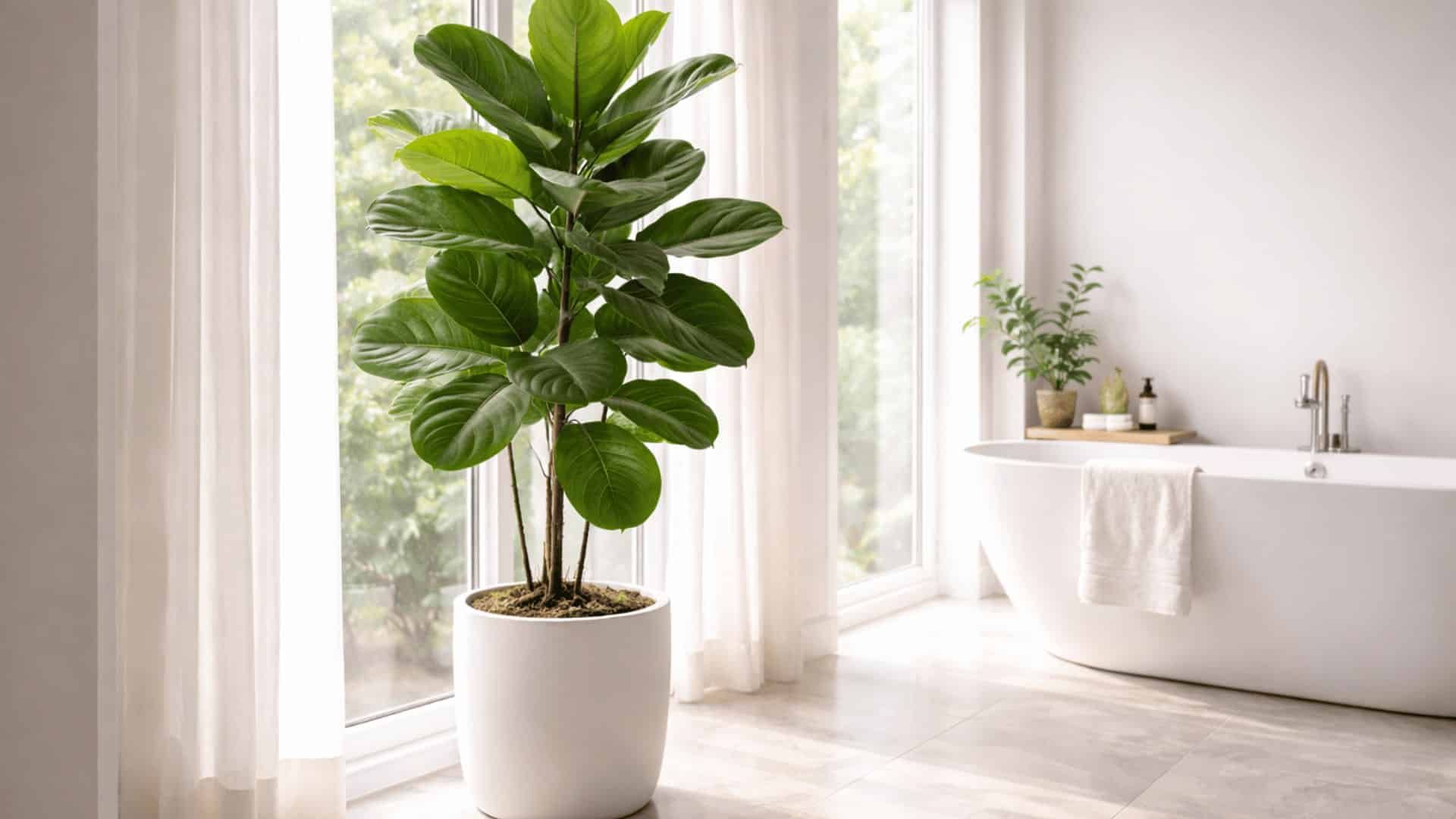
Fiddle leaf figs are particular; most plant people will tell you that upfront. They dislike being moved, react badly to drafts, and need consistent light to stay happy. In a bathroom with a large window and stable conditions, though, they can genuinely work.
The large leaves make a strong impression. Just place it once, leave it alone, and water consistently. Disrupting it too often is usually where things go wrong.
30. Areca Palm
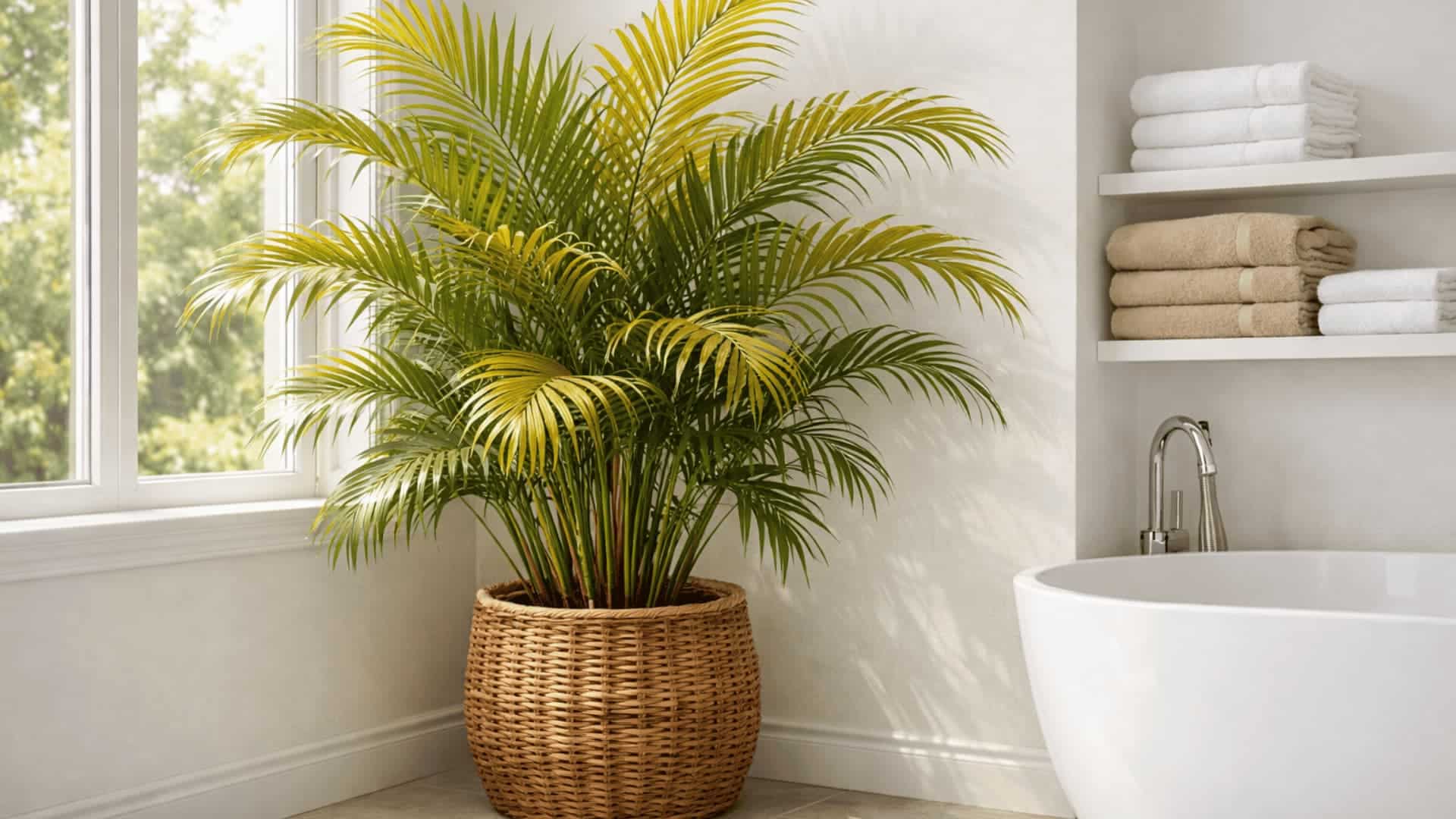
Areca palm brings a relaxed, tropical feel to a large bathroom with decent natural light. It grows in a full, feathery spread and looks best as a floor plant in a wide pot.
Place near a window with indirect light and water regularly, keeping the soil moist but not saturated. It’s pet-friendly and handles indoor humidity well. Over time, it can grow quite tall, so it suits bathrooms with higher ceilings.
Best Plants for No-Window Bathrooms
No window doesn’t have to mean no plants. These varieties tolerate artificial light and low airflow better than most, making them practical picks for enclosed bathroom spaces.
31. Lucky Bamboo
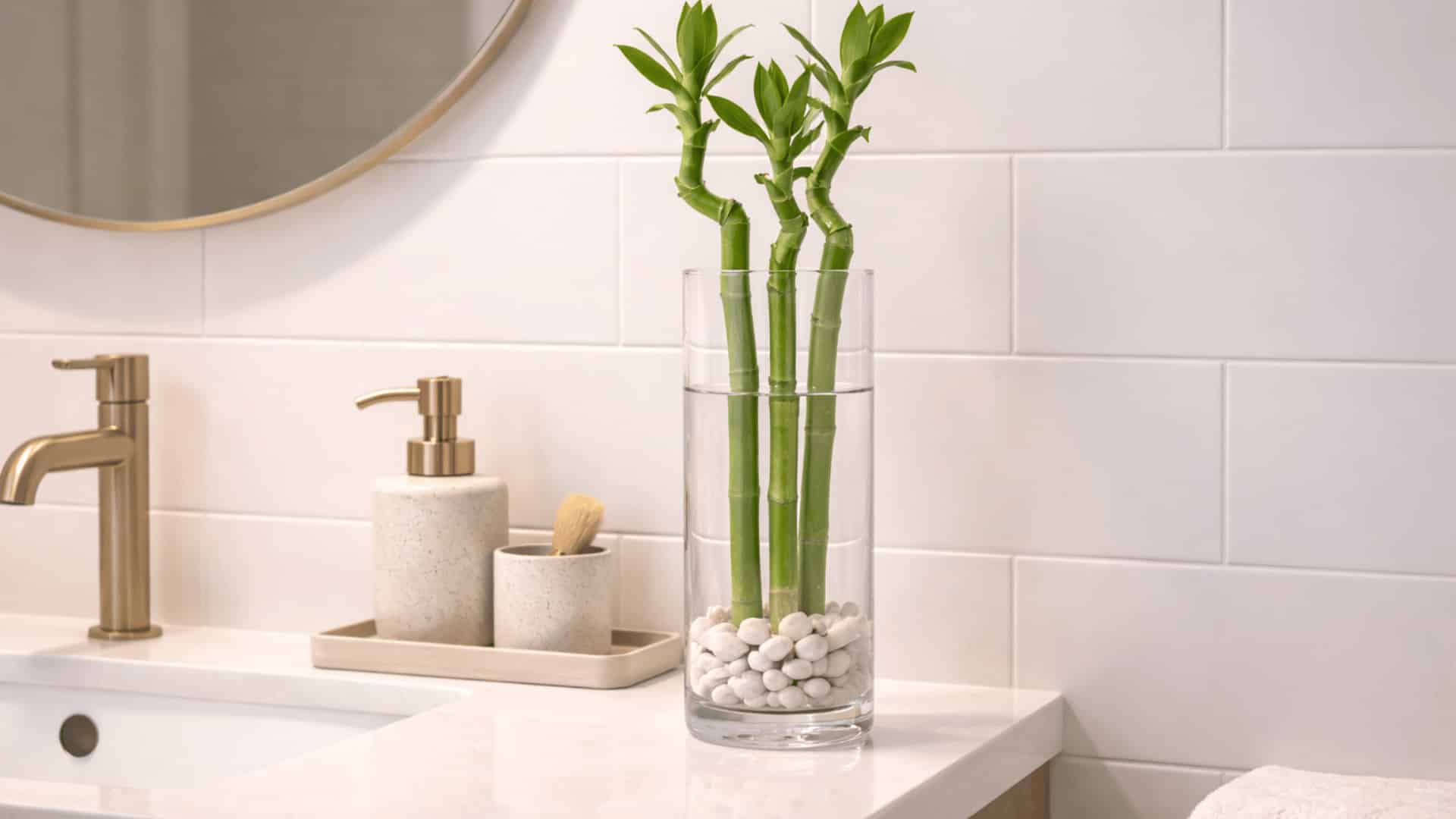
Lucky bamboo is one of the few plants that grows in water alone, making it a practical option for a windowless bathroom. It tolerates artificial light and requires no soil. Place a few stalks in a vase with pebbles and water, and top it up regularly.
Keep it away from direct air conditioning vents. It stays compact, looks clean on a vanity or shelf, and requires almost no maintenance beyond topping up the water.
32. Prayer Plant (Maranta)
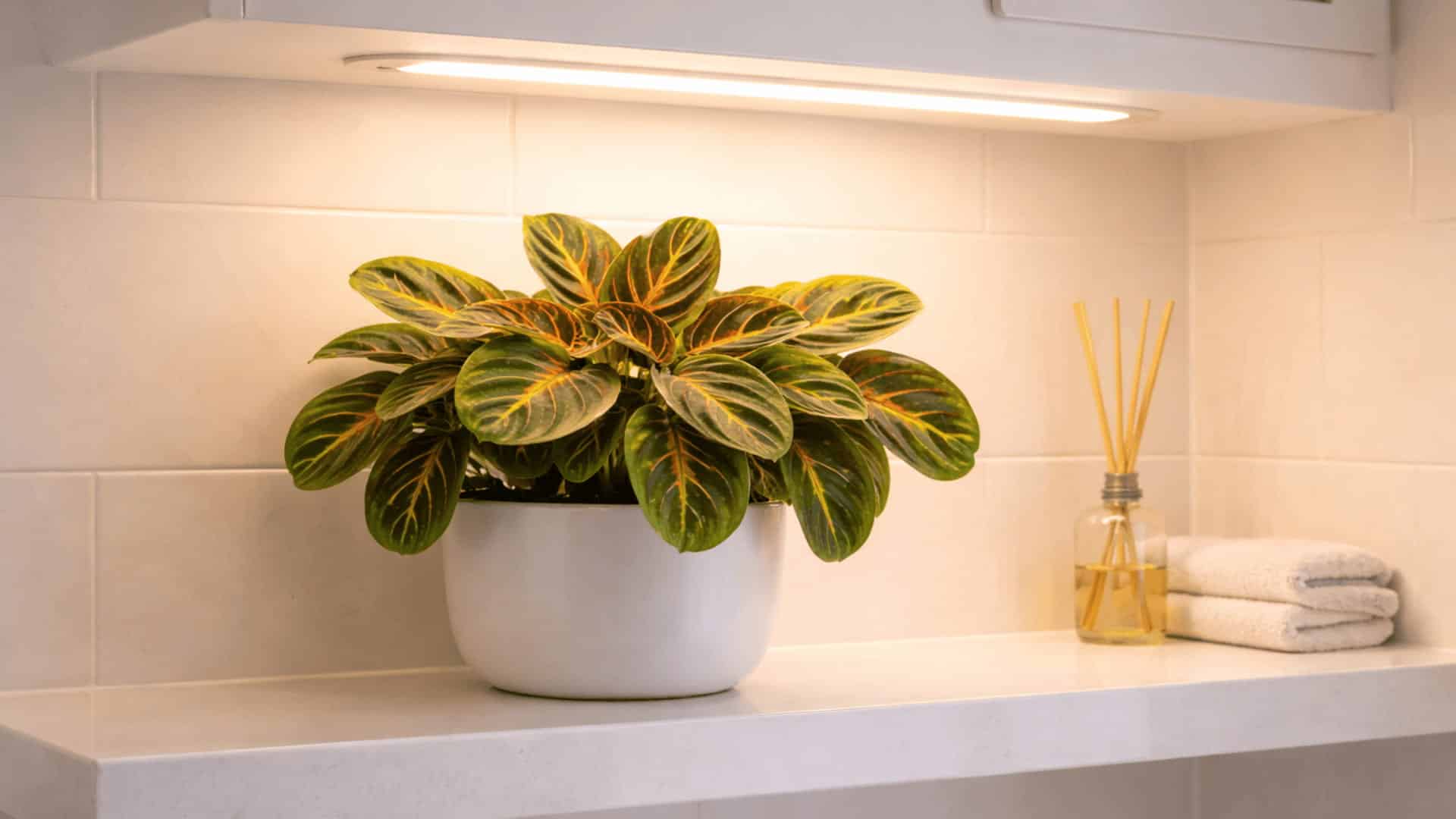
Prayer plant handles artificial light reasonably well and suits a windowless bathroom better than most. Its patterned red-and-green leaves fold upward at night, which is how it gets its name.
Place it on a vanity shelf or countertop under ambient LED lighting. Keep the soil consistently moist and mist occasionally. It’s non-toxic to pets, which makes it a practical and safe choice for enclosed bathroom spaces.
33. Dracaena sanderiana
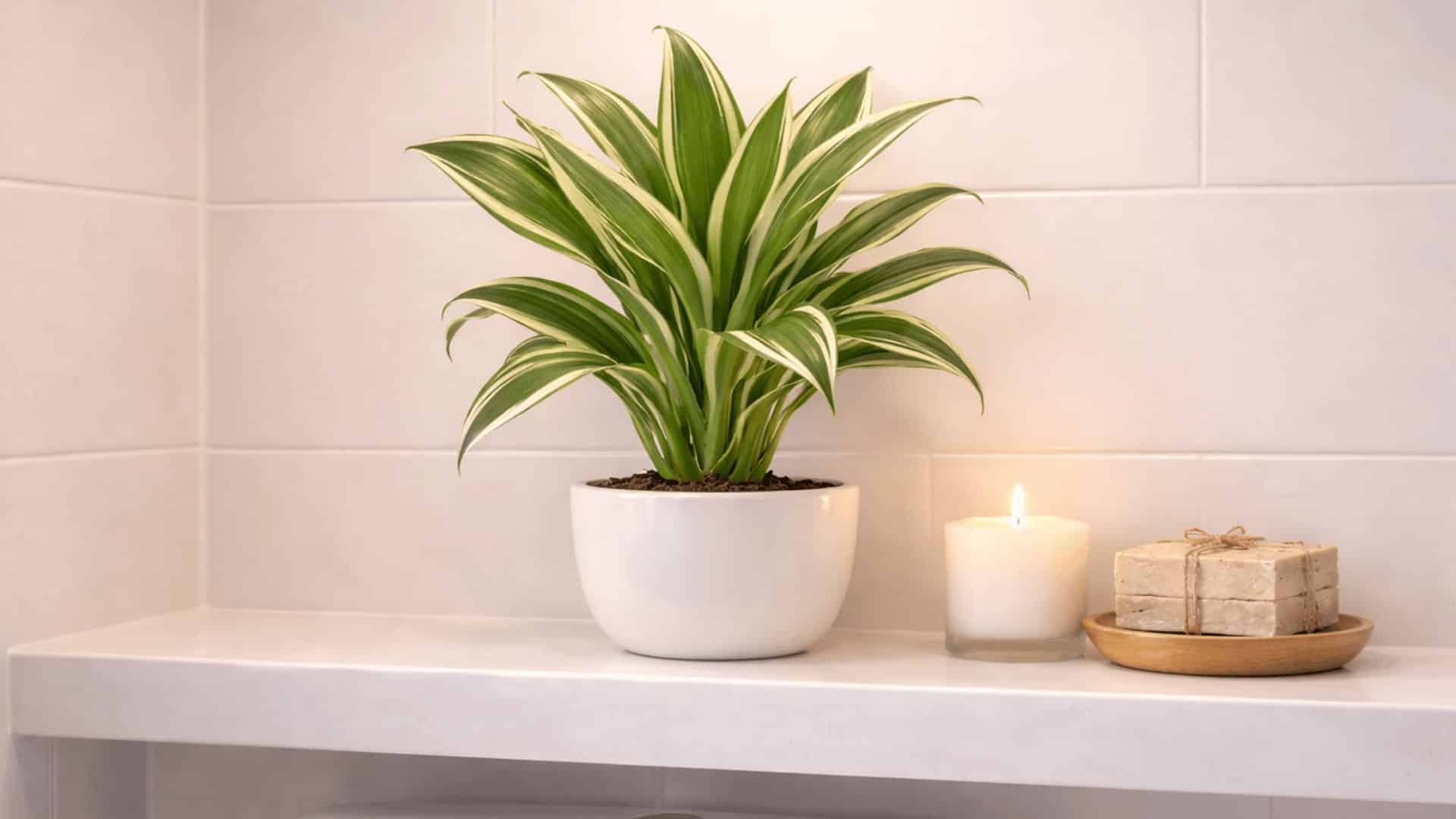
Dracaena sanderiana, sometimes called ribbon plant, is compact and tolerant of artificial light. It grows in soil or water and stays small enough for a vanity or shelf in a windowless bathroom.
Water moderately if growing in soil, or top up the vase weekly if growing in water. It handles consistent indoor humidity without issues. Its upright, striped leaves add a bit of visual structure to an otherwise plain bathroom shelf.
34. Aglaonema (Chinese Evergreen)
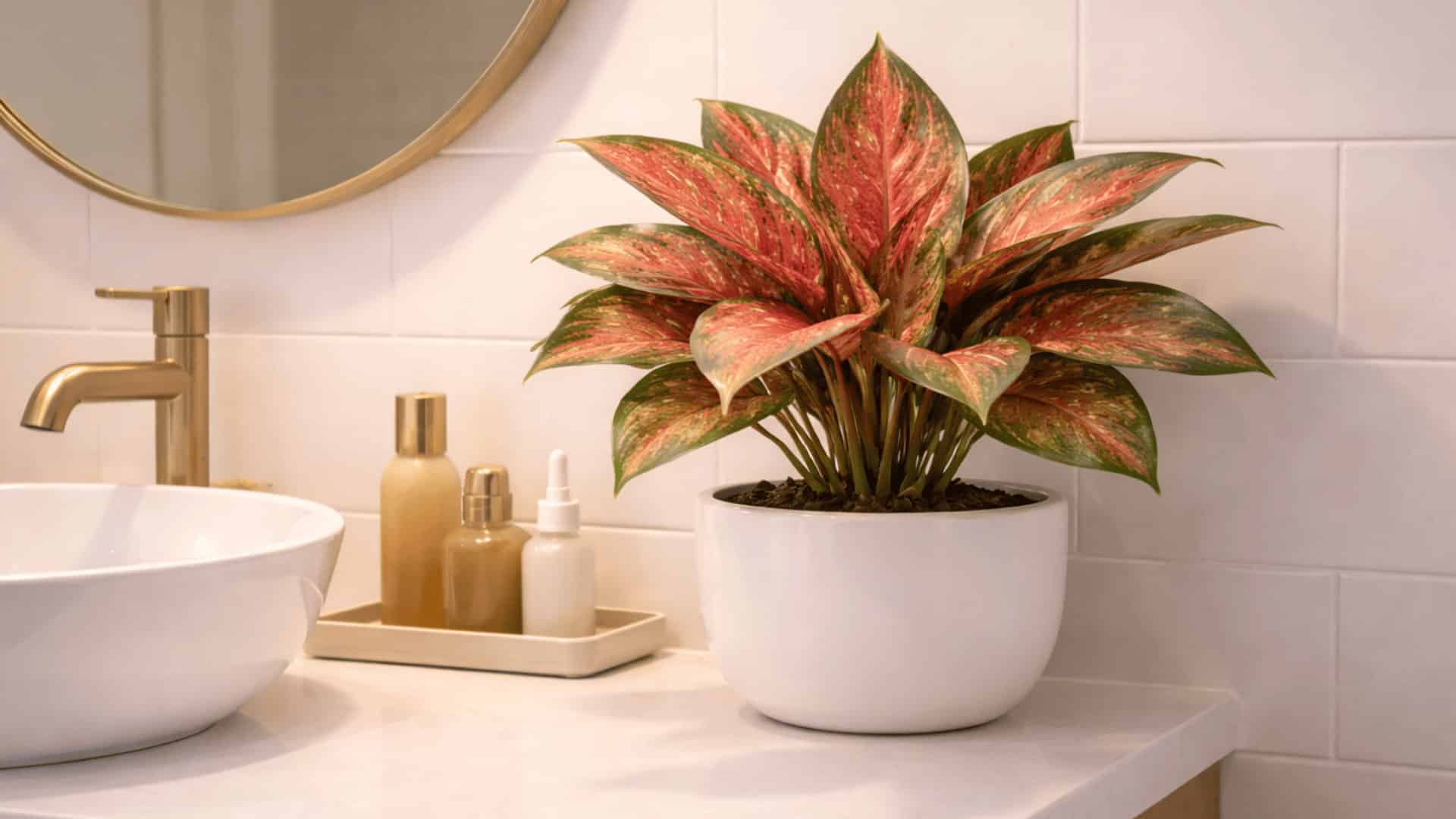
Aglaonema is one of the most adaptable plants for low or artificial light conditions. Its patterned leaves, often green, silver, or red, add color to a windowless bathroom without needing sunlight.
Place on a shelf or vanity under ambient light. Water every one to two weeks and let the soil dry slightly between sessions. It handles humidity well and is relatively slow-growing, so it won’t outgrow its spot quickly.
35. Peperomia
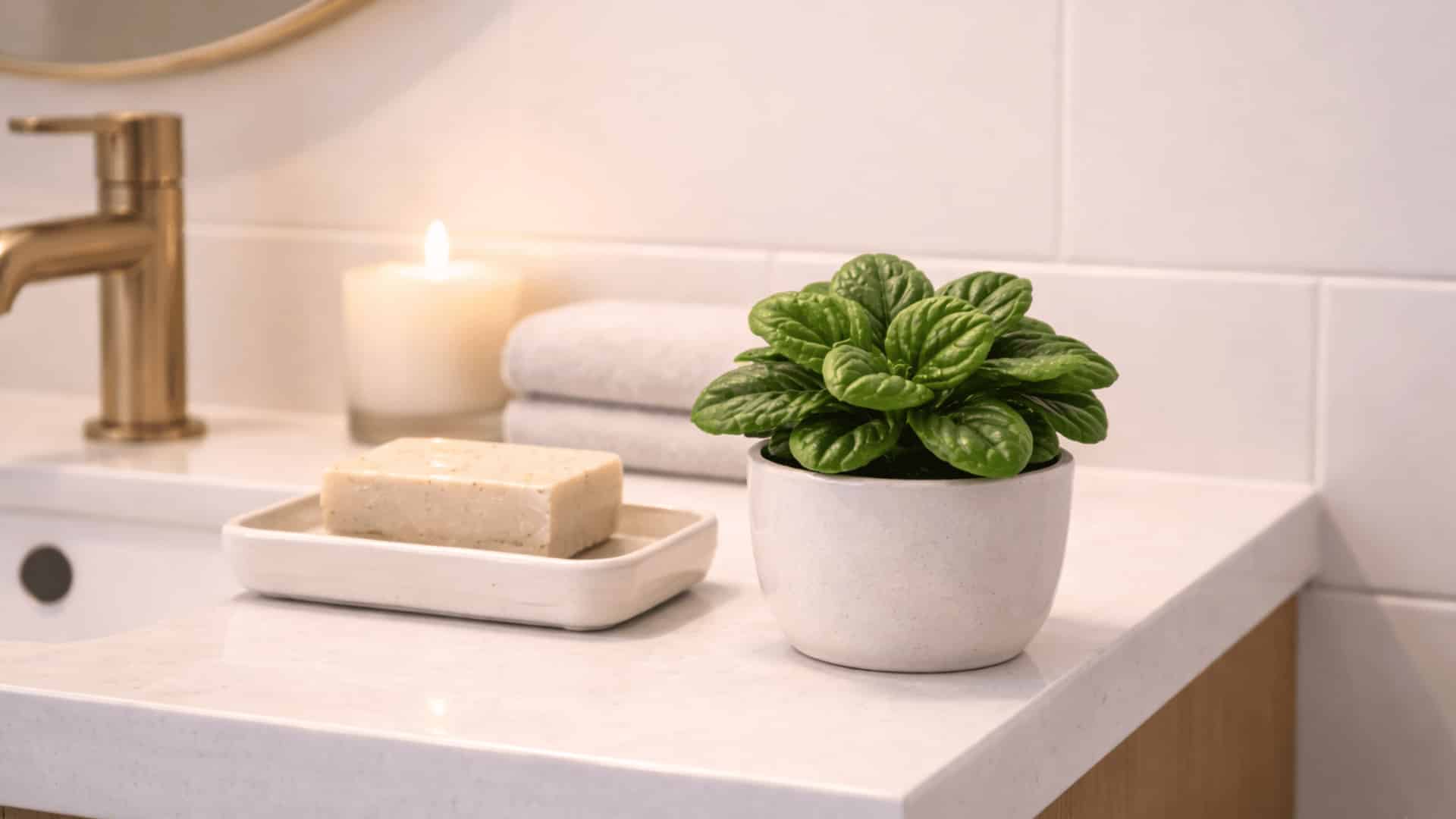
Peperomia was something I almost overlooked because of how small it is. But for a bathroom counter or vanity shelf, the compact size is actually the point.
It stores moisture in its thick leaves, so it handles being forgotten for a week without drama. There are enough varieties to find one that fits the look of almost any bathroom. It’s not the showiest option, but it’s one of the more honest ones.
How to Care for Bathroom Plants
Bathroom plants need slightly different care than the rest of your houseplants. The humidity changes things, and so does the limited airflow and light.
- Adjust watering frequency: Bathrooms stay humid, so check the soil before watering; it dries out slower than you’d expect.
- Improve airflow: Crack a window or run the exhaust fan regularly to prevent mold in soil and on leaves.
- Use well-draining soil: A mix with perlite or coarse sand stops water from sitting at the roots and causing rot.
- Wipe the leaves: A quick, damp cloth wipe removes soap residue and helps the plant absorb whatever light is available.
- Rotate for light exposure: Turn the pot a quarter rotation every week or two so all sides grow evenly.
Small habits make a real difference here. A plant that gets consistent airflow, the right watering schedule, and occasional leaf cleaning will last far longer than one that’s simply placed and forgotten.
Bathroom Plant Mistakes that are Easy to Avoid
Small mistakes can quietly kill even the hardiest bathroom plant. Knowing what to avoid saves you time, money, and a lot of frustration. Here are the most common mistakes to watch out for:
| Mistake | Why It’s a Problem | What to Do Instead |
|---|---|---|
| Choosing desert plants for dark bathrooms | Desert plants need bright light and dry conditions | Choose shade-tolerant plants like pothos or peace lilies |
| Overwatering because of humidity | Humidity does not replace watering, but overwatering causes root rot | Check soil moisture before watering each time |
| Ignoring drainage holes | Water pools at the bottom, and roots rot quickly | Always use pots with drainage holes or add gravel at the bottom |
| Placing plants in direct hot steam | Direct steam can scorch leaves and cause fungal issues | Position plants nearby but not directly in the path of steam |
These mistakes are easy to make but just as easy to avoid. A little awareness goes a long way in keeping your bathroom plants healthy and booming.
The Bottom Line
Picking the right plant for a bathroom comes down to knowing your space. Light levels, humidity, airflow, and available room all play a role in whether a plant lasts or quietly gives up over time.
The best plants for bathroom spaces aren’t always the prettiest ones on the shelf; they’re the ones that actually match your conditions. I learned that the hard way after losing a few plants I genuinely liked to root rot and poor light.
A windowless bathroom needs different choices than a bright one with a large window. A household with pets needs a different shortlist than one without.
If you’ve tried any of these in your own bathroom, drop a comment below; I’d genuinely like to know what worked for you.