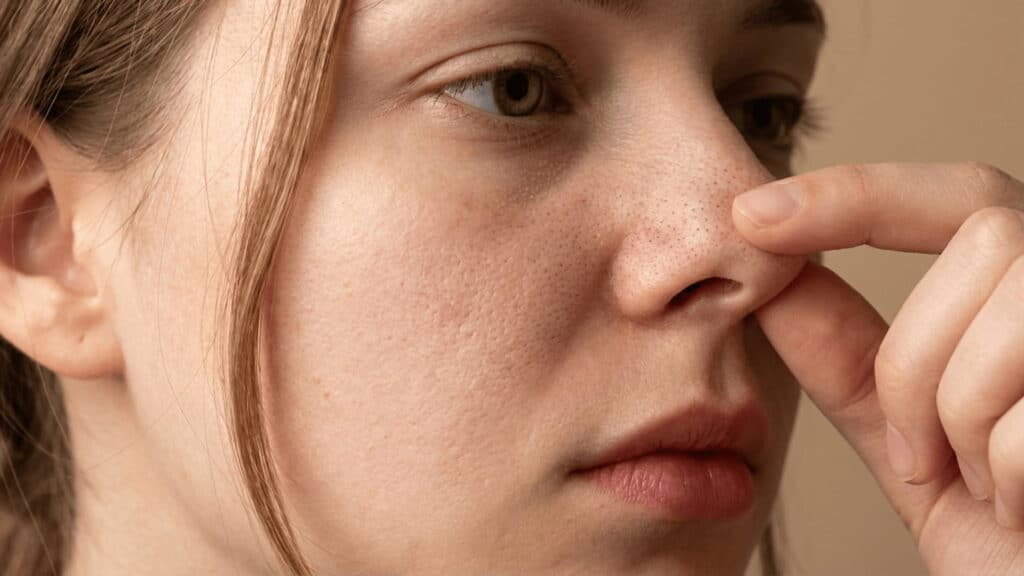

Blackheads on the nose are one of those skin concerns that seem straightforward, until you’re three products deep and nothing has changed. The advice online is everywhere, and a lot of it is genuinely conflicting.
Some of it helped me, some of it didn’t, and some of it made things worse before I understood why.
What tends to get lost in most guides is the middle ground, the part between a quick fix that fades by morning and a full dermatologist-level routine.
This guide covers how to get rid of blackheads on the nose, from fast solutions to long-term habits, along with the science behind what’s actually happening in your pores and what’s worth skipping entirely.
What is a Blackhead?
A blackhead is an open comedone, a pore that’s become clogged with a mix of sebum (the skin’s natural oil) and dead skin cells. Unlike whiteheads, the pore opening stays open, exposing the residue directly to air.
That exposure triggers oxidation, and oxidation turns the plug dark, which is exactly where the name comes from.
It has nothing to do with dirt or poor hygiene, which is honestly one of the most common misconceptions about blackheads on the nose and face.
No amount of scrubbing will stop them from forming if the root cause isn’t addressed. The skin is simply doing what skin does; oil production is normal and necessary, it just needs a little help staying balanced and clear. For those whose skin naturally produces more oil, building around a daily sebum control routine creates a much stronger foundation for keeping blackheads from forming in the first place
How to Get Rid of Blackheads on the Nose at Home
A single product won’t keep blackheads away, but a structured approach will. Here’s what actually works broken down by frequency.
Step 1: Once a Week, Double Cleanse with an Oil Cleanser

Start with a cleansing oil applied to a dry nose. Massage in circular motions for five to ten minutes; this softens and loosens the hardened oil sitting inside pores.
Emulsify with lukewarm water, then follow with a gentle pH-balanced cleanser. This combination removes oxidized accumulation that water-based cleansers simply can’t reach on their own.
The oil cleanse does the heavy lifting; everything else that follows works better because of it.
Step 2: Once a Week, Apply a Pore Mud Pack

After oil cleansing, apply a clay or mud pack generously across the nose. Leave it on for ten to fifteen minutes until fully hardened, then rinse with lukewarm water. A soft microfiber cloth helps remove residue without scrubbing.
Kaolin and bentonite both work well; they absorb excess sebum sitting inside pores and create a visibly cleaner appearance after just one use.
Clay masks work best immediately after oil cleansing, as the pores are already clear and ready to absorb.
Step 3: Green Tea Cooling Pack

Brew a cup of green tea, soak cotton pads in it, and refrigerate overnight. Apply to the nose for ten minutes after the mud pack step. The tannins in green tea help tighten pores and control oil, while the cool temperature soothes any inflammation from cleansing.
It’s a simple, low-cost finishing step that genuinely supports pore tightening after deeper cleansing. This step feels like a reset; it calms the skin and closes out the weekly deep-cleanse regimen.
Step 4: Three Times a Week, Jojoba Oil Pre-Cleanse + Mild Exfoliating Cleanser

Apply jojoba oil directly to the nose five to ten minutes before washing. Its molecular structure closely mirrors that of natural sebum, allowing it to soften and loosen residue within pores without stripping the skin barrier.
No need to massage aggressively, leaving it on lets the sebum soften on its own. This pre-cleanse step makes the exfoliating cleanser that follows far more effective.
Jojoba preps the pore, the exfoliant then clears what’s already been loosened from inside.
Step 5: Three Times a Week, Mild Exfoliating Cleanser

Follow the jojoba pre-cleanse with a mildly exfoliating cleanser containing salicylic acid or BHA. This removes dead skin cells, controls excess oil, and keeps pores from refilling too quickly after cleansing.
Sensitive skin types can swap this for a gentler BHA toner, applied after a regular cleanser. Either way, the goal is regular, moderate exfoliation, not aggressive weekly scrubbing.
Regular and moderate always outperform aggressive and occasional; this step proves that every time.
Step 6: Three Times a Week, Pore Essence or BHA Toner

After cleansing, apply a pore-refining essence or BHA toner to the nose. This step tightens pores that have been stretched by heat and oil production, making them less likely to quickly trap debris again.
It won’t permanently shrink pores, but steady use keeps them visibly smaller and cleaner between deeper cleansing sessions. Pore care is the step most people skip, and it’s exactly why blackheads keep coming back so fast.
Step 7: Daily, Niacinamide + Retinol in Your Skincare Routine

Add niacinamide in the morning to regulate sebum production and reduce pigmentation left behind by blackheads. At night, incorporate a low-strength retinol or retinoid to speed up cell turnover and prevent dead skin from settling into pores.
Sensitive skin can alternate, niacinamide in the morning, retinol every other night, until tolerance builds gradually. These two ingredients do the long-term work quietly; the rest of the routine just supports what they’re already doing.
For more information, refer to the video below:
How to Remove Blackheads from the Nose Fast?
Blackheads on your nose can feel frustrating, especially when you want fast results. While you can’t clear pores overnight, some methods can give you visible improvement within a day or two.
| Steam + Salicylic Acid | Pore Strips | Professional Extraction | |
|---|---|---|---|
| How It Works | Steam softens clogged oil. Salicylic acid breaks down the buildup inside the pore. | Strips stick to damp skin and pull out surface-level debris. | A trained esthetician removes clogs using proper tools and clean technique. |
| How to Use It | Steam 5–10 minutes. Pat dry and apply salicylic acid right away. | Apply to clean, damp skin after steaming. Let dry fully, then peel off slowly. | Book a session with a licensed professional for targeted extraction. |
| How Fast You’ll See Results | Visible improvement within 1–2 days. | Immediate visual difference. | Same-day visible clearing. |
| Best For | Mild to moderate blackheads. | Quick fix before an event. | Deep or stubborn blackheads. |
| Limits to Know | Blackheads can return without a steady approach. | Only removes surface clogs. Results are temporary. | Costs more than home care and still needs maintenance. |
Quick options help when time matters. If you stick to a steady schedule, you’ll keep your pores clearer and prevent buildup from coming right back.
Blackheads vs Sebaceous Filaments (Know the Difference)

Not everything on the nose is a blackhead, and this is where many skincare routines quietly go wrong. Sebaceous filaments are tiny, gray-toned dots that sit flush with the skin and are completely normal.
They’re part of how the skin moves oil to the surface. Blackheads, on the other hand, are clogged, oxidized plugs that sit slightly raised and respond well to BHA and retinoids. Sebaceous filaments don’t.
Treating them the same way often leads to over-stripping and irritation without real results. The two look similar enough to be confused, but the differences in their behavior and response to treatment are significant.
Sebaceous filaments will always come back; the goal isn’t elimination, it’s keeping them small through consistent, gentle care.
Why Do You Get So Many Blackheads on Your Nose?
The nose has more oil glands than almost any other part of the face, which already predisposes it to congestion. Hormonal shifts during puberty, periods, or stress push oil production even higher.
Larger pores trap dead skin cells faster, and heavy makeup or skipping sunscreen adds to the daily congestion that settles deep by the end of the day.
Overwashing, though, makes things worse. The skin has a natural acid mantle, a slightly acidic barrier that protects moisture and keeps irritants out.
Harsh or alkaline cleansers strip this layer, triggering the skin to produce even more oil as a defense response. That “squeaky clean” feeling after washing is a warning sign, not a win.
Common Mistakes to Avoid
Some habits feel productive but quietly make blackheads worse. These are the ones worth dropping before anything else.
- Don’t Squeeze: Forcing a blackhead pushes bacteria deeper, increases swelling, and often leaves marks that last much longer than the original clog.
- Don’t Scrub Hard: Harsh scrubbing damages your skin’s surface, triggers excess oil production, and spreads buildup rather than clearing it.
- Don’t Overuse Acids: Using strong acids too often can weaken your skin barrier, leading to irritation and, over time, even more congestion.
- Don’t Skip Moisturizer: When your skin is dehydrated, it produces excess oil, which can clog pores and make blackheads more visible.
Avoiding these four mistakes alone can make a noticeable difference, even before adding any new products to the approach.
How to Prevent Blackheads on the Nose Long-Term

Clearing blackheads is one thing; keeping them from coming back is where the real work happens. These habits make the difference.
- Switch to Non-Comedogenic Products: Check labels on makeup, moisturizers, and sunscreens; non-comedogenic formulas are specifically designed to avoid blocking pores.
- Never Skip Sunscreen: UV damage thickens the skin’s surface over time, making it harder for pores to naturally shed dead cells and stay clear.
- Double Cleanse at Night: An oil-based cleanser removes what water-based formulas miss, sunscreen, makeup, and oxidized sebum that settle deep into pores by the end of the day.
- Exfoliate on a Schedule: BHA two to three times a week keeps dead skin from settling into pores. Disciplined, moderate exfoliation always outperforms aggressive, occasional exfoliation.
- Manage Oil Without Over-Stripping: Niacinamide in the morning regulates sebum production, and blotting papers through the day control shine without triggering the oil rebound that rewashing causes.
Prevention isn’t about perfection; it’s about building habits that quietly work in the background every single day.
When to See a Dermatologist?
Home routines handle most blackheads well, but there are situations where professional help makes more sense. If blackheads are persistently deep, painful, or spreading into surrounding acne, that’s worth a visit to a dermatologist rather than more trial and error.
Dark marks left behind after clearing are another sign that skin needs more targeted support. A dermatologist can prescribe stronger retinoids that work faster than over-the-counter options, recommend chemical peels to clear congestion more deeply, or perform professional extractions safely.
Sometimes the routine isn’t the problem; the skin just needs a stronger solution than a shelf product can offer.
How Long Does It Take to See Results?
Realistic timelines are rarely discussed, and that’s exactly why so many people quit too early.
Salicylic acid typically shows noticeable improvement within two to four weeks of regular use, though some purging in the first week or two is normal as congestion works its way out.
Retinoids take longer; most people see meaningful change between six and twelve weeks, with full results closer to three to four months.
Clay masks deliver the same-day improvement in appearance, but that’s surface oil being absorbed, not deep congestion being cleared. Expecting retinoid-level speed will always lead to disappointment.
Skin has a natural turnover cycle of roughly twenty-eight days, and real clearing works with that cycle, not against it.
Bottom Line
Getting rid of blackheads on the nose isn’t about finding one miracle product, and honestly, that took me longer to accept than I’d like to admit. It’s about understanding what’s actually happening inside the pore and responding with the right combination of habits.
This guide covered everything from identifying whether it’s a true blackhead or a sebaceous filament, to building a routine around salicylic acid and retinoids, to knowing when a dermatologist makes more sense than another clay mask.
What I’ve found is that the difference between skin that stays clear and skin that keeps cycling through the same congestion usually comes down to consistency and realistic expectations.
Small, steady habits outperform intense occasional fixes every time. Which step are you starting with? Drop it in the comments below.