
Some fruits look light, but they can do real work in your meals. Others seem filling yet provide only a small fiber boost.
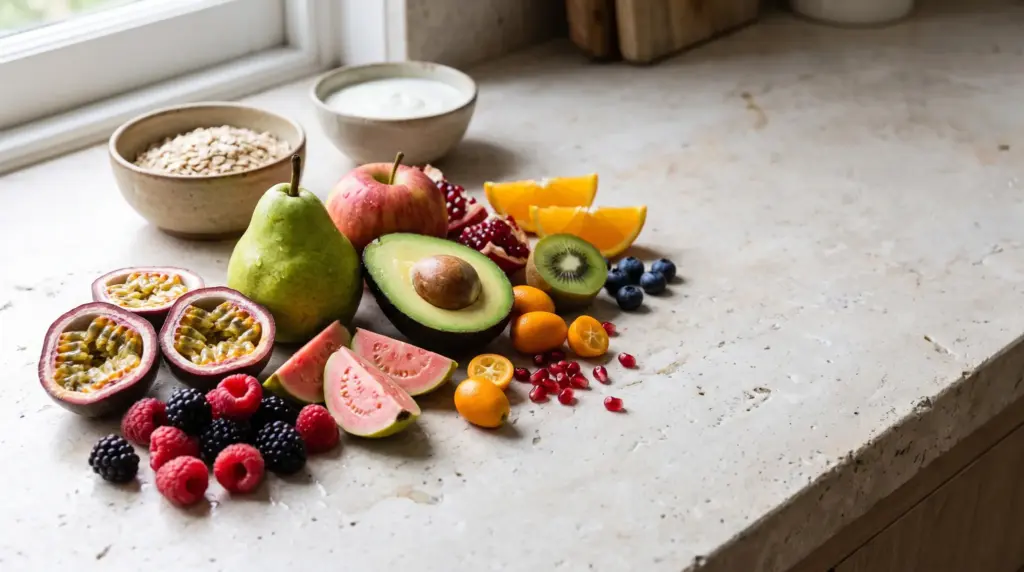
If you want to eat better without turning food into a project, high-fiber fruits are an easy place to start. The trick is knowing which choices give you more fiber for a normal serving. Passion fruit, guava, berries, pears, apples with skin, avocado, and mamey sapote can all help more than you may expect.
The chart comes first, so you can compare fruits fast. Then the list groups fruits by fiber level, grocery ease, and use. Keep it handy before shopping or planning simple snacks at home.
Why the Seeds, Skin, and Pulp Matter So Much
Fiber often comes from the parts of fruit that take more chewing. Seeds, skin, pulp, and dense flesh can all raise the fiber count. That is why berries, guava, passion fruit, pears with skin, apples with skin, avocado, and kumquats tend to rank higher than softer, watery fruits.
Whole fruit also matters. Juice removes much of the pulp and usually gives you less fiber than eating the fruit itself. Serving size matters too. A cup of berries, one medium pear, and one medium avocado are not the same kind of portion.
The chart below uses common servings, so you can compare fruit in a practical way. For final nutrient checks, use USDA FoodData Central, which shares public USDA nutrient data for foods and food parts.
Fruits Ranked by Fiber
The fiber amounts below are approximate. Fruit size, ripeness, variety, and serving amount can change the final number.
| Rank | Fruit | Serving Size | Approx Fiber | Best Use |
|---|---|---|---|---|
| 1 | Passion fruit | 1 cup pulp | 24g | Yogurt, oats, bowls |
| 2 | Breadfruit | 1 cup cooked | 10g+ | Cooked side dish |
| 3 | Elderberries | 1 cup cooked | 10g+ | Cooked sauces |
| 4 | Avocado | 1 medium avocado | 9 to 10g | Toast, salads, bowls |
| 5 | Mamey sapote | 1 cup | 8 to 9g | Bowls, drinks |
| 6 | Guava | 1 cup | 8 to 9g | Fresh snack |
| 7 | Kumquats | 1 cup | 8g+ | Whole fruit snack |
| 8 | Raspberries | 1 cup | 8g | Oats, yogurt |
| 9 | Blackberries | 1 cup | 7 to 8g | Snacks, bowls |
| 10 | Boysenberries | 1 cup | 7g | Yogurt, bowls |
| 11 | Pomegranate seeds | 1 cup | 7g | Salads, yogurt |
| 12 | Gooseberries | 1 cup | 6g+ | Snacks, compotes |
| 13 | Persimmon | 1 fruit | 6g | Fresh slices |
| 14 | Dragon fruit | 1 cup | 5 to 6g | Bowls |
| 15 | Pear with skin | 1 medium | 5 to 6g | Whole snack |
| 16 | Black currants | 1 cup | 4 to 5g | Sauces, bowls |
| 17 | Apple with skin | 1 medium | 4 to 5g | Daily snack |
| 18 | Kiwi | 2 fruits | 4 to 5g | Breakfast |
| 19 | Orange | 1 medium | 3 to 4g | Whole snack |
| 20 | Blueberries | 1 cup | 3 to 4g | Oats, yogurt |
| 21 | Cranberries | 1 cup | 3 to 4g | Cooked sauces |
| 22 | Banana | 1 medium | 3g | Oats, toast |
| 23 | Strawberries | 1 cup | 3g | Snacks, yogurt |
| 24 | Cherries | 1 cup | 3g | Fresh snack |
| 25 | Figs | 2 medium | 3g | Snacks, salads |
| 26 | Dates | 2 Medjool dates | 3g | Oats, bites |
| 27 | Mango | 1 cup | 2 to 3g | Bowls, salsa |
| 28 | Papaya | 1 cup | 2 to 3g | Breakfast bowls |
| 29 | Mulberries | 1 cup | 2 to 3g | Oats, yogurt |
| 30 | Apricot | 3 fresh fruits | 2g | Snack |
| 31 | Pineapple | 1 cup | 2g | Fruit bowls |
| 32 | Peach | 1 medium | 2g | Fresh snack |
| 33 | Nectarine | 1 medium | 2g | Fresh snack |
| 34 | Grapefruit | 1/2 fruit | 2g | Breakfast |
| 35 | Cantaloupe | 1 cup | 1 to 2g | Breakfast bowls |
| 36 | Grapes | 1 cup | 1g | Snack |
| 37 | Watermelon | 1 cup | Less than 1g | Hydrating snack |
The top fruits on this chart give the biggest fiber return per serving, but the lower-ranked fruits can still fit your meals. Use the ranking to pick stronger fiber choices when that is your main goal, then mix in the fruits you already enjoy for taste, budget, and ease.
Very Fiber-Dense Fruits to Start With

These fruits provide the highest fiber content per common serving. Some are easy to buy, while others may need a specialty store or local market.
1. Passion Fruit
Passion fruit ranks first because the pulp is packed with edible seeds. One cup can give far more fiber than most common fruits. Spoon it over yogurt, oats, chia pudding, or breakfast bowls. Its tart taste makes even a small serving useful.
2. Breadfruit
Breadfruit is a fruit, but it eats more like a starchy side dish. It is mild, filling, and usually cooked before serving. Pair it with beans, vegetables, or lean protein when you want a meal that feels more complete.
3. Elderberries
Elderberries can be high in fiber, but they are not a casual raw snack. They are usually cooked and used in sauces, syrups, and fruit mixes. The NCCIH notes that raw or unripe elderberries can be unsafe, so cooking matters.
4. Avocado
Avocado is a fruit, even though most people use it in savory meals. It gives fiber along with fat, so it feels filling. Add it to toast, grain bowls, salads, wraps, tacos, or eggs when you want a meal that holds you longer.
5. Mamey Sapote
Mamey sapote is dense, creamy, and sweet. One cup can give a strong fiber return compared with many common fruits. Use it in spoonable bowls or drinks made with whole fruit. You may find it more often in Latin markets or specialty produce stores.
6. Guava
Guava is one of the best fresh fruits for fiber. The skin and seeds can add to the total, depending on the type and how you eat it. Slice it as a snack, add it to a fruit plate, or pair it with yogurt.
7. Kumquats
Kumquats are small citrus fruits eaten whole, peel included. That peel helps raise their fiber count. Slice them into salads, eat them as a small snack, or pair them with yogurt if you like a sweet and tart bite.
Higher-Fiber Berries and Seed-Rich Fruits

These fruits give more fiber per serving than most common snack fruits. They work well when you want fruit that does more than just add sweetness.
8. Raspberries
Raspberries are one of the easiest fiber picks to repeat. A cup gives about 8 grams, and frozen raspberries work well when fresh ones cost too much. Add them to oats, yogurt, cottage cheese, pancakes, or a snack bowl.
9. Blackberries
Blackberries are close to raspberries in fiber and just as easy to use. Their seeds and pulp help them rank high. Eat them fresh, stir them into oats, or add them to a yogurt bowl when you want a quick fiber add-on.
10. Boysenberries
Boysenberries add another good berry choice beyond raspberries and blackberries. They work well in yogurt, oatmeal, sauces, and baked toppings. Fresh ones can be harder to find, but they are worth adding when available.
11. Pomegranate Seeds
Pomegranate seeds add fiber because you eat the seed part, not just the juice. They also bring crunch to simple meals. Sprinkle them over salads, yogurt, oats, grain bowls, or roasted vegetables.
12. Gooseberries
Gooseberries are tart, firm, and helpful when you want something beyond common berries. Eat them fresh when ripe or cook them into toppings and compotes. They work well with breakfast bowls, yogurt, and oats.
13. Black Currants
Black currants have a bold, tart flavor and a useful fiber count. They are less common than blueberries or strawberries, but they still add value to this list. Use them in sauces, cooked fruit toppings, or yogurt bowls.
This group is best when fiber is the main reason you are choosing fruit. If you can find these fresh or frozen, they can make breakfast and snack bowls more filling.
Everyday Berries and Lower-Fiber Fruit Picks

These fruits do not rank as high as raspberries or blackberries, but they still belong on the list. They are easy to use, easy to buy, and simple to fit into regular meals.
14. Blueberries
Blueberries are not the highest on the chart, but they are easy to use often. Keep them on hand for oats, pancakes, yogurt bowls, and snack plates. They are also simple enough for kids and quick meals.
15. Cranberries
Cranberries have fiber, but their tart flavor means they are often cooked or sweetened. Use them in sauces, grain bowls, or baked fruit mixes. Check packaged cranberry products because many contain added sugar.
16. Strawberries
Strawberries are lower in fiber than raspberries, but they still belong because they are easy to buy and eat. Use them in yogurt, oatmeal, snack plates, or breakfast bowls. They are also familiar for kids and picky eaters.
17. Cherries
Cherries can add a modest amount of fiber by the cup. A few cherries will not do much, so serving size matters. Add them to yogurt, oatmeal, fruit bowls, or snack plates.
18. Mulberries
Mulberries add variety to the berry group. Fresh mulberries can be soft and sweet, while dried ones are often easier to find. Use them with oats, yogurt, cereal, or small snack mixes.
This group works best for everyday eating. They may not all be top fiber fruits, but they help keep the list practical and easier to use.
Easy Grocery Fruits With Useful Fiber

These fruits are easier to find, easier to pack, and more likely to fit a normal grocery trip.
19. Pear With Skin
A pear with skin is one of the best everyday choices for fiber. The skin matters, so skip peeling when you can. Eat it whole, slice it with nut butter, or pack it with lunch for a low-prep snack.
20. Apple With Skin
Apples are common, affordable, and easy to carry. Keeping the skin on helps raise the fiber count. Pair apple slices with peanut butter, cheese, yogurt, oats, or nuts. It is not the top fruit, but it is easy to repeat.
21. Kiwi
Kiwi gives a good amount of fiber for a small fruit. It fits breakfast well because it pairs with yogurt, oats, eggs, and cottage cheese. Slice it, spoon it from the peel, or add it to a fruit bowl.
22. Orange
A whole orange gives fiber from its pulp. It is easy to carry, easy to peel, and easy to pair with nuts or yogurt. Choose the whole fruit when fiber is the reason you are eating it.
23. Banana
Bananas have fiber, but their main strength is ease. Add banana to oatmeal, toast, or yogurt. To raise the fiber in the meal, pair it with berries, oats, chia seeds, or nuts.
24. Figs
Fresh figs are sweet, soft, and helpful when you want a small fruit snack. Add them to yogurt, toast, salads, or breakfast bowls. They also work well on a snack plate with nuts or cheese.
25. Dates
Dates give fiber, but they are also dense and sweet. Use them in small amounts rather than eating a large handful. They work well in oatmeal, energy bites, or chopped over yogurt.
Tropical and Specialty Choices With Fiber

Some fruits are less common, but they can still add fiber and variety when you find them.
26. Persimmon
Persimmons can give a good amount of fiber in one fruit. It tastes sweet when ripe, but the texture changes by type. Slice firm persimmons into salads or snack plates. Spoon very ripe ones into yogurt or oats.
27. Dragon Fruit
Dragon fruit has mild flesh and tiny edible seeds. It adds useful fiber and works well in bowls, fruit plates, and breakfast spreads. Use it when you want a lighter tropical fruit with a mild taste.
28. Mango
Mango has moderate fiber and a sweet, soft texture. Add it to yogurt bowls, salsa, fruit plates, or rice bowls. Pair it with berries, chia seeds, or oats when you want the full meal to carry more fiber.
29. Papaya
Papaya is soft, light, and easy to eat at breakfast. It has some fiber and works well in yogurt bowls, fruit plates, or breakfast sides. Pair it with berries if you want more fiber in the same bowl.
30. Apricot
Fresh apricots are small, seasonal fruits with a mild fiber amount. They are easy to eat as a snack and work well in yogurt, salads, and breakfast plates. Use fresh apricots here so the list does not repeat dried versions.
31. Pineapple
Pineapple works well in fruit bowls, yogurt, salsa, or snack plates. It also pairs well with berries when you want a fruit mix with more fiber overall. Choose whole pineapples rather than syrup-packed fruit cups when possible.
32. Grapefruit
Grapefruit gives moderate fiber when eaten whole. It works well at breakfast or as a snack. Since grapefruit can interact with some medicines, anyone taking regular medication should ask a healthcare professional before eating it often. The FDA explains this risk.
Lower-Fiber Fruits Worth Comparing

These fruits are not bad. They simply rank lower when fiber is the main reason you are choosing fruit.
33. Peach
A peach has less fiber than pears, raspberries, or guavas, but it still works as a whole-fruit snack. Eat it fresh, slice it into yogurt, or add it to oats. It is a good summer fruit.
34. Nectarine
Nectarines are similar to peaches in fiber. They are easy to eat fresh and need little prep. Pair nectarines with yogurt, cottage cheese, nuts, or oatmeal for a snack that feels more complete.
35. Cantaloupe
Cantaloupe is hydrating and easy to eat, but it sits lower on the fiber chart. It still fits a healthy plate. Pair it with berries, oats, yogurt, cottage cheese, or nuts when you want more staying power.
36. Grapes
Grapes are easy to snack on, but they are low in fiber compared with berries. They still belong here because many people want to know where common fruits rank. Pair them with nuts, yogurt, or whole grain toast.
37. Watermelon
Watermelon is mostly helpful for hydration and volume. It has less than 1 gram of fiber per cup, so it is not a main fiber choice. Eat it because you enjoy it, but choose berries, pears, apples, guava, or avocado when fiber is the target.
Best Choices by Goal

Use this table when you want the fastest answer for a certain need.
| Goal | Best Choices |
|---|---|
| Most fiber | Passion fruit, breadfruit, elderberries, avocado, mamey sapote, guava |
| Easy grocery picks | Pears, apples, oranges, bananas, berries |
| Smoothies | Raspberries, blackberries, avocado, kiwi, mango |
| Budget-friendly | Bananas, apples, pears, frozen berries |
| Kids’ snacks | Apples, strawberries, oranges, bananas |
| Low-prep snacks | Apples, pears, oranges, bananas, grapes |
| Salad toppings | Avocado, pomegranate, berries, figs |
These goal-based picks make the list easier to use in real life. Start with the category that best matches your needs, then choose the fruits that fit your budget, taste, and regular grocery routine.
How to Build a 30g Fiber Day
The FDA Daily Value for dietary fiber is 28 grams based on a 2,000-calorie diet. Needs can vary, but this gives you a helpful label-based reference point.
| Meal | Food Idea | Approx Fiber |
|---|---|---|
| Breakfast | Oats with raspberries | 10g |
| Snack | Pear with skin | 5 to 6g |
| Lunch | Lentil bowl with avocado | 12g+ |
| Snack | Apple with skin | 4 to 5g |
| Dinner | Vegetables with beans | 8g+ |
Fruit helps, but fruit alone is not the easiest way to get a full day’s worth of fiber. Beans are among the easiest boosters to add, and black beans and pinto beans both have a high fiber content per cup. Oats, lentils, vegetables, nuts, seeds, and whole grains round out the rest.
Fresh, Frozen, Dried, and Juice Compared

Fruit form changes how filling the serving feels. Fresh and frozen fruit usually work best for daily eating, while dried fruit works better in smaller portions.
| Type | Best For | Watch For |
|---|---|---|
| Fresh fruit | Daily snacks and volume | Fruit size changes fiber |
| Frozen fruit | Bowls and budget meals | Choose unsweetened bags |
| Dried fruit | Small add-ons | Easy to overeat |
| Fruit juice | Not ideal for fiber | Much of the fiber is removed |
Fresh and frozen fruit work best for daily eating. Dried fruit can help in small portions, but it is easy to overeat.
Constipation-Friendly Picks to Mention Carefully
Fruit can help increase fiber intake, but it should not be treated as a cure for constipation. Water, meal balance, movement, and medical history can also matter.
| Fruit | Why It Fits |
|---|---|
| Raspberries | High fiber per cup |
| Pears | Good fiber with skin |
| Apples | Easy daily choice |
| Kiwi | Works well at breakfast |
| Blackberries | High-fiber berry |
| Figs | Sweet fiber option |
Severe pain, bleeding, ongoing constipation, or sudden bowel changes should be discussed with a healthcare professional. MedlinePlus notes that adding fiber too quickly can cause gas, bloating, and cramps, so make changes slowly.
Mistakes to Avoid
A few small fruit habits can lower how much fiber you actually get. These fixes are simple, but they can make the list more useful in real meals.
- Drinking juice instead of eating whole fruit: Juice lacks the fiber found in whole fruit. Much of the pulp is removed, and the drink usually feels less filling. Choose whole oranges, apples, berries, or pineapple when fiber is the main reason for eating fruit.
- Peeling every apple or pear: Peeling apples and pears can lower fiber. If the skin tastes good and the fruit is washed well, leave it on. Peeling is fine when needed, but keeping the skin gives you more from the same fruit.
- Eating large portions of dried fruit: Dried fruit is dense because much of the water is removed. It can add fiber, but large portions can quickly add a lot of sugar and calories. Use it as a small topping instead of the full snack.
- Relying only on bananas: Bananas are easy, but they are not the highest fiber fruit. Add berries, pears, apples with skin, guava, avocado, or passion fruit when you want a bigger fiber lift from fruit.
- Adding fiber too fast: A sudden jump in fiber can cause gas, bloating, or stomach discomfort. Add one higher-fiber fruit at a time and drink enough water. Slow changes are easier to keep and usually feel better.
Once these mistakes are out of the way, fruit becomes easier to use well. The goal is not to eat perfectly, but to choose whole fruits, keep portions in check, and build fiber slowly.
Frequently Asked Questions
Can I meet my target with fruit alone?
Usually, no. Fruit helps, but beans, lentils, oats, vegetables, nuts, seeds, and whole grains make the target much easier, and knowing how to spot whole grain fiber content on a label carries over to more than one food. A fruit-only plan can feel too sweet and less balanced for most people on busy days.
Should I leave the skin on?
Keep edible skin on when it tastes good and has been washed well. Pears, apples, peaches, and nectarines usually give more fiber with skin than without it, so peeling lowers the total in many snacks.
Are canned options okay?
Yes, unsweetened canned options can work, especially when fresh options cost more or spoil quickly. Pick fruit packed in water or juice, drain it if needed, and skip heavy syrup at home when possible, too.
What is the easiest way to add more?
Spread fruit across meals instead of eating a large bowl at once. Add berries to breakfast, a pear with lunch, and avocado or pomegranate at dinner so your stomach can adjust at a slower pace.
Do kids need the same amount?
No. Kids need less fiber than adults, and needs change with age. Use small servings, familiar fruits, and water. Ask a pediatrician if constipation, belly pain, or feeding issues often recur at home.
Wrap Up
Choosing fruit for fiber gets easier once you stop guessing by name and start checking the serving size.
I would keep the chart near the top, then use the grouped list to choose fruit by real use. You can grab berries, apples, pears, oranges, or bananas when the day feels rushed. For a bigger fiber meal, add avocado, guava, passion fruit, mamey sapote, or pomegranate.
A helpful page should not just name high-fiber fruits. It should help you shop, eat, and build a day that feels doable. Save this list before your next grocery run, and check final fiber numbers with USDA data before publishing for better trust and reader confidence.