
A minimalist wardrobe for men is not about owning thirty items and calling it a lifestyle.
It is a specific, practical set of clothes you actually reach for, where every piece earns its spot because it fits well, works with at least two or three other things you already own, and matches the life you are genuinely living.
I have built these wardrobes for men close to me, and the version that works every time is not the Instagram-clean capsule with matching basics. It is the one built around their actual week.
| Primary Goal | Get dressed without thinking about it |
| Typical Item Count | 25 to 35 pieces, depending on lifestyle |
| Core Palette | 2 to 3 neutrals + 1 personal color |
| Key Test | Does every piece work with at least 3 others? |
| Best First Step | Sort what you already own before buying anything |
That quick-reference box is the honest version of how this works. The sections below explain the actual process, piece by piece.
Minimalist Wardrobe vs Minimalist Capsule Wardrobe
These two terms get used interchangeably by most people, but they describe different things. A minimalist wardrobe is a general approach: owning fewer, more considered clothes and buying with more intention.
A minimalist capsule wardrobe is tighter and more structured. Every piece is chosen to connect to other pieces, and the goal is maximum outfit combinations from a small, intentional list.
Most men end up using both together without realising it. That is actually the approach that works best in practice.
| Minimalist Wardrobe | Minimalist Capsule Wardrobe | |
|---|---|---|
| What it is | An overall approach to owning fewer, more intentional clothes | A smaller, structured set built around outfit combinations |
| Focus | Reducing clutter and buying with more thought | Maximizing combinations from a tight item list |
| Structure | Flexible, no fixed formula | More defined, every piece connects to others |
| Best for | Varied dress codes and seasonal needs | Men who want a clear daily system |
If you are reading this, you probably want both. The sections below are built with that in mind.
Why Men Switch to a Minimalist Wardrobe
The men I have worked with did not come to me because they wanted to own less for the sake of it. They came because mornings were slow, buying things felt like a habit they could not stop, and nothing in a packed wardrobe actually went together.
After the switch, the differences were immediate. Getting dressed stopped being a decision that cost mental energy at the start of the day.
Packing for a trip became easy because everything already matched. Bad purchases stopped stacking up because there was a clear test before anything new came in.
The cost-per-wear argument matters too. Spending $80 on a white Oxford shirt you wear twice a week is a better investment than spending $25 on a shirt you wore once and forgot about.
I have seen men spend significantly less overall once they stopped buying things that did not connect to anything they already owned.
Know Your Lifestyle Before You Start
The most common mistake I see is copying someone else’s wardrobe without thinking about your own week.
A man who works from home and occasionally goes to dinner has completely different needs from someone who works in a client-facing role five days a week.
Before you touch a single item in your wardrobe, map out what your actual week looks like. Think about your dress code at work, what you do on weekends, how often you do laundry, and whether you travel for work.
That context is everything. A minimalist wardrobe that works for your actual life is completely different from one that looks good in a blog post.
How to Build a Minimalist Wardrobe for Men: Six Steps
Step 1: Pull Everything Out First
You cannot sort a wardrobe while clothes are still on the rail. Pull everything out and lay it somewhere flat. I tell every man I work with that this step cannot be skipped or shortened.
Sort into five piles: keep, maybe, donate, repair, and remove. The maybe pile is where most people go wrong. Be honest about it.
If something has not been worn in the last twelve months and you cannot name an upcoming occasion where it actually fits, it does not belong in keep.
What stays should fit well right now, get worn on a regular basis, and work with at least two or three other pieces already in the wardrobe.
Step 2: Keep Only What Fits Your Real Life
Keep what you actually wear. Keep what fits today, not the size you are planning to get back to. Keep what works across more than one outfit.
Remove the gym clothes you only pack for trips but never use. Remove the blazer for events that never actually happen. Remove the jeans that almost fit.
I have seen men hold onto these things for years. A wardrobe with twenty items you reach for every week is more useful than a wardrobe with eighty items you dread opening.
Step 3: Build a Simple Color Palette
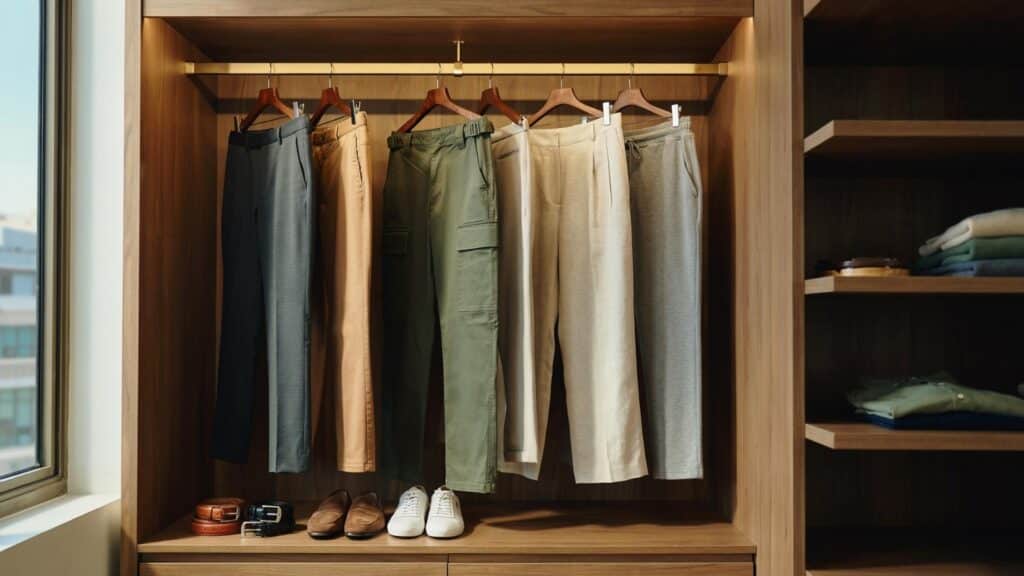
Start with base colors you naturally reach for: black, navy, grey, white, beige, brown, or olive. Pick two or three of these and build around them.
Add one personal color if you want some variety without losing the logic. Navy, white, and olive is a palette I come back to again and again with men I work with.
It rarely fails because every combination from those three colors reads well together without effort. When your wardrobe shares a color logic, everything pairs without thinking.
Step 4: Build Around Core Pieces
Get tops, bottoms, layers, and shoes sorted before you think about accessories. Shopping without knowing what you own leads to duplicates and pieces that do not connect to anything.
Before buying anything new, I ask every man to identify what is actually missing. Sometimes there are plenty of tops but only one decent pair of trousers.
Sometimes the shoes are fine but there is nothing to layer with in cold weather. Every new piece should connect to at least two or three things already owned. If it does not, it does not belong here.
Step 5: Test Combinations Before Buying More
Before spending anything, pair every top with at least two bottoms and check that your shoes work across most of those combinations.
This is where most men realise they already have what they need. If a new item only works with one other piece, it does not earn its place. The goal is a wardrobe where everything works together without hesitation.
Step 6: Wear Only the Selected Pieces for 30 Days
Before buying anything new, wear only what you have selected for a full month. This is where the real information comes from. You will see what you reach for every week and what sits untouched.
In my experience, most men are missing just one layer at most, and they would have bought three unnecessary things without this test. Go by what you actually wear, not what you think you should wear.
Minimalist Wardrobe Essentials for Men
These are the pieces that carry the most weight. Get these right and the rest falls into place.
Tops: Plain cotton t-shirts in white, black, and navy. An Oxford shirt. A polo. A casual button-down. One or two knit sweaters in neutral tones. Aim for eight to twelve pieces total depending on how often you do laundry. Cotton washes well and breathes, which is why I recommend it over synthetic blends for basics.
Bottoms: Dark wash jeans that fit well off the shelf. Chinos in beige, olive, or grey. One pair of casual trousers. Three well-fitting bottoms in complementary colors is all most men need.
Outerwear: A lightweight jacket, an overshirt, and a blazer cover almost every situation from casual to business casual. The blazer does double duty: it works over a white t-shirt and dark jeans, and it works over a button-down for work.
Shoes: Clean white sneakers, a pair of boots, and leather shoes or loafers if your job needs them. Three pairs handles the full range.
Accessories come after these four categories are sorted. A belt and a watch are the only items worth getting to before the base is right.
Minimalist Capsule Wardrobe Example for Men

Here is a breakdown I use as a starting point with most men. The exact numbers shift based on how often you do laundry and how varied your week is.
| Category | Items | Pieces | Best For |
|---|---|---|---|
| T-shirts | White, black, navy | 6 | Casual, travel, layering |
| Casual shirts | Oxford, button-down | 3 | Smart casual, weekends |
| Dress shirts | Neutral, classic fit | 2 | Work, formal events |
| Sweaters | Knit, neutral tones | 2 | Casual, smart casual, cold weather |
| Jackets | Light jacket, blazer | 2 | All occasions |
| Jeans | Dark wash | 2 | Casual, travel, weekends |
| Chinos | Neutral colors | 2 | Smart casual, work, travel |
| Dress trousers | Classic fit | 1 | Work, formal |
| Shorts | Neutral, if climate requires | 1 | Casual, warm weather |
| Shoes | Sneakers, boots, dress shoes | 3 pairs | Casual to formal |
| Suit or blazer | Navy or charcoal | 1 | Formal, work |
| Accessories | Belt, watch | 3 to 5 | All occasions |
This is a starting point, not a prescription. Adjust it to your job, your climate, and your laundry habits. If you wash clothes twice a week, you can go lighter on t-shirts. If your work requires formal wear four days a week, that dress shirt count goes up.
Minimalist Wardrobe Color Palette for Men
Color is what holds the whole wardrobe together. These combinations work because every piece shares the same color logic. Once you see that in practice, getting dressed genuinely stops being a decision.
| Top | Bottom | Layer | Shoes |
|---|---|---|---|
| White shirt | Navy chinos | No layer needed | Loafers |
| Grey t-shirt | Black jeans | Denim jacket | Clean sneakers |
| Navy sweater | Beige chinos | No layer needed | Boots |
| White t-shirt | Dark denim | Olive overshirt | Sneakers |
| Black t-shirt | Grey trousers | Blazer | Leather shoes |
Notice that none of these combinations require a decision. That is the whole point of building around a color palette from the start. The outfit is already made before you open the wardrobe.
Outfit Formulas for a Minimalist Wardrobe

These are the four formulas I keep coming back to. They are not rules. They are reliable starting points that work for most dress codes without overthinking.
Casual Everyday: T-shirt, jeans or chinos, clean sneakers, light jacket. Fits well and requires no decision-making at 7am.
Smart Casual: Oxford shirt, chinos, loafers or sneakers, blazer or overshirt. This is the formula I suggest whenever the dress code is unclear. It works for dinner, a casual office, a weekend trip, almost anything.
Work: Button-down shirt, dress trousers or chinos, leather shoes, blazer if needed. Swap shirt colors across the week and the formula holds every time. Navy trousers with a white shirt on Monday, beige chinos with a pale blue shirt on Tuesday. Same structure, no mental load.
Travel: Comfortable t-shirt, stretch chinos, lightweight jacket, sneakers. Everything matches, nothing wrinkles badly, and one pair of shoes handles the whole trip. This is the formula I recommend most for men who travel with carry-on only.
If you want to see how these formulas translate into a wider set of outfit ideas, my piece on types of styles for every wardrobe covers the style logic behind each approach in more depth.
What to Avoid When Building a Minimalist Wardrobe
The biggest mistake I see is throwing out too much too quickly. Going from a full wardrobe to ten items overnight means you will reach for the wrong things constantly and spend money filling gaps you created yourself. Build slowly.
Other things that consistently get men off track:
Buying new clothes before sorting what you already own. You will almost certainly duplicate things you already have. Defaulting to all-black, white, and grey because it feels minimal, when those colors genuinely do not suit you.
Keeping clothes that look good on a hanger but feel uncomfortable to wear. You will not reach for them. Spending heavily on basics before you know what style actually works for your body and your life.
| Hyacinth’s Tip: The 30-day test is genuinely useful before buying anything new. Most men already have what they need and are missing one layer at most. Without the test, they would buy three things they do not need. |
How to Shop for a Minimalist Wardrobe
Shopping smart matters more than shopping often. These are the rules I follow before buying anything for a minimal wardrobe.
Make a gap list first. Write down what is genuinely missing based on the combinations that are not working, not what you feel like buying. Buy one piece at a time. Fit comes before everything else.
A perfectly colored shirt that does not fit right is a waste of money regardless of price. Every new piece must work with at least three outfits you already own.
If you cannot picture those three outfits before buying, put it back. That single rule saves more money than any budget tip.
Best Brands for a Minimalist Men’s Wardrobe
These are the American brands I have found consistently deliver the clean cuts, neutral palettes, and durable fabrics that work best in a minimal wardrobe. Prices noted here are approximate as of 2026. Check current pricing directly with each retailer.
| Brand | Price Range | Best For |
|---|---|---|
| Everlane | $20 to $200 | Quality basics, transparent pricing, clean cuts |
| J.Crew | $30 to $300 | Smart casual staples, chinos, blazers |
| Todd Snyder | $80 to $600 | Refined basics, well-fitted cuts |
| Buck Mason | $45 to $250 | Premium t-shirts, jeans, everyday basics |
| Banana Republic | $40 to $350 | Work and smart casual pieces |
| Ralph Lauren | $30 to $500 | Oxford shirts, chinos, classic American basics |
| Gap | $15 to $120 | Affordable everyday basics, jeans, t-shirts |
| Outerknown | $50 to $400 | Sustainable basics, casual wear |
| Taylor Stitch | $60 to $350 | Durable, well-fitted everyday pieces |
| Cuts Clothing | $48 to $148 | Clean, minimal t-shirts and polos |
Prices correct as of 2026. Check current pricing directly with the retailer.
Building a minimal wardrobe does not require a large budget. It requires choosing right. Buck Mason for t-shirts and Ralph Lauren for an Oxford shirt gets you a solid base for well under $200.
How to Maintain a Minimalist Wardrobe Long-Term
Building it is the easier part. Keeping it working takes consistent habits. Review everything each season. Follow a strict one-in, one-out rule. Repair good pieces rather than replacing them at the first sign of wear.
A quality white t-shirt that costs $40 and lasts three years has a better cost-per-wear than a $15 replacement you buy every six months.
Store off-season pieces separately so the current wardrobe stays clean. Remove anything that no longer fits your routine, even if you spent real money on it.
These are small habits, but they are the difference between a minimal wardrobe that works for years and one that gradually fills up again.
Frequently Asked Questions
These are the questions that come up most often once men have read through the basics above.
What is a capsule wardrobe for men?
A men’s capsule wardrobe is a small, structured set of clothes where every piece connects to other pieces for maximum outfit combinations. It typically contains 25 to 35 items built around a consistent color palette. The goal is to be able to get dressed well without thinking about it.
How to build a capsule wardrobe for men?
Start by sorting what you already own. Keep only what fits well and works with at least two other pieces. Build a palette of two or three neutral colors. Fill gaps in tops, bottoms, outerwear, and shoes in that order. Wear only your selected pieces for 30 days before buying anything new.
What is a capsule wardrobe for men in terms of item count?
Most men find 25 to 35 pieces covers everything well. That includes six t-shirts, three casual shirts, two dress shirts, two sweaters, two pairs of jeans, two pairs of chinos, one dress trouser, one blazer, a light jacket, and three pairs of shoes. Adjust based on your laundry frequency and how varied your week is.
What is the 333 rule for men?
The 333 rule means wearing only 33 items for 3 months with no exceptions. It is one of the fastest ways to find out what you actually wear versus what just takes up space in your wardrobe.
What is the 70/30 rule for a wardrobe?
The 70/30 rule means 70 percent of your wardrobe should be classic, versatile pieces you wear constantly, and 30 percent can be personal, seasonal, or trend-led items. It keeps the wardrobe functional without removing all personality from it.
How often should I update a minimalist wardrobe for men?
Review it each season. Replace only what is genuinely worn out or no longer fits your routine. Resist seasonal shopping habits. If your existing pieces are earning their place, there is no reason to add anything.
Final Verdict
Yes, and the men I have worked with who built one correctly have not looked back. The ones who got it right were not the ones who spent the most or threw everything out.
They were the ones who got honest about what they actually reach for and built slowly from there.
If you anchor in navy, white, and olive and test your combinations before buying anything new, you will end up with a wardrobe where getting dressed stops being a problem you have to solve every morning. Start with the sort.
That step tells you more than anything else in this process.