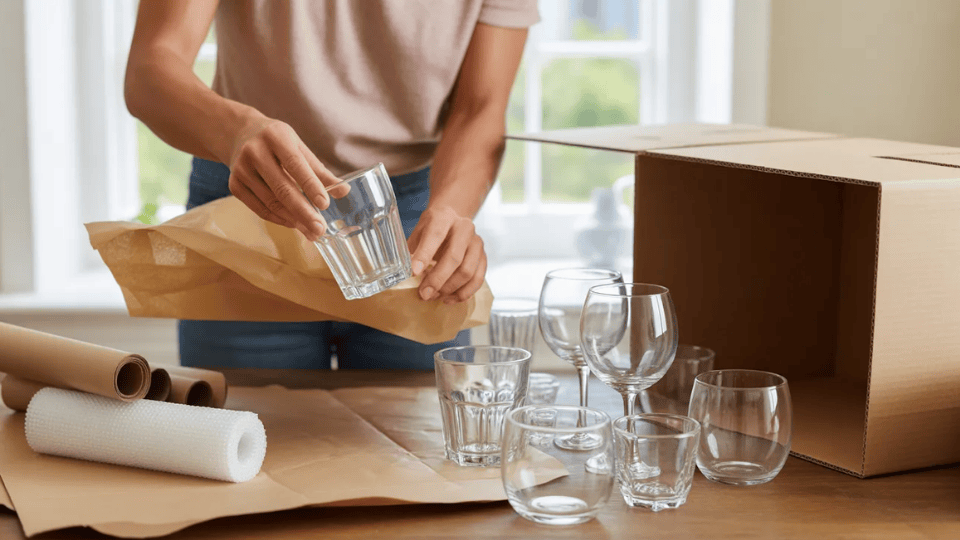

When you move to a new home, fragile items can feel like the biggest worry. I’ve packed kitchen boxes many times, and glasses are always the trickiest.
One wrong move and your favorite mug or wine glass can break before you reach your new place. The good news is that you can protect your glassware with the right steps and simple packing methods. You do not need professional movers to do it safely.
In this guide, I will show you how to pack glasses for moving step by step, using easy techniques anyone can follow.
You will also learn what supplies you need, what mistakes to avoid, and helpful tips for safely packing different types of glass.
Why Packing Glasses the Right Way Matters
When you move to a new place, glasses are often the items most likely to break. I’ve seen many moves where the real problem wasn’t the truck ride but the packing itself. That’s why learning how to pack glassware for moving the right way can make a big difference.
Glass is thin and fragile, so even a small bump inside the box can cause cracks or chips. When you wrap each glass carefully and remove the empty space in the box, you reduce the chance of damage.
Good packing also prevents glasses from rubbing against each other during transport. I also recommend labeling boxes as fragile so anyone helping you move handles them with extra care. These small steps can help protect your glassware during the move.
How to Pack Glasses for Moving: Step-by-Step Guide
Packing glasses the right way keeps them safe during transport. I like to follow a clear process that protects each piece.
These steps will help you pack glassware carefully so it reaches your new home without cracks or chips.
Step 1: Reinforce and Cushion the Box

Start by preparing the box so it can safely hold fragile items. Tape the bottom seams well so the box stays strong.
I always add a thick layer of crumpled packing paper at the bottom. This layer acts as a cushion, helping absorb shock if the box moves during transport.
Step 2: Wrap Each Glass Individually

Wrap every glass on its own so pieces do not touch each other. Place the glass on packing paper, then gently roll it while folding the paper around it.
I also place a small amount of paper inside the glass. This supports the rim and helps reduce pressure during transport.
Step 3: Add Extra Padding

Some glasses are thinner and need more protection. After wrapping with packing paper, you can add a layer of bubble wrap around the outside.
This extra padding helps absorb impact if boxes shift during the move. I make sure the glass shape cannot be felt through the wrapping.
Step 4: Place Glasses Upright in the Box

Always place glasses upright inside the moving box. I avoid packing them on their sides because that can put pressure on weaker areas.
Standing them upright spreads the weight more evenly. Arrange them carefully in rows and avoid forcing them into tight spaces inside the box.
Step 5: Use Dividers or Compartments

Cardboard dividers help keep glasses separated during the move. Each glass sits in its own space, which stops them from touching each other.
I like using dish pack boxes with built-in compartments. When glasses stay separated, they are much less likely to bump into each other.
Step 6: Fill Empty Spaces

Empty space inside a box can cause items to shift as the box moves. I always check for gaps after placing the glasses.
Fill those spaces with crumpled packing paper, towels, or soft cloth. This keeps everything snug so the glasses stay steady during transport and unloading.
Step 7: Seal and Label the Box

Once the box is packed, close the flaps and seal them with strong packing tape. I always label the box clearly so people know it holds fragile items.
Write “Fragile – Glassware” on several sides and draw arrows showing which side stays upright. Clear labels help movers handle the box with care.
Smart Tips to Protect Glassware During a Move
A few simple habits can make packing much safer during a move. When learning how to pack glassware for moving, I always follow practical steps that help protect fragile items.
| Tip | Explanation |
|---|---|
| Pack heavier glasses at the bottom | I place heavier glasses at the bottom of the box and lighter ones on top. This balances the weight and protects delicate pieces from pressure during the move. |
| Avoid overloading fragile boxes | Overfilling a box adds extra weight and increases the risk of breakage. I pack fewer glasses in each box so they stay secure and are easier to carry. |
| Use smaller boxes for glassware | Smaller boxes work better for fragile items because they limit movement. I often choose sturdy dish pack boxes since they provide stronger support and better protection. |
| Double-box delicate pieces | For valuable or sentimental glasses, I place the packed box inside a larger box with padding around it. This adds another layer of protection during transport. |
| Pack every day glasses separately | I keep a small box with a few everyday glasses. This makes them easy to find after moving without opening every kitchen box. |
Following these tips keeps your glasses steady and protected. I’ve noticed that small precautions during packing help prevent damage and reduce moving stress.
How to Unpack Glasses Safely After Moving
Unpacking fragile glassware needs patience and care. I always follow a few simple steps to keep my glasses safe and prevent damage.
Step 1: Place the box on a stable surface: Set the box on a flat, steady surface before opening it. This prevents sudden movement and reduces the chance of glasses shifting or falling out.
Step 2: Open the box carefully: Cut the packing tape slowly and open the flaps gently. I avoid using too much force so the glasses near the top stay protected.
Step 3: Remove the packing paper layer by layer: Take it out gradually rather than pulling everything out at once. This helps you keep control and prevents wrapped glasses from slipping.
Step 4: Unwrap one glass at a time: Carefully unwrap each glass and place it on a soft surface, such as a towel or countertop. This protects delicate rims and prevents accidental slips.
Step 5: Inspect glasses before storing: Check each glass for chips or cracks before putting it away. Early inspection helps you spot damage and avoid using weakened glassware.
Common Mistakes to Avoid When Packing Glasses
Packing glasses may seem simple, but small mistakes can easily lead to broken items during a move. I’ve learned that avoiding a few common errors can protect fragile glassware.
- Wrapping multiple glasses together: Some people wrap several glasses in the same sheet of paper to save time. I always wrap each glass separately so they do not bump into each other.
- Leaving empty space inside the box: Empty gaps inside the box allow glasses to shift during transport. I fill these spaces with packing paper or cloth to keep everything stable.
- Using weak or damaged boxes: Old or worn boxes may collapse under weight. I always choose sturdy moving boxes designed to safely hold fragile kitchen items.
- Overpacking fragile items: Placing too many glasses in a single box increases pressure and increases the risk of breakage. I prefer packing fewer items so they stay secure.
- Forgetting to label fragile boxes: Unlabeled boxes may be handled roughly during moving. I clearly mark boxes as fragile so movers know to carry them carefully.
Avoiding these mistakes can save your glassware from cracks and breaks. I’ve found that careful packing always leads to a smoother and safer move.
Wrap Up
Packing fragile items can feel stressful, but it becomes much easier once you know the right method. I always remind people that careful packing matters more than speed.
When you take a little extra time to wrap each glass, add padding, and use sturdy boxes, your glassware has a much better chance of arriving safely.
In this guide, I showed you how to pack glasses for moving step by step, along with simple ways to protect different types of glassware. If you follow these tips, you can move your kitchen items without worrying about opening a box full of broken pieces.
If you’re preparing for a move, save this guide and use it as a checklist while packing. It can help you keep every glass safe from start to finish.