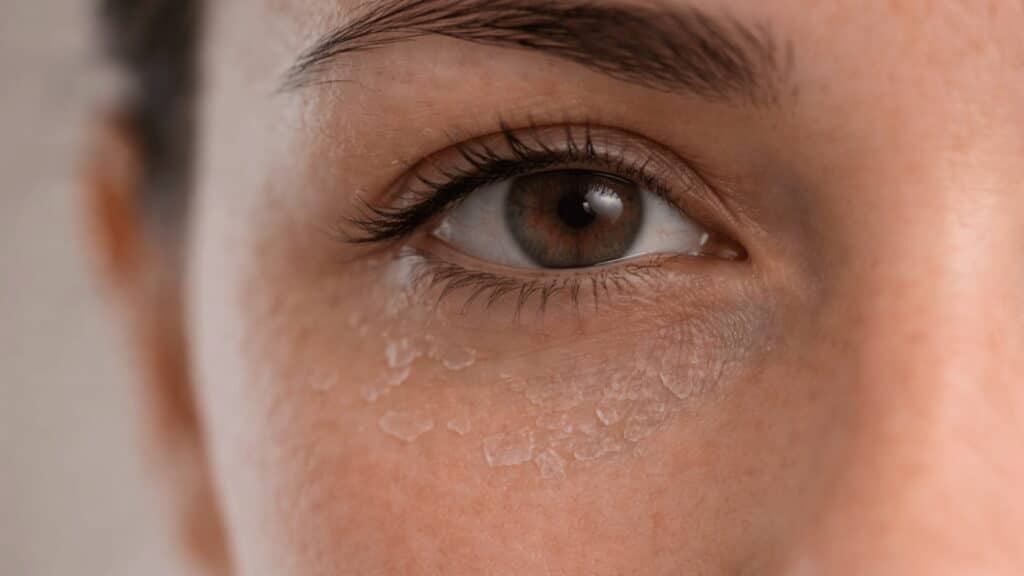

Dry under eyes can make your skin feel tight, flaky, and uncomfortable before the day even starts. I’ve dealt with it myself, and I know how frustrating it feels when simple skincare doesn’t seem to help.
The skin around your eyes is thinner and more sensitive, which means it loses moisture quickly and reacts easily to weather, products, and stress.
I’ll help you understand what causes dryness under the eyes and how to tell if it’s simple dryness or something like eczema or dermatitis. You’ll also learn practical steps you can start tonight to repair your skin barrier and calm irritation.
Once you understand what’s triggering the dryness, you can care for your skin with more confidence and see steady improvement.
Why Do You Have Dry Under Eyes?
Dryness under the eyes rarely happens for just one reason. The skin in this area is thinner and has fewer oil glands than the rest of the face, so it loses moisture more quickly.
Dermatology research on periorbital skin structure, including findings discussed in The Structure and Function of Skin, notes that thinner skin and fewer oil glands around the eyes make this area more sensitive to environmental stress
Common triggers include:
- cold outdoor air
- indoor heating or air conditioning
- sun exposure
- dehydration in the skin barrier
Skincare products can also contribute. Strong ingredients such as retinoids, exfoliating acids, and foaming cleansers may weaken the skin barrier when used too close to the eyes. This is especially relevant for those following an active daily oily skin regimen, where stronger ingredients are used more frequently and can sometimes affect the delicate under-eye area
These ingredients can increase transepidermal water loss (TEWL), allowing moisture to escape more easily.
Fragrance, certain makeup formulas, and heavy eye creams may also cause irritation. In some cases, dryness may relate to eczema, contact dermatitis, or periorbital dermatitis.
Aging and hormonal changes can further reduce oil production and slow barrier repair.
Dry Skin, Eczema, or Dermatitis: What’s the Difference?

Understanding the difference between simple dryness and inflammatory skin conditions helps you choose the right treatment and avoid worsening irritation.
| Condition | Key Symptoms | What It Feels Like | When It Happens | What Helps |
|---|---|---|---|---|
| Simple Dryness | Flaking, tightness, mild redness | Tight, slightly rough | After weather changes or harsh products | Gentle moisturizer, barrier repair |
| Eczema | Intense itching, redness, and crusting | Very itchy, inflamed | Chronic, allergy-linked | Prescription creams, dermatologist care |
| Contact Dermatitis | Burning, swelling, patchy rash | Stinging or irritated | After the new product is used | Stop trigger product, soothing care |
If itching is severe, swelling increases, skin crusts, or no improvement appears after two weeks, seek medical advice promptly.
How to Treat Dry Under Eyes (Step-by-Step Plan)
In my experience, dry under-eye skin improves faster when you keep things simple and follow a clear routine. Adding too many products at once often overwhelms the skin and slows recovery.
Step 1: Stop the Damage

The first step is removing anything that may be irritating the area.
Pause retinoids, exfoliating acids, strong foaming cleansers, and fragranced products near the eyes. Give your skin a few days without active ingredients so the barrier can calm down.
Reducing friction, heat, and strong formulas allows the under-eye area to stabilize before you begin repairing it properly.
Step 2: Repair the Skin Barrier

Now focus on restoring hydration and strengthening the skin’s protective layer. This helps the under-eye area hold moisture better and reduces tightness, flaking, and sensitivity.
Ceramides help restore the skin’s protective layer. Glycerin draws water into the skin to reduce tightness. Hyaluronic acid adds hydration but works best under a heavier cream.
Petrolatum seals moisture in and prevents water loss. Layer hydrating ingredients first, then apply a richer cream on top. Consistency matters here.
Daily barrier support helps the under-eye area regain softness and reduces flaking, redness, and sensitivity over time.
Step 3: Seal and Protect

Once your skin begins improving, protect it daily. Apply a gentle sunscreen around the eyes each morning to prevent further moisture loss and irritation from UV exposure.
Use a humidifier indoors, especially in winter or air-conditioned spaces, to maintain stable moisture levels.
At night, apply a thin occlusive layer over your moisturizer to lock hydration in while you sleep. Protection keeps progress from reversing and helps prevent dryness from returning.
Fast Relief: What You Can Use Tonight
A thin layer of petrolatum (such as petroleum jelly) applied to slightly damp skin can help seal in moisture overnight and calm dryness.
A thick, fragrance-free cream works similarly and is a little more comfortable if petroleum jelly feels too heavy. A cold compress can ease redness and calm any burning sensation within minutes.
What not to do: Avoid coconut oil if your skin is broken or irritated, skip any product with fragrance or alcohol, and never apply active ingredients like retinoids or acids, thinking they’ll speed up recovery. They won’t, they’ll make it worse.
Ingredients That Help Dry Under Eyes
When I’m choosing products for dry under eyes, I focus less on the brand and more on the ingredient list. Some ingredients are great at restoring moisture and protecting the delicate skin in this area.
Ceramides: Ceramides help strengthen the skin’s natural barrier. I’ve found they work well for keeping moisture in and preventing the under-eye area from drying out during the day.
Petrolatum: Petrolatum acts like a seal over the skin. It locks in moisture and slows water loss. When dryness is severe, I often see this ingredient recommended for overnight use because it protects the skin while it repairs.
Glycerin and Hyaluronic Acid: Both ingredients pull moisture into the skin. They work best when layered under a thicker cream that seals everything in. On their own, they can sometimes evaporate before providing lasting hydration.
Ingredients That Can Make Dry Under Eyes Worse
Some ingredients can irritate or dry out the already delicate skin around the eyes. When I check product labels, these are the ones I try to avoid.
Fragrance: Fragrance is one of the most common causes of irritation around the eyes. Even products labeled “natural” or “gentle” can cause redness or itching if they contain fragrance.
Denatured Alcohol: This ingredient dries quickly on the skin but can strip away natural moisture. With repeated use, it weakens the skin barrier, making dryness harder to address.
AHAs, BHAs, and Essential Oils: These ingredients can be too strong for the thin skin under the eyes. They often cause stinging, peeling, or sensitivity, especially if the skin is already dry.
Can You Wear Makeup with Dry Under Eyes?

Yes, you can still wear makeup with dry skin undereyes, but preparation matters more than the products themselves. Start with a hydrating moisturizer and let it absorb for a few minutes before applying concealer.
A thin occlusive layer over your moisturizer can help smooth the skin and prevent makeup from settling into dry patches.
Matte concealers are usually the biggest problem for dry under-eye skin because they cling to flaky areas and emphasize texture. Cream or liquid concealers blend more easily and tend to look more natural.
When applying makeup, gently press and pat the product into the skin instead of dragging it. Less friction helps protect the delicate under-eye area and keeps the finish smoother.
How to Prevent Dry Under Eyes Long-Term
Treating dryness is one thing; keeping it from coming back is another. These habits make a real difference over time.
- Gentle routine: Use a fragrance-free, non-foaming cleanser that doesn’t strip the skin barrier with every wash.
- Layering method: Apply hydrating products on slightly damp skin, then seal with a heavier cream or occlusive on top.
- Hydration: Drinking enough water won’t fix dryness on its own, but chronic dehydration absolutely makes it worse.
- Climate adjustments: Run a humidifier indoors during winter or in air-conditioned spaces to maintain stable moisture levels.
- Seasonal tweaks: Switch to a richer moisturizer in colder months and a lighter one when humidity is naturally higher.
Small, consistent habits help the under-eye area stay hydrated and resilient, preventing dryness from returning as easily.
When to See a Dermatologist
Most cases of simple dryness improve within several days of consistent moisturizing. However, some symptoms suggest that something more serious may be happening.
Seek medical advice if you notice:
- severe itching
- swelling or inflammation
- crusting or weeping skin
- No improvement after two weeks
A dermatologist can diagnose conditions such as eczema, contact dermatitis, or periorbital dermatitis and recommend appropriate treatment.
The Bottom Line
By now, you have a clearer understanding of why dryness appears under the eyes and how small changes in your routine can make a real difference.
I’ve shared the most common causes, the signs that help you recognize irritation early, and simple steps that support the skin’s ability to hold moisture again.
When you focus on gentle products, steady hydration, and patience, the under-eye area usually begins to improve. I’ve seen how much calmer skin can feel once the routine becomes simpler and more consistent.
Try applying the repair steps tonight and give your skin time to respond over the next few days.
If you’ve experienced this before, I’d love to hear what worked for you, share your thoughts, or tips in the comments so others can learn from your experience too.