
Dust doesn’t take days off. Wipe a shelf down on Monday, and by Thursday, it looks like you never bothered.
Store-bought sprays sound convincing on the label, but most leave a greasy residue, fill the room with a sharp chemical smell, or simply move dust around without doing anything to slow its return.
My mom had a way of keeping a home that felt genuinely clean, not just tidied up, but actually fresh. The recipes she passed down sit at the core of my cleaning routine now.
Simple, built from pantry staples you most likely already have, and quietly more effective than most products lining store shelves. Non-toxic, easy on the budget, and surprisingly good at keeping dust away longer, these are the DIY dusting sprays worth making room for.
What is a Dusting Spray and How Does It Actually Repel Dust?
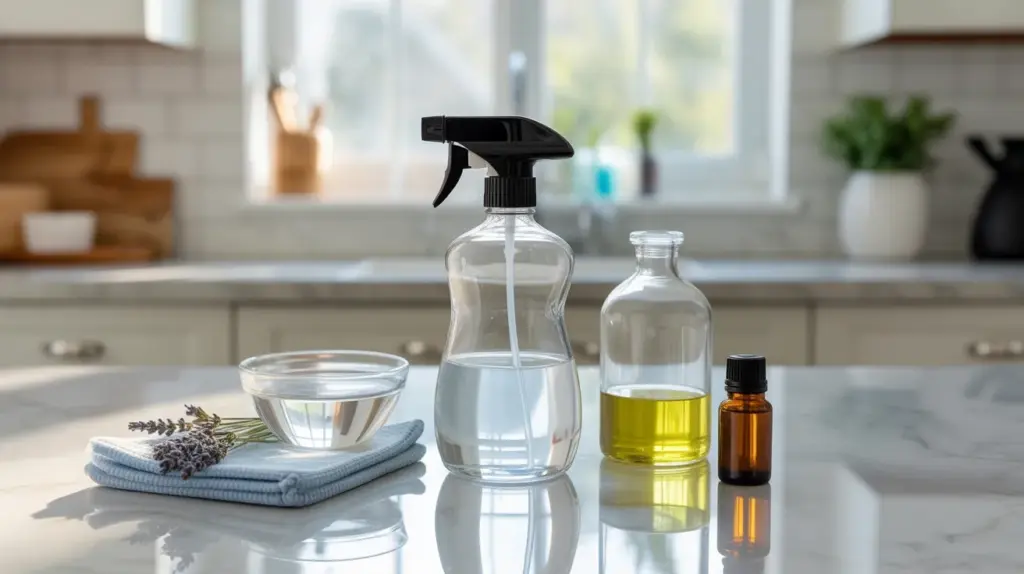
A homemade dusting spray is a liquid cleaning solution made from common household ingredients, typically water, white vinegar, a small amount of oil, and optional essential oils.
Unlike a dry cloth that just lifts and relocates dust particles, a good dusting spray removes buildup and leaves a light protective layer on the surface. Vinegar cuts through the grime and residue that quietly accumulates on your shelves over time.
The oil, olive oil being my personal go-to, just as it was in my home growing up, lightly coats surfaces, slowing static buildup and making it harder for fresh dust to cling. Essential oils add a pleasant scent and mild antibacterial properties to your spray.
Because oil and water naturally separate, shaking the bottle before every use is non-negotiable. This is basic chemistry, not magic, and that’s exactly what makes it so reliable.
Why Dust Builds Up So Quickly in Homes
Growing up, dust always seemed to reappear the moment a surface was wiped clean, and my mom was quick to point out it wasn’t random.
Dust has sources: fabric fibers from clothes, rugs, and upholstery; dead skin cells; pet dander; pollen drifting in through open windows; and fine debris circulated by air vents.
Every time someone walks across a room or drops onto a couch, particles lift into the air and resettle. Static electricity makes this worse; surfaces with existing buildup create friction, giving fresh dust something to cling to more easily.
That’s the real reason a basic dry wipe never feels like enough. A spray that removes buildup and lightly coats the surface reduces static, which helps prevent dust from returning as quickly after cleaning.
Homemade Dusting Sprays That Keep Our Home Dust-Free
Growing up, the house always smelled faintly of lemon or lavender, never harsh cleaner. My mom rotated these three formulas depending on the room and surface. All three are non-toxic and safe for regular household use when applied correctly.
1. The Classic Vinegar and Olive Oil Dust-Repellent Spray

A simple homemade dusting spray works beautifully on sealed wood furniture, shelves, and baseboards, keeping surfaces clean without harsh chemicals or expensive store-bought products.
Shelf life: 2-3 Weeks
Store in:Cool, dark place
Ingredients
| Ingredient | Quantity | Notes |
|---|---|---|
| Distilled water | 1 cup | Acts as the base |
| White vinegar | ¼ cup | Helps remove buildup |
| Olive oil | 1–2 tablespoons | Adds light shine |
| Lemon essential oil (optional) | 10 drops | Adds fresh scent |
How to Make It
- Add water: Pour distilled water into a clean spray bottle first
- Pour vinegar: add white vinegar directly after the water to make mixing easy
- Mix the oils: add olive oil and your chosen essential oil next
- Shake well: close the bottle tightly, then shake before each use
The vinegar helps remove buildup. The olive oil adds a light shine and slows the dust from sticking as quickly. Always test on a hidden area first, especially on antique or unfinished wood. Vinegar can dull delicate finishes over time.
2. The Light Everyday Dusting Spray (Lower Oil Formula)

This formula is ideal for painted furniture and sealed surfaces, delivering lighter coverage that cleans effectively without leaving residue or compromising light finishes.
Shelf life: 2-3 Weeks
Store in: Cool, dark place
Ingredients
| Ingredient | Quantity | Notes |
|---|---|---|
| Distilled water | 2 cups | Main base for dilution |
| White vinegar | ¼ cup | Light cleaning support |
| Olive oil | 1 tablespoon | Lower amount reduces residue |
| Mild dish soap | 1 teaspoon | Helps cut grease and blend oil |
| Lavender or tea tree oil (optional) | 5–10 drops | Adds scent (use carefully around pets) |
How to Make It
- Add water: fill the bottle first before introducing any other ingredients
- Pour vinegar: add it directly after the water for easy, even mixing
- Add dish soap: just a small drop is enough to cut through grease
- Mix the oils: pour in the olive oil, then add your chosen essential oil
- Shake before use: always give the bottle a gentle shake before spraying anything
The dish soap helps oil and water mix more easily, reducing streaking. Using less oil lowers the chance of residue on painted or lighter surfaces.
Disclaimer: Essential oils may harm pets, especially cats. Avoid tea tree, eucalyptus, and citrus. If needed, use only very small amounts of lavender.
3. The Fast-Drying Alcohol Dusting Spray (No Oil Version)

For glass, mirrors, and electronics, a simple alcohol-based spray dries quickly and leaves no film. Most cleaning experts recommend skipping oil in this type of formula. Even small amounts can leave haze on glass and screens.
Shelf life: 4-6 Weeks
Store in: Room temperature, away from heat
Ingredients
| Ingredient | Quantity | Notes |
|---|---|---|
| Water | Fill the bottle halfway | Dilutes alcohol |
| Rubbing alcohol | Fill the remaining half | Main cleaning agent |
| Essential oil (optional) | A few drops | Adds a light scent |
How to Make It
- Pour water: fill the spray bottle roughly halfway before adding anything else
- Add alcohol: pour it in directly; this handles most of the cleaning
- Add essential oil: a few drops of your preferred scent works perfectly fine
- Shake gently: a slow, steady shake evenly combines all the ingredients
This version evaporates quickly and leaves no residue. Use very little product, especially on electronics. Always spray onto the cloth first, not directly onto screens.
How to Use Your Homemade Dusting Spray the Right Way
The right formula only goes so far; technique is what separates a surface that stays clean longer from one that just looks wiped down. These habits made all the difference growing up:
- Spray onto the cloth, not the surface: direct spraying risks oversaturation, which can damage finishes or leave rings on wood
- Work top to bottom: displaced dust falls downward, so clean higher surfaces first
- Use only microfiber cloths: they trap particles rather than pushing them around
- Shake every use before: oil and water separate quickly; skipping this means uneven application
- Buff with the dry side after wiping: picks up remaining residue and leaves surfaces looking clean, not damp
Small habits, consistent results. Once the method becomes routine, you’ll notice surfaces staying cleaner between sessions without any extra effort.
What Do Professional Cleaners Use for Dusting?

A cleaning professional once shared something that completely changed how I approached dusting: it’s less about the product and more about technique.
Skilled cleaners rely on microfiber cloths that trap particles rather than scatter them, light misting rather than drenching surfaces, and always work top to bottom so debris falls onto areas not yet cleaned.
For heavier buildup, a HEPA vacuum handles the bulk before any wiping begins. What you won’t find in their routine is heavy polish or thick coatings that attract more grime over time.
A simple DIY dusting spray follows that same logic: apply lightly, pair it with the right cloth, and stay consistent. That steady rhythm, more than any advertised product, is what genuinely keeps surfaces cleaner for longer.
Comparing the Cost of Dusting Spray Options
Initially, I didn’t think much about cost growing up, but now I see the difference clearly. My DIY recipes are inexpensive because they use basic pantry items. Here’s a simple comparison of common dusting spray options you might see in suburban homes:
| Option | Estimated Cost Per Bottle | Where to Buy (In Store) |
| Popular All-Purpose Furniture Spray (store brand) | $4–$7 | Walmart, Target, Grocery Stores |
| Oil-Based Wood Polish Spray | $5–$10 | Home Depot, Lowe’s, Ace Hardware |
| Natural Brand Dusting Spray (plant-based) | $6–$12 | Whole Foods, Sprouts, Natural Grocers |
| Homemade Dusting Spray | Under $1 per batch | Source ingredients at Walmart or Target |
If you already have vinegar and oil at home, the cost drops even more. Over a year, refilling one reusable bottle saves money without lowering cleaning performance.
Surfaces You Should Never Use Homemade Dusting Spray On
These recipes work well across most household surfaces, but a few materials simply don’t mix well with vinegar, oil, or water. Knowing these exceptions protects your furniture and finishes:
- Unsealed wood: absorbs moisture and oil unevenly; use a dry cloth instead
- Natural stone (marble, granite): vinegar’s acidity can etch and dull the surface over time
- Antique furniture: always patch-test on a hidden area before applying anything new
- Screens and electronics: use only the alcohol-based version on a lightly dampened cloth; never spray directly
When in doubt, less is more. A quick patch test on an inconspicuous spot takes thirty seconds and can save a surface you’d otherwise have to refinish or replace.
Final Thoughts
My mom didn’t have a cabinet full of specialty products. She had a few simple ingredients, a spray bottle, and a routine, and the house reflected it.
The honest truth is that dust control comes down to two things: using the right formula for your surfaces and staying consistent with a schedule. These three recipes cover almost every room in a home, and none of them require anything you can’t find in a grocery store.
Pick the one that fits your surfaces best and make a small batch this week. You’ll likely notice dust returning more slowly, and that alone makes the habit worth keeping. Drop a comment below and share your concoctions.