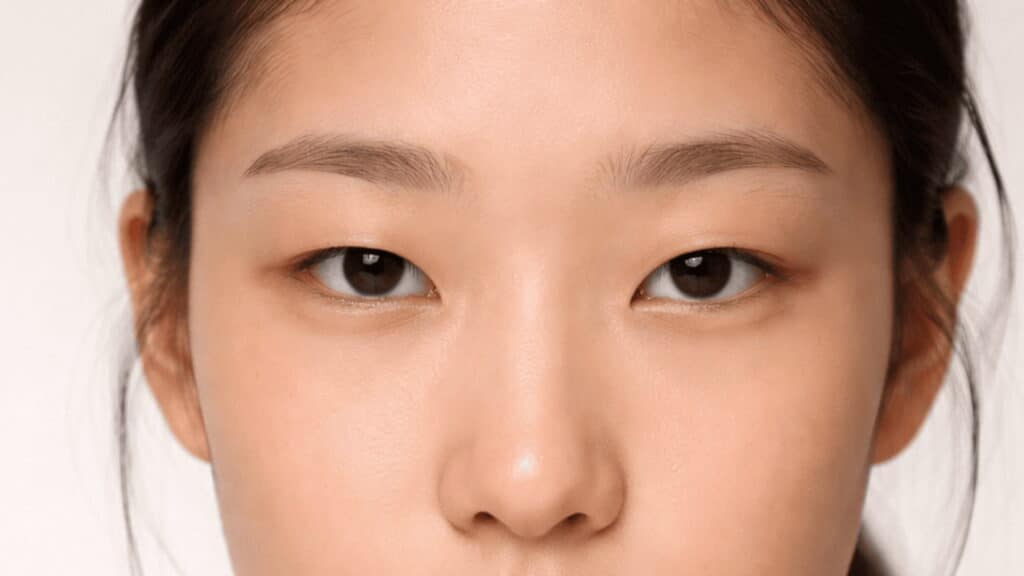

I used to think eye shape names were just simple labels like almond or round. It sounded straightforward enough. But once I started paying closer attention to my own features, I realized I had been missing a lot of subtle details.
If you’ve ever tried a makeup look that looked amazing on someone else but felt slightly off on you, your eye shape might be the reason. Understanding eye shape names helps you see your features more clearly and style them with intention.
In this guide, I’ll walk you through the main eye shapes, how to identify yours step by step, and how spacing, lid type, and depth all play a role. You’ll also get practical tips for makeup and glasses that actually suit your structure.
By the end, you won’t just know your eye shape, you’ll understand it.
Why Identifying Your Eye Shape Matters
Understanding eye shape names brings clarity to styling decisions and facial balance.
In my styling work, I’ve noticed that many makeup frustrations come from copying techniques designed for a completely different eye structure. When liner placement or shadow depth doesn’t match the eye’s natural shape, the result can feel heavy or uneven.
Once the correct shape is identified, makeup placement becomes far more intentional. Small adjustments can change how balanced the eyes appear. For example:
- Eyeliner angle can visually lift or soften the outer corner
- Shadow depth can change how open the eyes look
- Lash placement can lengthen or widen the eye area
Glasses selection also improves when eye structure is considered. Frame width, bridge style, and lens height can either complement or overpower the natural eye proportions.
Another common issue is confusion between eye shape and eye features. People often mix up spacing, lid type, or depth with the shape itself. Once you separate these factors, identifying your eyes becomes much easier.
Main Eye Shape Names You Should Know
Your eye shape affects how makeup sits, how lashes frame your face, and how glasses balance your features. Once you understand your own shape, styling starts to feel much easier and more intentional.
Below, I’ll walk you through the most common eye shape names in simple terms. As you read, you can compare each description to your own eyes and see which one truly matches you best.
1. Almond Eyes

Almond eyes taper slightly at both corners and appear longer than they are tall. The iris usually touches both the top and bottom lids, leaving little white visible.
From a styling perspective, almond eyes are often considered the most balanced shape. Because the proportions are naturally even, many makeup techniques work well without major adjustments.
In practice, I’ve noticed that people with almond eyes often feel comfortable experimenting with different liner styles.
Helpful styling tip:
- Keep liner close to the lash line with a slight outward extension
- Most lash styles work well
- Choose frames that match your natural eye width rather than extending too far outward
2. Round Eyes

Round eyes appear more open and circular. When looking straight ahead, you may see white above or below the iris.
This shape has more vertical height than almond eyes. The corners do not taper strongly, which creates a wide, expressive appearance.
In makeup styling, round eyes often benefit from techniques that add horizontal balance.
Helpful styling tip:
- Focus liner on the outer third of the eye
- Blend a deeper shadow at the outer corner
- Choose lengthening lashes rather than very full ones
- Rectangular or cat-eye frames help visually stretch the eye shape
3. Hooded Eyes

Hooded eyes have extra skin that folds over the crease, which can partially hide the upper lid when the eyes are open.
Many people with hooded eyes assume they have small lids, but in reality, the lid space simply sits under the fold.
From a cosmetic science perspective, hooding often becomes more visible as skin elasticity changes with age. Dermatology studies show that collagen loss around the eye area can gradually increase hooding over time.
Helpful styling tip:
- Keep eyeliner thin near the inner corner
- Blend the shadow slightly above the crease so it remains visible
- Choose lightweight lashes
- Frames with a higher bridge can prevent crowding above the eye
4. Monolid Eyes

Monolid eyes do not show a visible crease separating the eyelid from the brow area. Instead, the lid appears smooth from the lash line upward.
This structure is common in many East Asian facial features, but monolids occur across many different ethnic backgrounds.
Because the lid surface is smooth, makeup techniques often focus on building dimension through shading rather than crease definition.
Helpful styling tip:
- Blend the shadow upward to create depth
- Extend the liner slightly outward
- Lightweight frames with adjustable nose pads often sit most comfortably
5. Upturned Eyes

Upturned eyes have outer corners that sit slightly higher than the inner corners.
If you imagine a straight horizontal line across the eyes, the outer edges angle upward. This shape naturally creates a lifted appearance.
Many people with upturned eyes notice that winged liner can quickly look exaggerated if the angle is too sharp.
Helpful styling tip
- Keep the liner balanced rather than dramatically lifted
- Add a subtle shadow under the outer lower lash line
- Choose frames with gentle curves rather than sharp angles.
6. Downturned Eyes

Downturned eyes have outer corners that angle slightly lower than the inner corners. When looking straight ahead, the lower lash line dips toward the outer edge. This gives the eyes a softer appearance.
The defining feature is the downward tilt, not the amount of visible lid space or skin.
Helpful styling tip:
- Focus liner on the outer upper corner
- Lift the liner slightly upward
- Avoid pulling the shadow downward
- Frames with gently upswept corners can help create visual lift
7. Deep-Set Eyes

Deep-set eyes sit farther back in the eye socket and often rest beneath a more prominent brow bone. This structure can create a natural shadow above the lid.
Deep-set eyes are sometimes mistaken for hooded eyes, but the difference lies in bone structure rather than skin folds.
In cosmetic formulation studies, lighter reflective shades are often recommended for recessed areas because they visually bring features forward.
Helpful styling tip:
- Use lighter shades on the lid
- Keep the liner soft rather than heavy
- Choose thinner frames that do not sit too close to the brow
8. Protruding (Prominent) Eyes

Protruding eyes sit slightly forward in the eye socket, making them more noticeable from the side.
The lid space is often very visible, and the eye can appear rounded. This is different from round eyes because the eye projects outward rather than simply appearing tall.
In my experience, matte shadows work particularly well here because they create depth without adding shine.
Helpful styling tip
- Use mid-tone matte shadows
- Avoid overly thick liner
- Medium-width frames with a gentle structure usually look most balanced
9. Close-Set Eyes

Close-set eyes are positioned closer together than the width of one eye. A simple way to check is to compare the space between the eyes with the width of one eye. If the gap is smaller, they are considered close-set.
This refers to spacing, not the shape or size of the eye opening.
Helpful styling tip:
- Keep the inner corners bright
- Focus liner and shadow outward
- Choose frames with a thin or clear bridge
10. Wide-Set Eyes

Wide-set eyes have more space between them than the width of one eye. If the gap across the bridge of the nose appears wider than a single eye, this classification applies.
Like close-set eyes, this describes positioning rather than the eye opening itself. The focus is on the distance between the eyes.
Helpful styling tip:
- Apply slightly deeper shadow near the inner corner
- Keep the liner evenly distributed
- Frames with a defined bridge can visually reduce the gap
11. Small Eyes

Small eyes have a shorter width or a smaller visible opening than the surrounding facial features. The iris may fill most of the visible space, leaving minimal white showing.
This refers to overall size rather than tilt, depth, or spacing. Small eyes can still have a defined crease or other distinct features.
Helpful styling tip:
- Use thin eyeliner
- Keep the lower waterline light
- Choose shorter curled lashes
- Lightweight frames usually maintain better proportions
How to Identify Your Eye Shape
Identifying your eye shape becomes much easier when you break it into clear, simple steps. I’ve found that trying to judge everything at once only makes it more confusing.
When you check your crease visibility, corner angles, spacing, and depth one by one, you start to see patterns more clearly.
This approach helps you classify your shape accurately and avoid mixing it up with nearby features like lid type or spacing.
Step 1: Look at the Crease

Begin by examining the upper eyelid crease. A visible fold separating the lid from the brow area usually indicates a double eyelid structure. If no crease appears, the eyes may be monolid.
If a crease exists but is partly covered by skin, the eyes may be hooded. Crease visibility helps narrow down shape categories quickly and prevents mislabeling.
Step 2: Check the Outer Corners

Observe the angle of the outer corners compared to the inner corners. If the outer corners sit slightly higher, the eyes may be upturned. If they angle lower, they may be downturned.
If both corners align horizontally, the shape may be neutral, such as almond or round. Corner direction plays a major role in classification.
Step 3: Measure the Spacing

Spacing refers to the distance between both eyes, not the shape itself. Compare the gap between the eyes to the width of one eye. If the space between the eyes is smaller than one eye width, they are close-set.
If the space is wider, they are wide-set. Balanced spacing typically equals one eye width.
Step 4: Check the Depth

Depth refers to how your eyes sit within the socket. If your eyes appear recessed beneath the brow bone, they may be deep-set. If they extend slightly forward, they may be protruding.
This step asks you to focus on bone structure rather than lid shape. I always remind people that depth is separate from crease type or spacing. It simply adds another layer to your overall eye classification.
Use these quick methods to confirm what you’re seeing and compare your features carefully before settling on your final eye shape.
- Mirror Test: Stand in front of a mirror with your eyes relaxed and your brows neutral. Observe crease visibility, corner angle, spacing, and depth together carefully.
- Photo Test: Take a straight-on photo in natural light. Keep the head level and expression neutral for accurate comparison with diagrams.
- Simple Checklist: Review crease, tilt, spacing, and depth one at a time. Record observations to avoid confusion when traits overlap.
Eye Shape vs. Eye Features: Clear Differences
Eye shape often gets confused with spacing, lid type, or depth, and I’ve seen how easy it is to mix these up when you’re trying to figure out your own features.
This table breaks down each term clearly so you can separate your eye outline from the surrounding structural details. Once you look at them side by side, it becomes much easier for you to identify what truly defines your eyes.
| Category | What It Refers To | Key Traits | Common Examples | What It Is Not |
|---|---|---|---|---|
| Eye Shape | The outline of the eye opening | Determined by corner angle and overall width-to-height ratio | Almond, round, upturned, downturned | Not about spacing or bone depth |
| Eye Spacing | Distance between both eyes | Measured against one eye width | Close-set, wide-set | Not the actual eye outline |
| Lid Type | Skin structure over the eyelid | Defined by crease visibility | Monolid, hooded | Not corner angle or spacing |
| Eye Depth | How eyes sit in the socket | Based on bone structure and projection | Deep-set, protruding | Not the shape of the opening |
Understanding these differences helps you avoid mislabeling your own features and provides much greater clarity. I’ve noticed that once you slow down and look at each trait separately, everything starts to make sense.
Accurate classification happens when you evaluate your outline, spacing, lid structure, and depth one at a time. After that, you can combine your observations and feel confident about what truly defines your eye shape.
Can Eye Shape Change Over Time?
Eye shape can shift slightly over time, but the underlying structure usually stays the same. The biggest visible changes usually come from:
- Aging and reduced skin elasticity
- Weight fluctuations
- Surgical procedures such as blepharoplasty
- Certain medical conditions that affect the eye area
Dermatology and oculoplastic research show that the tissues around the eyes gradually change with age. Studies examining periorbital aging report that collagen loss, skin thinning, and shifts in orbital fat distribution can alter the appearance of the eyelids.
For example, the study “Decoding Periorbital Aging: A Multilayered Analysis of Anatomical Changes” (Lohakitsatian et al., 2025, Aesthetic Plastic Surgery) found that aging affects several layers around the eye, including skin, fat compartments, and surrounding soft tissue. These changes can make eyelids appear more hooded or soften the outer corners over time.
Because of this, most visible changes happen in the skin, fat, and connective tissue around the eye rather than the eye opening itself.
Summing Up
Understanding eye shape names makes it easier to see how structure influences styling choices. From identifying crease types to checking spacing, depth, and corner angle, each step helps build a clearer picture of natural features.
Knowing the difference between shape and surrounding traits prevents confusion and improves decisions about makeup placement and glasses selection.
Small adjustments based on accurate identification can improve balance without changing natural proportions. With the right knowledge, styling becomes more intentional and less frustrating.
If any section raised new questions or clarified a detail, feel free to share your thoughts or experiences in the comments. Reading and comparing different features carefully can always reveal something new.